


Travel
Exploring Central Europe
A river cruise line wouldn’t allow her wheelchair on board, so Cheryl Angelelli planned her own route through Prague, Vienna and Budapest. It turned out to be the better trip.
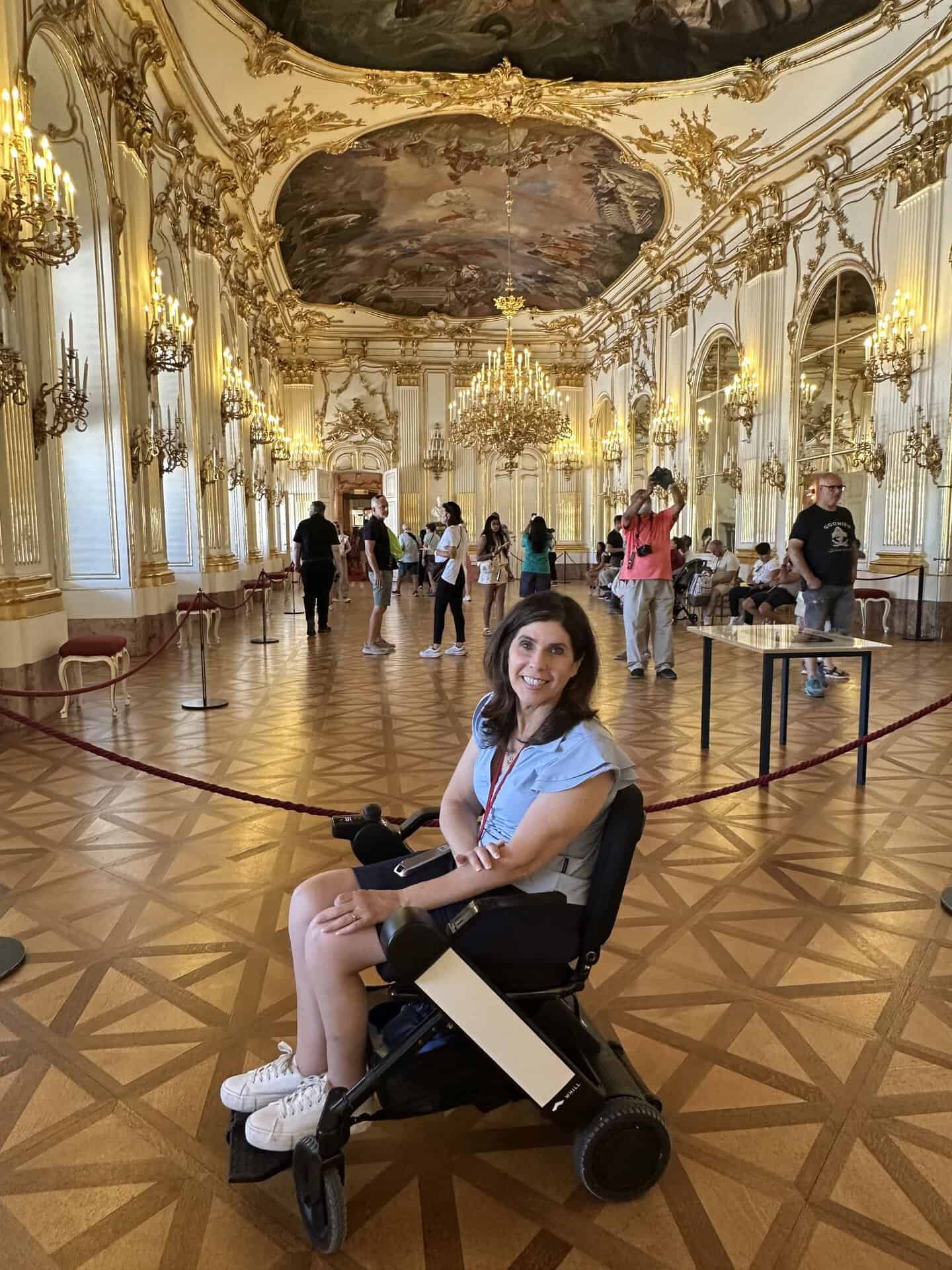
Nothing excites me more than traveling to a new place that I’ve only seen in movies or read about in history books, so when I received an advertisement in the mail for a Viking River Cruise along the Danube River to some of Central Europe’s most famous capitals, I jumped at the opportunity. My husband and I have been on ocean cruises, but a river cruise was on our bucket list. Having traveled to over 30 countries, we also wanted to go somewhere we had never been before, so the itinerary that included Vienna and Budapest, piqued our interest.
Our excitement was short-lived. Shortly after booking, we learned that Viking River Cruise does not allow individuals who use a wheelchair or mobility scooter on their foreign river cruises due to the smaller, narrower size of the boats and the lack of an elevator. Because the cruise is entirely in Europe, there is no Americans with Disabilities Act (ADA) protection and European laws, the vessel’s classification requirements and Viking’s own accessibility policies take precedence.
Disappointed but undeterred, we received a full refund and decided to skip the boat and travel to Vienna and Budapest on our own. It cost roughly the same amount of money, but gave us greater flexibility and control of our own schedule. It turned out to be a better decision.
Prague
Conquering Cobblestone in the Czech Republic
The first stop on our itinerary was a three-day stay in Prague. Dubbed the “City of a Hundred Spires,” Prague actually has more than 1,000 tower, turret and church spires. The historic city center has survived many centuries with very little damage from wars, allowing you to literally roll through the city streets and see buildings from the Gothic, Renaissance and Baroque eras standing side by side.
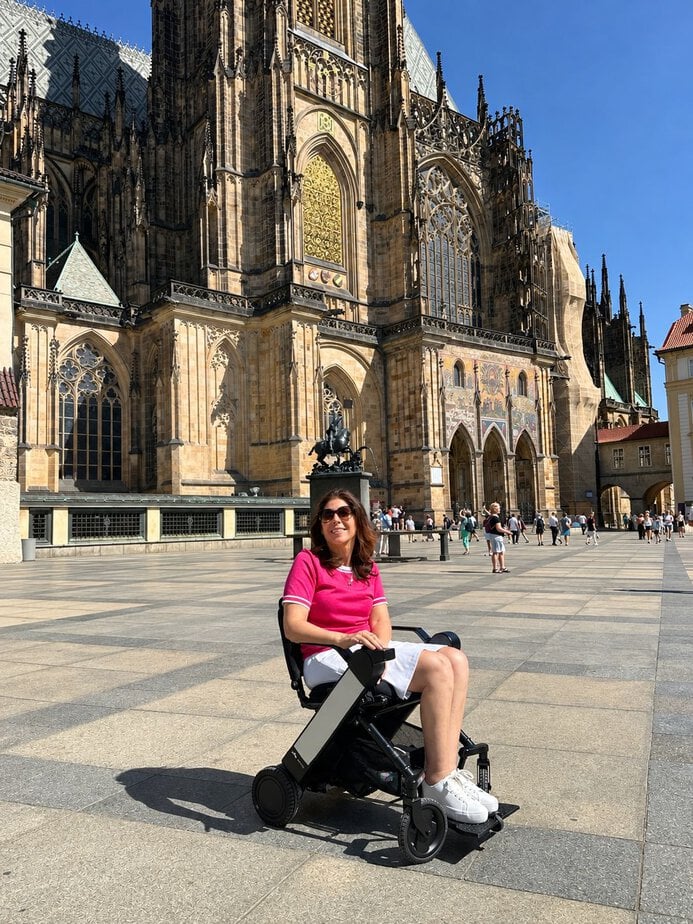
Friends had warned me Prague’s cobblestone streets would be a problem, and they weren’t wrong. Anticipating this, I decided to travel with my WHILL F2, a folding, power wheelchair, instead of my manual chair. The WHILL was a godsend. The few wheelchair users I encountered in the city all had power chairs similar to mine, or a powered attachment added to the front of their manual wheelchair.
I used Hotels.com’s accessibility filters to find all the rooms for the trip, checking off elevator, stair-free entrance and accessible bathroom as must haves to narrow my search. In Prague I selected the Mozart Prague, due to its accessibility and central location to many attractions. The hotel was a former palace and yes, Mozart was actually a guest.
The hotel did not clarify which room types were wheelchair accessible online, so I ended up emailing the property directly about my needs. When we arrived, they showed us two room types and we selected a room that met my accessible needs and was large enough to accommodate me, my husband, and my mom who was traveling with us. At over 400 sq. ft., it was spacious by European hotel room standards and included a half bathroom and a large accessible bathroom with a roll-in shower and fold-down shower bench.
A full breakfast menu was included in our room price, but there was a step to get into the restaurant. The staff did their best to accommodate us, serving us in a small courtyard just outside the restaurant. To be honest, I much preferred eating outside in the private courtyard so the negative turned out to be a win. The one downside was the room did not have air conditioning. This is common in older European hotels. They did provide a fan, but it was summer and hot.
As an incomplete C6 quadriplegic, I can transfer fairly well into a regular cab and my folding power chair fits easily into a car with a deep trunk. Knowing this, we opted not to take public transportation because of the cobblestone streets and used taxis to drop us off right at the accessible entrances of the sites we wanted to see. Another reason to opt for a taxi is that Prague’s public transportation is not fully accessible. Most buses have fold-out ramps, but not all stops are accessible, and many — but not all — metro stations have elevators.
My Favorite Accessible Attractions in Prague
Prague Castle
The largest ancient castle complex in the world according to the Guinness World Records. The hill-top castle overlooks the whole city, providing stunning views. Many of the buildings and parts of the royal gardens are accessible. The must see at Prague Castle is St. Vitus Cathedral. The ornate, Gothic style, Roman Catholic cathedral is where kings were crowned, royalty is entombed and relics of saints and the crown jewels are housed.
Old Town Square
This pedestrian friendly square has beautiful buildings, cafés, and shops. The streets are flat and although there are cobblestones, they are not as bad as other parts of the city. Old Town Square is home to the famous Prague Astronomical Clock, where tourists gather at the top of every hour to see a glockenspiel show and hear the bells toll.
Charles Bridge
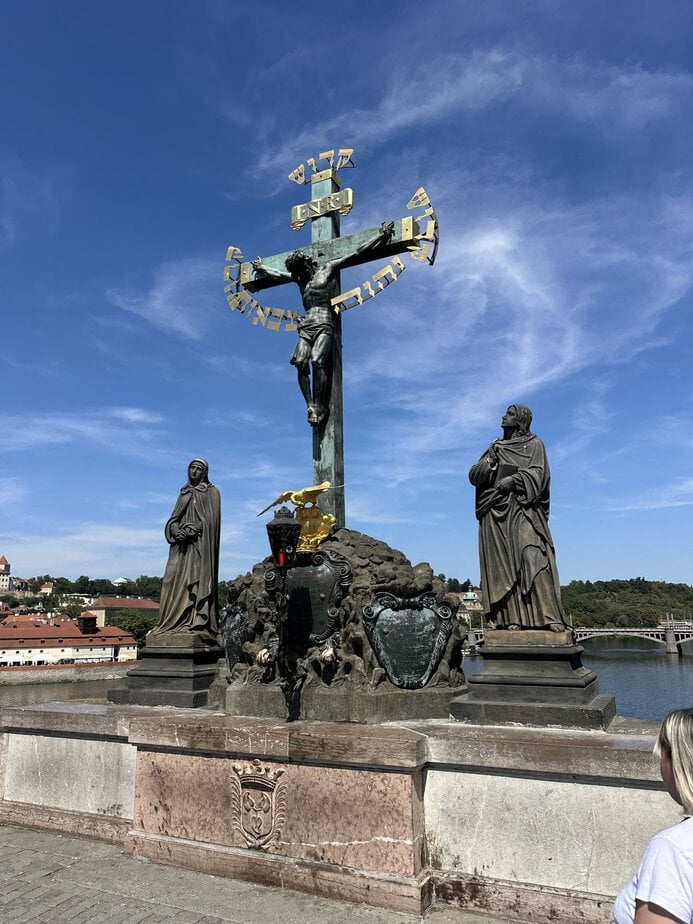
Almost seven football fields long with 30 towering statues depicting saints, the historic bridge is one of the defining landmarks in Prague. The bridge is a lively hub of activity with tourists, musicians and artisans filling the route. The cobblestone bridge also connects Old Town with Lesser Town. It’s a bit tough to navigate but worth the effort.
Vienna
Enjoying life on Austrian time
From Prague, we took a four-hour train ride to Vienna, Austria for a three-day stay. Traveling by train in Europe is my favorite mode of transportation. The trains have platform lifts, accessible bathrooms, designated spots for wheelchairs and travelers with disabilities usually get a discount.
When I arrived in Vienna, I could have kissed the ground in gratitude for the noticeable reduction in cobblestone streets. Additionally, the ones that existed were more manageable.
Vienna was my favorite stop on our itinerary; beautiful and elegant with grand, sprawling palaces, magnificent churches and steeped in old world charm. Vienna has a much slower pace than Prague. Prague feels more lively and tourist-orientated, whereas Vienna has a more relaxed feel. I could have spent the whole week in Vienna. There was so much more I wanted to see.
Because we were going to do more walking in Vienna, I rented a mobility scooter for my mother. Since we both had mobility devices, we couldn’t fit into one taxi, so I booked a wheelchair accessible transport service. Both options I found in Vienna required advance booking and ran on the pricey side.
We stayed at a Hyatt-owned property in Vienna near Belvedere Palace. It was modern and accessible, but in a business district. In hindsight, I would have booked something closer to Vienna’s city center so we could walk/roll to most attractions on our itinerary and save on transportation costs.
My Favorite Accessible Attractions in Vienna
Schonbrunn Palace
Vienna’s grandest palace was the summer home of the Habsburg imperial family. It boasts 1,441 rooms in total, but the wheelchair accessible grand tour only includes 40 lavish rooms open to the public. The gravel-lined outside gardens are partially accessible, likely difficult for manual chairs with small casters. You can view the iconic Gloriette from the gardens but reaching the Gloriette’s viewing platform is only accessible by stairs.
Hofburg Palace
This palace served as the winter residence for the Habsburg’s imperial family. When in Europe, I usually buy my attraction tickets onsite at the ticket box office because disabled people, and sometimes their companions, receive a free or discounted ticket price. You can’t buy those tickets online because you have to prove you have a disability either by having a European disability card or a letter from your doctor, the latter of which I had. It backfired this time because the palace interior tour was sold out. Thankfully, the Spanish Riding School—a separate attraction—was not. We were treated to a dressage performance by the Lipizzaner white stallions.
St. Stephen’s Cathedral
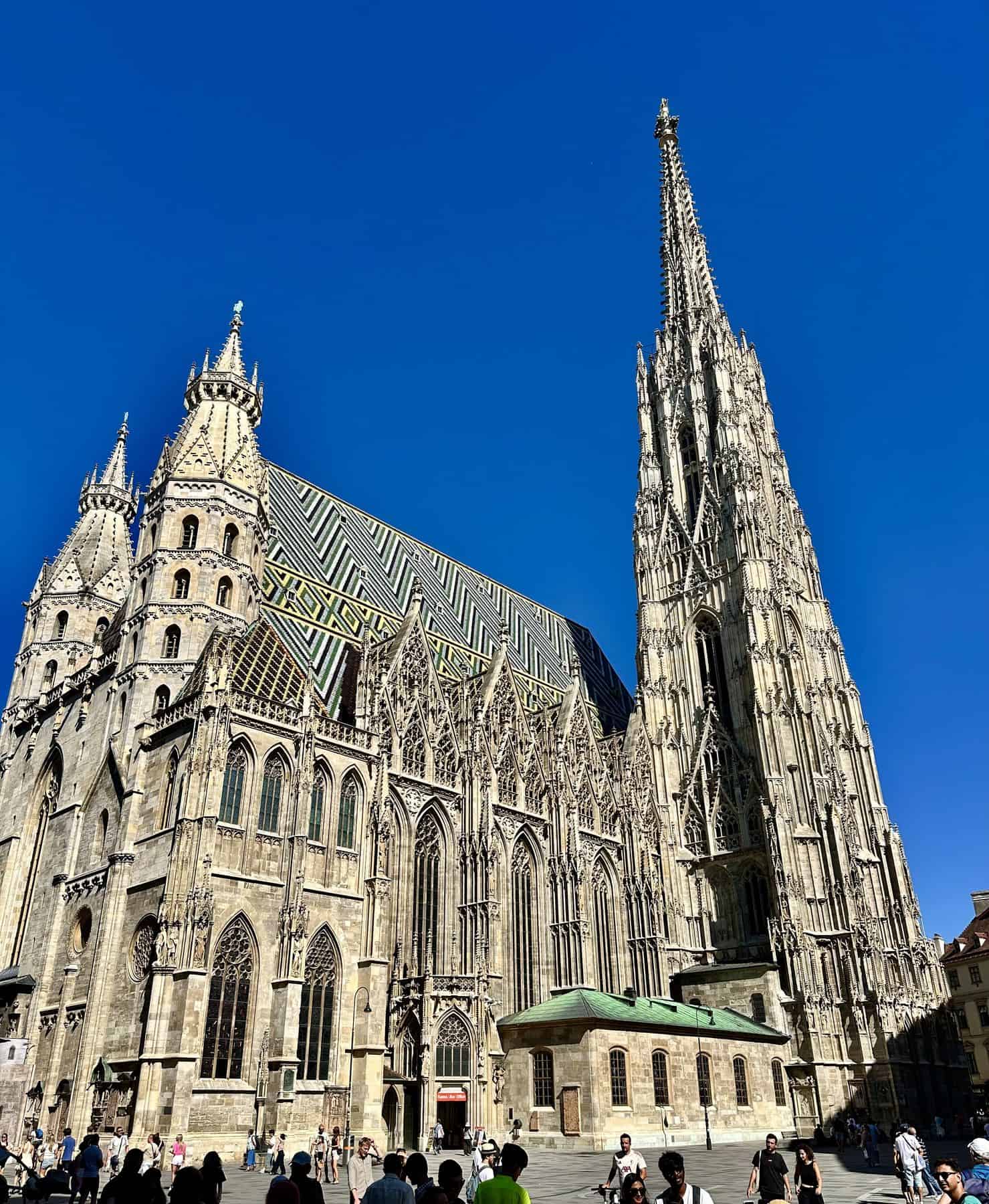
The massive Gothic church in the city center is a treasured landmark and known for its patterned roof. The main floor is accessible, but the towers, roof and catacombs are not. The pedestrian-friendly streets surrounding the cathedral are a mecca for people watching with tons of shops and cafés.
Budapest
Blasting through Budapest
For our last stop, we took a day trip via train from Vienna to Budapest. Because we only had seven hours in the city and wanted to see as much as possible, I booked a private five-hour guided tour with a company specializing in tours for disabled people. It was a terrific way to cover a lot of ground and learn about the history of the city.
I learned Budapest is actually two distinct halves: Buda on the hilly side of the Danube River and Pest on the flatter side. Additionally, Budapest is sometimes referred to as the City of Spas because they have more than 100 thermal springs beneath the city. I didn’t get to experience a thermal bath on this excursion, but it’s definitely on the list for next time.
Our guide described Budapest as “a city in progress” when it comes to accessibility. For example, the newest Metro, the M4, is fully accessible. The older M1 Metro is not, and the M2 and M3 Metro are partially accessible. Only a couple of the many thermal spas are listed as wheelchair accessible, but many museums are.
Improving accessibility is one of the goals of Hungary’s newly appointed Social and Family Affairs Minister, Vilmos Kátai-Németh. He lost his eyesight at the age of 16 and has been prioritizing physical and digital accessibility in Hungary, urging people with disabilities to identify and address everyday barriers.
While in Budapest, we got to dine at the most famous restaurant in Hungary, the Gundel Cafe Patisserie Restaurant. Operating for more than 130 years, it is widely known for its traditional Hungarian dishes. Despite the age of the restaurant, I was pleasantly surprised that the front entrance had a ramp and there was a main floor accessible restroom … a rare find in Europe’s older neighborhoods.
My husband was the only one of us brave enough to try the local cuisine on this trip. I wasn’t quite sure how my bowel program would respond to goulash or Hungary’s heavily paprika-spiced delicacies, so I stuck with safer choices like pasta. I did sample a few bites of wiener schnitzel. I give it two thumbs up.
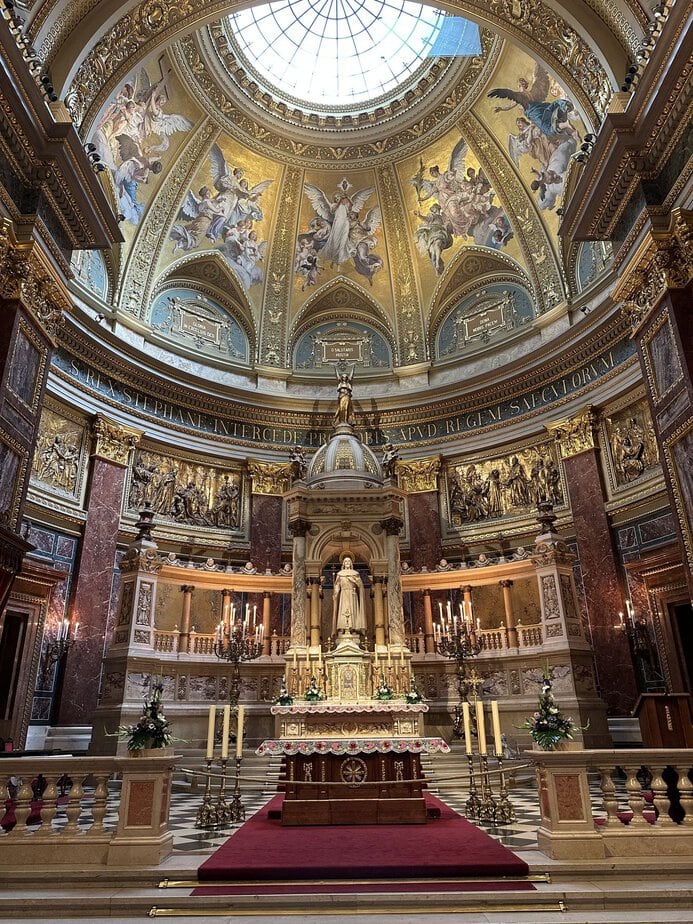
My Favorite Accessible Attractions in Budapest
Basilica of St. Stephen
The basilica is the most sacred Catholic church in Hungary because it contains the nation’s most revered relic: the mummified hand of the church’s patron and first Christian king, King St. Stephen. The ornate church is richly decorated with marble columns and walls, religious frescoes, and a soaring mosaic-decorated central dome. Only the main floor is wheelchair accessible, and wheelchair users enter on the side of the church instead of the main entrance.
Castle District
The district features Buda Castle, Fisherman’s Bastion and Matthias Church, along with dozens of restaurants, shops and pubs within steps of each other. This area is probably the most challenging for wheelchair users due to cobblestones and steep streets, but some parts are doable. Fisherman’s Bastion provides one of the best photo ops of the city. The upper terrace has steps, but the lower terrace is accessible and provides panoramic views of the city and Hungary’s massive Parliament building.
Shoes on the Danube Bank
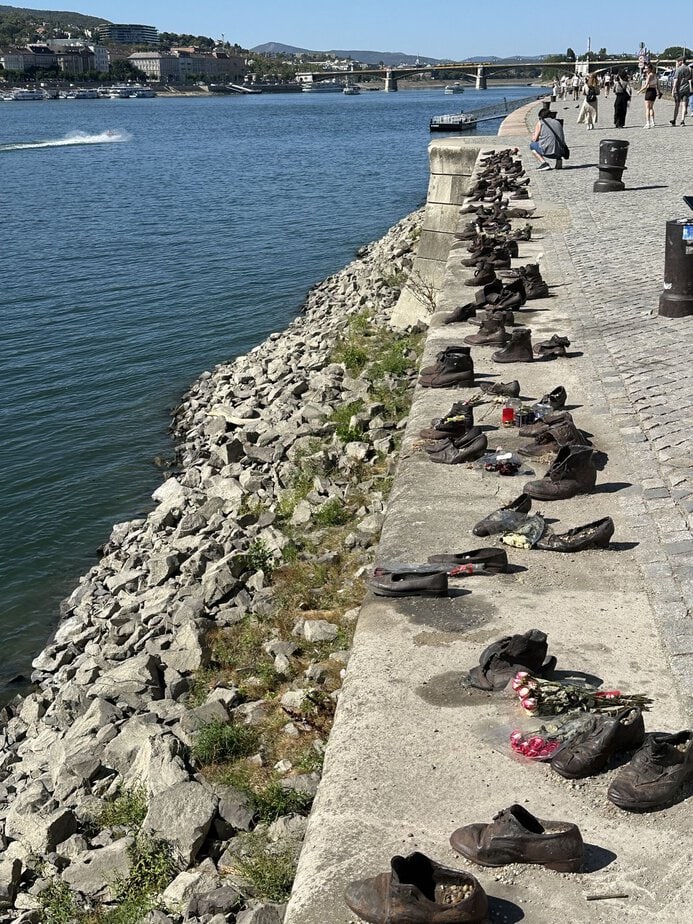
This eye-opening Holocaust memorial is powerful to experience. Along the Danube riverbank, you’ll find 60 pairs of shoes cast in iron. The shoes represent the thousands of Jewish men, women and children who were forced to remove their shoes, a valuable possession at the time, before being executed and falling into the river. Each pair of shoes represents a life and story that should not be forgotten. If you are planning to visit, there is hard-packed sand leading to the river bank, smaller caster wheels might sink into the sand so plan accordingly.
Challenge accepted, rewards earned
Three countries and three sprawling cities in seven days was a lot, but I enjoyed my experience exploring each unique city. The people we encountered were very friendly and always willing to help. Cab drivers were willing to stop for us and even help load my wheelchair in their vehicle, something that doesn’t always happen elsewhere like New York. I also found Prague, Vienna and Budapest to be very affordable and much cheaper than other European cities, like Paris or Venice, when comparing hotel rates, dining and transportation.
The world is too beautiful to experience only from the places that are easy to navigate.
Traveling through historic parts of Europe as a wheelchair user isn’t always easy. Cobblestone streets, narrow sidewalks, steps and older buildings can present challenges. Prague, Vienna and Budapest were no different in that regard. But there are workarounds, for example, many restaurants usually have steps to get in, so I usually stick to dining at one of the many outdoor cafés. More difficult is finding an accessible public bathroom. Most restaurants and public restrooms in Europe have stairs leading to the bathroom and no elevator. A good option is to look for an American chain. Starbucks saved me on more than one occasion during this trip. You can also try an accessibility guide online or an app listing accessible restrooms, I even used ChatGPT.
Bottom line, don’t let the barriers stop you from going to Europe. Do your research, plan ahead and, most importantly, pack your patience. Bringing a companion who can lend a helping hand doesn’t hurt either. The extra effort is worth it. There’s something incredibly magical about experiencing Europe’s history, architecture, culture and all its splendor firsthand. Besides, the world is too beautiful to experience only from the places that are easy to navigate.
Now that I’ve unpacked it’s time to start thinking about and planning my next bucket-list destination. Iceland or the Amalfi Coast? Yep, I like a challenge.
Subscribe
Login
0 Comments
Oldest