


United Spinal’s Resource Center Tackles Your Tough Questions
October 1, 2021
Steve WrightImagine the ultimate help desk for spinal cord injury — a magical place where trained, knowledgeable experts provide the resources and information to resolve all your questions and help you get back to living the life you desire. Now, what if I told you that actually existed, and you could access it for free?
While it doesn’t use magic and has no actual physical location, the United Spinal Resource Center has been filling this need for 17 years, establishing itself as the premier destination for all SCI/D inquiries and needs.
The team consists of six professionals — four who live with spinal cord injuries, one registered nurse and one social worker. Bill Fertig, the team’s director, served 25 years as a municipal police officer and training sergeant before an off-duty motorcycle accident resulted in paraplegia in 1999. He joined the Resource Center in 2005 and has since worked to expand its offerings and hone its services. He takes pride in personalized, customized and localized assistance.
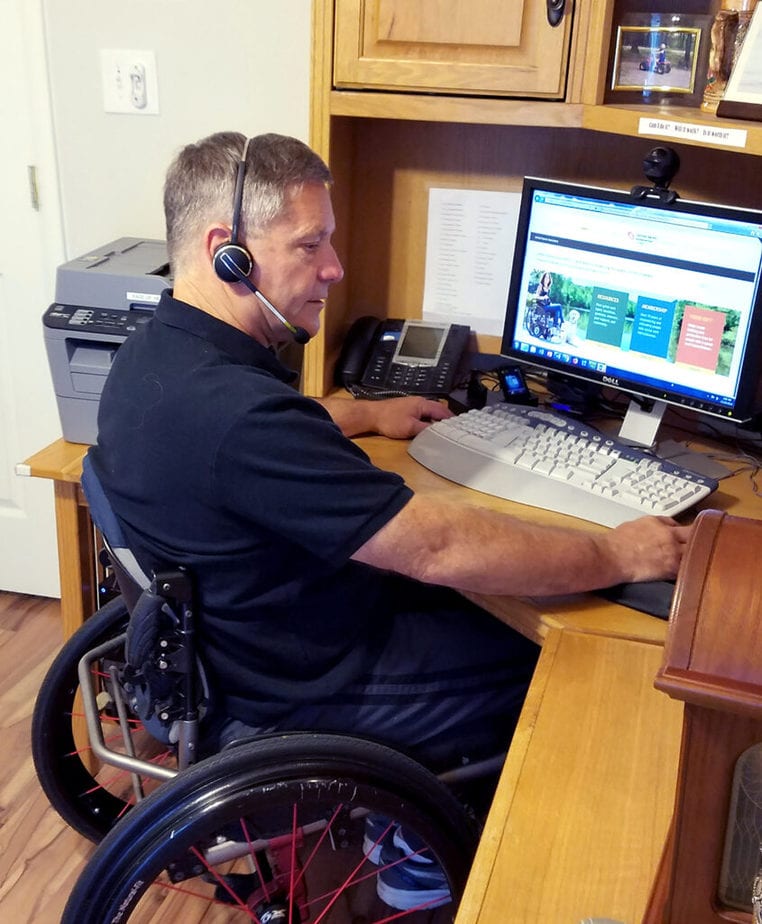
“We go above and beyond to make sure that everyone who reaches out gets any resources they need.”
“Our six information specialists have a combined 100 years of experience living with SCI and 68 years working as information specialists,” he says. “They take a great deal of pride in providing timely, helpful guidance to others dealing with the many complexities of living with SCI.”
Whether the request for assistance comes by email or phone, his team members try to call the person back to get the full details so they can deliver the proper resources. Resources range from help finding personal care attendants, transportation, housing and home modifications to advocacy in dealing with insurance companies and medical facilities. In addition to responding to inquiries and member problems, the team receives between 200 and 300 new member applications with embedded member questions every month. Every application gets assigned, read and responded to quickly and thoroughly.
“We go above and beyond to make sure that everyone who reaches out to us gets our full attention and any resources or help they may need,” says David Heard. He’s an information specialist who also serves as United Spinal’s membership coordinator.
United Spinal Association Programs and Projects
United Spinal Association strives to improve the lives of people living with spinal cord injuries and disorders through its programs. Visit Unitedspinal.org or call 718/803-3782 for more information.
Accessibility Services ensures the built environment is accessible to wheelchair users by training design professionals and reviewing and completing inspections nationwide.
Advocacy & Policy Network advocates for benefits and regulations that are beneficial to paralyzed Americans and all people with disabilities.
Resource Center connects people with personal guidance and resources to effectively regain their quality of life and independence. 800/962-9629
National Chapter Network supports the SCI/D community by promoting health, inclusion, and independence through a wide range of resources and support.
New Mobility magazine provides the latest news and resources on active living for wheelchair users. Find us on Facebook at @newmobility and on Twitter and Instagram at @newmobilitymag.
Pathways to Employment partners with employers to place people with SCI/D in jobs and provide trained mentors, resources, and support to facilitate return to work.
Peer Support provides peer-to-peer support for individuals, friends, caregivers and family members through a national network of peer support groups.
Ready to Roll assists in preserving the health and safety of members during natural or human-caused disasters.
Tech Access Initiative ensures accessible technology is inclusive to all people with disabilities, including wheelchair users. @techaccessconnection on Facebook
VetsFirst advocates for disabled veterans so they can achieve the highest level of independence and quality of life. 800/404-2898, ext. 7731 or 7732
New Beginning Backpacks are filled with information and resources for people transitioning into their communities after SCI/D.
Get Involved With United Spinal
There are many ways to stay active and informed and meet other members of United Spinal.
Join Our Facebook SCI/D Support Group
Participate in our Virtual Social Hour
Join our monthly Resource Center Live Zoom
Join our Rolling Revolution Advocacy Network Facebook Group
Join our Rolling with Pride – LGBTQ+ Discussion Group
“We’re a collaborative group within our Resource Center, each with our own strengths, knowledge and experiences,” says Jane Wierbicky. “Together, we truly aim to provide hope, direction and much-needed information to help people get back to doing the things they love.” She’s an information specialist with over 35 years of experience working as a nurse exclusively in the field of spinal cord injury and related disabilities.
Longtime Resource Center specialist Daniela Castagnino says responding to inquiries is as much about making personal connections as solving the immediate issue at hand. “When you answer the phone and can tell they are very stressed and upset, and you’re empathizing, and you are familiar with the issue, you can almost sense them start to see that things are going to be OK,” says Castagnino, a quadriplegic. “Having a positive effect on people — helping people who are family members of people with new injuries — you can transmit to them the idea you’re not alone. It will get better. And you will get through this. There’s a whole and rewarding life that’s available.”
“Hearing that message from someone living with a spinal cord injury can make a big difference,” says José Hernandez, a Resource Center information specialist. With 26 years of life as a C5 quadriplegic under his belt, Hernandez brings a deep blend of lived and professional experience to his work. “I take pride in being able to relate with callers and emailers on a deeper level and going beyond what the textbook or doctors may tell them.”
Fertig and his team note that the best success stories are when the person’s issue is resolved, and they are given the tools to better advocate for themselves. “It’s not that we do it all for the person in a vacuum — we make them part of the team, let them know they are on the right track. We give them factual, current information to base their appeals on,” he said. “That empowers them to go further and be more successful.”
Here are five notable cases that demonstrate the breadth and expertise the team brings to the Resource Center.
‘All I Needed to Cross the Finish Line’
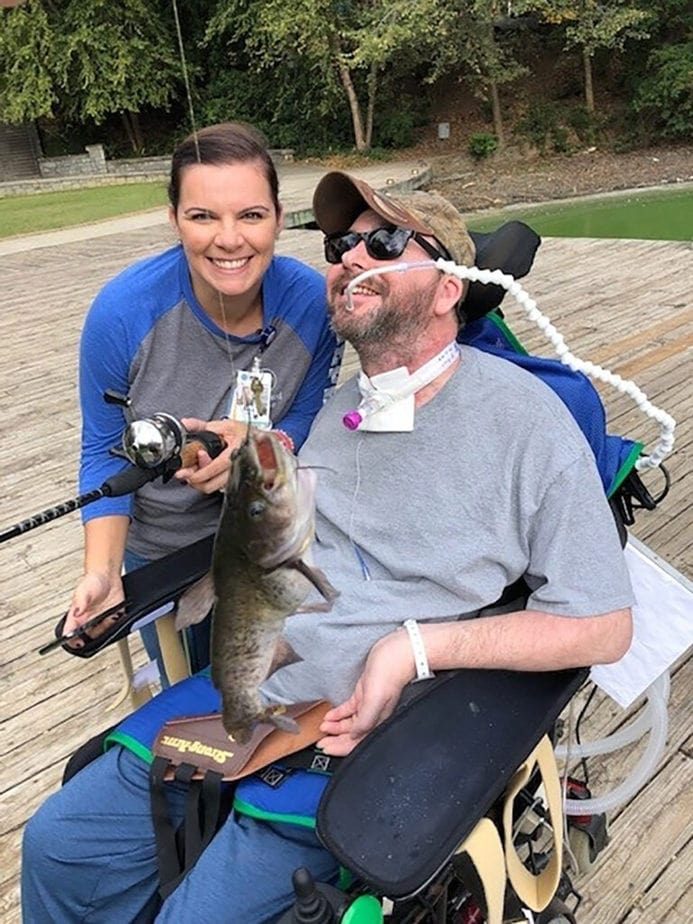
Chris Dunn survived a diving accident in July 2018 that left him paralyzed, on a ventilator and mostly blind. A father and concrete worker, Dunn spent a year in a Maine ICU, fighting for his right to rehab and get back to living his life. “I’m pretty sure they just wanted to kill me,” he said in a 2019 interview.
Dunn’s family was repeatedly told there was nothing more that could be done for him and, even though he was in his early 40s, they should put him in hospice to die. After seven months of reaching out to hospitals and rehab centers all over the country and receiving nothing but rejections, Chris’ mom, Carol, filled out the online form to join United Spinal Association, writing: “We are desperate. We need help, please.”
Wierbicky fielded the question and emailed Carol the next day. That started a partnership between the Dunns and United Spinal that eventually got Chris back to living his life.
Dunn relied on a ventilator, pacemaker and feeding tube. His complications were challenging, but Wierbicky was determined to help.
“It’s always shocking to me when we see cases where that doesn’t happen,” she says. “It became clear to me through this case that people living in rural states that don’t have dedicated spinal cord injury programs and those who are on ventilators are in an especially vulnerable position. All Carol ever wanted was for him to be evaluated by people who understand his condition. That seemed like a very reasonable goal.”
Working together, Carol and the Resource Center team enlisted Disability Rights Maine, state legislators and federal representatives and held weekly calls with hospital staff and the state’s Medicaid program. Ultimately, their advocacy got Chris into Shepherd Center in Atlanta — one of the nation’s premier SCI rehab centers.
“What it came to down to, up in Maine, was a hospital administration that looked at the injury level he had as not being any kind of quality of life. So they denied him care that would have given him quality of life,” says Resource Center director Bill Fertig. “Here is a guy with a very, very significant disability. But through it all, he has almost universally maintained a strong perspective. He has taken all that came to him, and he’s happy.
At Shepherd Center, respiratory therapists went to work trying to wean Chris off the ventilator and strengthen his voice, while physical and occupational therapists attempted to undo the damage a year of lying in the ICU had done.
The team helped Chris build up the lung capacity to only need the vent at night. He was able to go fishing. After four months, Chris returned to Maine. He continues to fight the system to receive maximum benefits, while his mother serves as his primary caregiver.
“I don’t know that I would have been able to make things happen without United Spinal Association,” Carol says. “I was getting tired. I wasn’t going to give up, but they came in and propped me up and gave me some courage and some encouragement to keep going. They pointed me in some right directions and stood behind me, and that’s all I needed to cross that finish line.”
And that, says Wierbicky, is the essence of what the Resource Center strives to do. “Rehabilitation stays have decreased so dramatically over the years I’ve been involved in the field, and it can be so difficult for people to get all of the information they need in such a short time,” she says. “It’s very gratifying to talk with people to help them drill down to the information they need when they need it and hopefully feel supported and less overwhelmed.”
“This is why the Resource Center is here: to fight for people and give them the support they need — on a personal and professional level — to attain the best quality of life possible,” says Fertig.
‘They’ve Got My Back’
Shannon Cobb, a sociology student at McHenry County College in Illinois, says she is one of the Resource Center’s most frequent users. “I’ve sent so many random questions to the Resource Center — it’s hard to list all the things they’ve helped me with. Overall, it’s nice to know someone has your back,” says Cobb, a paraplegic who uses a manual wheelchair — often pulled by Princess, her Rottweiler-Shepherd service dog.
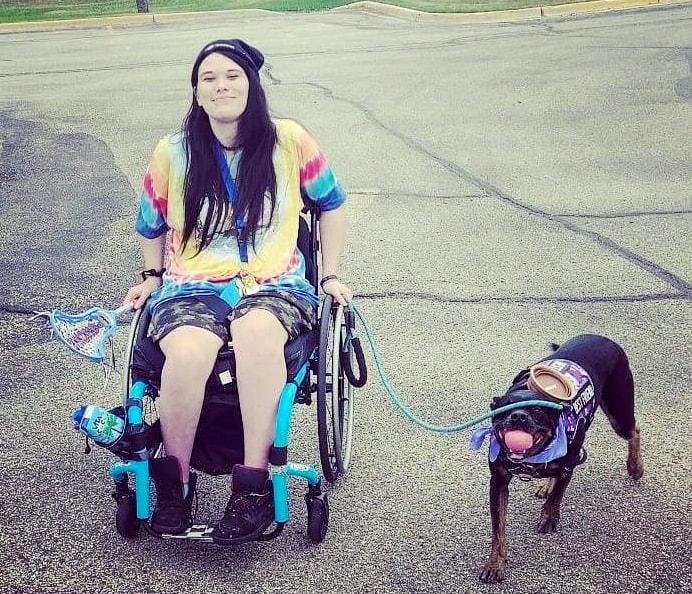
“I was having a lot of problems figuring out how to get things done when I was first injured [in 2018],” she says. “The Resource Center has helped with finding accessible housing, adapting a home to be more wheelchair-friendly and helping me find a wheelchair and getting grants.”
Cobb participates in wheelchair lacrosse, searches for more adaptive sports in her location an hour-plus away from Chicago and is interested in extreme wheelchair sports. Fertig wrote a letter of recommendation to help Cobb with a grant to fund a wheelchair that stands up to the abuse of WCMX. The center also has helped the budding social worker with peer advice on how to stretch the paltry disability payment that she receives each month.
Lindsey Elliott, a social worker who serves as United Spinal’s director of member initiatives and as an information specialist, invited Cobb to one of the Resource Center’s new Zoom-based nationwide peer sessions. “Her participation led to resources and information from her peers who were on the call — United Spinal members from all over the country. She was on the call with notebook in hand, furiously taking notes on all the resources,” says Elliott. “We started these calls to address the isolation born of COVID. They are a time to kick back and chit chat about all kinds of things. Lots of questions are asked and information is shared.”
“I have learned to be very resilient. I cannot imagine how my journey would have been without the team of people at the Resource Center,” says Cobb.
Fast, Personal Solutions
Wes Holloway reached out to the Resource Center for help finding a personal care attendant when he moved to Washington, D.C., from Houston to pursue a Master of Fine Arts at George Washington University. An accomplished artist, Holloway took his first year of coursework via Zoom. But when in-person classes for his second year demanded a quick relocation adjacent to campus, the scramble was on.
Castagnino, who is based in D.C., remembers getting an email on a Friday afternoon that Holloway needed PCA help for the weekend. “Bill and I put all ideas to work and put all hands on deck at the last minute. I checked a Listserv for caregivers, CILs and agencies and showed Wes how to narrow a search on Care.com,” says Castagnino.
Thanks to a combination of Castagnino’s personal knowledge, contacts at D.C.-based home-health agencies, a local center for independent living, department of disability services and the local United Spinal chapter, the team was able to help Holloway find a PCA and make the move.
“It is great to see that the Resource Center responds quickly in a personalized, thorough and individualized way. I didn’t get the call center, voicemail runaround,’’ says Holloway, who hopes to teach at the university level while continuing with socially-engaged art projects.
Hacks, Ideas and Answers
Annie Mitchell reached out to the Resource Center for accessible gardening ideas two years after becoming a paraplegic. She ended up with several ideas for home modifications and other hacks that Fertig and his team came up with to enhance her quality of life.
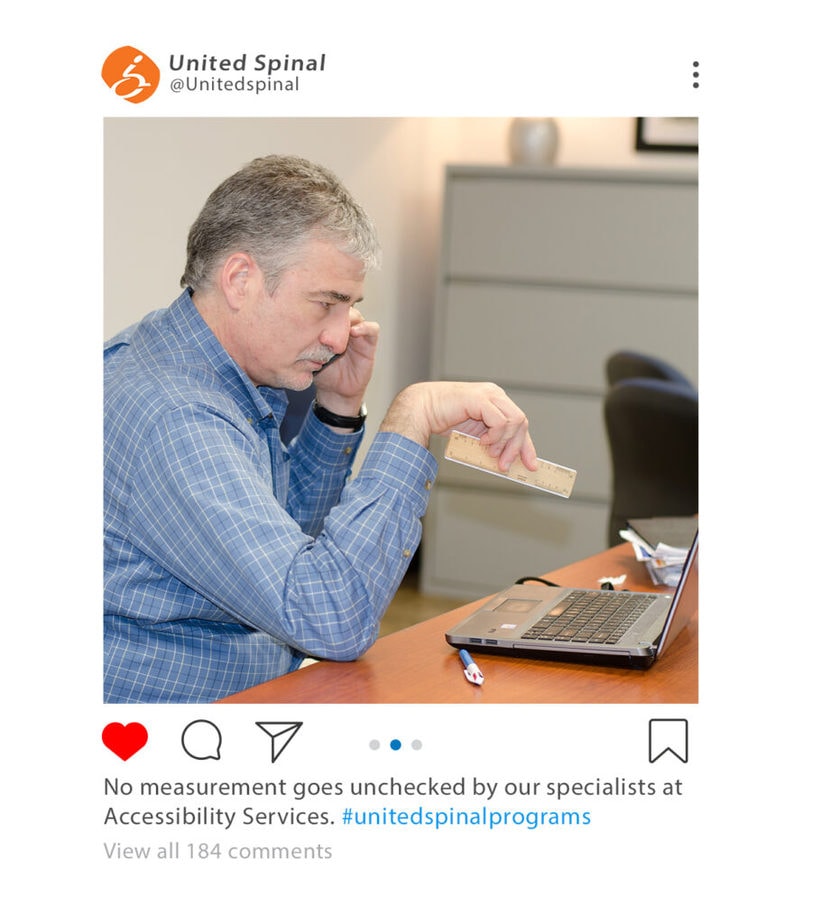
“We try to phone people, rather than email,” Fertig said. “Rather than answering a quick question from a category on a form, it gives us the opportunity to chat and respond more fully and directly. Hers was a typical case where we were able to identify so many areas of information that she could utilize comprehensively. When our information specialists make direct personal contact with people, very good things happen.”
On the gardening end, the team suggested a short-handled gardening rake for gardening from a wheelchair. The gardening chat let to simple home modifications such as:
- Spring hinge pins for exterior doors to simplify door opening/closing from a wheelchair
- Adding a magnetic catch to the back of the door to keep the door open when needed.
- Fold-down kitchen cabinet rack choices for quick accessibility to upper kitchen cabinets.
- Vanity drain and trap options to facilitate roll-under bathroom vanity access.
Catheter Conundrum
Everyone should be able to go to the bathroom when they want and need to, but without the proper supplies, it can be a difficult and frustrating task for people with disabilities. Betty Sherril reached out to the Resource Center because she was not receiving enough catheters per month from Medicaid and didn’t know what to do.
“Centers for Medicare & Medicaid Services had hard ceilings on how many catheters they would provide to a CMS beneficiary,” Fertig says. “Supported by the Resource Center information specialists and the United Spinal policy department, Betty was eventually granted an exemption from CMS catheter limits and began to receive all of the monthly medical supplies that she required.”
Support New MobilityWait! Before you wander off to other parts of the internet, please consider supporting New Mobility. For more than three decades, New Mobility has published groundbreaking content for active wheelchair users. We share practical advice from wheelchair users across the country, review life-changing technology and demand equity in healthcare, travel and all facets of life. But none of this is cheap, easy or profitable. Your support helps us give wheelchair users the resources to build a fulfilling life. |


Recent Comments
Dick Crumb on Adapting Recreation To An Aging Body
Karen on The Everlasting Saratoga Cycle
Ted Kilroy on Handcycle Gear Guide