


Adapting Recreation To An Aging Body
What do you do when your body tells you it’s time to move on from your favorite recreational activity?
March 16, 2026
Bob Vogel
My 40 years as a T10 para have been infinitely richer thanks to remarkable advances in adaptive recreation equipment and the many adaptive recreation programs I’ve taken part in. From joining friends on several multiday bike tours climbing over pristine 12,000-foot passes in Colorado’s Continental Divide, to handcycling through the Mars-like red cliffs of Utah’s Canyonlands and sleeping under the stars in the middle of nowhere outside Moab, Utah, I’ve been incredibly fortunate to experience wide swaths of the great outdoors that wouldn’t have been accessible to wheelchair users when I was injured.
However, being a wheeler tends to be extra hard on body parts, so much so that it seems shoulders, elbows and spinal discs age and wear in dog years. My wear and tear started with hitting a bump while monoskiing at high speed, which caused a sacral fracture that didn’t heal right and slowly got worse over the years. Later, I sustained severe rotator cuff tears that had been building over years of hard use. After consults with surgeons on the sacral fracture and shoulder tears, in my case the rehab, risk of reinjury, and limitations after repair were not worth risk of surgery. For me, and for many others, this leads to an inevitable reckoning: Should I keep going and risk serious health issues, or hang it up and try to find a new passion or pastime?
I wish the best to those who chose the first route, but I opted for the latter. Giving up one of my favorite things wasn’t easy, and as I talked with other wheelers who have done the same, I found out it rarely is. But our conversations also reenforced that it is doable and often very rewarding.
Tales of recreational passions
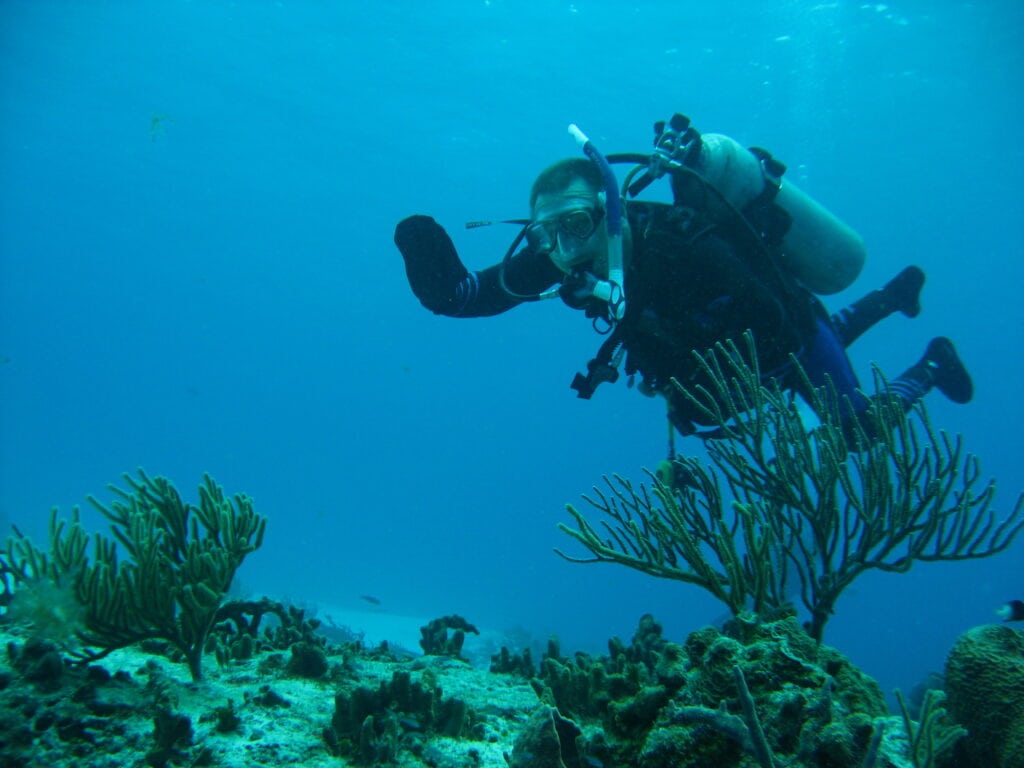
Prior to landing in the SCI world because of a ski crash, I was living my wildest dreams as a 25-year-old professional freestyle skier, traveling the world to perform in competitions. When I was injured in 1985, the first commercially available monoski was still a few years out, and without that readily available, I looked elsewhere to fill my recreation needs.
I got involved with everything from hang gliding to scuba diving, but nothing came close to skiing. Skiing was so imbedded in my psyche that not being able to ski was worse than not being able to walk. I could stand and ski in my dreams, but if the skis came off I needed my wheelchair.
When I finally tried monoskiing in the late ‘80s it was like my ski dreams had come to life. It brought back the same feeling of passion, focus and freedom I remembered. I skied with friends at my favorite resorts and runs, became an adaptive ski instructor, taught my daughter to ski, and skied many areas and runs that had been on my bucket list.
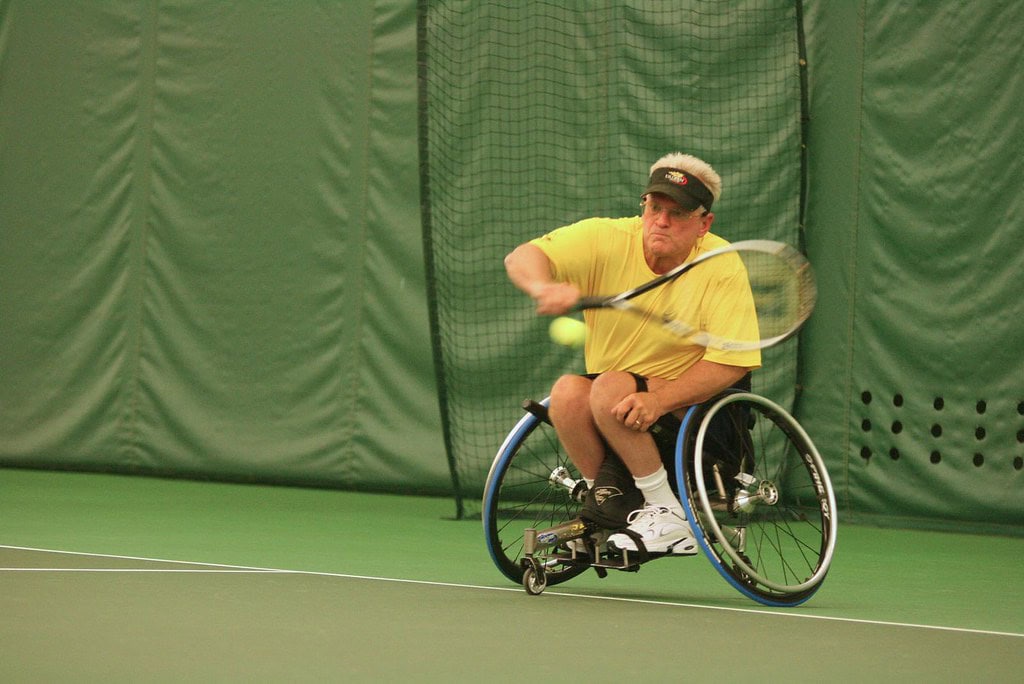
Like monoskiing for me, wheelchair basketball and tennis became all-consuming passions for Wayne Leavitt after he was paralyzed. “I loved the competition, camaraderie, physical and mental battle of sport,” says Leavitt, 77, is in his 57th year as a T4 complete para. He played basketball for 35 years starting in 1971 and tennis for 40 years starting in 1981. “I loved the one-on-one battle of tennis and the team aspect and being a part of the team’s success in basketball,” he says.
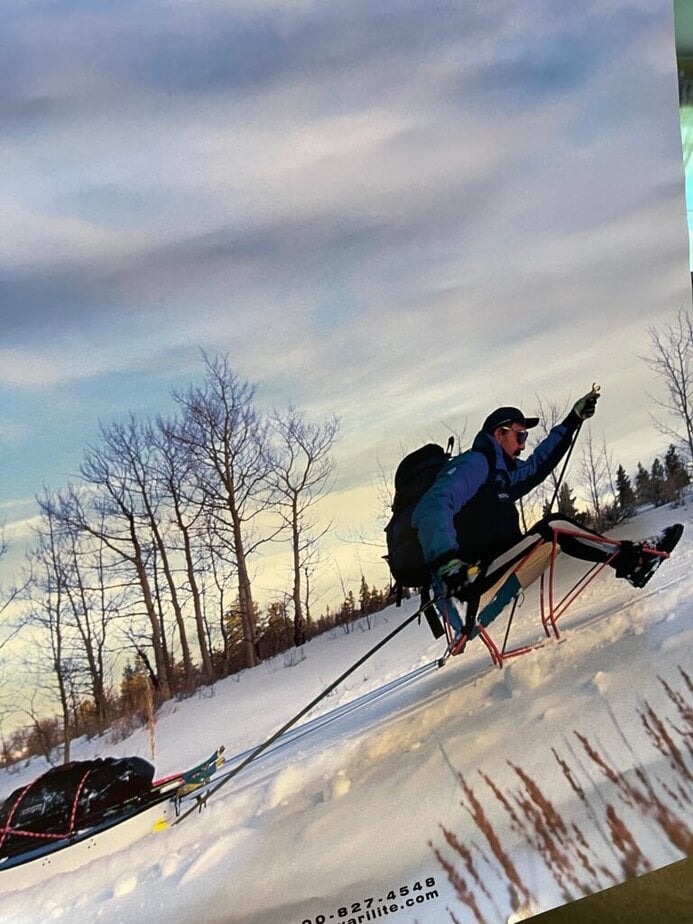
Cross-country (XC) skiing and mountain climbing were the recreations of choice for Jeff Pagels, age 77. “For me XC skiing got me into the outdoors, gave me freedom,” says the Green Bay, Wisconsin, native in his 41st year as a T10 para. “From a competitive standpoint XC skiing is a great equalizer: I’ve entered 55-mile able-bodied XC races where I’ve beaten 70% of the able-bodied racers.” Pagels had a 13-hour surgery to remove a brain tumor in 2007. When he recovered, he climbed Mt. Whitney and Mt. Kilimanjaro. “I did this as a challenge and as a way to show people that the outdoors is good medicine.”
Elena Van Loo didn’t get hooked on adaptive sports until she moved to California in the 1980s. Now 56, she loves wheelchair tennis, basketball, monoskiing and XC skiing. “I love the competitiveness of sports and loved competing so much it felt like I had to do these sports,” says Van Loo, a polio survivor. “I’m also a social person and loved the social part of sports, developing bonds with the people I competed with.”
How do you know when to say when?
Getting older and realizing that you are unable to enjoy your favorite activities the way you used to without elevating your chances of serious injury can be frustrating. Deciding to give up a beloved pastime or trying to find something to replace it can be even more difficult.
For me, skiing was increasing wear and tear to an old injury on my lumbar spine. In the early years after my injury, my lower back would be sore at the end of a ski day. Over time the soreness turned to pain, then it got more intense and lasted longer, sometimes days, then weeks. Eventually I would hurt all ski season.
I wanted to avoid ending up like my friends with SCI who had secondary lumbar injuries and needed spinal-rod fusion from hip to chest. By the 2011 ski season, my back pain was causing me to opt out of skiing on all but a few ski days. A year later, at age 52, I begrudgingly sold my ski gear. Although I miss the sport, I’m grateful I had the chance for a “second ski act” after my SCI, and crossed off most of my bucket list ski goals. I still miss it, but enjoy replaying the highlight reels in my mind.
“Choosing to retire really impacted me because I loved the sports and loved competing so much,” says Van Loo, who saw the wear-and-tear writing on the wall early enough to avoid serious injury. By 2013 at age 43, the years of high impact from basketball were taking their toll on her shoulders and elbows. “I had to retire from basketball in order to save my shoulders and elbows from further ligament and tendon issues,” she says. She later decided to retire from competitive sports altogether.
Pagels’ love of XC skiing kept him going even after two shoulder replacements and an elbow fusion. He finally made the decision to hang up his skis three years ago when a broken arm, the result of a XC ski fall the previous year, didn’t heal properly. “My body got too worn out and beat up for me to transfer into my cross-country ski, and too worn out to get upright if I tip over — and the guys I ski with are too old to help me transfer or get me upright after a fall,” he says. “I feel good that I accomplished everything I wanted in the sport and feel it was a good decision to quit.”
Leavitt also endured multiple surgeries to stay on the basketball court before he realized it was time to move on. “I loved the competition of basketball but I was working full time and I’d wake up in the morning after a practice and could barely move and hurt like hell for the next three days,” he says. “My body was telling me it’s time to quit.”
He retired from basketball but kept playing tennis. His competitive streak kept him coming back even when a torn shoulder required surgery and 6-12 months of rehab. He went through that eight times — including two total reverse shoulder replacements — before finally deciding that remaining healthy enough to continue work and put food on the table is more important than competing for another trophy. “My mind was still saying yes, but my body said no,” he says now. “[All the wear and tear] started to affect my quality of life.”
How to cope and adjust without your pastime
Letting go of your recreational pastime can be a difficult challenge. The key is finding something that brings you as much satisfaction.
I still find joy in driving up to the mountains on a crisp winter day and spending time taking in the unique sights, smells and sounds at my old ski resort haunts. But now I don’t have to be up at the crack of dawn to beat the rush to the slopes; I can wake up late and arrive at midafternoon to join my ski buddies for a drink and hear about their adventures. Although I still miss skiing, I’ve made peace with it. My recreation dance card is more than full with activities that are easy on the body: swimming, trail riding on my mountain handcycle with e-assist, riding my road handcycle on a trainer for cardio. Even better, I’ve been sharing travel adventures and extended road trips with my wife, Debbie. On top of all that, I’m looking at starting two items on my bucket list: advancing my knowledge of dog training to find and train my next service dog, and taking sailplane lessons to earn my glider pilot’s license.
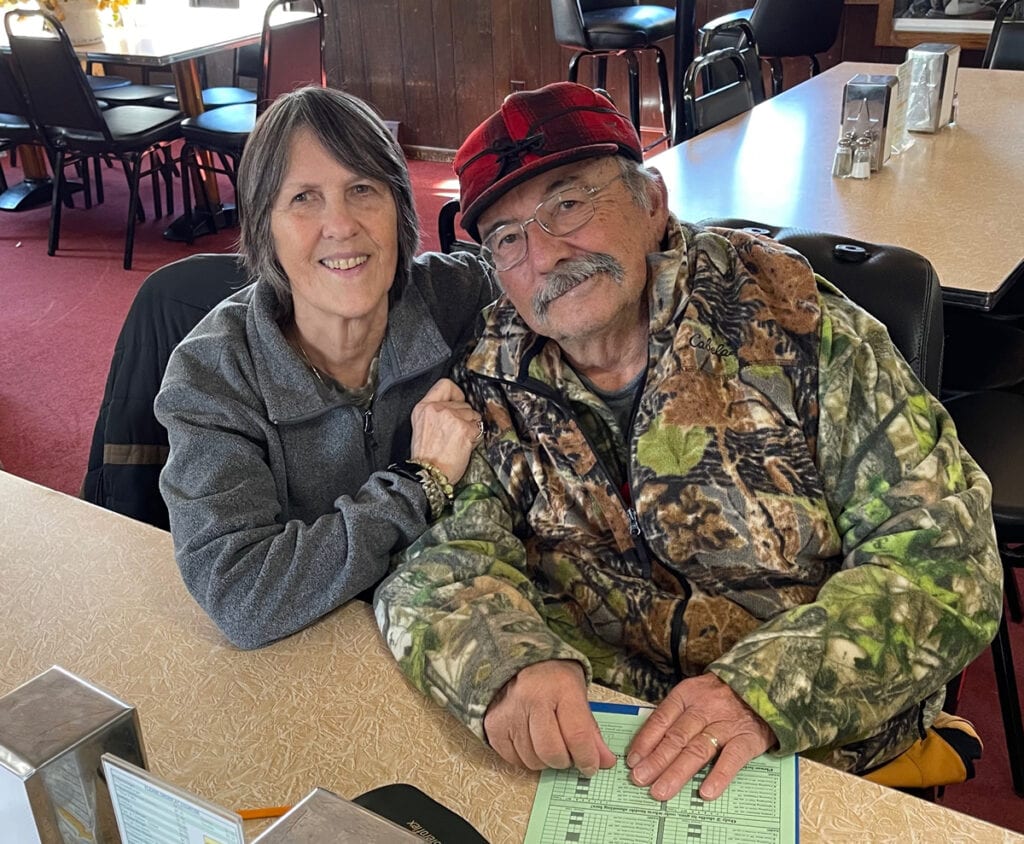
Although Pagels no longer cross-country skis, he is still very active. “I still enjoy fishing for walleye and perch on both hard (ice fishing) and soft water, and in the fall, I get out hunting for deer, both bow and rifle, so I’m able to keep my freezer full of venison,” he says. He goes to a local gym three times a week to stay in shape. “Starting a gym workout isn’t as fun as starting out on a cross-country journey,” he says. “That first push on the weight bar isn’t too fun, but after a few minutes the endorphins kick in and it feels good to get the cardiovascular workout.” In the summer months he still rides his handcycle.
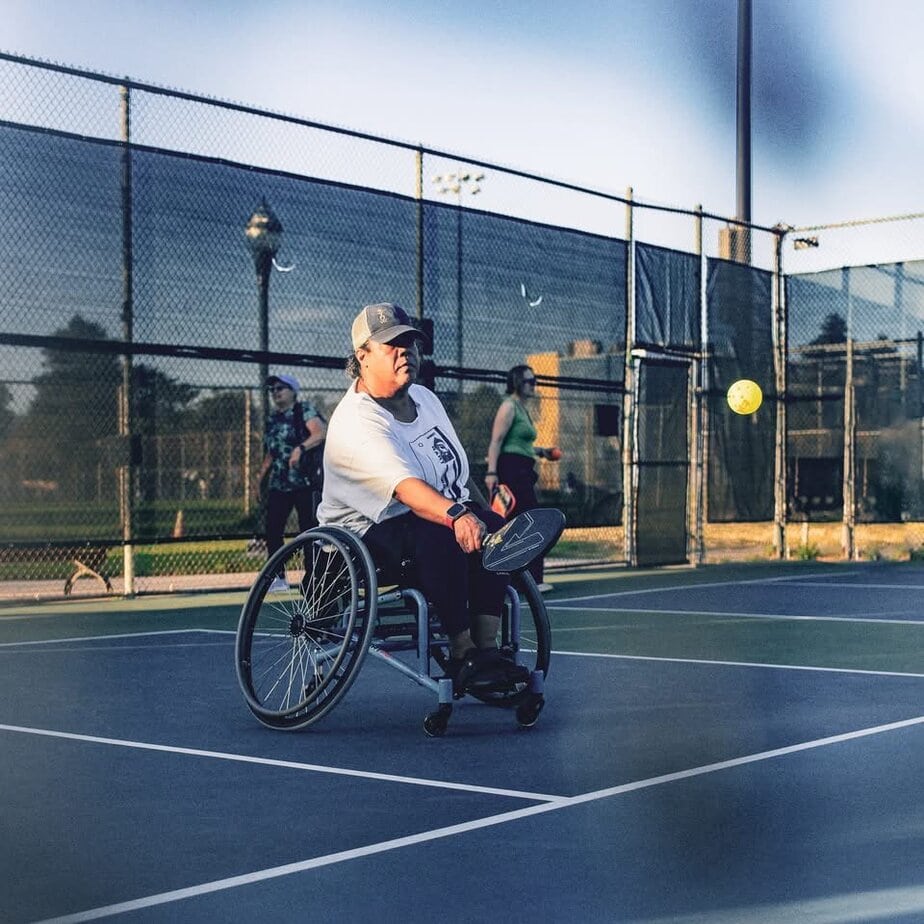
Van Loo remains active too, focusing on low impact activities. She continues to stay involved in wheelchair basketball as a coach and picked up pickleball as a hobby two years ago. “It’s the same fun as tennis but it isn’t hard on my shoulders and elbows like tennis is,” she says. “It gets me out and about and I have developed a bond with the people I play pickleball with.”
Van Loo has also benefitted from her growing involvement with Environmental Traveling Companions, a San Francisco-based organization dedicated to making the outdoors accessible. Now a board member, she has gone on ETC trips down the Grand Canyon, and has done several sea kayaking trips with them in the Sea of Cortez in Baja. “ETC plans accessibility on their trips so well. They are low impact on shoulders,” she says.
Leavitt has moved from competing on the court to rooting from the sidelines as a proud uncle. “I’ve found as much or more fulfillment as an uncle helping my relatives raise my 7-year-old niece and 10-year-old nephew as I did with sports,” he says. “My wife and I never had kids and we really enjoy spending time with them and helping raise them.” He helps coach, cheerlead and encourage. “When I was growing up, I wanted to be a teacher and a coach, so I feel I’m finally getting my chance in a certain way. I’m teaching them right from wrong, how to work smart, how to plan, and how learning to be good in sports can translate into everyday life.”
Lessons learned from moving on
Although I still get a longing to go skiing from time to time, I’m reminded of what an SCI peer told me a few months after my SCI: “There are some things my body no longer lets me do. On the other hand there are several lifetimes of things I want to do, and can still try or get better at.” I’ve zeroed in on dog training and sailplane flying.
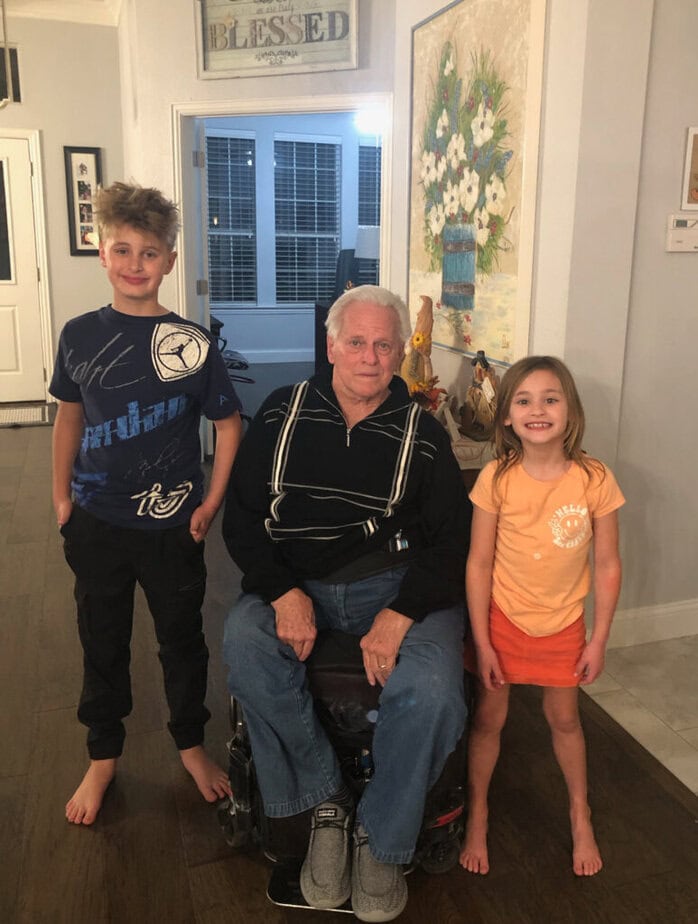
For Leavitt, sports are still fulfilling, but from different angles, cheering, sharing and coaching his niece and nephew. “Being an uncle is great for a lot of reasons,” he says. “From a sports standpoint I enjoy passing on my love and knowledge of sports, from a non-sports perspective, it feels great to be an example and help them learn to grow up to be a good and responsible individual to society.” And he reports his shoulders feel great and he still gets around in a manual chair with power assist.
Pagels enjoys the feeling and the results of keeping in motion. “The more I work out, the better I feel — even at 77, if I keep at it I can still build up muscle.” Feeling better and building muscle keeps him in shape to be able to get outdoors for hunting and fishing.
Van Loo says that although the 20 years of playing wheelchair basketball were some of the most memorable moments of her life, her new, lower-impact pastimes have become new passions that have led to new friendships. “Now I’m building friendships through pickleball and kayaking, [and] I’m just as competitive on the pickleball court as I was in tennis or basketball,” she says. “Listen to your body — it’s OK to move on to other adventures, don’t feel guilty about it. Look on the positive!”
Support New MobilityWait! Before you wander off to other parts of the internet, please consider supporting New Mobility. For more than three decades, New Mobility has published groundbreaking content for active wheelchair users. We share practical advice from wheelchair users across the country, review life-changing technology and demand equity in healthcare, travel and all facets of life. But none of this is cheap, easy or profitable. Your support helps us give wheelchair users the resources to build a fulfilling life. |


I just loved playing basketball, and did so for 30 years. But that just got too hard on my body, so now I handcycle, fish and take lots of walks with my wife. Plus I work out at the YMCA.