


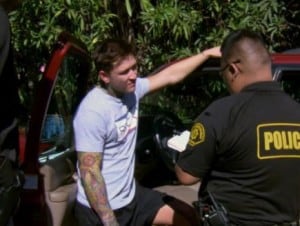
On Jan. 10, 2013 ABC News ran a very cool and informative segment called, “On the Hunt for Handicapped Parking Cheaters.”
During the six-minute report they followed undercover investigators from the California Department of Motor Vehicles as they looked for people using someone else’s placard — in this case they set up on a street next to the entrance of a popular hiking trail in the hills above Los Angeles. Parking on the street is for residents only, and people with an accessible placard. All others have to park a block or two away. One would think this would be a bonus when walking and hiking for exercise.
Two women get out of a big shiny SUV and head for the trail while the investigator punches of the placard number into a computer, which shows it is registered to an older man.
As the team waits for the women to return there is a cut to an interview with a man in Shreveport, La., a quadriplegic who drives a four-door pickup with a cool lift. He explains that one evening he couldn’t find parking at a restaurant because the only accessible spot was taken up by a police car. His wife shot a photo and posted it on Facebook where it quickly went viral.
Despite the accessible parking sign mounted on a post in front of the car and a clearly marked accessible space, the officer got off with a verbal reprimand because of a technicality — the space was “improperly marked” because there was “no sign stating what the penalty for violation would be.”Arrgh!!
The show returns to the SUV as two women return from their hike. Confronted by the investigator, the driver says the placard belongs to her husband. By law she isn’t allowed to use it, so she gets a stern lecture and a citation, in this case it could be as high as $700. The investigator points out that using another person’s placard is a crime, a misdemeanor. Her friend takes off running.
A homeowner living on this street explains that before the sting operation it was next to impossible to find parking in front of his house because it was filled with “a sea of blue placards.” Out of frustration he reported it on www.handicappedfraud.org. He says that since the sting organization things have improved, however the investigative team shows there are still quite a few cheaters.
The investigative team busts several more people — one young, athletic looking man is written up for using his grandfather’s placard. He is incensed, insisting this is wrong, “I’m not in a handicap spot, handicap parking is for handicap spots.”
The undercover investigator says that when busted some people admit they were in the wrong and apologize, but many become indignant, verbally abusive, and on occasion, physically abusive. For me this is good information. It is important to call attention to parking cheaters, but better to do so with caution — perhaps a discreet photo of the car including license plate, phone call to local police and a report to www.handicappedfraud.org.
Something that became apparent to me in the news report is that if somebody thinks it is OK to cheat and abuse accessible parking, they already have a serious flaw in their moral compass. I would rather let authorities find out how far that flaw runs.
Support New MobilityWait! Before you wander off to other parts of the internet, please consider supporting New Mobility. For more than three decades, New Mobility has published groundbreaking content for active wheelchair users. We share practical advice from wheelchair users across the country, review life-changing technology and demand equity in healthcare, travel and all facets of life. But none of this is cheap, easy or profitable. Your support helps us give wheelchair users the resources to build a fulfilling life. |


Recent Comments
Dick Crumb on Adapting Recreation To An Aging Body
Karen on The Everlasting Saratoga Cycle
Ted Kilroy on Handcycle Gear Guide