


Sidewalk Cafes and Other Ways The Pandemic Made City Accessibility Worse
March 1, 2023
Nickole Cheron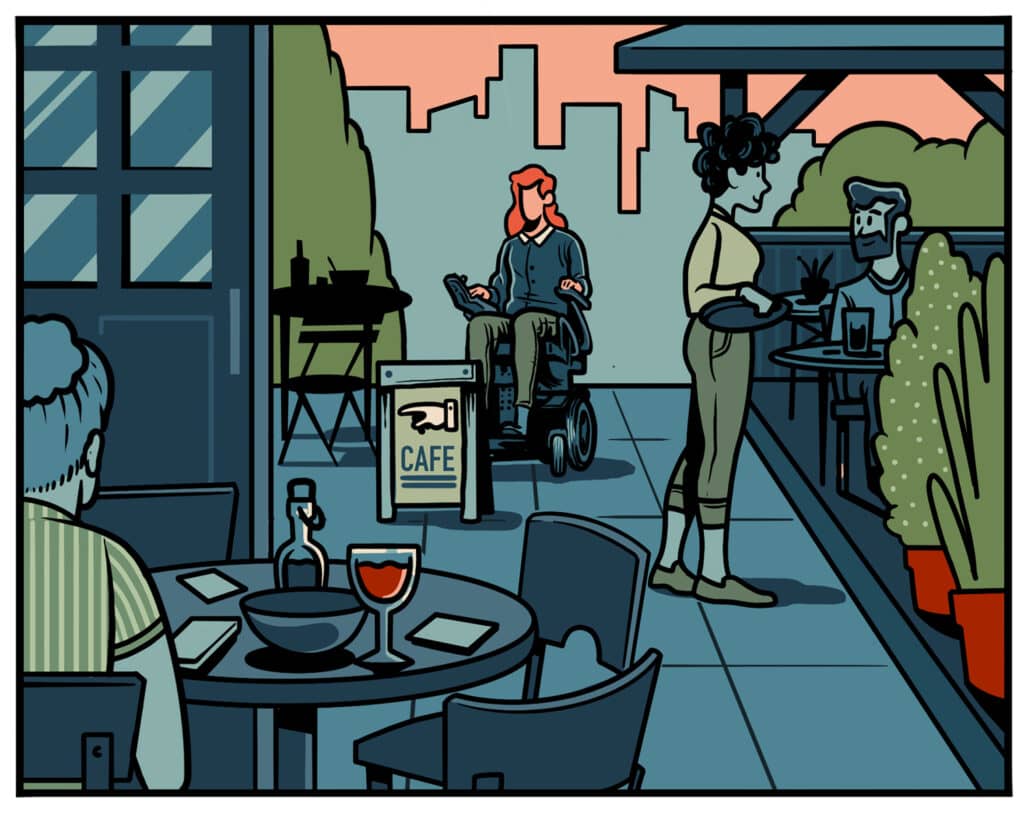
I’m a bit of a broken record at work, always saying “representation matters.” I work in government and there is no logical way you can govern a geographic area without your workforce being representative of your population’s diversity. This mantra holds true especially when you talk about the built environment. When you don’t have people with mobility disabilities or blindness at the table affecting decision-making, you are going to fail at making a city’s built environment compliant with Title II of the ADA. I’ve been a chair user all my life due to a neuromuscular disease. In my city and around the country, the pandemic created some unique and difficult challenges that have had dramatic impacts on accessibility. Here are some of the ways we failed during COVID-19:
Sidewalk and street cafes: We had street cafes long before the pandemic, and they have always been an impediment to the right of way. You know what I mean: A restaurant chooses to put picnic tables on the sidewalk instead of tables that are smaller and lighter with removable chairs. COVID made this situation even worse because the city allowed restaurants to build seating in the street, often at the cost of accessible parking. If anyone had consulted me, the ADA Title II manager, I would’ve told them anything that a restaurant built could not be on a platform raised higher than the sidewalk, or if they did, it would need to have a ramp, and that any gating around the seating needed to be movable. Thanks to some diligent disabled citizens complaining, I was able to get the department to reissue guidance that explained their ADA obligations, as well as guidance around choosing accessible seating. #NoMorePicnicTables
We had street cafes long before the pandemic, and they have always been an impediment to the right of way. COVID made this situation even worse.
Camping in the right of way: As if our right of way wasn’t compromised enough, my city decided to help combat the huge increase in houseless-ness by allowing people to tent-camp on the sidewalk. The ordinance made it clear that campers needed to protect the right of way, but when you’re houseless and it’s a pandemic, you tend not to read ordinances. In my mind, this was not a black-and-white issue. Removing the camps might sound like a solution, but that would affect people with disabilities too — 80% of people living on the street are disabled. It’s terrible navigating a situation that impacts people with disabilities on both sides. I proposed a solution to clearly mark the sidewalk with barriers to preserve the right of way, but before it got traction, the city received a lawsuit from a group of wheelchair users and subsequently lifted the camping ordinance.
You might be wondering why I couldn’t do more with such a fancy title, but the truth is most of my work is reactive. I get called in when the problems come to the surface after implementation. If we had more people working in our department of transportation, or any other department, the work of compliance and equity could be proactive, with people with disabilities at the table from the beginning.
It is still unclear what the long-term impact of the issues around camping and sidewalk cafes will be. What is clear is if the community of people with disabilities does not push back on cities, either through making official complaints, suing or working in government, these issues will continue. The people who fought the systemic injustice of ableism proclaimed “nothing about us without us.” That sentiment needs to be moving beyond just public involvement. We must demand government hire people with lived experience most impacted by inaccessibility in the built environment.
Support New MobilityWait! Before you wander off to other parts of the internet, please consider supporting New Mobility. For more than three decades, New Mobility has published groundbreaking content for active wheelchair users. We share practical advice from wheelchair users across the country, review life-changing technology and demand equity in healthcare, travel and all facets of life. But none of this is cheap, easy or profitable. Your support helps us give wheelchair users the resources to build a fulfilling life. |


Recent Comments
Dick Crumb on Adapting Recreation To An Aging Body
Karen on The Everlasting Saratoga Cycle
Ted Kilroy on Handcycle Gear Guide