


Congratulations to the following readers, whose submissions were selected for publication in response to NEW MOBILITY’s call for stories about how NM made a difference in their lives.
From Spinal Network to New Mobility
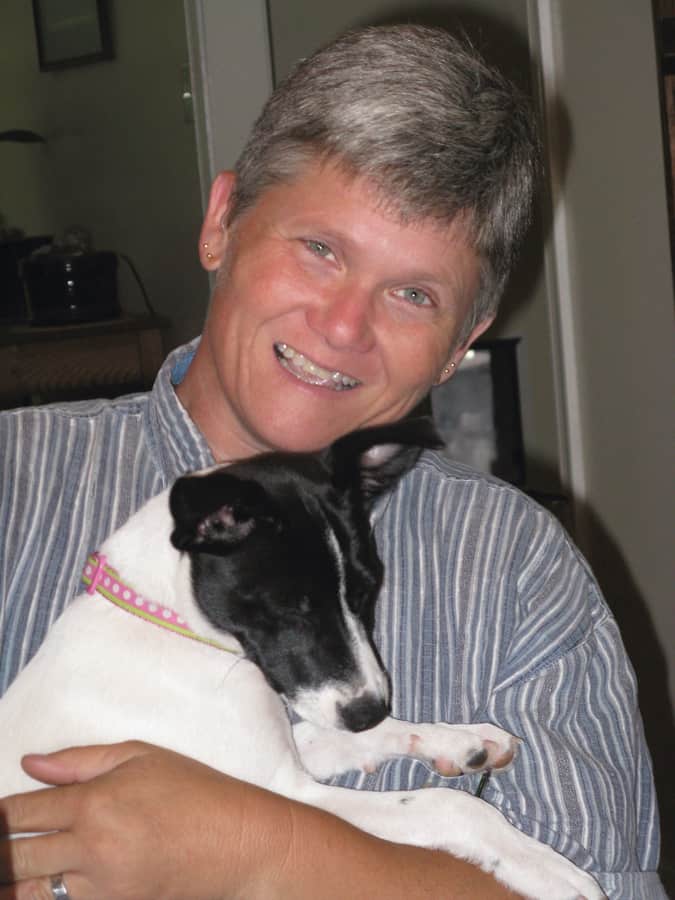 By Susan Scofield
I rolled a postal Jeep in August of 1989, spent six weeks in the hospital and finally landed in Woodrow Wilson Rehab Center (Fishersville, Va.) in October as a newly minted crip of the T12 variety. It was a culture shock to say the least for this young, white woman with middle-class roots. I kept finding ways to avoid everyone while being as polite as possible. I was the oldest at 27 and it seems I only had one thing in common with the kids in rehab, and that was a brand new wheelchair. Turns out that one common denominator was a pretty big deal.
One day in physical therapy during my four-month stay at WWRC (no, this is not a typo — we really did get to stay that long back then), I was waiting for my turn on the parallel bars, and I rolled over to a table where a stack of magazines had just been placed. I looked past the clinical-sounding title of SPINAL NETWORK EXTRA, and flipped through pages filled with young folks in chairs just like myself, and articles that I wanted to read. Little did I know that this was the first issue of the best disability mag written to date. Turns out, SPINAL NETWORK EXTRA/NEW MOBILITY is the same age as my disabled life. How cool is that?
Please understand that this was all pre-Internet, and current information was more difficult to come by then. I devoured stories about people living with a disability that let me know that I wasn’t alone, and that eventually I would do all these things, as well. Later, I even managed to get myself included in an issue surveying the cars we drove and our adaptations. Over the next few months, I learned to revere folks like Sam Maddox, Barry Corbet, Candace Cable, Jean Dobbs and Bob Vogel (he hang glides, for God’s sake!). John Callahan’s irreverent, twisted cartoons gave me a way to laugh at the crazy cards I had been dealt. I found a passion for handcycles in these pages, and was soon flying around my neighborhood in a brand new Freedom Ryder, circa 1991.
NM fielded my questions over the years about such things as transfers, hand controls, wheelchair cushions, bladder issues, sex, disabled sports, accessible vacation spots, cool chairs and how to spare my shoulders. Before Christopher Reeve, my heroes were Harriet McBryde Johnson and John Hockenberry — incredibly intelligent folks that made everyone sit up and take notice. I read an article on author Hugh Gregory Gallagher (polio survivor), and now one of my favorite books is his FDR’s Splendid Deception. My classroom kids benefit from stories about FDR that most people have never heard. The Boston wheelchair marathoner Bob Hall created and marketed his own Hallmark wheelchair and Photoshopped it under FDR’s butt in NM. Yep, I got one of those, too.
More recently, I’ve fallen in love with the writing of the current editor, Tim Gilmer. He’s been in a chair for 20 years longer than I have, and I look forward to his Bully Pulpit every month. He speaks his truth like E.F. Hutton, and we, the chair folk, listen closely and nod our heads. On more than one occasion, I have read his column to my therapist. “This is the way I feel! He hit the nail on the head!”
The funny thing is that I have totally taken NM for granted all this time. When I needed the magazine, there it was, and there it has been for 25 years. Happy Birthday to NM and my crip life! I have realized that what I read from the beginning was the truth: This life on wheels has not been easy, but it has been worth every minute. May we both grow old together gracefully.
Making a Difference in Our Shared Lives
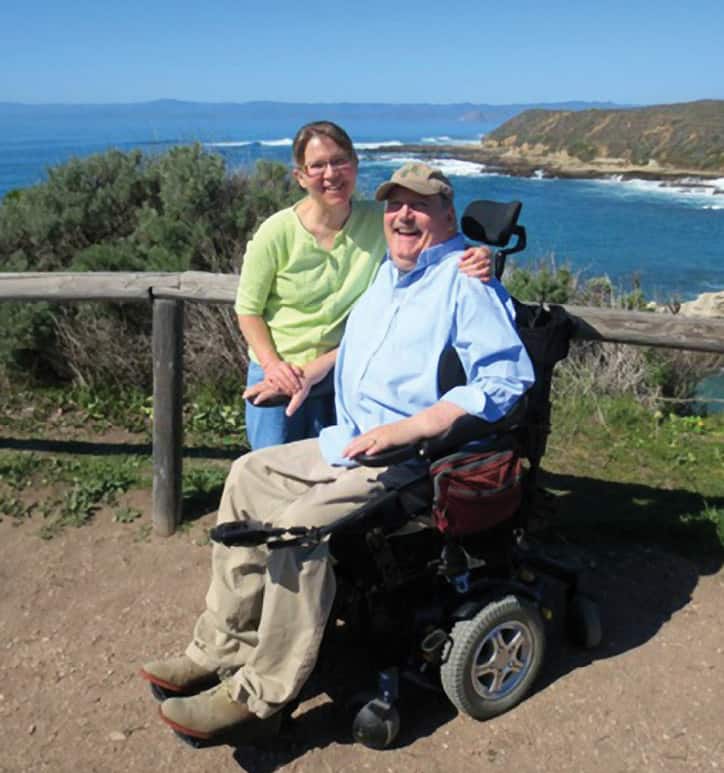 By Beverly and Bryan Gingg
Though we never met Barry Corbet, we were deeply saddened by his 2004 passing. When he retired in 2000, we had wondered who could possibly fill his shoes. In very little time we were reassured that NEW MOBILITY would continue to be an invaluable resource. The stories, perspectives, insights and ideas shared on the pages of NM have helped us live a full and happy life through almost 26 years of marriage.
A chance meeting at a university (Cal Poly San Luis Obispo) had brought us together in January 1984; Bryan was returning to college after a C3-4 complete SCI in October 1982, and I was a new graduate student. Friendship evolved into romance, and we were married in October 1988.
When we began our journey, we had no idea of the adventures — fun and not so fun — ahead. But we pressed on. Health challenges and hospital stays were overwhelming at times. We had never heard of disability culture.
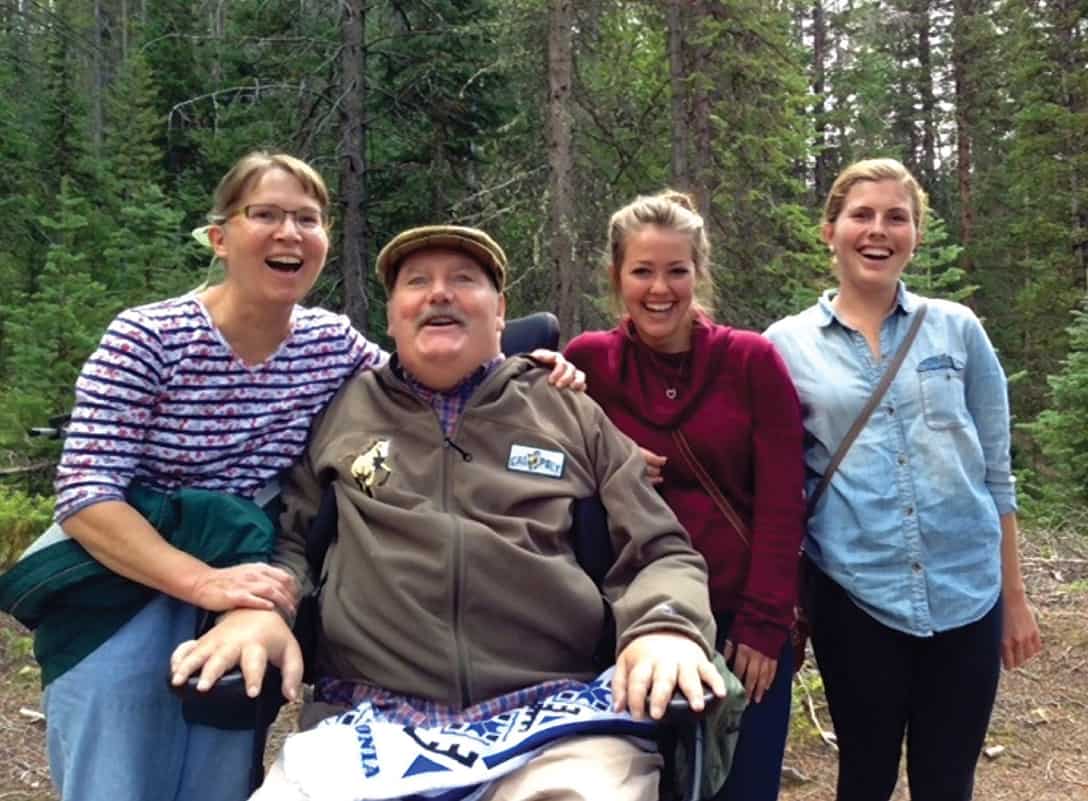
When I first met Bryan, the biology student in me wanted to learn about SCI. I recall going to the university library to read medical journals. Oh man, I thought, we’re doomed. I was pretty sure that Bryan wouldn’t have a long life. Too much information can be depressing. But we’ve been lucky. Advances in medical care are a big part of that, but so, too, are attitudinal changes. NM shines a light on those who defy stereotypes of what it means to live with a disability, even a severe one.
NM has been a co-pilot, providing navigational tools for a road less traveled. We find reassurance and inspiration. We’ll be OK. When we read about Tim Gilmer’s fairly recent medical odyssey, we were reminded that even the toughest battles are bearable when there is love and kindness, faith and good humor within and around us. Relationships matter.
NM’s July 2013 cover story — “Why Do Medical Providers Ignore the ADA?” — has been used to help educate our local medical community about barriers to health care. We’ve clipped other articles. Keepers. The magazine has inspired us to travel and to become community leaders (sloaccessforall.org), connecting us with a bigger world. We could go on and on about what NM means to us. Thank you for making a huge difference in our lives. We wish you all the best on your 25th anniversary and hope you’ll continue for many years.
Deciding to Persevere
 By Lisa Lasko
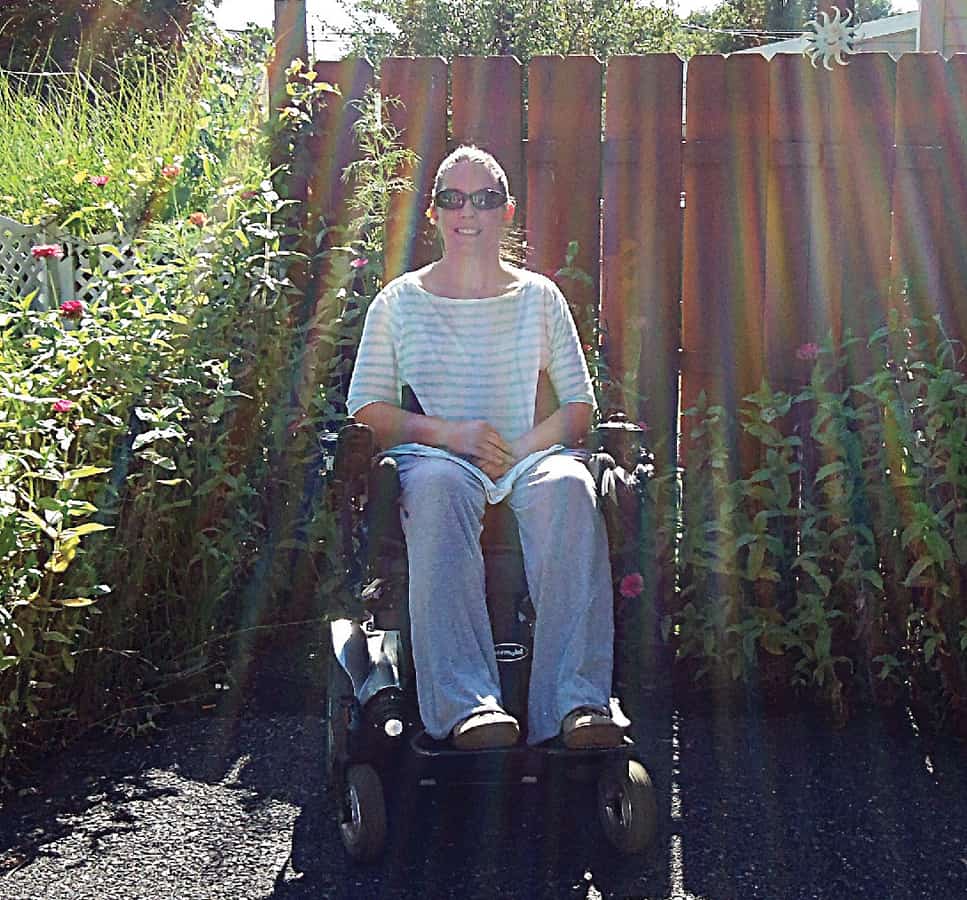
As an avid outdoor buff and nature lover, I decided to take advantage of an unusually warm Sunday afternoon in January 1999 and go hiking, not knowing my life would change forever. On a narrow, high trail, I slipped on a patch of ice and fell over 100 feet down the mountainside, bounced amongst rocks and trees on the way down, and slammed face-first into the frozen creek.
After I was rescued by a bystander who saw me fall and had to hike to reach me, I was hospitalized in very critical condition, in a coma for several days with numerous internal injuries, a brain contusion, severe hypothermia and pneumonia. I had creek water in my lungs, a crushed stomach and diaphragm that were pushed up into my lungs, and was bleeding from my ears. I was read the last rites by my church pastor. The most devastating injury, however, was a C3-4 fracture, leaving me a quadriplegic. I had just turned 19 and was about to begin my second semester at college. I cannot remember a single thing from this day, not even waking up that morning.
Living life in a wheelchair with such limited movement, completely dependent on others, was extremely difficult for me the first few years. The fun, outgoing, expressive and vibrant Lisa was there no more, and great friends from high school slowly vanished. Depression hit hard. I didn’t want to go outside anymore.
I went through a few years of intense physical rehabilitation and counseling. I also subscribed to NEW MOBILITY and read many inspiring stories of people with physical disabilities of all sorts who were able to move on with life and prosper. I decided it was time to stop focusing on what I had lost and start focusing on everything I had left.
I began to accept that my spinal cord injury, my limitations, and being in a wheelchair was something I could not change. I also came to the realization that I should be grateful I recovered as much as I did. At my injury level, I could have permanently been on a ventilator, had a brain injury or chronic neurological damage due to lack of oxygen from being under water and comatose. I am thankful I recovered enough to have functional wrist movement to use a joystick, can extend my legs, move my feet, feel pain, and think, speak and breathe independently.
After reading more encouraging NM articles, and with support from friends and family, I decided to return to college. First I took an Internet course, then two Internet courses, and eventually gained the courage to join the classroom and socialize with others. I rediscovered my outgoing personality and had the opportunity to meet others with various disorders when working with the office of disabilities. I was invited to educate others on living with a disability, which became one of my passions.
As an undergraduate, I participated in making a video for students and faculty members called “ACT Now,” which showed how a successful transition from high school to post-secondary education for disabled students is established and demonstrated the various support services available in colleges today. As a graduate student, I was a peer educator and worked with other disabled students. I held discussion panels for those in undergraduate courses about the impact of disability on my life and strategies I used to be a successful student, and I participated in question-and-answer dialogues with the large classes. At the historic graduate school I attended for two years, I also advocated for more accessibility on the campus and was able to work with the disability office to have automatic doors and ramps installed in several buildings.
After receiving my master’s of education degree in counseling in 2012, I am now a clinical therapist at a local outpatient mental health center. I work with about 25 clients of various ages and disorders. I love what I do and do what I love! My office includes an accessible computer that is voice-activated with a microphone and a desk I can roll under to see the screen; I reach my propped telephone using a mouth stick. Thanks to these accommodations, I complete diagnostic evaluations, treatment plans, crisis interventions, and make recommendations for other services at the agency.
I do need assistance, though, with the manual work of filing papers and grabbing clients’ charts when needed, but fabulous co-workers help me with anything I need. I am also in the final process of obtaining my credentials to become a licensed professional counselor. I am thankful to have all of these opportunities that have not only helped me to grow as a person, but as a person with a disability. I have met so many wonderful people throughout the years and have great friends who support and accept me for who I am.
After being at the brink of death 15 years ago, and despite my many challenges, I try to live every day to the fullest. I go shopping, attend concerts, see movies, work, and eat out in restaurants By being an advocate for those who are physically and mentally challenged, my life is dedicated to helping raise awareness of disability issues and educating others that life can go on no matter what happens.
Discovering My Freedom
By Kevin Smith
EDITOR: The following letter was sent to NM in early June prior to our call for submissions for this issue, but we felt — for obvious reasons — that it was a winner.
My name is Kevin Smith and I am currently incarcerated at S.C.I. [state correctional institution] Laurel Highlands. I was born with cerebral palsy and later diagnosed with scoliosis. A few days ago a friend of mine received the May issue of NEW MOBILITY magazine. That same night he let me borrow it, and I couldn’t put it down. I was completely amazed how insightful and informative the articles were. Until now I had no clue that such a publication even existed.
Before reading your magazine, I often found myself getting frustrated trying to prepare for my release from prison. A lot of questions were answered for me just by reading one issue of your magazine, and a whole new world of endless possibilities brought to my attention. I can’t wait to subscribe to your magazine! Throughout my lifetime I have met plenty of wonderful people with disabilities. When I get home (August of this year), I intend to contact each and every one of them and insist they also subscribe. I will also give the address to as many as I can here in the prison before my departure and encourage them to subscribe as well.
My old way of thinking made me believe that people like myself had no real place or value in the world. That primitive mindset is what led me to selling drugs, which inevitably led me to prison. The past five years of my life have been a living nightmare but nonetheless another chapter in my journey. I am determined to have a happy, successful, and active lifestyle, and with the resources and information made available through NEW MOBILITY, I am positive better days are ahead.
Support New MobilityWait! Before you wander off to other parts of the internet, please consider supporting New Mobility. For more than three decades, New Mobility has published groundbreaking content for active wheelchair users. We share practical advice from wheelchair users across the country, review life-changing technology and demand equity in healthcare, travel and all facets of life. But none of this is cheap, easy or profitable. Your support helps us give wheelchair users the resources to build a fulfilling life. |


Recent Comments
Dick Crumb on Adapting Recreation To An Aging Body
Karen on The Everlasting Saratoga Cycle
Ted Kilroy on Handcycle Gear Guide