


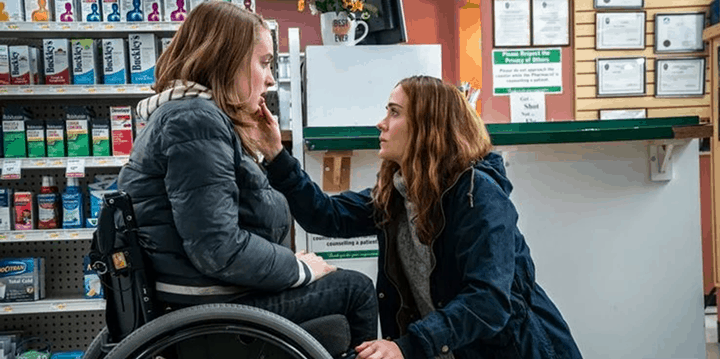
Disability representation matters and has been a long-time advocacy issue in the film industry, as actors without disabilities are far too often cast for roles of characters with a disability. As a person with multiple disabilities, I get excited when I see different disabilities represented in the media.
One of the first things I do is look up online if the actor playing the part has a disability in real life. If I find out they do, my excitement grows. If I find out they don’t, which happens a lot, I feel disappointed and unseen. I followed this same process when I first saw the preview for the film, Run, which starred a wheelchair user. I was ecstatic to find out that the emerging actor, Kiera Allen, was a wheelchair user in real life like me. At that moment, I set my alarm for the Hulu premiere on Nov. 20, 2020.
Run is directed by Aneesh Chaganty and written by Chaganty and Sev Ohanian. Kiera Allen stars as the main character, Chloe, a homeschooled teenager who begins to suspect her mother, Diane Sherman, played by Sarah Paulson, is keeping a dark secret from her. As a viewer, I experienced the film as a drama/horror/thriller movie about the relationship between a mother and a daughter covering topics such as disability, mental illness, trauma and grief.
Intersections Between Grief, Trauma and Disability
These topics intersect each other throughout the film as the audience interacts with Diane, who presents herself as a self-sacrificing, loving, single mother, and her daughter, Chloe, who is a wheelchair user with multiple health issues including asthma, diabetes, arrhythmia and paralysis. Chloe spends her days homeschooling and engaging in her daily routine and is anxiously awaiting acceptance letters from colleges to come in the mail. As the film progresses, the audience slowly grasps the troubling nature of the mother-daughter relationship.
In the thrilling drama, actor Kiera Allen does her own stunt work, as the action rises, and answers begin to unfold. We discover many of Diane’s parenting decisions are a result of the grief and trauma she experienced after the loss of a child who died shortly after being born extremely prematurely.
Even though the film was a major thriller/drama, I found it covered the intersecting relationship between mother and child across disability, mental illness, trauma and grief well. It is a film with authentic casting and characters who cover the impact of these topics on their lives with care within the thriller genre. I credit Chaganty and Ohanian for not creating a character that reinforced the disability tropes that reduce the person to a stereotype, and for seeking out a wheelchair user to play the part. Allen did a phenomenal job as Chloe and Paulson did an excellent job portraying the complexity of a mother filled with love, trauma, mental illness and grief.
Authentic disability representation is possible
Run reminds us that it is possible to have disability representation in media, and that actors with disabilities can be cast in major roles. I love how the Arab Film and Media Institute express the importance and value of representation through defining it in film and media as “simply how media, such as television, film and books, portray certain types of people or communities. There are a number of groups who are underrepresented in most Western media. They include women, people of color, LBGTQA+ people, people with a range of body shapes and types, people of non-Christian religions, and differently-abled people. There has been a steady increase of diversity in media, but progress has been long and slow.”
This definition combined with films like Run remind us that people are complex beings, and that intersectionality and representation can occur together and be explored with care. Everyone deserves to see themselves and their stories represented in media and all aspects of their lives.
May the film industry, media platforms, and the systems of our society create more space for authentic representation because it matters. Authentic representation empowers and creates visibility. What a difference it makes when I feel empowered and seen because I saw a part or all of myself represented.
Support New MobilityWait! Before you wander off to other parts of the internet, please consider supporting New Mobility. For more than three decades, New Mobility has published groundbreaking content for active wheelchair users. We share practical advice from wheelchair users across the country, review life-changing technology and demand equity in healthcare, travel and all facets of life. But none of this is cheap, easy or profitable. Your support helps us give wheelchair users the resources to build a fulfilling life. |


Recent Comments
Dick Crumb on Adapting Recreation To An Aging Body
Karen on The Everlasting Saratoga Cycle
Ted Kilroy on Handcycle Gear Guide