


Eric Howk is Rocking the System for Accessible Substance Abuse Recovery
November 1, 2021
Teal Sherer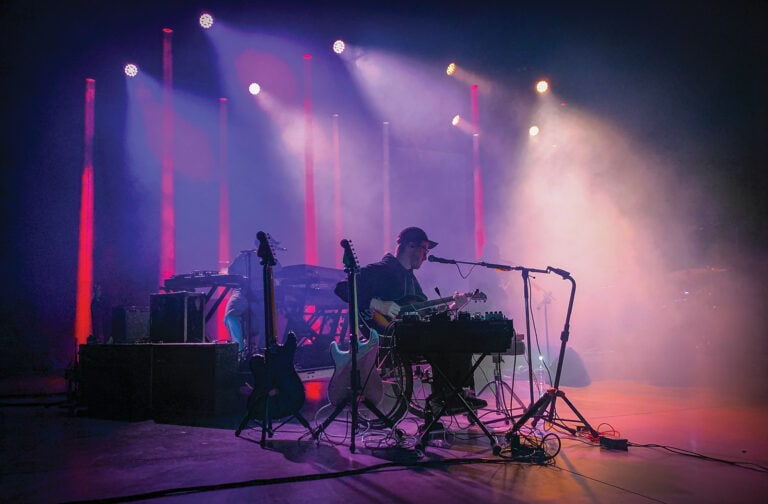
Photo by Stan Clawson
There are clothes in the washer, in the dryer, in a suitcase and on the floor,” says Eric Howk, the guitarist of the Grammy Award-winning Portugal. The Man. Tomorrow, he is flying from his home in Seattle to Los Angeles to do a show at the Beach Life Festival. After COVID forced him to take the longest break of his 25-year music career, he is trying to get back in the groove of life on the road. “I was awesome at looking at exactly how long I was going to be gone for and eye-balling exactly what I needed. I lost all those skills. I totally forgot how to pack.”
Instead of traveling the world and playing to sold-out stadiums, Howk, 40, spent much of the pandemic unpacking his long history of substance abuse. The isolation and uncertainty led him to confront what had become a dangerous and growing problem and seek treatment. Now sober, Howk is committed to raising awareness about the lack of accessibility in residential substance abuse rehab centers and helping others struggling with substance abuse.
The Fall From the Top
When the COVID pandemic hit March 2020, Portugal. The Man had just come off the most intense run of its career with the global smash hit “Feel It Still.” “At that point, it was close to three years post-release of that song,” says Howk. “We had played it everywhere that would listen to it. And we were still promoting the hell out of it.”
Howk had two suitcases packed, his passport in his pocket and had checked into a flight to Mexico City for a two-week tour when the shows were canceled because of the coronavirus. It would be 16 months until Portugal. The Man would do a live performance again.
With their calendar clear, the band immediately started seeking out ways to fill it. “I don’t think any of us at that point knew how to take a day off,” says Howk. “I know I didn’t. So, we really poured ourselves into songwriting and recording, and we put the focus heavily onto our foundation.”
Howk kept busy during the day with Zoom meetings, appearances on nonprofit boards and press obligations, but the second those responsibilities finished, he’d start drinking alcohol and taking drugs. “I went to bed blacked out pretty much every night, and just stayed in that cycle,” he says.
Howk had been abusing alcohol for years and has a family history of it. “It took my grandfather out, and it took my father super early,” he says. Howk wanted to get sober, but he always came up with excuses. “There’s work to be done. There’re things to do. There are singles coming out, promo opportunities and all that stuff. Which was all bullshit at the end of the day,” he says. Howk was also using alcohol to help manage his nerve pain and spasticity due to a T4 spinal cord injury. In 2007, he was sitting against a wall in a friend’s yard when the wall collapsed, and he fell 12 feet. “I was in a nonstop loop of making things much, much worse for myself,” says Howk.
In September 2020, Portugal. The Man rented a theater in Portland to get back on a stage and record. “The first day, I showed up on time, sound-checked, got all my gear sounding good, and gave a bunch of fist bumps to my guys and the crew,” says Howk. “We had a very productive day.” When Howk got back to his hotel room that night, he drank so much that he didn’t wake up for work that next morning. No number of phone calls or people from the hotel knocking on the door could rouse him. “It was definitely concerning,” says Zach Carothers, Portugal. The Man’s bassist and Howk’s close friend. “I was worried if he was alive or not.”
Howk scared a lot of people that day, including his fiancée, Kassandra. “We’d had conversations in the months leading up to that moment where we had talked about it [Eric’s substance abuse], and all of my biggest fears came rushing into my head,” she says. In the end, Howk and Kassandra felt relieved that it was out in the open and that they didn’t have to keep pretending that everything was OK. “He held himself accountable right away,” says Carothers. “He said, ‘Sorry! I think it’s about time for your boy Eric to check himself into rehab.’ I’m very proud of him.”
PTM Foundation and United Spinal Join to Fight Substance Abuse
Portugal. The Man’s PTM Foundation is partnering with United Spinal Association to help bring awareness of the need for more accessibility in residential substance abuse and mental health treatment facilities. Howk would also like for there to be a database or other easy-to-access way of getting accessibility information.
“Addicts, people chemically dependent: the justifications, the excuses — it’s something we’re all really good at,” Howk told United Spinal Association. “It’s not good, because of lack of access, to provide one more excuse to not seek treatment. It’s not good to have the best facility saying, `I don’t know if you can get in, maybe through the side door.’ Or, ‘The bathroom can’t work, well … but maybe we can take the door off the hinges, but you’d have no privacy.’”
Howk also wants to bring awareness to the over-prescribing of opioids for pain control. “When I left physical rehab in 2007, they were like great, go live your life — also here’s your grocery bag full of pills.” Howk later patted himself on the back for getting off these prescriptions, but in turn, he drank more alcohol. “I sure felt like it was making my nerve pain and my spasms better when really the damage I was doing to my body was so much worse.”
If you or someone you know has encountered access issues at substance use disorder and mental health disorder treatment facilities, United Spinal wants to hear your story. Please contact the Online Help Desk.
You can also view the Fact Sheet on Drug Addiction and Federal Disability Rights Law .
Find the protection and advocacy agency in your state.
Getting Sober
Howk began researching in-patient substance abuse treatment centers. “When you picture a rehab facility in your mind, it’s typically a cliff-side Malibu staircase kind of situation that doesn’t scream out accessibility,” he says. After a series of phone calls and Google image searches, Howk struck out in finding a place that was wheelchair accessible.
“I know people in the disability community that have white-knuckled or cold-turkeyed their way off different substances. Or they’ve just quit drinking altogether and more power to them,” says Howk. “That is something I tried doing myself personally many times, and it just never took. For me, I needed more of a solid foundation because my relationship specifically with alcohol was something that so baffled me.”
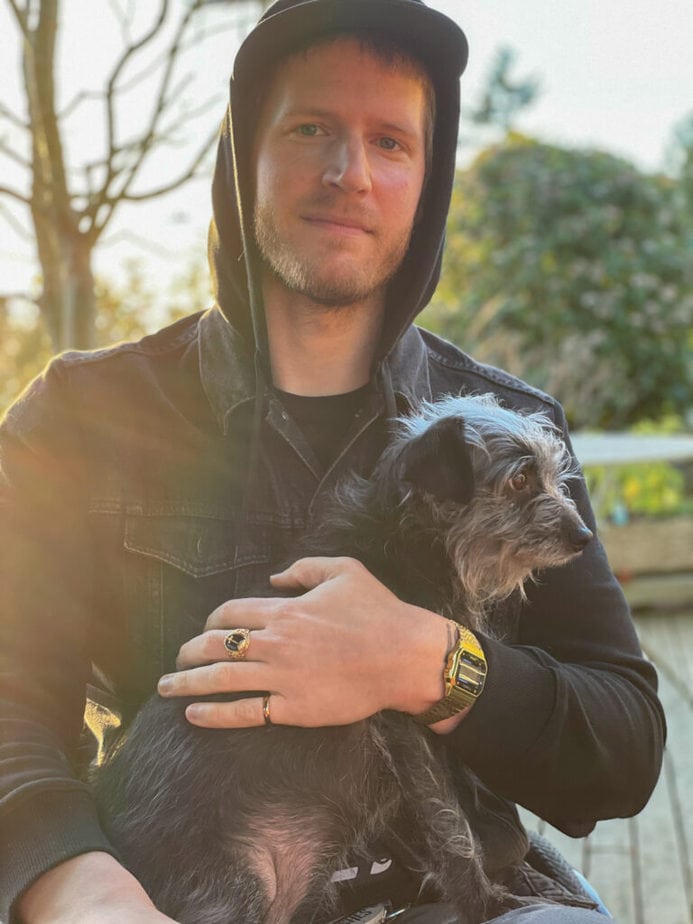
Howk settled on a facility in Seattle that had previously been a nursing home, built long before the ADA. He checked himself in on October 10, 2020. They had no accessible rooms but offered Howk a “big room,” which he shared with other patients. Howk brought a raised toilet seat to help with transfers as the toilet was low and there were no transfer bars. The bathtub was totally inaccessible for Howk, so Kassandra ordered wipes and towelettes off Amazon so he could clean himself. “I’ve done tours in Eastern Europe, in South America, I’ve stayed at some pretty dicey places, made my way through some pretty dicey sidewalks, and used some pretty questionable restrooms. So, that was how I was able to make it work,” says Howk.
While Howk was in rehab, Kassandra dove headfirst into a program for family members of people in recovery. “I was also reading all the books and going to Al-Anon,” she says.
Howk stayed at the facility for 28 days and credits it for saving his life. “In my darkest days, there were so many things that I was ready to leave behind. I didn’t want to take care of myself, I didn’t want to take care of my body, and that’s the vigilance required of us as disabled folks. When I’m taking off days from myself, like my bowel program and the simplest bits of self-care, that could potentially kill me.”
Howk and Kassandra got married in August at Snow Peak Farm in Wasilla, Alaska. “It’s wild — that spot is actually a place she picked out, not knowing that I went to elementary school a mile down that road,” says Howk. “It is the specific part of my weird area of Alaska that John and I and Zach from the band are all from.”

Rachel Tweggs Photography
Of his new bride, Kassandra, Howk says, “We’re each other’s people.”
“We’re each other’s people,” says Howk about his now-wife. “We know what’s going on with each other, and we’re both super weird.”
Howk also turned 40 in August and is embracing the milestone. He bought a pop-up tent, has been going camping, and fishes every chance he gets. “I’ve never been an ‘I hope I die before I get old’ kinda guy,” he says. “I was always excited to continue on with the journey of life. I didn’t know how quickly I’d turn the corner, I guess, and how dramatically I would make this shift into wearing moccasins and listening to James Taylor, but I’m super here for it.”
Back in the Groove
Portugal. The Man has been easing back into a show schedule — playing at festivals and doing shorter runs across the country. They have a tour set for early spring. “We really want to get out and play shows, but we are we’re coming at it with an abundance of caution,” says Howk. “The last thing a band wants to do is get together and get people sick.”
Howk says it’s going to take a lot for him to be comfortable back on a tour bus. “For the record, I was never comfortable on a bus anyway. I’m the odd man out with the wheelchair situation.”
Howk is in his home studio putting the finishing touches on some song ideas. He has been sober for a little over a year and has an AA online meeting login and a password for every time zone in the world. “If I wake up at 3:15 a.m. and I’m feeling a little weird, I know there is a meeting waiting for me in Ireland that I can go jump on,” he says. “I have transformed my life. I don’t know that I would have been able to marry the love of my life and keep this career that is just starting to come back to me that I missed so much.”
Support New MobilityWait! Before you wander off to other parts of the internet, please consider supporting New Mobility. For more than three decades, New Mobility has published groundbreaking content for active wheelchair users. We share practical advice from wheelchair users across the country, review life-changing technology and demand equity in healthcare, travel and all facets of life. But none of this is cheap, easy or profitable. Your support helps us give wheelchair users the resources to build a fulfilling life. |


Totally agree!! I entered recovery back in 1993 and faced the exact same issues with finding a wheelchair accessible treatment facility…. Out of the 30 or so residential facilities in RI only one was accessible… was kind of hoping that things had gotten better but apparently not…
Interesting story on how we take on life with our issues. One thing that we need to be aware of is getting out of self. I thank AA for that bit of simple but very important truth. Going through rehab I really didn’t see my handicap, because it just wasn’t not being able to walk but my addiction! Congrats on your sobriety!