



In a world where simply traveling abroad with a disability can seem daunting, the prospect of moving to a foreign country might seem overwhelming. How will people treat me? What access obstacles will I face? Can I get the medical services and resources I need? And that’s not even considering the fact you are likely abandoning your entire support system and moving somewhere you know no one.
We reached out to people with disabilities who are succeeding after moving away from their native countries to find out their keys to success and suggestions for others.
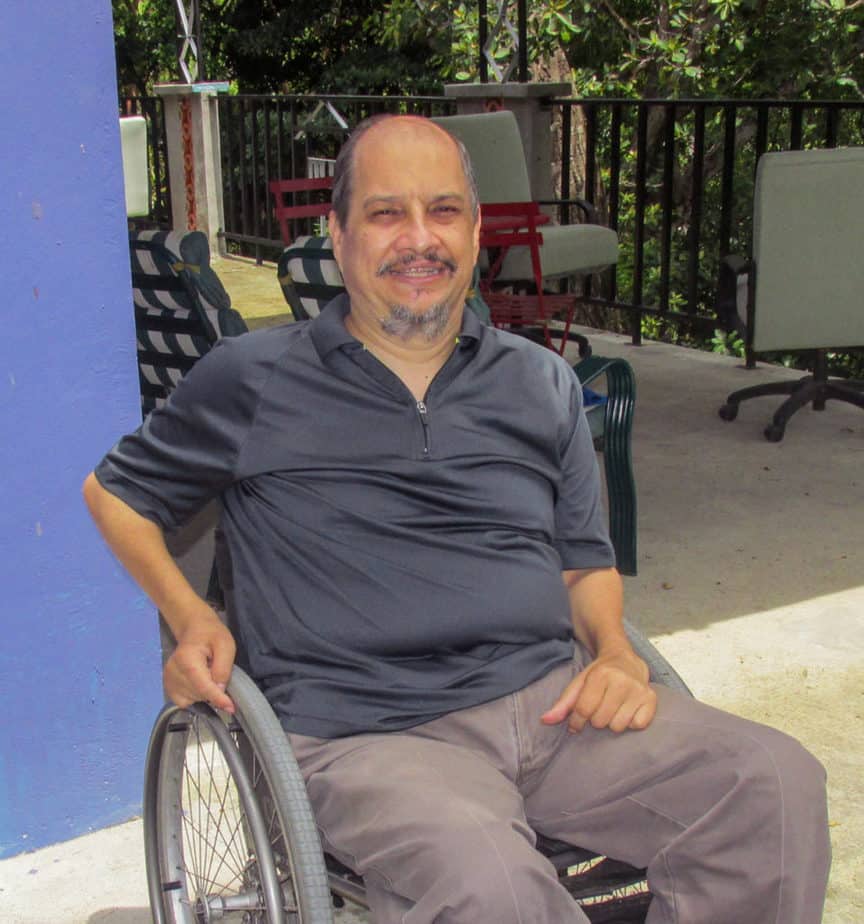
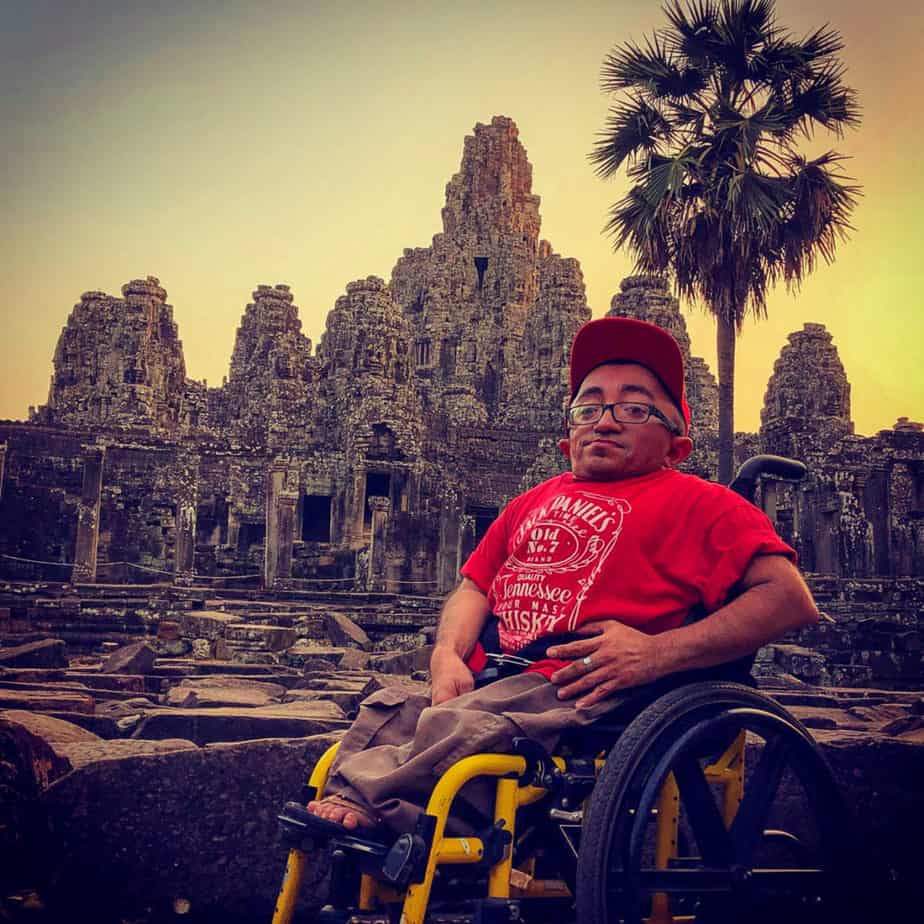
Tony Boatright left the United States for Panama nine years ago — almost 40 years after sustaining a C5-6 spinal cord injury. His only regret is not moving there sooner. Mitch St. Pierre has been living in Cambodia for the last six years after growing up in Canada as a wheelchair user. He says he feels totally accepted as a disabled person and has relished the move: “I love adventures.” Power wheelchair user Josh Grisdale also left Canada and became a naturalized Japanese citizen five years ago. Rhonda Raven Neuhaus had been visiting Costa Rica for 25 years before she finally decided to move there in 2019. An amputee who uses prosthetic legs, Neuhaus says, “It’s beautiful to live in a country that prioritizes the natural environment and its people. Costa Rica is a beautiful nation rich with biodiversity — and the people are amazing.”
What About My Benefits?
If an important reason to move abroad is affordability, it’s vital to understand whether your disability benefits are still payable if you’re not resident in the U.S. And the good news is that in general they are, which means that your standard of living may be much higher than it would be stateside, even though it may not be exactly luxurious.
Supplemental Security Income and Social Security Disability Insurance are two of the most common programs from the Social Security Administration. U.S. citizens who are eligible for SSDI can receive benefits even if they live overseas, although there are some countries — notably North Korea and Cuba — to which the SSA cannot mail benefit checks under any circumstances. The full list of countries to which the SSA cannot send benefit payments can be found on theSSA’s website. But there are dozens of permitted countries for SSDI across the world from Latin and South American countries to Southeast Asia and Europe where your dollar is worth a lot more.
Note that the SSA considers any stay outside the U.S. or its protectorates (American Samoa, Guam, Puerto Rico, the U.S. Virgin Islands and Northern Mariana Islands) that lasts longer than 30 days to be residence outside the U.S. rather than just a visit. Therefore, any stay lasting 30 days or more requires you to report your status change to the SSA, including submitting change of address information. Similarly, SSI and Medicare benefits are not payable to nonresidents; that is, people who are staying longer than 30 days outside the country.
The situation with regard to the approximately 28,000 disabled veterans who live outside the US is more complicated. A group of laws known as “Title 38” originally authorized the US Department of Veteran Affairs to provide healthcare only to veterans with service-related disabilities (regardless of where they lived). This general restriction was modified in 1996 to provide non-service disability health care for veterans living in the US but not for veterans living outside the US. Section 1724 of Title 38 specifically prohibits the VA from providing non-service disability healthcare to expat veterans.
All of these people shared a passion for adventure and a desire to experience something new. Boatright acknowledges that living abroad isn’t for everyone but doesn’t want anyone to give up on that dream because of a disability. His advice? “If you are ready for adventure, prepared to face unexpected difficulties and have an open mind, try it.”
Make New Friends
Near the top of many people’s lists of concerns about moving abroad is the fear of leaving behind friends, family and support networks. While you may not be able to replace the support provided by existing family and friends, all the people we spoke with suggested that over time new friends can fill these roles. “As I’ve been coming to Costa Rica for 25 years, I have people who are my family here and I’ve made a large circle of friends,” says Neuhaus. “I am also blessed to have a wide circle of expats from all over the world near where I live. This mix is perfect for me.”
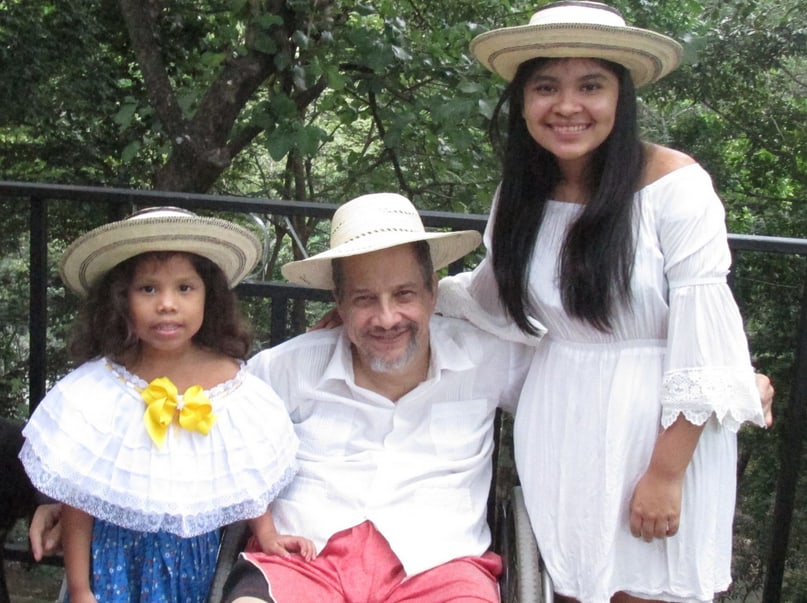
Boatright and St. Pierre both report how easy it is to make friends — both locals and expats — in their adopted countries. “The Panamanian people are very kind and welcoming,” says Boatright.
“It’s very easy to meet people here, especially in the local bars,” adds St. Pierre.
Additionally, the pandemic has taught us that we can sustain meaningful relationships — not to mention employment — via FaceTime, Zoom, Skype and so on.
Although getting physical support via the internet isn’t possible, the advice and emotional support available can help with stress and homesickness.
Formal supports are easier to replace with forethought and planning — you know best what your needs are, so careful research should tell you whether they can be met in the country you’re planning to emigrate to. Everyone we interviewed for this article stressed the importance of two things: finding out as much as you can about the destination and testing the waters by frequent and, if possible, extended visits.
What About Health Insurance?
It’s worth making your own investigations, starting with long-term health insurance designed specifically for expats. One option is TRICARE, the comprehensive healthcare program for uniformed service members, retirees and their families around the world. Most TRICARE health plans meet the requirements for minimum essential coverage under the Affordable Care Act.
“I would recommend visiting many times before moving,” says Neuhaus. “I would ask a lot of questions, find local disability organizations and meet other people in the community. I would also be sure to find any accessible housing or other needs prior to arrival.”
That approach worked for Grisdale. “I visited Japan numerous times and wanted to try living here,” he says. Both he and St. Pierre recommend making friends in the local disability community to get expert advice when navigating the welfare and disability systems and to make connections. “You’ll need and maybe even rely on them,” says St. Pierre.
Access & Affordability
Quite possibly the primary reason people with disabilities choose to move abroad is affordability. Lower costs for labor, resources and property may allow you to buy or build the accessible dream home you couldn’t afford in the United States. Boatright wasn’t able to find suitable modified accommodations, so he simply bought and modified his home — something he would have been unlikely to be able to afford stateside.
St. Pierre takes full advantage of the flexibility that comes with lower construction costs. “The apartment I live in in Cambodia is actually easier for me than back home,” he says. “My bathroom is bigger, and if things need to be changed it is very cheap and easy to have something built.”
Safety Concerns
If you’re worried about safety, consider this: the United States has the second-highest number of gun deaths per year, behind only Brazil. Grisdale’s new home of Japan consistently ranks as one of the world’s safest countries, while both Boatright and Neuhaus report feeling as safe in Central America as they did in the U.S. Even St. Pierre says he finds Cambodia “pretty safe,” saying, “I’ve been robbed physically two times in my home city and four more times in other countries.”
On the downside, more affordable countries often lack the economic means and political structures that facilitate disability access and support. Without relevant legislation, like the Americans with Disabilities Act, or the means to enforce it, getting around can be difficult.
Both Boatright and St. Pierre acknowledge that their adopted countries lack the resources not only for the upkeep of infrastructure, but also for the enforcement of building codes. Boatright says that Panama has “accessibility laws, but no standards.” He says he encounters lots of ramps, but many are too steep or impractical.
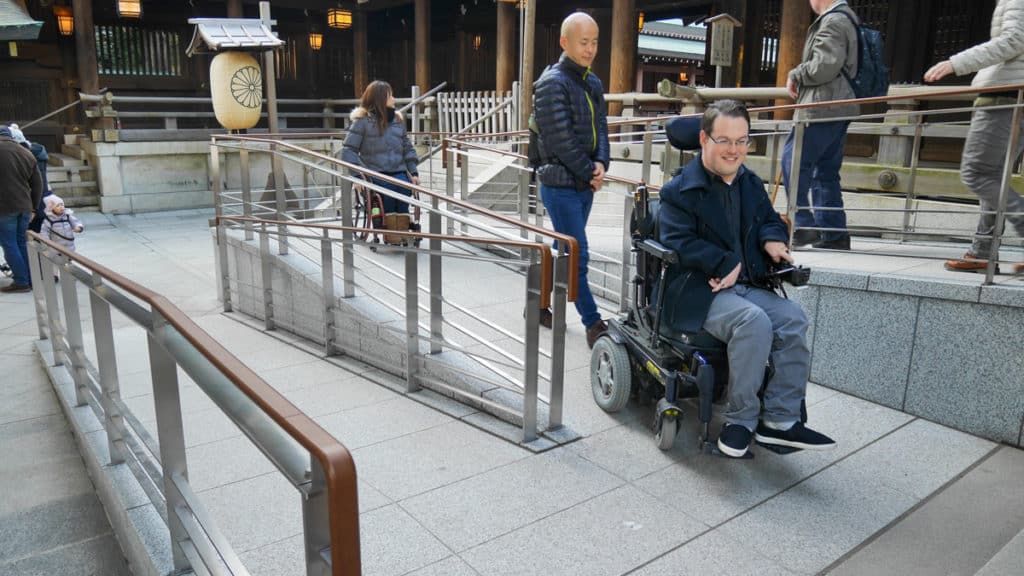
St. Pierre describes Cambodia in bleaker terms, saying, “There is no infrastructure for disabled people in Cambodia.” But both added that a lack of infrastructure is made up for by people power and a willingness to help. “Getting around Cambodia can sometimes be difficult, but everyone is so helpful — carrying me into a car or tuk-tuk,” says St. Pierre. Neuhaus lives near the first independent living center in Costa Rica, Centro Morpho. “They, and other organizations like them, have done a lot toward passing legislation, educating the public, providing assistance services and advocacy toward inclusion,” she says. “That said, there is much needed here for full inclusion and access.”
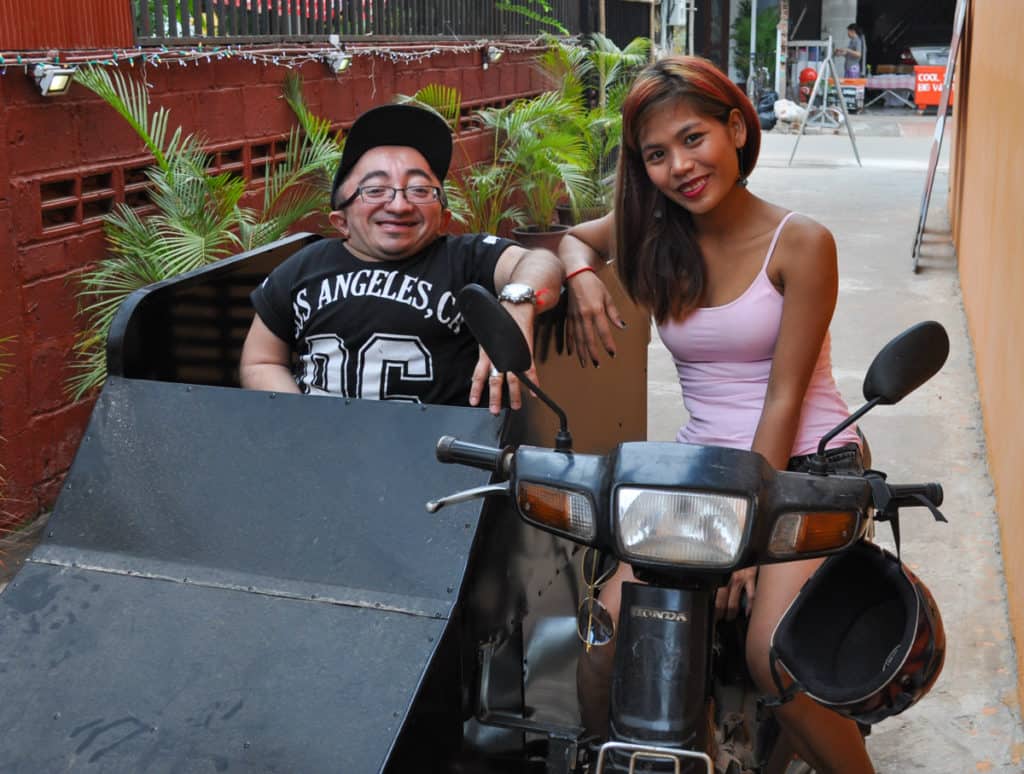
St. Pierre notes that the lack of regulation leaves ample room for innovation, highlighting the sidecar he designed and built for his then-partner’s motorbike. It would be illegal in Canada but has been a boon for getting around in Cambodia. “I basically showed a picture of a sidecar to the local welder who took the measurements of my chair and built me a sidecar that attaches to my girlfriend’s motorbike,” he says.
Care Doesn’t Have to Be Costly
Living with a disability often means that you need to be more mindful of the quality and cost of healthcare. There’s no doubt that the U.S. medical care system is among the best in the world — first-rate doctors, clean and modern facilities, and top-quality care — but it’s also without doubt the most expensive, and largely unaffordable without health insurance, which itself can be prohibitively costly.
Almost anywhere you move is sure to have cheaper medical care, but ensuring that it is competent and accessible remains important. Thankfully, the rise in medical tourism and the growing global economy have increased the number of countries offering solid services. Our interviewees reported mixed levels of satisfaction, but good experiences overall.
In Japan, which is very much a first-world country with prices to match, Grisdale makes do with a combination of national healthcare and his company healthcare plan. He admits that navigating the welfare system was one of the biggest challenges he faced once living in Japan. He relied heavily on local friends in the disability community for help and advice.
As a legal resident of Costa Rica — ranked No. 3 in affordable healthcare by International Living magazine — Neuhaus is able to take full advantage of the country’s highly-regarded universal healthcare system. Her experiences emphasize that challenges are inevitable, even in a good situation. “As an amputee, the biggest challenge is that my closest prosthetist is three to four hours away in the capital, San Jose,” she says. “When my leg broke, there was nobody local to fix it. When I had a new set of legs made, I had to constantly make trips back to San Jose.”
Panama may not be the country that jumps to mind when you think of healthcare, but Boatright reports that it is “good and cheap.” He noted that therapy can cost as little as $1.50 per hour. “The prices there are so affordable I have never bothered with buying insurance,” he says.
St. Pierre’s experience in Cambodia has been more mixed. “Cambodia is a developing nation, and its medical standards are nowhere near those of Canada,” he says. While hospital care can be costly, medication is highly affordable. Despite the uneven offerings, he says, “I would only return home if I had some kind of serious medical issue.”
Employment Everywhere
Even within developed economies, disability representation in the workplace is much lower than the average, while people with disabilities represent a minuscule proportion of the international workforce. As with building codes, although the legislation may be in place, in some countries it is rarely enforced. Modified or adaptive equipment may also be unavailable or difficult to access in some countries.
As a writer, Boatright can carry on his trade from anywhere there is electricity and an internet connection. Neuhaus, similarly, is an entrepreneur who works from home, making it immaterial where she is based. “As a consultant in disability rights and as an intuitive healer, I feel very blessed that I am able to live where I desire,” she says. “I very much appreciate having a disability community in my area that has welcomed me into its heart, with the love and the same passion for inclusion that I carry.”
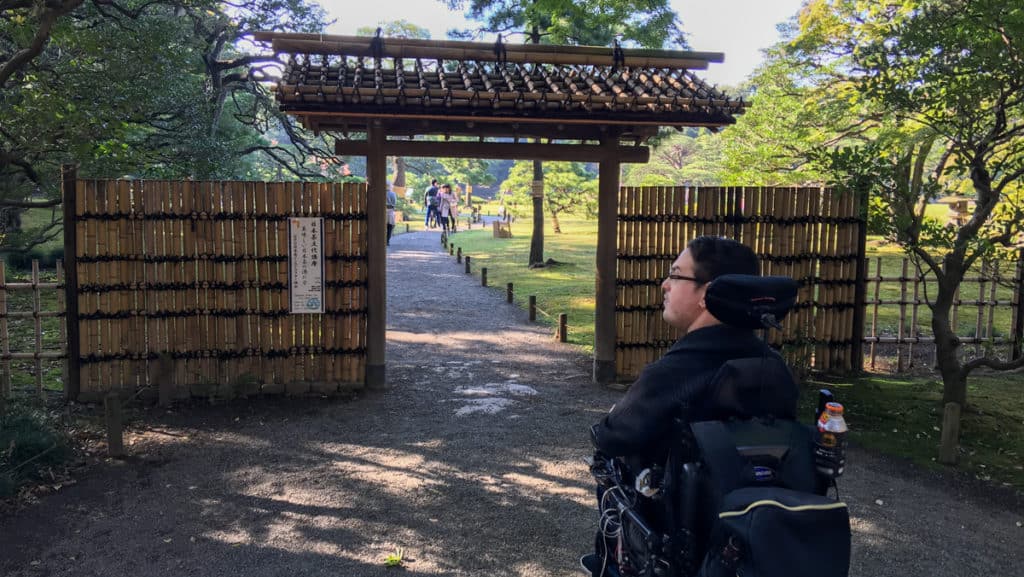
St. Pierre believes he’s been “pretty fortunate” to find employment. While Grisdale found it much more difficult than back home to find a job, he now feels well-supported and secure in his role as a webmaster. He set up the website Accessible Japan and the social media platform Tabifolk because, “I believe strongly in giving back to society, and I love to use technology to improve the lives of people with unique needs and challenges.”

Home is Where the Heart Is
There’s nothing easy about giving up the world you are familiar with for a new world riddled with new challenges and unforeseen obstacles. But if that task sounds slightly familiar, it’s because many of us have already faced something similar with our disabilities. The same skills and attitudes developed living with a disability often prove invaluable in making the move to a new country.
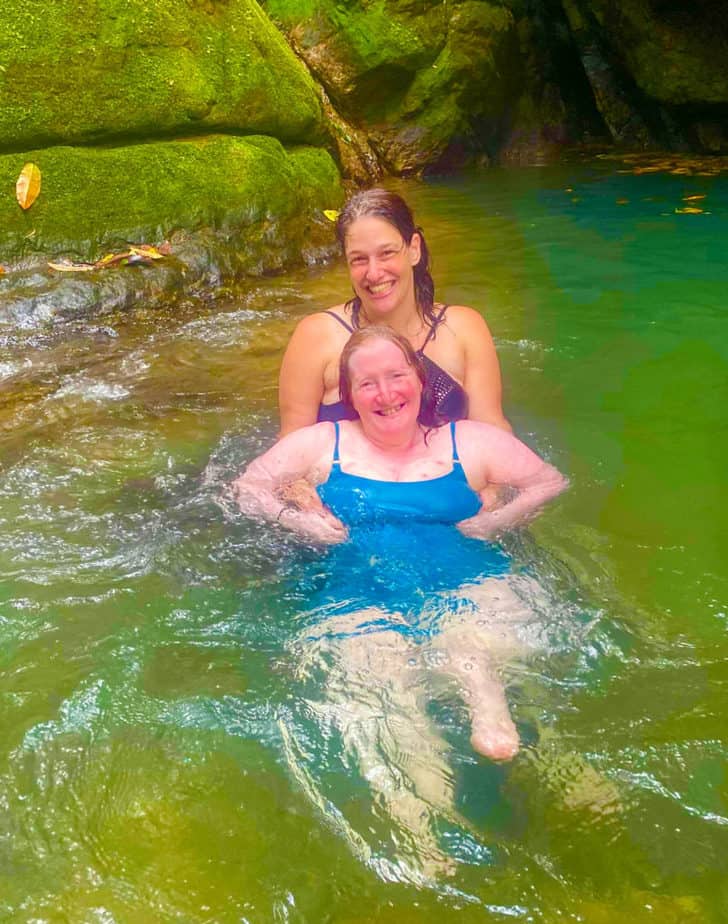
At the end of the day, though, home ends up being where the heart is. Everyone we spoke to settled in the country they fell in love with. St. Pierre first laid eyes on Cambodia while filming a documentary for Canadian television. “During the filming of our documentary, I fell in love with this beautiful country,” he says. For Neuhaus, that process happened slowly over 25 years of visits, but the end was never in doubt. “I always thought that I would retire in Costa Rica,” she says, “but made my move 20 years earlier than anticipated. Truly, this is a second home for me and I felt called to make this move … I feel very at peace here.”
Boatright moved to Panama with a plan to live there for a year. He got hooked: “After 10 months, I bought a car and started looking for a home.” Grisdale visited Japan numerous times before moving there 14 years ago and felt so at home that five years ago he renounced his Canadian citizenship and became naturalized. Tellingly, no one has plans to move back to their country of origin.
Seven Steps to Living Abroad With a Disability
- Do your research: Find out as much as you can about accessibility in countries you’re interested in before you visit.
- Identify and make contact with local disability organizations; they can provide you with invaluable resources and specific information as well as local contacts.
- Search out trailblazers: It’s likely that you won’t be the first person to be emigrating to your chosen country, so seek advice from someone who has already done it.
- Try before you buy: Visit the country you’re interested in migrating to for an extended period — at least a month and preferably three.
- Equipment check: Make sure your equipment is in good condition before you leave.
- Find a source: Locate a reliable local supplier of equipment, spare parts or medication you need.
- Champion the cause: Emigrating is not a one-way process: you can help change attitudes by the way you act and how you cope, which will not only encourage people to help you, it will also help pave the way for others with similar disabilities.
Support New MobilityWait! Before you wander off to other parts of the internet, please consider supporting New Mobility. For more than three decades, New Mobility has published groundbreaking content for active wheelchair users. We share practical advice from wheelchair users across the country, review life-changing technology and demand equity in healthcare, travel and all facets of life. But none of this is cheap, easy or profitable. Your support helps us give wheelchair users the resources to build a fulfilling life. |


I have traveled to more than 25 countries and lived abroad half of my life with my significant cerebral palsy disability. We can make things easier in developing countries when we make sure US foreign assistance programs develop sustainable projects that adhere to our regulations. Unfortunately, that does not happen often enough,
Definitely, Karen! So much work to be done. Thank you for all the work you do out in the world – so glad to know you.