


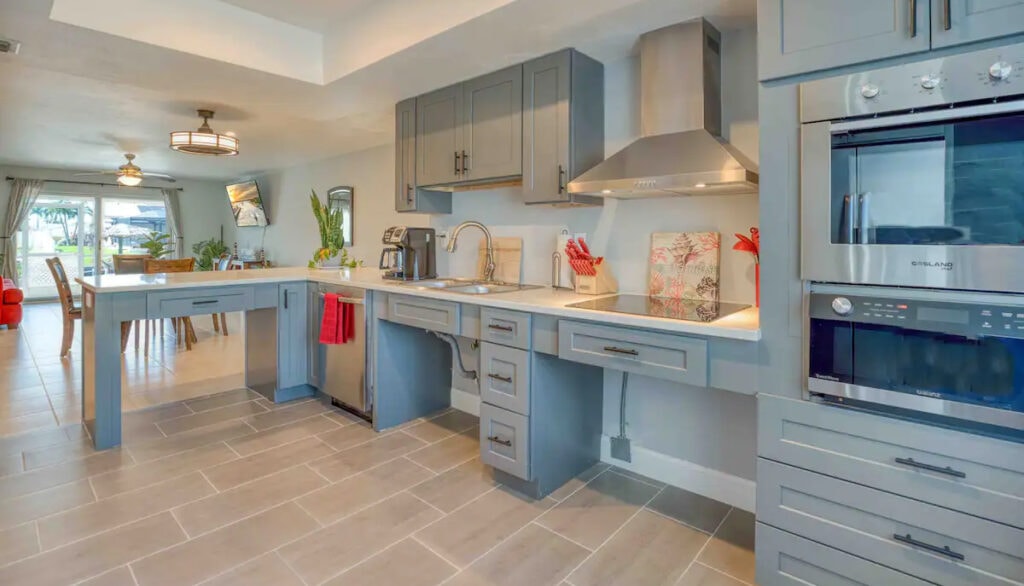
Funding a home accessibility remodel or a new build of an accessible home is likely to be one of the biggest expenses you’ll ever have. But there are a variety of programs that can help ease the financial load.
Grant Programs
If you need help paying for accessible home modifications, grants are the first place to look because if you qualify, grants are free money — you don’t have to pay them off like you do a loan.
The most generous home modification grant program in the U.S. is reserved for veterans with service-connected disabilities. For service-disabled wheelchair users, the U.S. Department of Veterans Affairs Specially Adapted Housing Grant will pay up to $121,812 (the amount changes every year) to buy, build or change your permanent home. You have to own or purchase your home to qualify for this grant.
For non-veterans, state Vocational Rehabilitation Agencies will sometimes pay for accessible home modifications if the modifications — like entrance ramps or lifts — help you access your job. For people older than 62 who have low incomes, the USDA offers a grant program that can be used to make your home more accessible if you meet the eligibility criteria.
Medicaid Home and Community-Based Services waiver programs may provide home modification assistance in your state. Because these programs are administered on a state-by-state basis, eligibility requirements and covered services vary by state. Some HCBS waiver programs include funding for home modifications that help you live safely and independently in your own home. Contact your state Medicaid agency to learn what HCBS waiver programs are available in your state and whether you qualify.
And while not technically for “accessibility,” the Department of Energy’s Weatherization Assistance Program can help you replace windows, upgrade insulation and heating systems, along with other measures to help with climate control in your home. Contact your state weatherization administrator to see if you qualify.
There are also a variety of nonprofit foundations that offer grants for people with spinal cord injuries and other types of mobility disabilities, like multiple sclerosis, cerebral palsy, spinal muscular atrophy and others. Some can be used for home modifications or assistive technologies.
Loan Programs
Specialty loan programs can also help provide cash for needed accessibility improvements. These programs are often easier to qualify for and provide more favorable repayment terms than traditional loans.
Home modification loan programs are usually delivered on a state-by-state basis, so a good place to start is contacting your local Center for Independent Living. They can give you information on what grants, loans and home modification programs are available in your state. Loan examples include accessible home modification loans available through some state housing finance agencies or home modification loans available through some state assistive technology programs, which provide low-interest loans to buy assistive technology or help pay for accessibility modifications. For example, Northwest Access Fund Home Modification Loans can provide residents of Oregon, Washington and Idaho loans of up to $60,000 with a 10-year term.
Similar to their grant program, the USDA also offers a loan program that can provide up to $40,000 for accessibility improvements with repayment at a fixed 1% interest rate and a 20-year term. That program is also only available to people older than 62 with low incomes.
Some banks and credit unions — like Digital Credit Union’s Access Loans or American1 Credit Union’s Ability Loans — also offer loans for home modifications.
If you’re looking to buy a home, you can use an FHA 203k loan to roll the purchase price of a home and the cost of accessibility modifications into a single mortgage. Contact your local mortgage provider to see if they offer a 203k loan and whether you would qualify.
Crowdfunding
If you don’t have the monthly income to repay a loan, another option to pay for home modifications is crowdfunding apps. They let you create a personal fundraising campaign and share it among family, friends, friends of friends and strangers.
Help Hope Live is a nonprofit crowdfunding site that offers some unique features, including one-on-one support, tax-deductible donations and help in maintaining Medicaid and other asset-based programs. Because Help Hope Live operates as a 501(c)(3) nonprofit, donations are made to the organization and administered by them rather than going directly to you. The funds typically won’t count against asset-based benefits like Medicaid, though you should check with your local benefits office to confirm.
GoFundMe is the best-known crowdfunding site for personal expenses. However, if you receive Medicaid or other asset-based benefits, starting a GoFundMe or similar for-profit crowdfunding campaign could put those benefits at risk, since funds raised go directly to you and may count as assets.
Home Modification Assistance Programs
There are also a variety of programs around the country that can provide labor and other assistance in obtaining home modifications.
The National Directory of Home Modification and Repair Resources has a map that can point you to local organizations offering home modification and repair programs. The directory also includes a state-by-state list of potential funding sources — when you search for home modification resources in your state, click on the “Funding Sources” tab to see grants, loans and other financial assistance programs available in your area.
Rebuilding Together is a national nonprofit that offers no-cost home modifications for eligible individuals, like widening doorways, installing ramps and grab bars and making bathrooms more accessible.
For new builds, Habitat for Humanity helps low-income buyers build homes affordably. Approved applicants work “sweat equity” (300-500 volunteer hours) instead of a cash down payment, and receive 0% financing, volunteer labor and donated materials. This yields homes at extremely low monthly payments compared to buying or building a traditional home. Tim Gilmer’s article “Habitat for Humanity: An Affordable Path to Home Ownership” dives into the specifics of how the program works and talks with wheelchair users who’ve built their own accessible homes.
Again, it’s worth checking with your local CIL to see what programs are available in your area.
For people over 65, it may also be helpful to contact your Area Agency on Aging or Aging and Disability Resource Center, as they may be able to connect you with other unique programs and financial resources in your area.
Home Modification Funding Options: Quick Comparison
| Category | Grants | Loans | Crowdfunding | Community Assistance Programs |
|---|---|---|---|---|
| Cost to You | Free — no repayment required | Must repay with interest (typically low rates: 1-5%) | Free, but may affect benefits if not structured properly | Free labor and materials |
| Typical Amounts | $1,000-$120,000 depending on program | $5,000-$60,000 depending on lender | Varies widely; $5,000-$30,000 typical | Value varies by project scope |
| Timeline | 2-6 months for application and approval | 2-4 weeks to 2 months for approval | Immediate start; fundraising takes 3-6 months average | 1-6 months; depends on waitlists |
| Key Advantages | No repayment; largest amounts available (especially for veterans) | More accessible than grants; favorable terms; funds available relatively quickly | No credit check; no repayment; flexible use of funds | No cost; expert labor; quality workmanship |
| Where to Start |
|
|
Support New MobilityWait! Before you wander off to other parts of the internet, please consider supporting New Mobility. For more than three decades, New Mobility has published groundbreaking content for active wheelchair users. We share practical advice from wheelchair users across the country, review life-changing technology and demand equity in healthcare, travel and all facets of life. But none of this is cheap, easy or profitable. Your support helps us give wheelchair users the resources to build a fulfilling life. |