


Today, United Spinal Association is the largest disability membership organization in the world, with 59,000 members, 49 chapters, close to 200 support groups and over 100 rehab and hospital partners.
We’re vibrant, diverse, active and energetic. In many ways, we are a young, up-and-coming disability network. Yet, our roots go back to the paralyzed World War II vets who came home to an inaccessible nation and founded our predecessor, Eastern Paralyzed Veterans of America. Much has changed since then, but aspects of their stories sound all too familiar.
1944-1968: Out of War and into the Battle for Access
The outlook for paralyzed soldiers returning from World War II was dire. Since their life expectancy was one to five years, they were written off as lost causes.
“The situation in the treatment of spinal cord injury at that hospital was typical of most places,” said George Hohmann, who was injured in 1944 and sent to Bushnell Military Hospital in Utah. “And that was almost total neglect except for the care of the nurses and especially the volunteers from the communities around. Medical staff knew nothing about what could be done for us and made short and sweet of the fact that there wasn’t a damn thing that could be done for us but keep us alive until we died. And this is a quote that I was told one day: ‘And that wouldn’t be very damn long.’ The prognosis was about two years.” That was for paraplegics. Quadriplegics didn’t last even that long.
The East Coast situation was similar, with just a glimmer of hope. “We had 300 paraplegics at England General Hospital, Atlantic City,” recounted Bill Green, former national president and national service director of Paralyzed Veterans of America. “Dr. Glen Spurling came up from the surgeon general’s office, and he was asked what they were going to do with the paraplegics. His remark was, ‘We’ll put them in a corner of the hospital. They’re going to be dead in a year anyway.’ Well, at that point, we blew our stacks. Because we knew that there was a doctor in Boston who had treated paraplegics successfully since 1935, Dr. Donald Munro. We felt that if he could, why couldn’t the Army set up programs? We didn’t even have OT. And they looked upon PT as being a means of amusing the patients. This was the Army hospital. The veterans’ hospitals were even worse.”
“James J. Peters believed SCI should be a medical specialty all by itself, and he made it happen.”
Veterans like Hohmann and Green found each other over the next few years, began forming groups (pdf) and got busy writing bylaws and organizational charters for their new associations. On April 29, 1947, the New York City-based Eastern Paralyzed Veterans of America voted in its first slate of officers, which included Robert Moss as recording and executive secretary.
The previous year, 1946, Moss and fellow veterans rolled into Grand Central Terminal to gather signatures in support of the nation’s first accessible housing legislation. This protest is considered EPVA’s founding event. Moss’ efforts were successful as Public Law 702 passed in 1948. “We were faced with a group of young men with a physical handicap that had virtually no survivor prior to then,” said Moss. “There was no way of coping with society as society was then constituted. There were no programs for survival, there were no care programs, there was certainly no such thing as elimination of architectural barriers — there was no legislation for it. The needs were tremendous.”
The ’50s to ’60s were quieter, with a significant exemption being when EPVA joined with other advocacy groups to push for the passage of what became the Architectural Barriers Act of 1968. “I wanted it to be simple. I wanted accessibility to be one of the items on the checklist of designers and builders,” said Hugh Gallagher, who wrote the law. He was a legislative aide to Sen. Bartlett of Alaska and used a wheelchair due to polio.
The law requires federally-funded buildings and facilities to be accessible for wheelchair users — thus setting the stage for more comprehensive, future legislation such as Section 504 of the Rehab Act and the Americans with Disabilities Act.
1970-1990: Rebirth, Rejuvenation and Rededication to the Cause
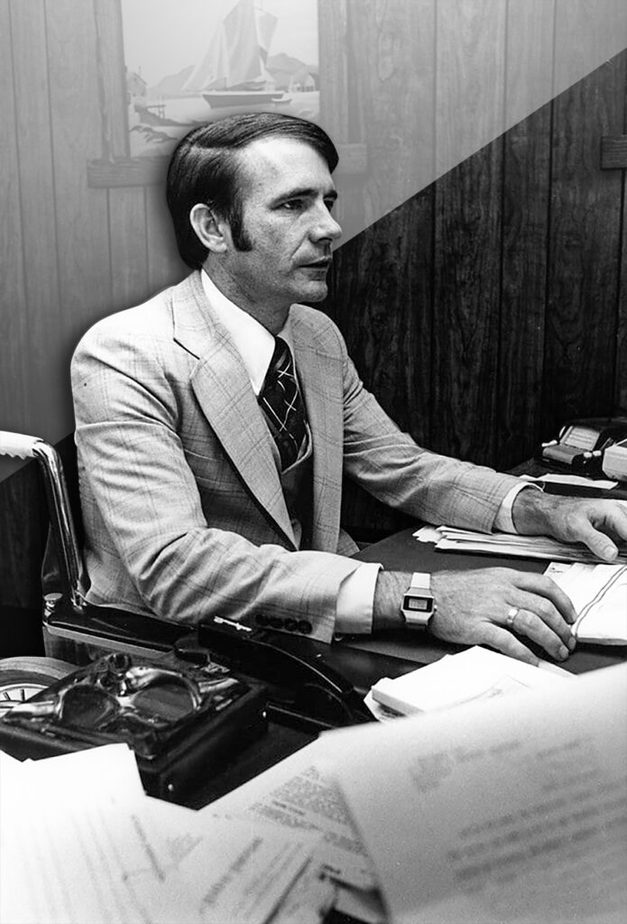
PVA and EPVA might have quietly disappeared if not for the energy and organizational know-how of James J. Peters, an Army civil engineer who sustained a spinal cord injury in 1967. Similar to the WWII vets, Peters found himself trapped in deplorable conditions in the Bronx Veterans Administration hospital. Two years later, in 1969, while still an inpatient, Peters managed to get Life Magazine to do an exposé called “Our Forgotten Wounded” on the conditions in the Bronx VA.
The article, published May 22, 1970, highlighted how Vietnam War vets with SCI lived longer than their counterparts in WWII and the Korean War, and this time around, quadriplegics were surviving.
But they had nowhere to go.
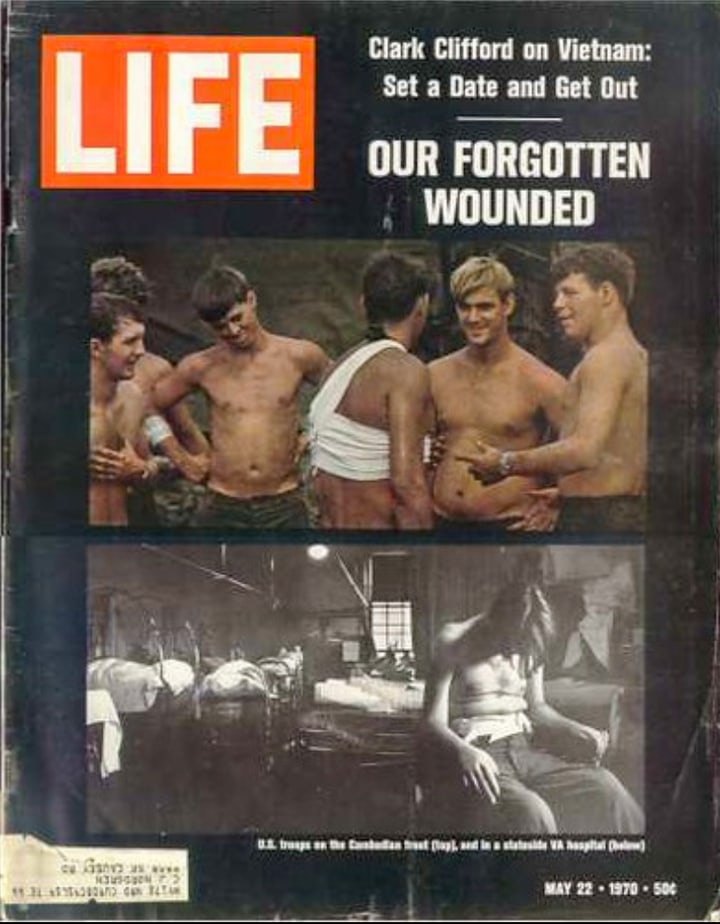
Marine Marke Dumpert told Life how he was blasted into the air at Khesanh, Vietnam, by a 6-foot Russian-made rocket and sustained quadriplegia. “The day they moved me into that gloomy 30C ward, I knew I was back at the battlefield,” he said. “It was the misery of Khesanh all over again. I spent over a month and a half in an 8-by-21-foot bunker in Khesanh. I remember the smell of four other guys plus myself, when we had to use water to drink, not to wash with, when we lived with garbage rather than dump it and get hit by a sniper. But at least in Khesanh, you could joke and be lighthearted. Death was around you, but there was still the possibility of getting out. Here in this ward, living with the misery of six neglected guys who can’t wash themselves, can’t even get a glass of water for themselves, who are left unattended for hours … it’s sickening.”
The urine bags of Dumpert and other quads in the VA spilled over because there weren’t enough attendants to empty them. “It smells and cakes something awful,” said Dumpert, of the waste. Another Bronx VA inmate was anti-war activist Ron Kovic, who wrote the book, Born on the Fourth of July.
The vets’ efforts led to the hospital being razed to the ground and rebuilt. In 2002 it was renamed after James J. Peters.
If that were all Peters was known for, it’d be enough. But it was just the start.
Peters was named executive director of EPVA, a small organization that housed the even smaller PVA. For a while, the two associations joined to form the PVA/EPVA, supported by a direct mail operation. “Since its inception, PVA/EPVA, Inc., has raised more than $1 billion in donations for programs that serve veterans with SCIs throughout the nation,” wrote Terry Moakley in his 2002 obit for Peters. Moakley was also a well-known advocate who served as president of EPVA.
Peters’ vision went beyond serving veterans. In 1977, he revitalized the American Paraplegia Society, the national organization for physicians who specialized in caring for people with SCI. Then during the early ’80s, he founded the American Association of Spinal Cord Injury and the American Association of Spinal Cord Injury Psychologists and Social Workers. “They became today’s ASCIPs,” says Weisman, referring to the Academy of Spinal Cord Injury Professionals. “He believed SCI should be a medical specialty all by itself, and this was the way to do that.”
“We believe wheelchair users should be involved in creating disability policies. We’re not just here to fight for a seat at the table. We’re here to fight for a seat at the head of the table.”
James Weisman, former president and CEO of United Spinal Association
His tenure was a fruitful time for policy work since he recognized good health is only one part of quality of life. He and Moakley famously recruited Weisman to be EPVA’s general counsel in a men’s restroom after they saw Weisman take it on the chin from his boss in the New York Governor’s office for defending disability rights. Weisman’s policy wins are legendary, spanning from successful lawsuits for accessible transportation to passage of the Americans with Disabilities Act in 1990. You can read about some of them in the Policy section.
1991-2021: Post-ADA or Pre-Inclusion?
After successfully shepherding the ADA into law, EPVA turned its attention toward enforcing it. Some post-ADA wins include helping to ensure all NYC buses had lifts and all sidewalks had curb cuts. Its Taxis for All campaign finally won agreements for wheelchair users to be able to hail cabs — and ride-share vehicles from companies like Uber and Lyft.
In 2004, EPVA expanded its mission to officially include all people with spinal cord injuries and disorders, regardless of military service. To reflect this new direction, it changed its name to United Spinal Association. The organization will always be there for wounded veterans, and in 2005 it successfully lobbied Congress to pass traumatic injury insurance legislation to provide between $25,000 and $100,000 for active-duty soldiers who sustained severe injuries.
But the real success story of this era began in 2010 when United Spinal Association acquired the National Spinal Cord Injury Association and NEW MOBILITY. “For us, it was amazing,” says Weisman. “First of all, having NEW MOBILITY as our house publication is a huge benefit as it unites our members. People with disabilities live all over the place, rural to urban, many are isolated, and we show them what life can be like. We always thought it was the perfect portrayal of members. And the merger with NSCIA was very similar. We went from being a local vets’ group to a national SCI/D organization and instantly gained chapters nationwide. Our motives were pure, and I think people got it.”
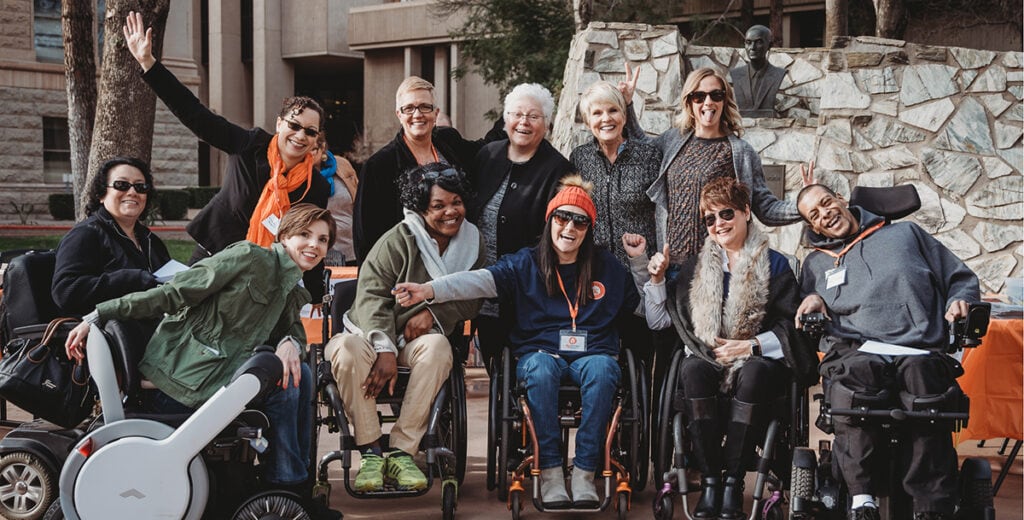
Today there are United Spinal chapters in most major cities and many smaller ones, and there are United Spinal advocates in practically every legislative district. Together, our members represent all aspects of American life, and under the leadership of our new President and CEO Vincenzo Piscopo, we continuously become more vibrant and diverse.
“I see diversity and inclusion as a painting. If it were just a plain canvas, it would be boring. It would not attract anybody, and it would not communicate anything. As you start adding colors, shapes and textures, it starts to become beautiful, and you want to see it and hang it in your room and all of that,” says Piscopo. “When you have a diverse team, you add different points of view and experiences, making the work more beautiful. You can engage with more people, and they are proud to have you in their lives.”
“We went from being a local vets’ group to a national SCI/D organization and gained chapters nationwide.”
Our earlier leaders learned their organizational skills while serving in the armed forces. Piscopo comes to us from the global corporation Coca-Cola. He served as a vice president and developed a similar, yet different, set of organizational skills that promise to move us forward in new, exciting directions.
An old black and white photo shows Robert Moss leading his group of fellow veterans in a protest. They just wanted to be welcomed back home from war. They wanted a place to live, the means to travel and decent medical care. Moss carries a sign that says, “Don’t Let Us Down,” meant for nondisabled Americans to remember the men who sustained SCIs while fighting for them. But as a member of the organization that he and those vets started, I feel it as a charge for us to continue the work they began.
We have not let them down. We’ve built a vibrant, diverse community whose achievements they would marvel at. And we’re just getting started.
Support New MobilityWait! Before you wander off to other parts of the internet, please consider supporting New Mobility. For more than three decades, New Mobility has published groundbreaking content for active wheelchair users. We share practical advice from wheelchair users across the country, review life-changing technology and demand equity in healthcare, travel and all facets of life. But none of this is cheap, easy or profitable. Your support helps us give wheelchair users the resources to build a fulfilling life. |


Recent Comments
Tim Gilmer on Could Paralympian and ‘Prairie Populist’ Josh Turek Be Iowa’s Next Senator?
Caroline Whalen on Adaptive Products Roundup: May 2026
Tim Ripley on The Right Wheelchair Seating Setup Can Change Your Life