


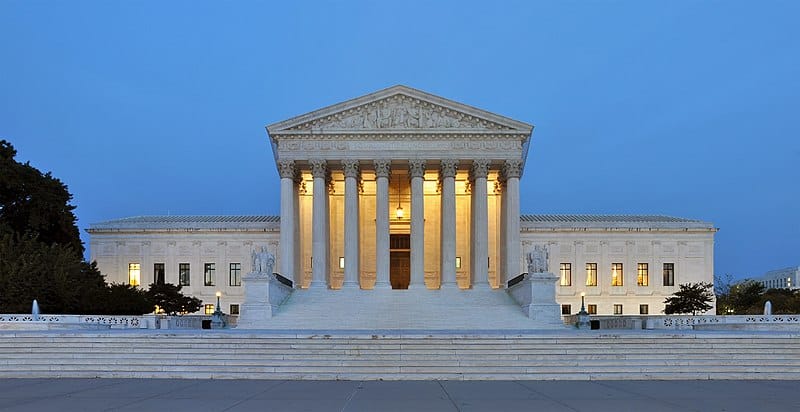
Supreme Court Allows Public Charge Rule Targeting Disabled Immigrants to Move Forward
February 5, 2020
Mike ErvinIn a 5-4 decision on Jan. 27, the U.S. Supreme Court ruled that the Department of Homeland Security may begin implementing the Trump administration’s “public charge” rule. Advocates argue this policy makes it much more difficult for people with disabilities to obtain green cards and visas.
The new rule was issued last August and expanded the factors that can be cited for denying a person a green card or visa on the basis that they may become a “public charge,” which is someone who utilizes certain public support programs. The new rule allowed for rejection of anyone who will, or is likely to, need Medicaid, SSI, home and community-based services, and Section 8 public housing assistance, among other things.
“This decision allows the government to implement regulations effectuating longstanding federal law that newcomers to this country must be financially self-sufficient and not a ‘public charge’ on our country and its citizens,” said the Trump administration in a statement.
But some say this rule is a regression to a less enlightened time in our nation’s history. “Disability advocates oppose this rule because it discriminates against people with disabilities and hearkens back to a time when immigrants with disabilities were explicitly excluded from this country, says Alison Barkoff, director of advocacy at the Center for Public Representation in Washington, D.C. “The disability community absolutely agrees that the rule is illegal disability discrimination.”
Claudia Center, senior staff attorney with the ACLU’s disability rights program, argues that, “This policy is yet another way for the Trump administration to hurt immigrants. It enshrines the false stereotype that people with disabilities do not contribute to our society.”
The rule was scheduled to go into effect in October, but 21 states sued in federal court to block its implementation. Sixteen disability rights organizations, including United Spinal Association, submitted an amicus brief in support of Washington’s suit.
Three federal district courts found that the rule was likely illegal and issued nationwide preliminary injunctions blocking DHS from enforcing it while the cases are litigated. DHS appealed these decisions. Two appeals courts removed those injunctions but a third allowed them to remain. DHS appealed the remaining injunction to the Supreme Court and this most recent decision removed that last remaining nationwide injunction, which enabled DHS to move forward with the rule while the lower courts consider its legality.
The decision may have a broader impact on the implementation of Trump administration policies, many of which have been blocked by temporary injunctions. “As two justices pointed out today, the expanding practice of district courts entering nationwide injunctions raises real problems about the proper power of a judge to decide only the case before him or her,” argued the administration.
While the public charge rule may now go into effect, Barkoff says the fight continues in the lower courts, where the suits challenging the rule will be decided. She believes this process will ultimately bring the issue back before the Supreme Court. “Not only will this rule keep out people with disabilities from the U.S., but it is causing fear. People who need and are entitled to critical benefits, including healthcare services, are already choosing not to use them because of concerns about how that could impact their immigration status.”
Support New MobilityWait! Before you wander off to other parts of the internet, please consider supporting New Mobility. For more than three decades, New Mobility has published groundbreaking content for active wheelchair users. We share practical advice from wheelchair users across the country, review life-changing technology and demand equity in healthcare, travel and all facets of life. But none of this is cheap, easy or profitable. Your support helps us give wheelchair users the resources to build a fulfilling life. |


Recent Comments
Dick Crumb on Adapting Recreation To An Aging Body
Karen on The Everlasting Saratoga Cycle
Ted Kilroy on Handcycle Gear Guide