



Imagine waking up to a herd of elk meandering across your property, or rolling out the door in the morning to spend the day chasing the horizon through fields of wheat in the cab of your tractor, no one but you and your dog for miles.
The appeals of rural living are plentiful and don’t discriminate around ability, but there are undeniable drawbacks and sacrifices for people with mobility disabilities who decide to eschew the more accessible convenience of urban life. Still, many of those who do will proudly defend their decision and tell you that the benefits are more than worth the hassles.
In the end, home is where you choose to be. For some, that has always been out where there’s more room to roll. Others took years to realize the rural lifestyle was for them, and some discovered just the opposite.
Born to Farm

William Meyer was born and raised in Central Nebraska, working on his family’s farm, ranch and feed lot while growing up in Wolbach, population 254, and later in Palmer, population 469. He has driven a tractor since the age of 9. “I’ve been around a grain cart since I was 12, pulling it with a tractor. I’d also rake hay in the summer,” he says. He owned his first cow in sixth grade and had 30 by the time he graduated from high school. “My dad would train me on weekends.”
At 21, he had just graduated from Southeast Community College and signed papers for an FSA farm loan to purchase 235 acres of his own. One week later he was lying in a hospital after a car crash, paralyzed, with spinal cord damage at C4, T1 and T4. Surgeons fitted him with rods on both sides of his spine from C2 to T6, plus a cage around C4. All signs pointed to an end to his farming career.
Meyer lay in the hospital, searching for a way to save his farming future. His family had survived the relentless consolidation of family farms that began after WWII. As smaller farms were swallowed up by larger farms due to high costs, economy of scale and global marketing, the sons and daughters of farmers and ranchers had left home and relocated to cities, leaving the farm behind. The Meyer family acreage had almost doubled in the last 10 years while food production from family farms had been cut in half during the rise of corporate agribusiness.
After being transferred to Madonna Rehab in Lincoln, he was contacted by a woman from AgrAbility, a government-subsidized state and federal program whose specialty is helping farmers with disabilities return to agriculture.
She had learned from her brother and dad, who knew of Meyer’s accident, that he was paralyzed and in the hospital. Call it fate, God’s will, quintessential small-town culture, or all three. She came to the rehab and shared some adaptive possibilities with him and asked if he was willing to give it a try. Meyer was all in.
The Right Tools for the Job
Just three weeks after being discharged from Madonna in 2015, AgrAbility provided him with a lift — a temporary loaner to take him from his pickup and place him in the cab of his John Deere 8310R, a 310-horsepower tractor with a cab that protects him from the elements.
Since getting back on the job, he has acquired the adaptive machinery he needs for his lifestyle. He has two pickups, each with a lift, two tractors, an adaptive saddle for rounding up cattle and an Action Trackchair for getting around and managing his property. His young dog, Ricky, his faithful companion, rides with him wherever he goes. Every piece of adaptive equipment he uses for his livelihood has been provided at no cost by AgrAbility, which arranges for grants from various programs.
“On a horse or in a tractor, you’re always moving a little. No sitting dead still.”
He works year-round farming 450 acres, including rental acreage, and also at the family-owned feedlot, a 4,000-acre operation that grows row crops and feeds around 10,000 cattle. He runs a feed truck in the mornings, working with two others, then does whatever needs to be done — tractor work with feed crops, checking on cattle, or tearing out trees to work on fencing. Some may think it would be boring being cooped up in a tractor cab. “Not at all,” says Meyer. “I’m busy paying attention, always doing something, reacting to changing conditions. I rarely sit still. It feels good when I’m working, time passes quickly, and I feel useful when I’m in the cab. I can do anything anyone can do. I feel a sense of freedom when I’m being productive. My least favorite thing to do is bookwork, taxes and record-keeping.”
Living the Life of a Nebraska Farmer-Rancher
Meyer puts at least 30,000 miles a year on his truck driving from operation to operation and for occasional hunting and fishing trips. His parents, grandparents, aunts and uncles live and work on scattered acreages, while Meyer lives in his own home on his own acreage. Farming, ranching and feeding is most of his life, but he never gets lonely. “I’ve been in bars surrounded by all kinds of people and it’s easier to feel lonely in that situation,” he says.
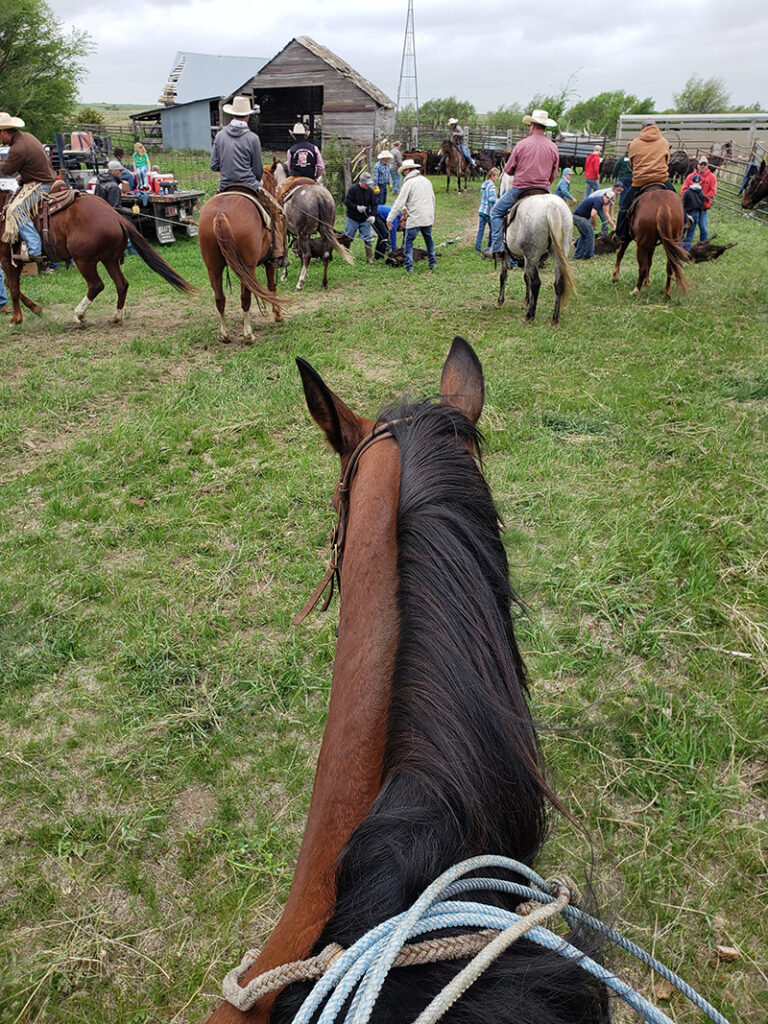
When he’s not farming, he might be fishing for walleye in South Dakota with his parents or hunting wild boar in Texas with buddies, but most of the time he is working. “It’s not just about driving machinery. In spring I get on my horse with a lift, and we bring in the calf crop,” he says. “Rope ‘em and drag ‘em, tie their legs, vaccinate, brand and castrate them, but I stay on my horse.” Besides the feedlot operation, the family has 1,000 head of cows to manage. From early March to mid-April is calving season. The family owns all their own bulls and feeds and sells all the calves.
Like anyone living with a spinal cord injury, he has had complications, but doesn’t dwell on them. He hasn’t had any skin problems yet, but he did get infections from his implanted spinal rods, eventually leading him to have them surgically removed. Once a year he sees a urologist in Lincoln who is also a para.
He has lived in his own home since having it remodeled for accessibility in 2017, and he hasn’t even thought of moving away from the great plains, as barren as it may seem to some. “Living in town is not for me,” he says. “I’m good with where I’m at. Can’t see myself living anywhere else. I don’t like mountains. No cities.”
He says traveling isn’t interesting to him, but he has thought about it. “I’m thinking maybe I should go on a real vacation someday, but you got to have time or money, and I spend on what I need,” he says. “I’d rather buy a new tractor than go to Cancun.”
The Last Frontier
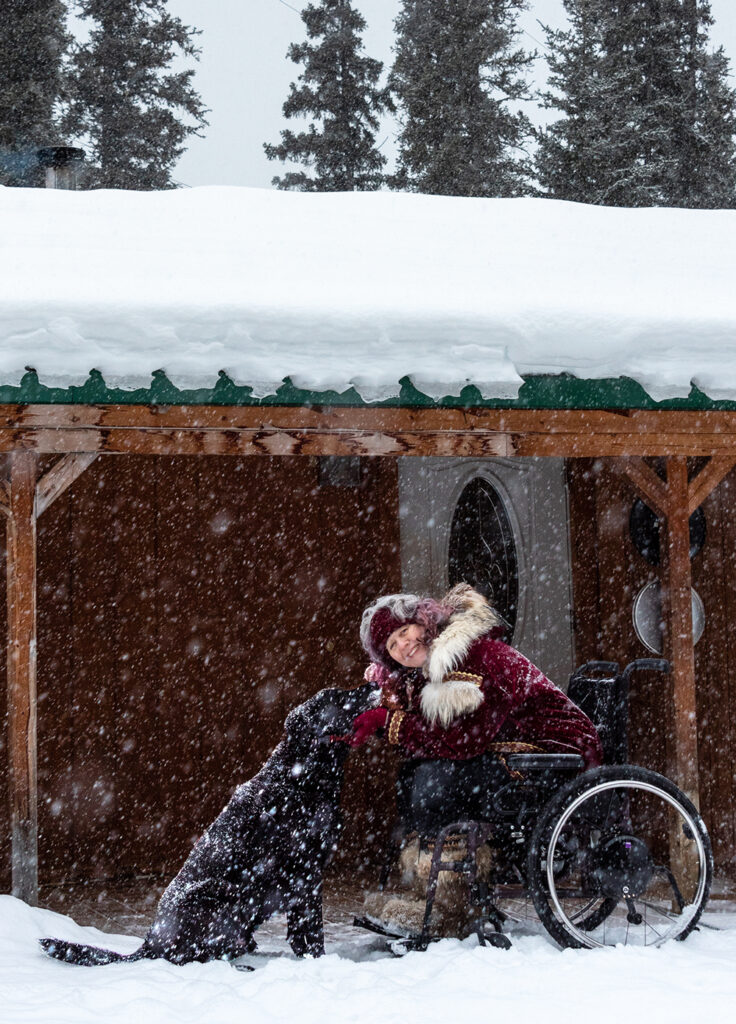
Living in Alaska isn’t easy for wheelchair users, but Tracey Porreca wouldn’t want to be anywhere else. She and her husband, Tony, live in Delta Junction, near Fort Greely, a remote location known mostly as the U.S. Army’s Northern Command Center, a launch site for anti-ballistic missiles, and the Cold Regions Test Center.
It’s the coldest location in the states, yet it is also an agricultural valley surrounded by three towering mountain ranges. “There’s farming over a large area and nothing around us,” says Porreca. That is if you don’t count the bison herd that occasionally gallops past the cabin-home that she and her husband finished building in 2010. “Outside our door is a spruce forest. Moose, eagles and owls are frequent visitors. I love it here.”
She’s a Navy veteran and a mother of three who describes herself as a survivor. As a 10-year-old growing up in Xenia, Ohio, she weathered the 1974 “Super Outbreak” when over 100 tornados devastated the region in less than 24 hours. She remembers the role she was given to help the volunteer fire department provide for the townspeople: “My job was to cook for everyone, and at 10 that was a big job, and it had a huge impact on me.”
After enlisting, she became one of the first women machinists in the Navy, repairing submarines in the male-dominated field. “Many men resented my being there,” she says, “so I worked very hard to become proficient in everything I could.”
Porreca married a man she met in the Navy and left the service after their first child. The couple’s third child was born with hypophosphatasia (see below), a rare bone disease doctors were unable to diagnose for over two years. Figuring out her baby’s diagnosis led Porreca on a path of advocacy, research and asking questions.
“The doctor, a geneticist who diagnosed my son, asked a lot of family history questions that led to discovering the rare disease ran in my family. I had it, too, but had never known it. I thought it was just the way I was.” She had learned to live with loose joints, soft skin, and frequent bruising. The disease was progressive and included bone weakness. The stress of caring for her third child led to a divorce in 1993.
Hypophosphatasia
HPP is an “orphan disease,” a term used to describe diseases the pharmaceutical industry has not invested in, usually because only a small number of people are affected. In 2015 a new “orphan drug”— Strensiq — was discovered. Tracey Porreca calls it a miracle. Only about 800 people in the United States are diagnosed with the disease, which makes insurance matters tricky, complicated, and frustrating. She must renew her coverage every six months. For more information, go to magicfoundation.org/Growth-Disorders/Hypophosphatasia.
A New Life
Porreca started the first support organization for HPP in 1994 and continued to work different jobs for several years. In 2005 her work offered her a choice of relocating to Hawaii or Alaska. She chose wilderness over paradise — drawn by her wanderlust and an adventuresome spirit — and moved north with her two younger teenagers.
After living in and around Anchorage, the most populous city in Alaska, Porreca and her new husband, Tony, built a cabin near Delta Junction. “We both talked about our love of outdoors and how we wanted to experience the “real” Alaska,” she says.
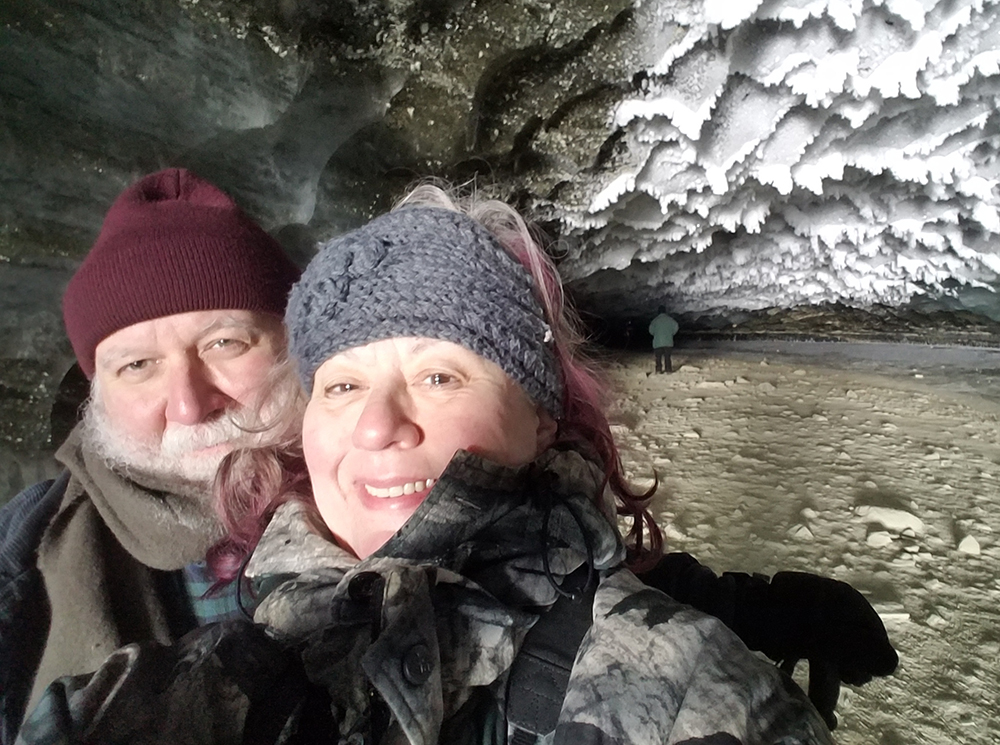
She had been running the HPP organization, flying all over to speak at conventions, and working as an Iditarod photographer who also led Aurora Borealis tours. But her bones and joints were starting to give out. After a total knee replacement went wrong, she started using a manual chair with power assist in 2017. As if all that hasn’t been enough of a challenge, in the last couple of years she had Covid, then cancer. “I had a double mastectomy in October last year.”
Now, at the age of 58, having settled into a world of incredible beauty and daunting challenges, she needs a power chair. “I haven’t ordered it yet. My insurance company is losing its mind, the drugs are really expensive, and I’m trying to get a new chair in less than five years.”
Living with a disability in a remote area is difficult. “You don’t do anything without help,” she says. “It’s really hard to be independent. Getting around is hard. I have to travel 350 miles for specialists, to Anchorage, and it’s two and a half hours to an airport. I go there once a month for cancer treatment and to see my kids.”
Travel can be dangerous as well. “Not long ago my right front tire on my little SUV edged off the pavement in the snow and I slid 25 feet down an embankment. I had to crawl up to the road and wait for help. I’ve followed dog teams out into the wilderness, and I’ve always been OK, but this unnerved me. Now I’m hesitant. You can be somewhere for 12 hours and never see another car. I’m nervous about going anywhere by myself now.”
She’d like to get a truck, but with a power chair imminent she is looking at 4-wheel drive vans. Still, she’s worried because lifts tend to freeze up in the extreme cold and driving can be treacherous.
She has occasionally met others with mobility disabilities, mostly when she lived close to Anchorage. While there she learned of a group called Alaska’s Healing Hearts. “They’re all about hunting and fishing, and they were originally set up for disabled vets,” she says. “Our move to Delta Junction put me too far away to participate, but I still talk to them.”
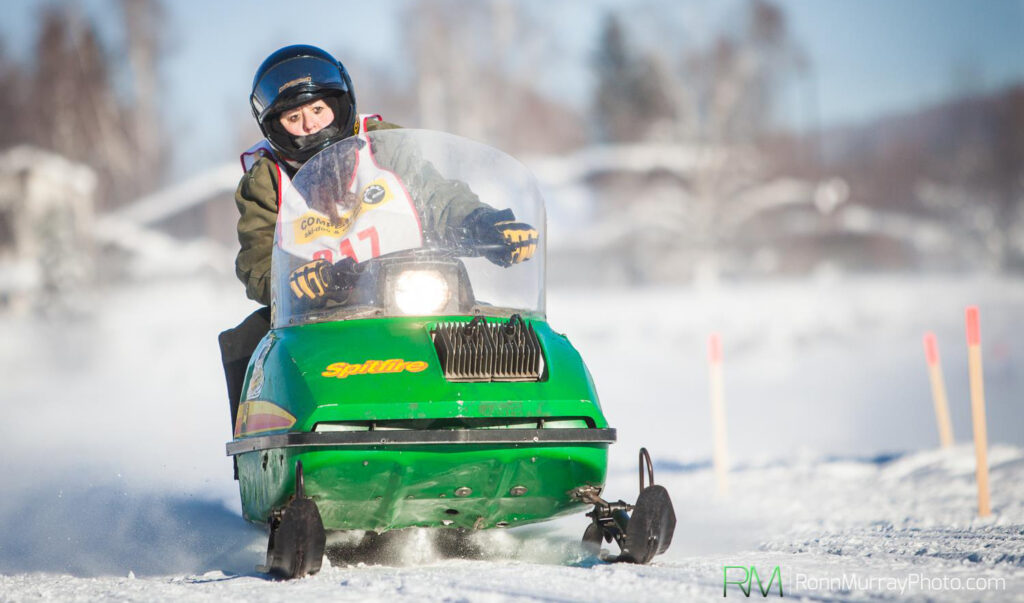
None of this has dampened her love for her “unique slice” of Alaska, surrounded by mountains, glaciers and volcanoes. Despite the cold, northern location, plants thrive. Porreca has a greenhouse dedicated to raising tomatoes. “Gardening connects me with my family and wonderful memories of growing up in a farming community, gardening with my grandmother, and 4-H as a kid,” she says. “I get a great deal of personal fulfillment and satisfaction from starting something from a tiny seed and watching it grow. It’s so gratifying to see all the jars of food I’ve canned and our freezer full of wonderful vegetables I’ve grown from seeds.” Cooking is one of her oldest passions.
Faced with trials ahead, that 10-year-old girl who went through an F5 tornado reminds her older self to be brave. “I decided then I would not be fearful. The mindset is to meet things head on,” she says. “My current situation is another mountain, how am I going to tackle this one? I can, and then I’ll go on to the next step.”
Home at Last
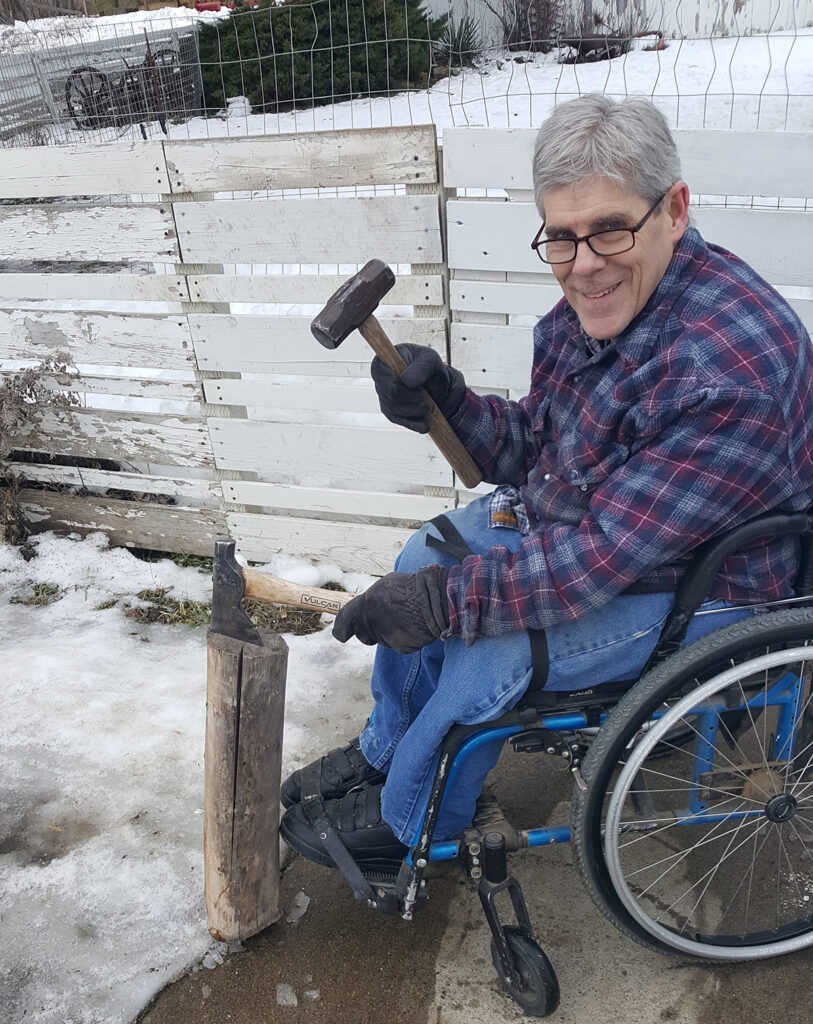
Randy Langton, a 64-year-old para, has lived the life of a dedicated artisan, living off sales of his handmade wares for the past 40 years, mostly without any government benefits. During that time, he bounced between many living situations before finally finding what feels like home.
In late spring of 1975, as a top skier on his ski team, just a week away from finishing high school in Medford, Oregon, he sustained a T5 spinal cord injury in a hang-gliding crash. He graduated the following year and enrolled at nearby Southern Oregon State College (now Southern Oregon University). Unforgiving terrain and an inaccessible campus led him to transfer to Portland State University, an urban campus in Portland. He graduated with a degree in painting in 1981. “I looked around, tried to get jobs after college, worked briefly in a stained-glass shop and decided I could do this stuff on my own,” says Langton.
Living in a Portland apartment, he started selling his handmade, wooden jewelry and accessory boxes in 1982 at the Portland Saturday Market, an open-air arts and crafts market. Langton was the only wheelchair-using artist as the endeavor expanded to Sundays and became a popular tourist stop in Portland, drawing a million visitors per year.
“My stuff sold the first day. I was surprised anytime I sold anything,” he says. “Lots of times in the early years I had to sit out in the rain, ice storms in the winter. Sometimes it was just unbearable.” After about 10 years of hawking his goods, he got the spot he really wanted, under the protection of a nearby bridge, where the shoppers felt comfortable all-year-round.
After living in three different city apartments, he bought a house. In the late 1990s he met Dottie, a ceramics artist whose booth was next to his. In 2000 they married, and Langton’s life changed dramatically. He and Dottie began looking for a house together, possibly on acreage.
They bought a place near the scenic Columbia River, about 45 miles from Portland and close enough to make their weekly pilgrimages to the market. “It was on a hill, a nice house. It had a big shop, but outside was pretty much inaccessible with a great view, but no garden,” he says. “I could barely move around outside.” Dottie’s daughter from an earlier marriage, Lara, lived with them.
With the advent of the internet, their in-person sales dropped off, and in 2005, they sold their property and moved to Beaverton, a Portland suburb, to save money. Lara got married and the two couples shared the small house.
Randy continued commuting to the weekend market but quit in 2008 after more than 25 years as a regular. Commuting had grown wearisome. “We wanted to get some land and get out of the city,” he says. In 2015, after an exhaustive search for a house on small acreage, the two families took a big leap and bought a house on three acres outside Ellensburg in Central Washington. It was a family move that took their combined resources to pull off.
Rural Living
At 1,500-2,000 feet in a fertile basin next to the Yakima River, Langton has finally found his rhythm and his place, all without missing a beat doing what he loves. He lives a simple life in a modest home on an older homestead that was split off from a larger hay farm with a second building on it, a two-story historic building. “At first, I wasn’t sure about the move, but I’ve grown to love it here. This is rural living,” he says.
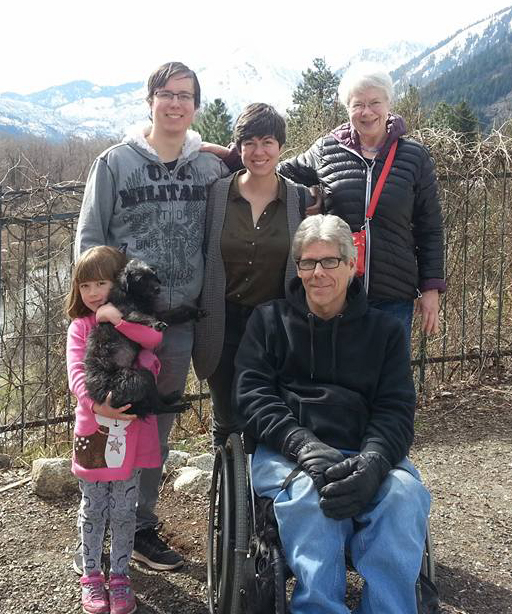
Hard, snowy winters provide one of the biggest challenges, but Langton manages to find the positives. He purposely bought an oversized bariatric scooter to ride around his property and gather firewood. “I use my scooter like a tractor or ATV,” he says. Its big 12-inch wheels give him plenty of clearance to go wherever he needs — snow or no snow. “I split firewood every day, I like it. It keeps me warm, it’s satisfying.” He especially enjoys moving about freely on the acreage.
He gets up every morning to make earring racks for a few hours, then gets the mail and leaves packages to send his customers. He has carpel tunnel syndrome now and had to drive over a montain pass to Seattle for an operation, but he gets regular care in Yakima, no more than an hour away. In his home he uses his manual chair.
In the spring the families have a garden, but it can be windy. Lara has four horses and works at an Arabian breeder’s place up the road. “We are definitely in the country,” says Langton. “Cattle run down the street. Hundreds of them. This is nothing like being in the city, and it couldn’t have happened without the internet. It’s necessary for our lifestyle here. Now we sell all our stuff remotely. It would be nice to have more money and fix things up, but this works perfectly for all of us.”
Searching For More
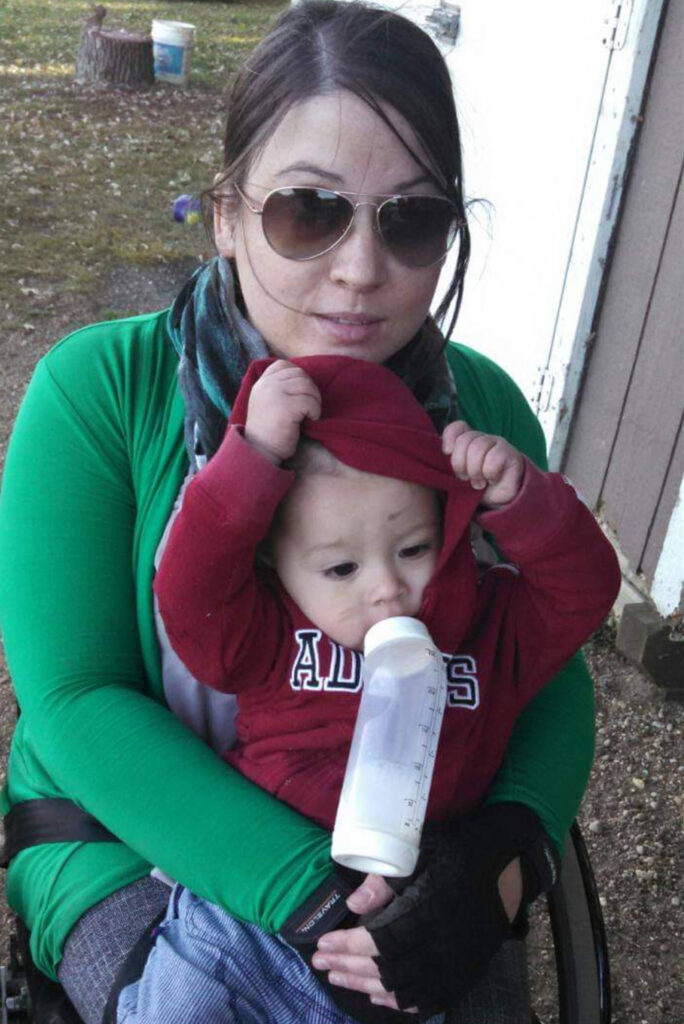
Rachel Malone, 33, grew up in Currie in Southwest Minnesota where her family had lived for generations. She got an immediate taste of what it’s like to live in a remote rural area — she was born with spina bifida and needed an ambulance to whisk her through a blizzard to a bigger hospital in Sioux Falls, South Dakota, that could perform needed surgery.
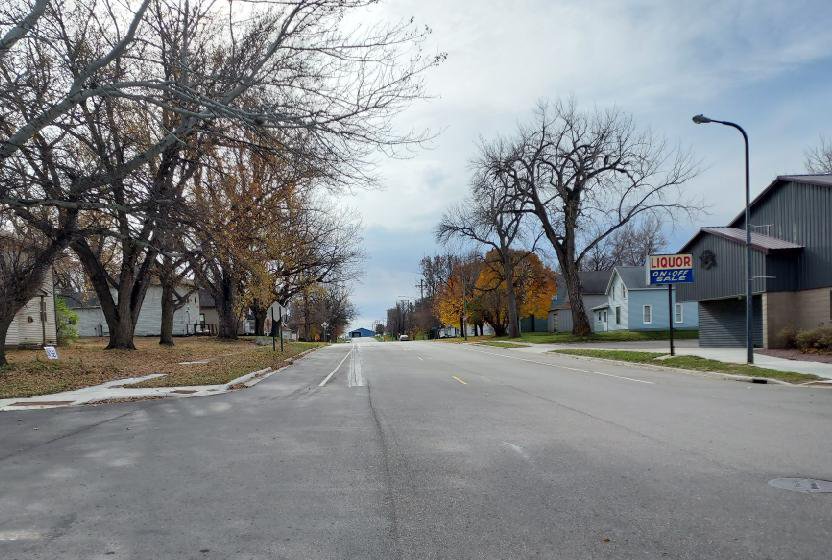
With only 233 people, Currie is one of the smallest towns in the state. “To me,” says Malone, “all towns there are my hometown because you have to go to all of them to do anything.” Slayton has a county hospital and courthouse, while Currie has a railroad museum and state park. Another town has a bar. You may have to go to church in another town. A lot of towns don’t have grocery stores. There are no taxis or transportation.
Her ancestors, farmers from Ireland, started an Irish colony near Currie. “A lot of them were there when the railroads came, so they worked around trains. Some stayed, but most people were farmers. My dad is a lawyer, and our family owns land — corn, soybeans, cattle, pigs. Everyone knows my family.”
The nearest high school was 10 miles away in Slayton (pop. 2,002). With a graduating class of 40 students and only 400 in the entire school, Malone often felt alone as a disabled student. “I had a regular gym class, but no adaptive sports or extracurricular activities. I didn’t know you could sue for compliance and make it happen,” she says. “They would tell me when I was growing up that I was teaching them. ‘We are learning from you,’ they’d say. It was like I was the first and only wheelchair user, and I knew nothing then.”
“It was like I was the first and only wheelchair user. I knew nothing then.”
For the majority of her medical needs — including 10 surgeries before she was 15 — and any real contact with disability culture, Malone had to trek over three hours to St. Paul. “My nearest disability specialist or place where I could get my chair repaired was three and a half hours away,” she says. “I had no awareness of disability culture or laws. Nobody did.”
She had to leave the Currie-Slayton area to attend three two-year colleges, two in Minnesota and one in Texas, graduating with degrees in photography and travel, event planning and hospitality, and also studied American Sign Language. “I have degrees in all kinds of stuff,” she says.
Breaking Away
Looking to further expand her horizons, Malone applied for an intercultural study abroad and exchange program scholarship sponsored by Mobility International (MIUSA) and CIEE. She was selected and got to go to Ireland, the homeland of her ancestors. She attended Dublin City University and studied Irish history, Irish tourism and sustainability. “I wanted to feel like what it was like to grow up there. I got to meet my family relatives and went to a brewery. Everyone there knew my family.”
She found Ireland’s approach to disability to be very different. “People are very nice in Ireland, but disability is treated like charity. They were helpful to me. A bus broke down and six people lifted me and set me down from the bus. Here [America] they would ask first, which is both good and bad.”
She has now traveled to 13 different countries and hopes to make a second trip to Ireland to attend the Harkin Summit in Belfast, an international gathering of disability activists and organizations that meets annually to advance career goals and aspirations for people with disabilities. Her travels have given her an opportunity to make good use of her photography skills.
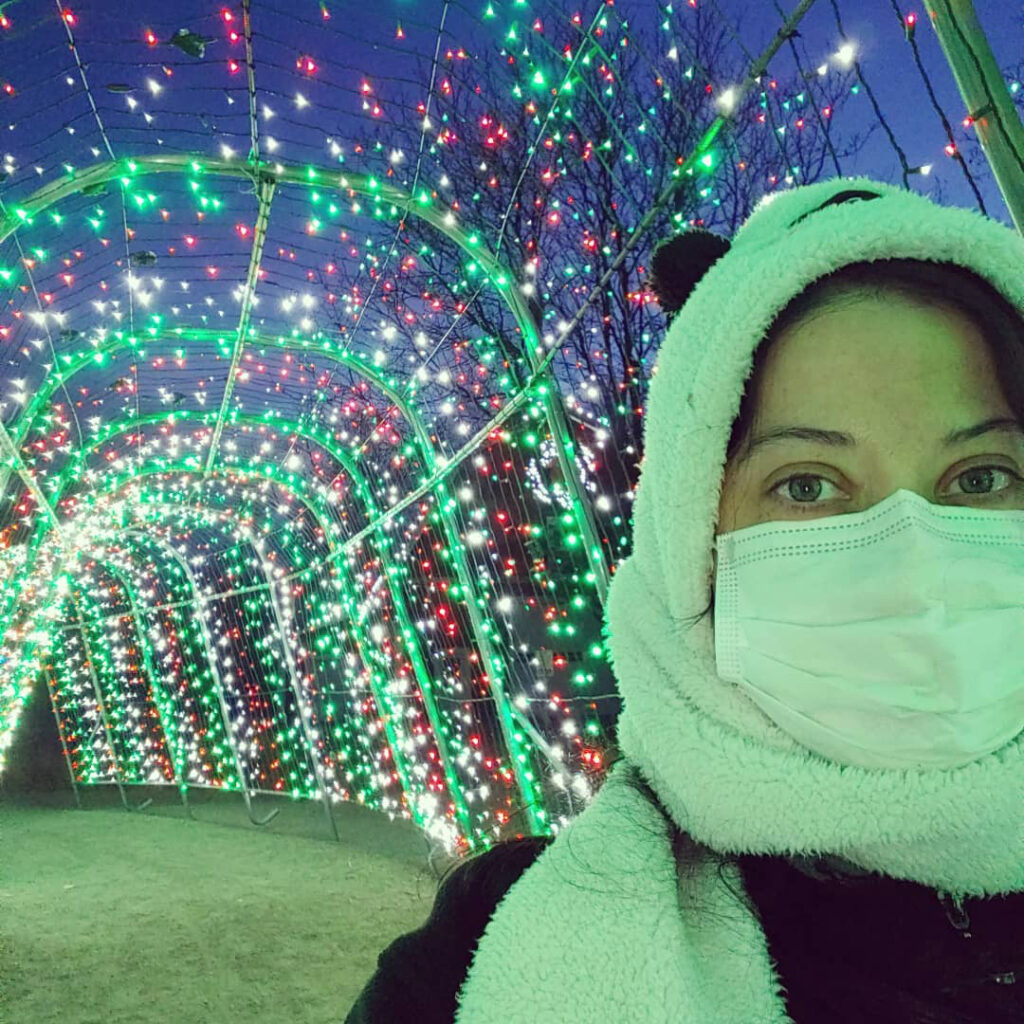
Her varied travel and living experiences have also given her an appreciation of the different levels of disability awareness that exist in America. “A lot of rural communities where I grew up are still not making changes. It’s like they don’t care. They don’t get it that business will get better with improved accessibility,” she says. “The level of awareness there is just not what it is here.”
Almost seven years ago she decided to leave behind her rural roots and settle in Boulder County, Colorado. She currently lives in an apartment in Lafayette, not far from Boulder and Denver. A desire for better weather factored into her move, but the real draw was her proximity to more opportunities to live an active life, with programs and responsibilities that didn’t exist in Currie. She’s a member of Denver’s Commission for People with Disabilities, and she makes use of the full range of adaptive sports she couldn’t do where she used to live, including air rifle, fencing, power weightlifting and curling. She has a job working for the Boulder County school district and recently added another position working as an ER receptionist for a hospital in Boulder.
She’s a long way from Currie now, but remote rural life still hangs on in America. About a 20-minute drive from where she grew up, you’ll find the iconic small town of Walnut Grove, population 800, the childhood home of Laura Ingalls Wilder, author of Little House on the Prairie, set in the late 19th century and made into a popular TV series that ran in the 1970s and 1980s. You can still get a taste of that era if you stream the show on Amazon Prime, and recently Paramount announced it will make a reboot of the popular series. Not surprisingly, internet services are now available in Walnut Grove.
Resources
- Action Trackchair
- AgrAbility
- Alaska’s Healing Hearts
- CIEE
- Langton Studio
- Life Essentials
- Mobility International
- Willpower (video of William Meyer)
Support New MobilityWait! Before you wander off to other parts of the internet, please consider supporting New Mobility. For more than three decades, New Mobility has published groundbreaking content for active wheelchair users. We share practical advice from wheelchair users across the country, review life-changing technology and demand equity in healthcare, travel and all facets of life. But none of this is cheap, easy or profitable. Your support helps us give wheelchair users the resources to build a fulfilling life. |


Recent Comments
Neil on A Safe, Effective Reusable Catheter System
Richard Crumb on A Safe, Effective Reusable Catheter System
Richard Crumb on A Safe, Effective Reusable Catheter System