


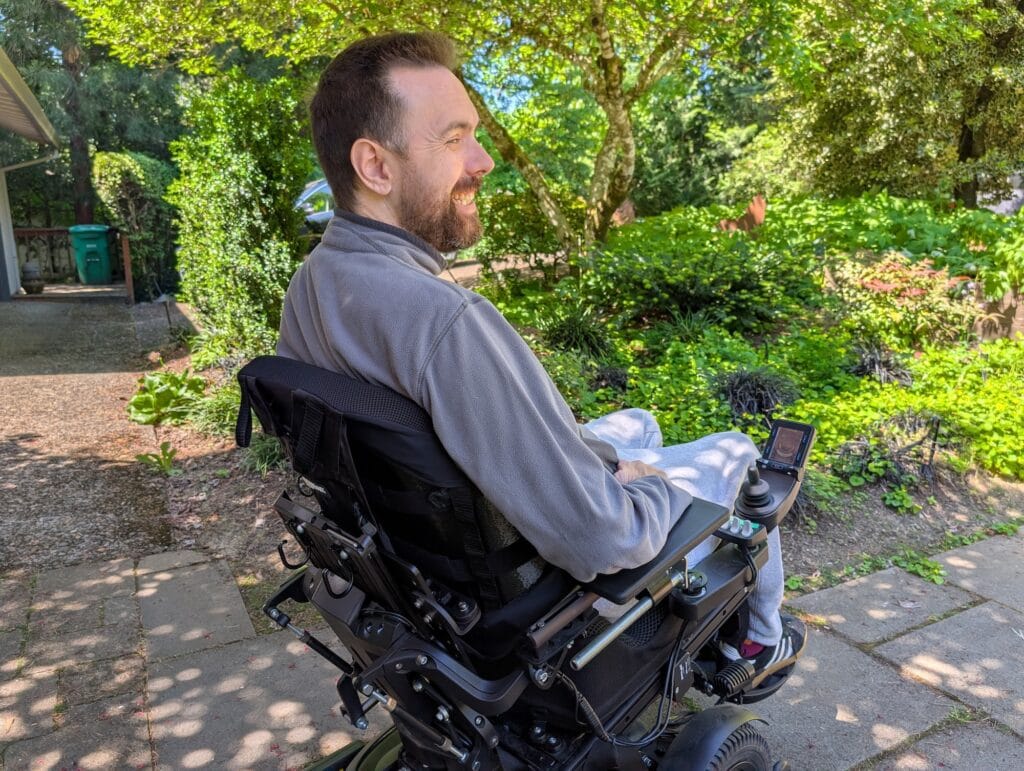
Years of avoiding pressure sores have taught me not to mess with a seating system that works. With a tweak here and some extra padding there, I kept my custom RIDE cushion and backrest on life support well past their expected expiration dates, but alas, all good things come to an end.
I eventually had to replace both with new molds that reflected my body’s changes, and while the new cushion worked swimmingly, the custom-molded backrest resembled a medieval torture device more than a functional backrest. Despite the best efforts of my therapist and vendor and multiple seating clinic visits for adjustments, it became clear that there would be no salvaging of what I affectionately dubbed “the polyurethane maiden.”
Right around the time I realized this, I received a release about Kalogon’s new Bondar backrest. We had just published a positive review of their Orbiter cushion, and I wondered: could the Bondar be the backrest solution I needed?
Ordering, Adjusting and Testing
Bondar is a customizable 3D-printed wheelchair backrest for people who need additional postural correction or support. It was designed to complement Kalogon’s Orbiter cushion, but can be used independently on most manual and power chairs. Before ordering, vendors and therapists can adjust the lateral depths and lengths, create “relief spots” and adjust the angular back using a program Kalogon built called Launch Pad.
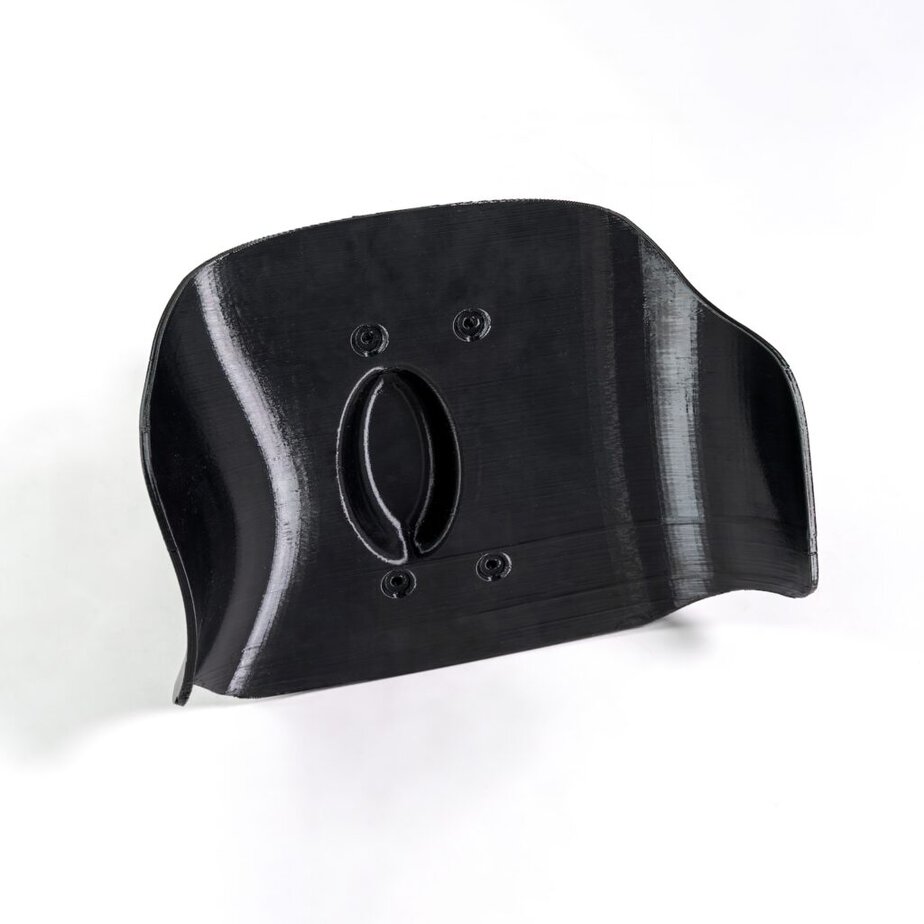
I worked with my vendor and therapist to design a backrest that would provide the lateral support I wanted without restricting my movement and independence like the polymaiden. Being able to see exactly how the supports would look using Launch Pad gave me hope that Bondar would solve my problems.
The Bondar I received looked almost identical to what I expected. With a black polycarbonate shell, a black cushion cover and black lacing on the back, there’s nothing particularly flashy about the Bondar. It looks solid and functional, and after the polymaiden that was more than enough for me.
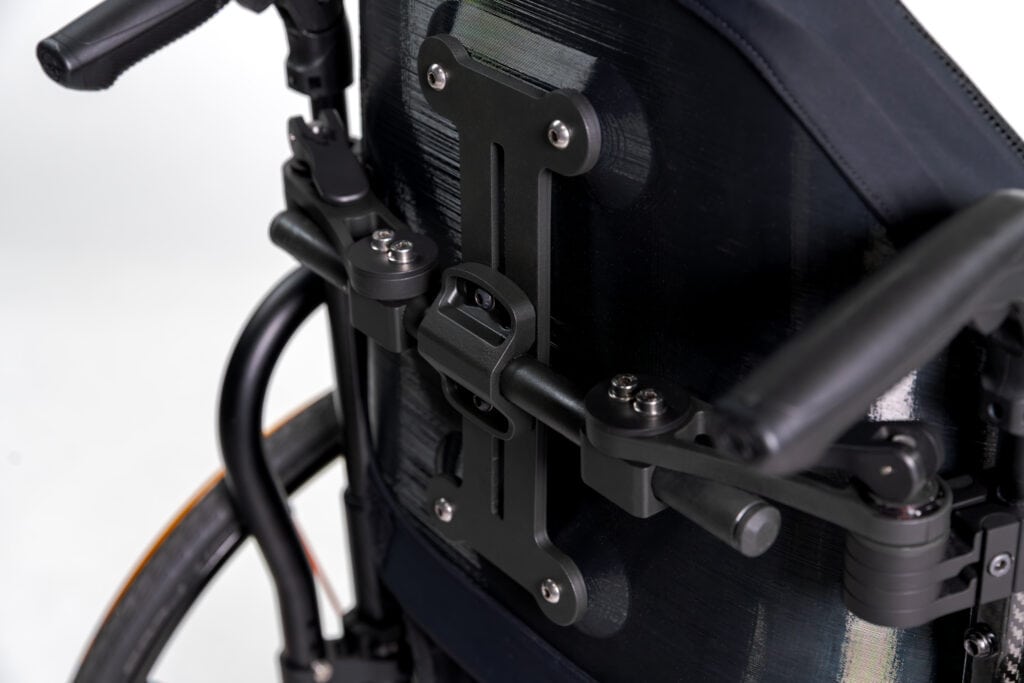
Installing the Bondar on my Permobil F3 was relatively painless, aside from a minor issue with the Permobil mounting bracket that I’ve also had with other backrests. Once I got seated, I immediately appreciated the balance of freedom and support the back provided. As a C5 quad, I have no sensation in almost all the areas where the backrest touches me, but I could tell the padding struck the right blend between being firm and supportive and soft and protective.
Despite my relative comfort, the backrest needed to be repositioned to optimize my seating position and ability to drive. The adjustments were where the Bondar truly shined. Using a single Allen key, my vendor was able to make extensive adjustments while I remained in the chair. It was his first time working with a Bondar and I could tell he was impressed at the backrest’s adjustability. “They really nailed it on the hardware,” he told me later. “Making adjustments was definitely a breeze.” I don’t plan on lots of adjusting now that we have it set up properly, but knowing it can be adjusted easily is reassuring and speaks to the thoughtful design.
Once we got the positioning locked in, I focused on function — specifically, did the Bondar allow me the freedom and mobility I needed to work from and drive my chair? Moving side-to-side and forward for pressure reliefs felt effortless and safe, but the right lateral support slightly impeded my ability to comfortably drive.
My therapist popped the back off, took it into the shop to cut it down and returned less than ten minutes later, problem solved. She said the polycarbonate shell was easy to cut through and work with. With the washable black cover pulled over, I couldn’t tell she had removed anything visually, but my arm moved more freely and driving was much easier. Honestly, after the polymaiden, everything felt easier and better with the Bondar.
The Verdict
In a good wheelchair seating system, each component should work together to provide needed postural support and skin protection while maximizing independence and function. What this looks like is different for every wheelchair user. I know people who depend on the added support provided by the features that I loathed about the polymaiden, and I know others who would scoff at the Bondar for being too cumbersome. But I also know a lot of wheelchair users in the middle, like me, for whom I think the Bondar could be a great solution.
A backrest doesn’t need to be sexy or have any bells and whistles; it needs to complement your cushion and chair and be reliable and adaptable to your needs. The Bondar checks all these boxes and wins extra points for the obvious care that went into designing its hardware and adjustment system.
Support New MobilityWait! Before you wander off to other parts of the internet, please consider supporting New Mobility. For more than three decades, New Mobility has published groundbreaking content for active wheelchair users. We share practical advice from wheelchair users across the country, review life-changing technology and demand equity in healthcare, travel and all facets of life. But none of this is cheap, easy or profitable. Your support helps us give wheelchair users the resources to build a fulfilling life. |