


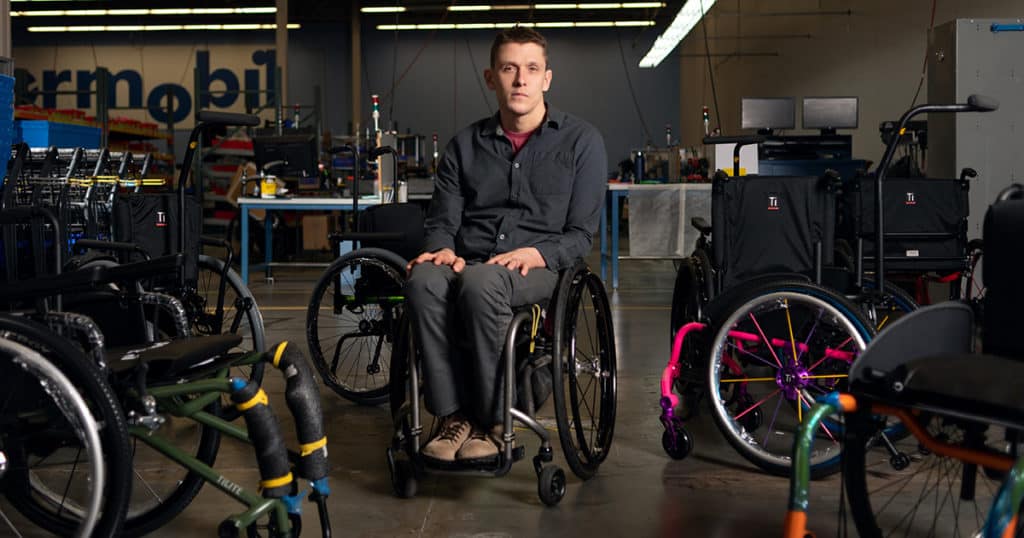
Unless you use a wheelchair full-time, it’s almost impossible to understand how make or break the right seating and positioning setup be can for your health, wellbeing and functionality. A bad seating system means constantly swimming upstream, battle balance, spasms, blood pressure and any number of complications. Dialing in a good setup can be life changing. It means that you have more time, energy, independence and choice in how you go about your day.
Finding the right setup typically involves finding the right components – think cushion and backrest – and the right wheelchair materials and measurements to work for you.
A Component is More Than an Accessory
In 2018, NM Editor-in-Chief, Ian Ruder, wrote about his conversion to a Ride Seating System for his power wheelchair. That system, by providing a blend of pressure relief and postural support that was unlike anything he’d experienced before, changed his life. But he acknowledged that the system doesn’t work for everyone. I tried a custom Ride cushion around the same time and wound up with increased edema in my lower legs, back pain and a lot more spasms. “There is no simple “one-fits-all solution” when it comes to the complicated needs of our community,” Ruder wrote. “But there are more good options now than there ever have been.”
Eight years later, Ruder found that his latest seating system was no longer working for his body and he tried a setup with a Ride cushion and Kalogon’s new, super-adjustable Bondar backrest. He found that it got him back into his happy place: the freedom and mobility needed to work from and drive his chair, combined with the pressure relief and postural support to keep his skin and bones healthy.
To find the products that work best for you, it pays to know the right people and to have some patience. First is finding out what other gimps are using. Peer support groups, your local United Spinal Chapter and adaptive sports events are great places to find wheelchair users with different levels of function. Don’t be afraid to pick their brains on what they like and don’t about their chairs and components — people love talking about their gear. Then, you need to assemble the right team. Bob Vogel’s “How to Get the Best Wheelchair Setup for Your Lifestyle” goes into the types of questions you should ask to improve your wheelchair setup and also what to look for in a therapist, ATP and DME vendor.

You also need to do your research. Even if you are going through a DME vendor, spend some time perusing online mobility stores like DMEHub or Living Spinal to see what options are currently available and what their features. I wrote the Gear Guide “How to Choose the Best Wheelchair Cushion for You” to explain the various types of wheelchair cushions and what you need to consider — from stability, to postural support, pressure relief, durability and more.
Once you find the right product, it can be hard to imagine life without it. Jarom Hlebasko spent years battling pressure sores until he found the SofTech cushion from Aquila Corporation, which allowed his skin to heal and stay healthy even as he resumed his active life, working full-time, and raising three daughters. When the company’s owners retired and shut down the business, Hlebasko and his brother decided to buy the company. “From the beginning, what was important to us was that someone would continue to make this product so others can find relief just like I did,” he says.
Measurements Can Make All The Difference
My own life changing seating story came in a couple of acts. It started when I got my first everyday wheelchair with ergo seating. Ergo seating simply means that the frame rail of wheelchair extends horizontally for a few inches before angling up to create the seat dump. This creates a pocket that allows your pelvis to sit more naturally. As a C7 quad, having ergo seating was revelatory. For the first time I felt like I could really lean forward into my push like I do in a rugby wheelchair. For the first time I felt like I could sit without slouching and still stay upright.
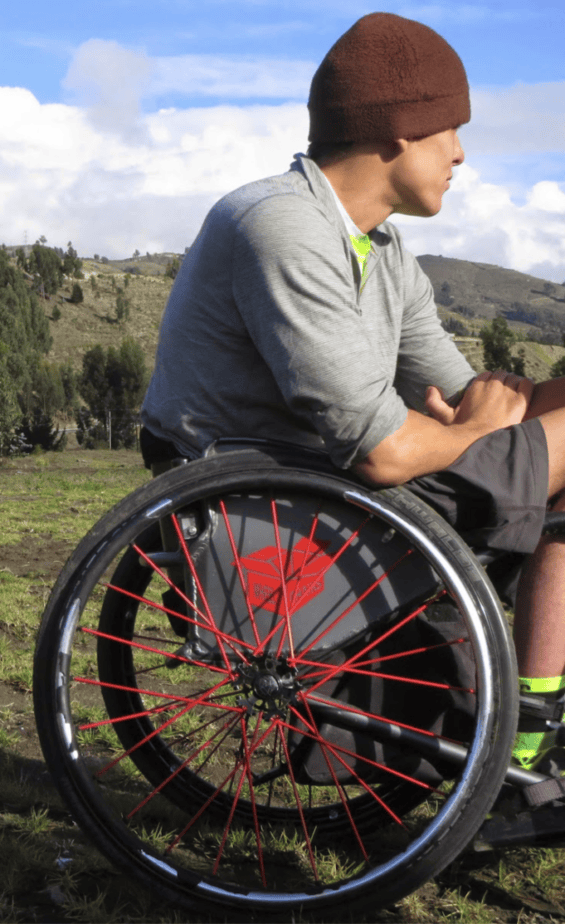
That seating system felt great, but the chair was made out of aluminum and rattled and wore out within a couple of years. It wasn’t until I got a titanium wheelchair with ergo seating in 2020 that I felt like I had something special. As I wrote in “My Quest to Find the Right Wheelchair”
“It’s comfortable to sit in. I can push miles in the city without my shoulders or neck hurting, and the front casters float over grass and dirt when I’m out in the country. When I run errands, I can lift the frame into the car without my bicep feeling like it’s about to detach from my shoulder. Titanium and carbon fiber may seem like a luxury, but not when you’re trying to keep your body from imploding by the age of 40.”
A big part of that story was how impossible it was to get insurance to pay for that chair. Things have only gotten worse since. That’s why United Spinal is fighting for a new bill that would require Medicare to create new codes that would allow suppliers to bill consumers for the cost of an upgrade to a titanium or carbon fiber wheelchair. Would it be better if insurance covered the true cost of ultralight wheelchairs? Absolutely. But this bill would at least let you get some titanium or carbon chairs without having to pay the full cost out of pocket. You should tell your Congress members to support it.
If you can’t get a new wheelchair, check out “Getting a Good Setup with Bad Wheelchair Reimbursement” and “Dial in Your Seating Position without Changing Your Chair.” Both go in depth on the tweaks — from front and rear seat height, to center of gravity and backrest angle — that can help you maximize the chair you do have. And when it comes to your seating setup, small changes can make a huge difference.
Support New MobilityWait! Before you wander off to other parts of the internet, please consider supporting New Mobility. For more than three decades, New Mobility has published groundbreaking content for active wheelchair users. We share practical advice from wheelchair users across the country, review life-changing technology and demand equity in healthcare, travel and all facets of life. But none of this is cheap, easy or profitable. Your support helps us give wheelchair users the resources to build a fulfilling life. |


This sentence got my attention. Please provide more information regarding seating and blood pressure!
“A bad seating system means constantly swimming upstream, battle balance, spasms, blood pressure and any number of complications.”