


How Wheelchair Users’ Repair Stories Moved a Congresswoman to Act
One of the bills advocates will be supporting at United Spinal Association’s Roll on Capitol Hill might not even exist if not for a conversation between a United Spinal member and one of her Representative’s offices.
June 15, 2026
Ian Ruder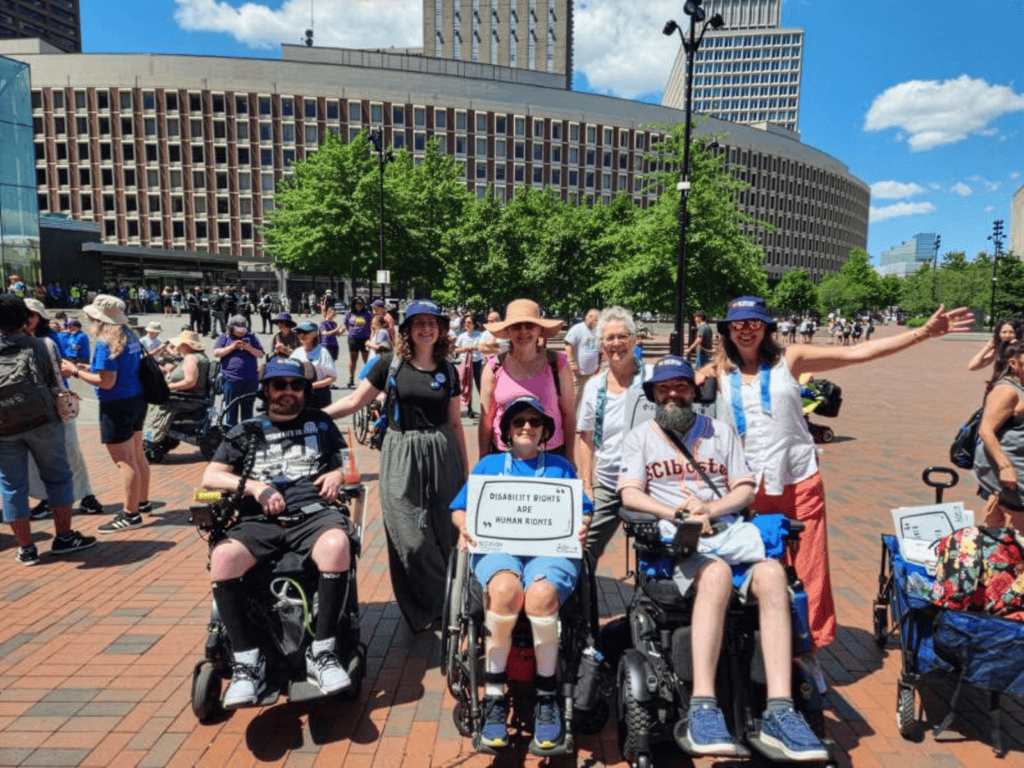
In more than 50 years as a manual wheelchair user, Pam Daly has amassed so many wheelchair repair horror stories that she can no longer keep track of which ones she’s told — or who she’s told them to.
There’s the time her brake fell off while she was sitting on the toilet in a store; the time a caster fell off repeatedly while she was on vacation in New York City; and the time her chair started emitting an ear-splitting squeaking sound, and that’s just the top of the list.
So, when Rep. Ayanna Pressley’s legislative assistant told Daly one of her stories had resonated with the Congresswoman, she wasn’t sure exactly which story he was referring to. It didn’t really matter though, as it wasn’t the specifics of the story that had captured Pressley’s attention, as much as one of the themes common to all her stories: how the need for prior authorization inevitably led to unfathomable delays in securing the wheelchair repairs Daly needed to live her life.
Even the simplest repair required Daly to get approval, often adding weeks, if not months, onto the repair process for the most basic fixes.
“It embarrasses me that I have to beg over and over and over again for something that is so stupidly easy to do,” Daly says. “It’s really barbaric.”
When she shares her repair nightmares with nondisabled people like Pressley, Daly tries to get them to think how they would respond.
“No one would put up with this!” says Daly.
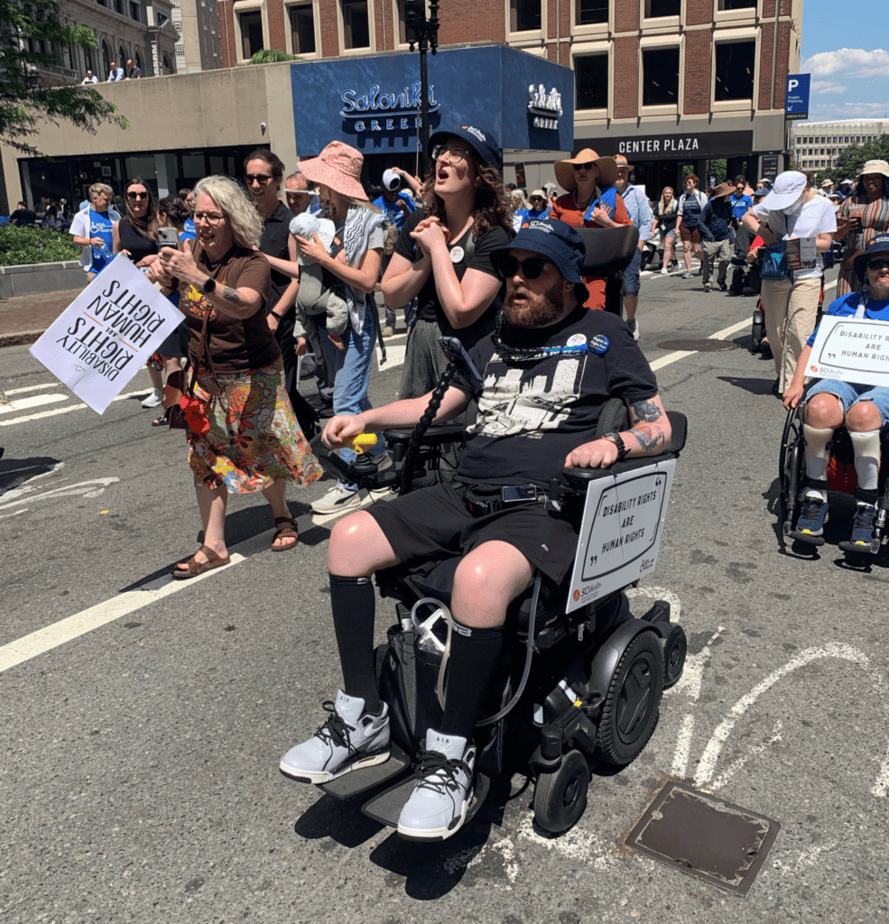
Pressley and her staff agreed, and following a meeting with Daly and fellow advocates from SCIboston, the Boston chapter of United Spinal Association, Pressley’s office drafted the “Facilitating Access to Service and Timely Repairs for Wheelchairs Act” (“FAST Repairs for Wheelchairs Act”). The bill would prohibit Medicare Advantage plans from requiring prior authorization for wheelchairs and other complex rehab technology.
Medicare Advantage, also known as Part C, is a privately issued alternative to traditional Medicare (Parts A and B). Medicare does not require prior authorization for wheelchair repairs but many Medicare Advantage plans do. According to AARP, as of May 2025, more than 35 million people — about 51 percent of eligible Medicare beneficiaries — were enrolled in a Medicare Advantage plan.
Vita Brown, advocacy coordinator for SCIboston, points to the bill as an example of the commonsense, non-partisan legislation that can make a real difference.
“It’s a very simple, small bill that would make a small change, basically making sure that definitions and requirements line up across the board. It’s making it fair for everybody,” she says. “That’s something that a lot of people can sign on to pretty easily.”
Brown started attending SCIboston meetings after her partner, William, sustained a C3 injury five years ago. She had always enjoyed advocacy and got involved as SCIboston’s coordinator soon after. The organic evolution of the bill — from meetings, to stories from those meetings, to follow-up calls and eventually a proposed bill — is an excellent example of the message Brown and Daly try to instill in other wheelchair users looking to make an impact but unsure how.
“Anyone who has a disability is a good advocate already because you have to do it all the time,” says Brown. “I’m just giving people the understanding that you already know how to do this, we’re just applying it slightly differently.”
To learn more about this bill, or any of the policy priorities for Roll on Capitol Hill, visit United Spinal’s advocacy page.
Support New MobilityWait! Before you wander off to other parts of the internet, please consider supporting New Mobility. For more than three decades, New Mobility has published groundbreaking content for active wheelchair users. We share practical advice from wheelchair users across the country, review life-changing technology and demand equity in healthcare, travel and all facets of life. But none of this is cheap, easy or profitable. Your support helps us give wheelchair users the resources to build a fulfilling life. |