


While putting together the content for this special issue, I reflected on my time at United Spinal Association and everything that has changed since I started. As I think about all the people I’ve met, the progress made by the organization and the future that lies ahead, I inevitably come back to the first organizational event I attended way back in October 2011.
A few months earlier, United Spinal had completed its merger with the National Spinal Cord Injury Association. The Orlando gathering was billed as a chapter development workshop, but it was really an opportunity for leaders from NSCIA’s network to meet face to face with United Spinal’s new blended staff and leadership.
Like two families meeting each other for the first time at a wedding, the vibe was … awkward. The longtime United Spinal attendees huddled in one corner of the lounge while the NSCIA leaders tried to gauge their intentions from afar. And both sides wondered exactly what they were getting into.
I was only six months into my gig editing a new membership magazine for the merged organization, and I had never met anyone from either part in person. I’d endured two lengthy flights, and a hellish connection to get to Orlando and arrived only to find the airline had mangled my power chair. Instead of worrying about making a good first impression on my new boss and co-workers, I struggled to stay upright and drive straight, with a luggage strap barely keeping me from falling out of my chair. It wasn’t exactly the image of a “strong, active wheelchair user” I’d hoped to project.
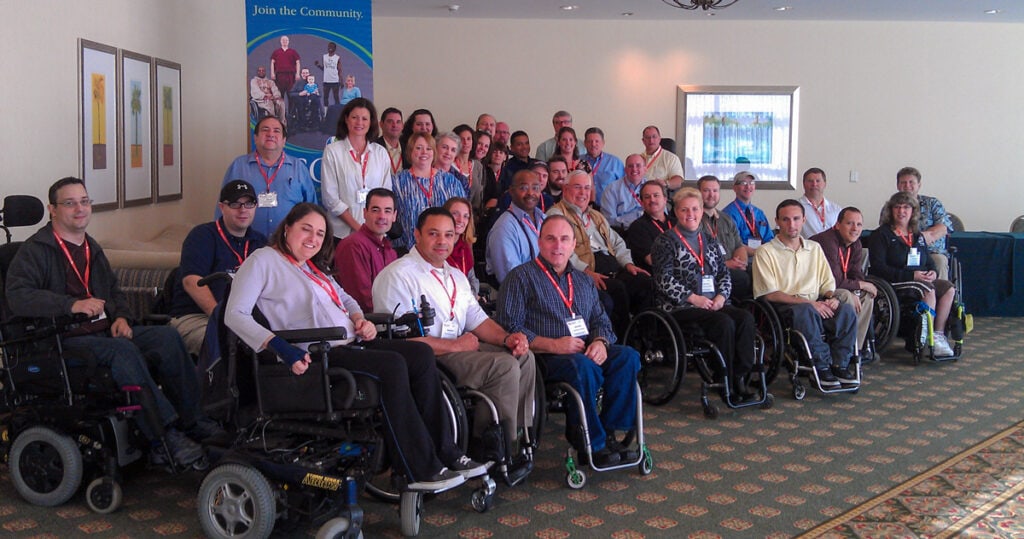
United Spinal’s then-president Paul Tobin calmed my nerves by introducing me around and reassuring me that most of the people there were just as unsure of what to do as I was. Over the next three days, I listened in as everyone got to know each other and hashed out what the newly merged organization would look like.
I remember some grumbling from the longtime NSCIA chapters about branding and uncertainty about how the chapters fit into United Spinal’s plans, but everyone was civil. We were all there for the same reason: to improve the lives of people living with spinal cord injuries and disorders.
Ten years later, this goal still drives every part of United Spinal, including NEW MOBILITY. The merger is ancient history, but staple programs like the Resource Center and VetsFirst remain strong, while new programs like the Tech Access Initiative and the Peer Mentoring Program are helping community members all over the country.
The awkward meld of families has evolved into a flourishing home. While the SCI/D community is likely one of the few families where you don’t actually want to add new members, knowing that United Spinal provides a welcoming option when newcomers inevitably join is essential.
From this observer’s chair, that option is stronger than ever, thanks to the hard work of my colleagues and all the inspired chapter leaders across America. I’d like to think that when the time comes for United Spinal’s centennial anniversary, spinal cord injuries and disability discrimination will be a thing of the past. In the more likely event that they are not, I’ll be excited to see what the organization is up to.
Support New MobilityWait! Before you wander off to other parts of the internet, please consider supporting New Mobility. For more than three decades, New Mobility has published groundbreaking content for active wheelchair users. We share practical advice from wheelchair users across the country, review life-changing technology and demand equity in healthcare, travel and all facets of life. But none of this is cheap, easy or profitable. Your support helps us give wheelchair users the resources to build a fulfilling life. |


Recent Comments
Dick Crumb on Adapting Recreation To An Aging Body
Karen on The Everlasting Saratoga Cycle
Ted Kilroy on Handcycle Gear Guide