


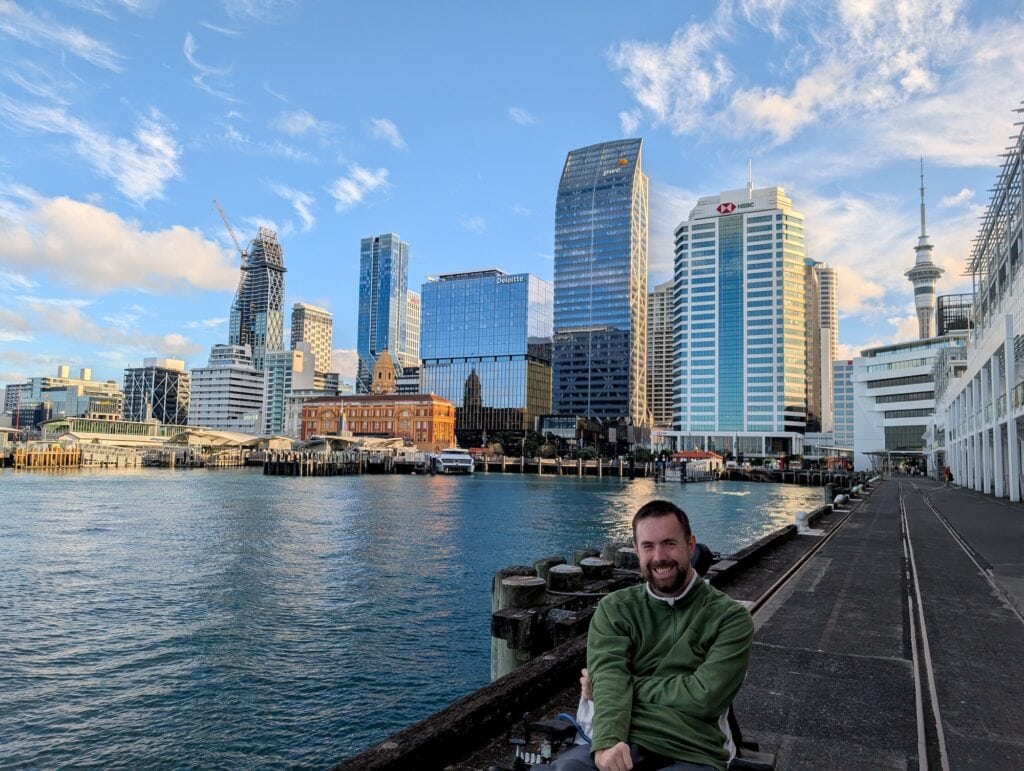
After two weeks traversing 2,300 miles across New Zealand and checking off every must-do on my list, when I finally checked into my hotel room back in the states, I didn’t have the reaction I expected.
I started to cry. Not tears of joy, but tears of pain and exhaustion.
My first international trip had exceeded all my expectations. Between a helicopter trip onto a glacier, a plane flight over the snow-capped Southern Alps, and too many other unforgettable adventures to list here, my mind overflowed with happy memories.
Unfortunately, none of that did anything to quell the overwhelming mental and physical destruction wrought by a 21-hour travel day, 17+ hours sitting on planes and enough awkward transfers to last a lifetime. The moment I rolled into my room, any adrenaline that had been masking the pain and anxiety wore off.
No hotel bed had ever looked sexier; the prospect of sleep briefly replaced my tears with a smile. Unfortunately, the moment my head hit the pillow, it felt like someone had just stabbed the entire circumference of my neck with thousands of tiny little swords. It took a handful of ibuprofen and 30 minutes of repositioning my pillow before my body finally let me get some rest.
A few hours of sleep and one delicious burrito later, my mind was able to start processing the whirlwind two-week trip and the emotional confusion in its aftermath.
What I came to realize was that while months of planning had resulted in a shockingly problem-free trip, the combined cost of all the stressors, all the worrying and all the extra, anxiety-inducing interactions had worn me down.
As much as I’d succeeded at budgeting for the added costs that come with accessible travel, I’d failed to anticipate the emotional toll from two weeks of worrying about things that most nondisabled travelers take for granted.
The toll started to build the minute I left home. My mind raced up and down my travel checklist, knowing that the equipment and supplies I need will be much harder to find in another country, thousands of miles away.

It ramped up at the airport. I exhaustively explained my needs to the staff hoping that my thoroughness would prevent them from damaging my wheelchair, bags, or, god forbid, me.
The plane was like a pressure cooker, turning my anxiety up a notch: Am I doing enough pressure reliefs? What if I have a bladder or bowel problem at 30,000 ft. in the middle of the Pacific Ocean?
Landing and discovering my wheelchair and bags had all arrived undamaged was a huge relief, but my mind instantly switched to thinking about my hotel and vehicle reservations. I’ve had providers fail to deliver the promised accommodations so many times that I’m actually more surprised when they do have the room or vehicle I reserved.
Each new destination presented some of these same anxieties. On a trip like this, where I stayed six different places, that added up. Adding two flights on the return trip and revisiting all the travel-day-related issues, and the emotional cost of the whole trip was enough to weary a much more worldly traveler than I.
But I’d do it all again in a heartbeat. The neck and shoulder pain went away with a few more nights of sleep and some more ibuprofen, and the mental pictures of all my adventures will stick with me for the rest of my life.
The unfortunate reality is that as disabled travelers we are inevitably confronted with more obstacles, more uncertainty and more potential problems. But isn’t that pretty much the same as what we face every day as disabled people living in an abled society?
Do I wish it had been less stressful to make all those memories? Sure, but if all the stressors I listed earlier were the disability tax required to enjoy my first international trip, it was worth paying.
Support New MobilityWait! Before you wander off to other parts of the internet, please consider supporting New Mobility. For more than three decades, New Mobility has published groundbreaking content for active wheelchair users. We share practical advice from wheelchair users across the country, review life-changing technology and demand equity in healthcare, travel and all facets of life. But none of this is cheap, easy or profitable. Your support helps us give wheelchair users the resources to build a fulfilling life. |