


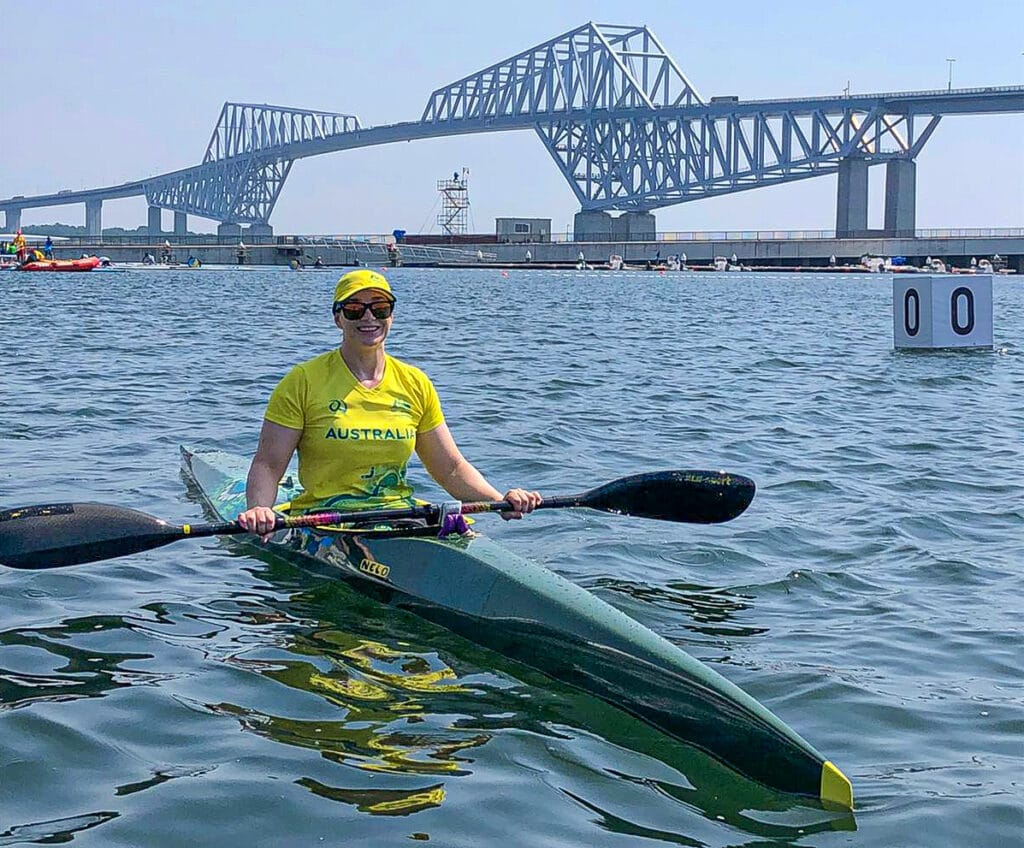
A Silver Medal and a Roller-Coaster Final Race Have This Paracanoeist Looking Toward Paris
September 14, 2021
Susan Seipel“Breathe,” I tell myself as I approach the start line. I’m on the world stage, at the Tokyo Paralympic Games, about to race the final of the Va’a outrigger canoe in the VL2 classification. Achieving the second-fastest heat time earned me the middle lane, prime position. I hear my name and country announced over the loudspeaker. There is silence afterward and no applause.
The stands are empty, a reminder of the COVID-19 virus raging across Japan that robbed us of what would have been a sold-out venue of cheering fans. It’s a real shame compared to my Paralympic debut in Rio 2016 when the crowds were wild. Brazilians love to party, and a fair few Australians had made the trek to join the festivities. The support was incredible, and the noise was like nothing I had ever experienced before.
But honestly, the lack of a crowd doesn’t affect my racing. I pull my blade through the water propelling the boat forward into the start bucket. I look down my lane toward the beautiful Tokyo Gate Bridge and take another deep breath. The starter calls, “Hold your boats, ready, set.” The bucket drops beneath the water, and that’s all I remember … the race is a blur.
Looking Back and Forward
As I watched the replay of the race, my memories flooded back. I recalled changing my paddle from my left hand to my right to steer the boat and some powerful strokes to pull away from the field at the finish line. Out of the corner of my left eye, I saw my opponent in front of me. I felt extreme happiness and relief — I knew I had the silver. A medal is what you dream of and the reward for many years of hard work, dedication and sacrifice.
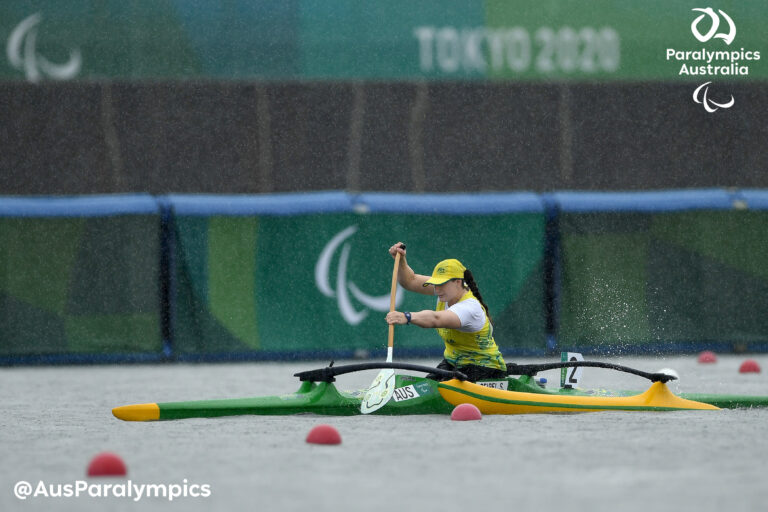
Courtesy of Paralympics Australia
Susan Seipel competes in her outrigger canoe.
The medal ceremony took place about an hour after the race. We were given a lot of instructions before the ceremony around COVID-19 protocols. Traditionally the medals are handed to the winners by dignitaries, but this time the athletes had to collect them from a tray. I was slightly overwhelmed by the occasion and completely stuffed this up by instinctively reaching for the medal in the middle — the gold — and was hastily corrected. The gold medalist asked if she could present my medal to me. Breaking all COVID protocols, she did, along with a big hug. I was honored and bursting with pride.
The next day I had another opportunity to medal in the KL2 kayak final. In Paracanoe at the Rio 2016 Paralympics, I made history as the first Australian ever to win a medal in a kayaking event. It was bronze, and I dreamed of repeat success here. I missed out on automatic progression and had to do a semifinal an hour before the final. Despite my great start in the semifinal, I did just enough to claim the slowest qualifying time.
I gave it everything I had left from lane one but placed a disappointing seventh in the final. After the race, I cooled down, paddling away from the course and realized this was my last paddle in Tokyo. Feelings of sadness hit suddenly, and tears welled in my eyes. I was sad that Tokyo was over, and the five-year rollercoaster campaign to get here had taken a toll. However, a few moments later, I felt happy again and found myself dreaming of being at home and taking my Oru kayak out to the beach to enjoy some recreational paddling before getting back into training to chase my next dream: Paris 2024.
Susan Seipel is an Australian paralympian who has also won three world championship gold medals in outrigger canoe. To learn more about outrigger canoe racing, watch the video below of her breaking down her 200 meter final at the 2019 Paracanoe World Championships.
Support New MobilityWait! Before you wander off to other parts of the internet, please consider supporting New Mobility. For more than three decades, New Mobility has published groundbreaking content for active wheelchair users. We share practical advice from wheelchair users across the country, review life-changing technology and demand equity in healthcare, travel and all facets of life. But none of this is cheap, easy or profitable. Your support helps us give wheelchair users the resources to build a fulfilling life. |


Recent Comments
Abdul Mansour on Testing Two New Seat Designs That Will Let You Fly in Your Wheelchair
Alejandra on Adaptive Products Roundup: May 2026
Lisa Blinn on A Malpractice Case Against ParkingMD