



“If there’s one thing you write about in your article, it should be just how flipping hard it is to explain to people, even health care professionals, what is going on with autonomic dysreflexia.” — Larry Singer, C5-6
As the guy tasked with explaining autonomic dysreflexia in an article, and a longtime quad myself, I know exactly what Larry Singer was talking about. AD was easily the scariest and most confusing topic covered in rehab after my C6 spinal cord injury. It can be an undiagnosable silent killer or a minor annoyance that vanishes with the smallest adjustment. Either way, if you are susceptible to it, you need to know what it is and how to handle it.
Autonomic dysreflexia has been a regular part of Singer’s life since he acquired a C5-6 SCI in a hit-and-run crash at age 19. Like many people with higher-level injuries, Singer has stories of his body going rogue with profuse sweating and severe headaches in response to everything from UTIs and bowel accidents, to a flat in his ROHO cushion. Now 56, Singer is blunt: “There’s no rhyme or reason to my dysreflexia.”
But you don’t make it 35 years as a quad by giving up just because there doesn’t seem to be any rhyme or reason. He’s learned to read his body’s reactions and respond accordingly to avoid serious complications as much as possible. I’ve done the same in my 20 years on wheels, and between our experiences, and those others have shared with me, I’m hoping I can help others understand AD so they can explain it and live with it.
What Autonomic Dysreflexia Is and Common Symptoms
AD wasn’t a frequent part of my life for the first 14 years I was paralyzed, but has become a regular occurrence since I had a seizure in 2019 — an event that kicked off years of other health issues. My elevator-pitch explanation of AD is that it is what happens when my brain can’t stop an out-of-control fight-or-flight response. When something’s wrong below my injury level, sensory nerves raise my blood pressure and trigger my adrenal gland, which makes everything go haywire. I’m a C5-6 quad, so my brain just can’t tell enough of my body to chill to make a difference. Some meds can help manage symptoms, but the real goal is fixing whatever set off those sensory nerves in the first place.

The autonomic nervous system controls many of the body’s automatic or involuntary functions, including blood pressure, heart rate, body temperature, sweating, digestion and sexual function. The ANS consists of two subsystems — the sympathetic and parasympathetic nervous systems — that maintain a balance between your “fight or flight” and “rest and digest” responses. Autonomic dysreflexia is what happens when that balance is broken by an SCI or other neurological injury.
In these cases, when there’s a noxious stimuli, the sympathetic “fight or flight” response kicks in, making the heart pump with more force and tightening the blood vessels, both leading to an increase in blood pressure. The “rest and digest” response to distend the blood vessels only reaches those areas above the injury level, allowing the “fight or flight” mode to continue out of control below the injury level. If the cause of the AD is not resolved, this can lead to dangerous spikes in blood pressure.
Blood vessels around the bowels, which represent a large portion of the circulatory system that influences overall blood pressure, are controlled by nerve signals below T6. This is why autonomic dysreflexia predominantly affects people with injuries at T6 and above.
Research has also shown that dysreflexia triggers the adrenal gland to release hormones called catecholamines that increase stress in the body. David McMillan, communications director with The Miami Project To Cure Paralysis, notes that “in a normal situation, the nervous system will balance the output so that sometimes you can send the signal just to the blood vessel or just to the adrenal gland. But the point with [AD] is you have an uncoordinated mass reflex where they all get turned on.” Among other things, those catecholamines can make people feel agitated and are necessary to elicit sweating, one of the most common symptoms of AD. Other common symptoms include pounding headaches, goose bumps, skin redness or flushing, chills without fever, and blurred vision. [For a full list, check the Model Systems Knowledge Translation Center guide].
Dysreflexia can be an undiagnosable silent killer or a minor annoyance that vanishes with the smallest adjustment.
The most common causes of AD are bladder, bowel and skin problems, but any intense sensation below the level of injury can be a culprit. Sources can be as simple as a kinked indwelling catheter or extreme temperature, or something harder to diagnose like a bladder or kidney stone, an ingrown toenail or a broken bone.
Finding and Relieving AD Causes
Singer believes the best thing he can do is try to avoid the things that cause AD. He tries to find a good balance of fiber in his diet (too much fiber and he runs the risk of having a bowel accident, too little and he runs the risk of being constipated) and always checks his ROHO cushion to ensure proper inflation. He also has found the right mix of nutritional supplements to prevent UTIs and treat them when he does get them.
When Singer starts to feel dysreflexic, he tries to address it quickly. Many people with SCI learn what AD feels like and usually don’t need to check blood pressure — but if you aren’t quite sure, then a blood pressure check is a good idea. MSKTC recommends knowing your baseline, which is usually in the 90-110 mmHg systolic/50-60 mmHg diastolic range for people with SCI. If you notice any AD symptoms and have a systolic blood pressure at least 20-40 mmHg above your baseline, or a diastolic pressure 15-20 mmHg above baseline, then you are likely dealing with AD.
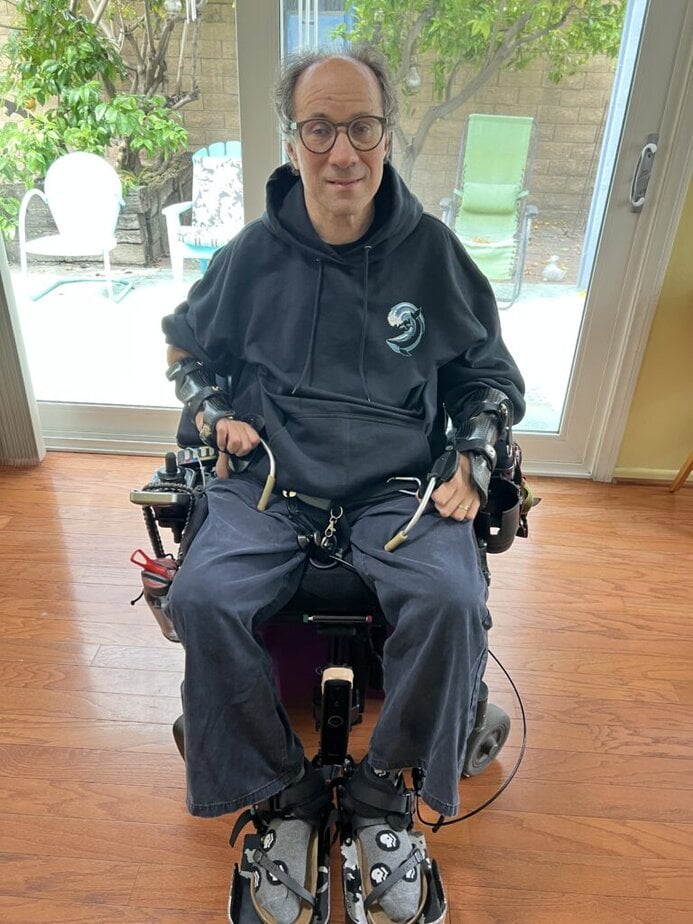
When Singer starts to feel the onset of symptoms, he starts to go down the checklist of potential causes. “I’ll check my leg bag and see if there’s anything in it. If there is, I will empty it to see if it is clear or milky, indicating a bladder infection,” he says. “[Then] I will go to the natural remedies I have found, including high potency cranberry, vitamin C and a d-mannose supplement called UT Synergy. If it’s a bowel accident, I usually smell something, or then there’s the rare situation that I can’t find the cause, so I worry it’s a pressure sore.”
The vast majority of my dysreflexia stems from a series of wounds I’ve been battling on and off for the last five years. The discomfort caused by the wounds is enough to cause sweating and headaches, but any pressure or irritation exacerbates it. I spent several months lying shirtless on towels in my bed waiting for a wound vac to heal one wound, sweating miserably all the time.
When I feel the onset of AD, the first thing I do is check my leg bag to make sure it’s not full or kinked. Then I move around a little in my wheelchair. If my AD spikes or changes with the movement, there’s a good chance it is skin/wound-related.
Sitting up and dangling your legs can help lower blood pressure, but are only temporary measures. Diagnosing the root of the AD is critical. Some people are able to diagnose the cause based on the symptom(s) they experience, but that’s not always possible. Singer taught his wife how to help alleviate the dysreflexia, but sometimes he just needs to wait it out until his attendant shows up for a full exam and diagnosis. When Singer still can’t pinpoint the cause, he heads to the ER.
Treatments for AD
I’ve headed to the ER for AD a good dozen times over the past five-plus years. Sometimes I knew what was causing the AD and needed doctors to fix it, and sometimes it was a mystery that required all sorts of imaging and tests. As I learned more about the dangers of AD, I stopped waiting things out so much before going to the hospital. The 2019 hospitalization taught me that back spasms triggering AD could spike my blood pressure to 220, leading to an unbearable headache and, more importantly, raising major cardiovascular risks. In 2022 I even had a TIA — a transient mini stroke — really driving the point home … and driving me to the ER when AD kicks in.
The nature of AD means it can contribute to stroke, organ damage, seizures or even death. For example, blood going at high pressures through distended vessels around your brain could lead to one of those vessels bursting, with dire consequences. ER doctors will try to pinpoint and fix the pain trigger and may give you medication to lower your blood pressure.
Rapid-onset treatments used for AD include nitropaste, a topical ointment that relaxes blood vessels, and nifedipine, a calcium channel blocker that comes in pill form. McMillan from The Miami Project notes that fast-acting meds “are very tricky to prescribe, because these are things that can induce shock, essentially,” and are often used under supervision of a doctor. Some people who struggle with AD carry an emergency dose of one of these meds.
Like many folks with SCI, I get mild AD during my bowel routine, it’s uncomfortable but not a major medical risk. My doctor prescribed terazosin, another drug for high blood pressure, and told me to take a single dose an hour before my routine. It helped with — but didn’t totally eliminate — blood pressure spikes during my morning routine.
New research even shows that spinal cord stimulators, which have been used for several decades to treat chronic hypotension (low blood pressure) in some people with SCI, can be programmed to also address AD-related hypertension and catecholamine releases. In fact, a study last year found that a specially programmed SCS significantly reduced AD in a 46-year-old C4-5 quad who had almost constant AD triggered by her nerve pain.
“By definition,” McMillan says, “bioelectronic medicines [like SCS] — medicines targeting the functioning of nerves – are going to be faster acting and also more, if you will, programmable. You can turn them on, you can turn them off; you can turn the stimulator on, you can turn it off. So, it seems like these bio electronic therapies have a lot more potential when it comes to autonomic dysreflexia.” He seemed optimistic that within a handful of years, SCS will be designed and approved to treat intermittent AD without any meds. Time will tell, but momentum is heading in the right direction and people dealing with disruptive AD may soon have a high-quality treatment.
Support New MobilityWait! Before you wander off to other parts of the internet, please consider supporting New Mobility. For more than three decades, New Mobility has published groundbreaking content for active wheelchair users. We share practical advice from wheelchair users across the country, review life-changing technology and demand equity in healthcare, travel and all facets of life. But none of this is cheap, easy or profitable. Your support helps us give wheelchair users the resources to build a fulfilling life. |


My first experience with AD happened six years after my T3/4 injury while giving birth to my 3rd child during the last stage of delivery. Suddenly, my blood pressure shot up and my head felt like it was ready to explode.
I had never heard of AD and neither had my doctor. He gave me a shot to bring my blood pressure down so I could deliver my baby safely. We found out later that an epidural given at the beginning of labor would prevent this from happening. We did that for my baby deliveries after that and it worked wonderfully.