



The benefit of getting a good night’s sleep is one of a few things in the world everyone agrees on. Sadly, getting enough deep sleep can be difficult, especially if you live with a disability. One way to mitigate some of the obstacles to a good night’s sleep is finding the right bed and mattress — one that is comfortable, functional, and goes above and beyond to support your specific health needs.
Many people with mobility disabilities use a standard consumer bed and mattress, and find the ideal setup is a frame that is the optimal height for transfers and a mattress that is the right balance of firmness for independence, but soft enough for comfort and skin protection. Others find that high-end adjustable consumer beds work better or are necessary for their independence or living situation.
Still others find that some combination of a hospital bed frame and specialty mattress is the optimal sleep-system for them. The main advantages hospital bed frames have over adjustable consumer beds is that they offer more adjustments, allowing the user or attendant to quickly and effortlessly change positioning and bed orientation. By lowering and raising the bed height to make transfers easier or angling the head of the bed to help with coughing or breathing, the right hospital bed can enhance independence and address some SCI issues.
The primary reason for choosing a specialty mattress is to protect skin, avoid a pressure ulcer, or help heal a pressure ulcer or skin flap. Additional reasons to choose a specialty mattress include comfort — as the same design that protects skin also provides a comfortable surface for great sleep — and allowing extended periods on bed rest.
Specialty mattresses protect skin integrity with various levels of shear reduction and immersion (sinking into the mattress). The correct amount of immersion also tends to be more comfortable for sleep. But too much immersion can make dressing, turning and transfers a challenge, something the right hospital bed and mattress combination addresses through frame adjustments. Also, many specialty mattress designs incorporate firmer sides for positioning and transfers.
Choices of hospital beds can be daunting. A web search shows there are well over 100 models of hospital bed frames, mattresses and frame/mattress combinations, with prices ranging from $700 to over $30,000. When looking for the optimal sleep system, if possible, try it before purchase to check for comfort and ease of transfers.
A great way to gather information on bed makes and models is to search disability forums like Rutgers University’s CareCure Forums. You can also check out reviews of a model you are interested in at online retail sites like Spinlife.com. For those with compromised skin or a currently healing pressure ulcer, it is wise to consult with a wound care clinician for their opinion of the most appropriate sleep system for your needs. When looking at a specific bed, check to see if there is a return policy in the event the system you choose is uncomfortable or doesn’t meet your needs.
The Benefits of Hospital Bed Frames and Specialty Mattresses
The list of adjustments and benefits for hospital bed frames — depending on the model — can include:
- Raising the Head and Upper Body: Helps with positioning and comfort, enables sitting upright for dressing, and can reduce strain on shoulders. Sitting upright makes it easier to eat and socialize, and can help with digestion and coughing.
- Raising Knees: Helps reduce leg spasticity, shearing and edema.
- Raising and Lowering Bed Height: Enables easier independent transfers, and aids attendant care.
- Raising the Foot-End of the Bed: Helps reduce edema in feet and legs.
- Auto-Transfer: A preset adjustment that lowers or raises the bed to optimal height for chair-to-bed transfers.
- Gravity-Assist Repositioning: Makes attendant repositioning easier.
- Trendelenburg and Reverse Trendelenburg: In the Trendelenburg position, the bed is angled so feet are higher than the head. Trendelenburg can help reduce edema, and reverse Trendelenburg can help with digestion.
- Side Rails: In addition to preventing a fall out of bed, a partial-length siderail (upper end of the bed) can be helpful for turning or provide a stable base for transfers.
Adjustments on a hospital bed can also help you fine-tune your most comfortable sleeping position and/or reposition yourself during the night. If you have decent arm and hand function, adding a trapeze can also help with repositioning.
Specialty mattresses are often more comfortable than their more basic, less expensive counterparts and can be a worthwhile investment whether you want better nightly sleep or are looking at an extended period of bed rest. If you have severely compromised skin or are actively trying to heal a pressure wound or flap surgery, you may need a high-end air management mattress.
Here are ideas and options for bed frames, mattresses, full bed systems and mattress top overlay options that can provide optimal sleep, health and independence:
Examples provided are not intended to be an exhaustive listing of available products. Please note: None of the hospital bed companies contacted for this story would provide a suggested MSRP. Listed and Online prices are approximations based on info available at time of print.
Non-Rehab Consumer Beds
Many consumer beds offer similar functions and benefits to hospital beds and mattresses, including some that combine bed and mattress. Just like choosing a rehab bed or mattress, the key is to find one that has the features you need to protect your skin and maximize your comfort and independence.
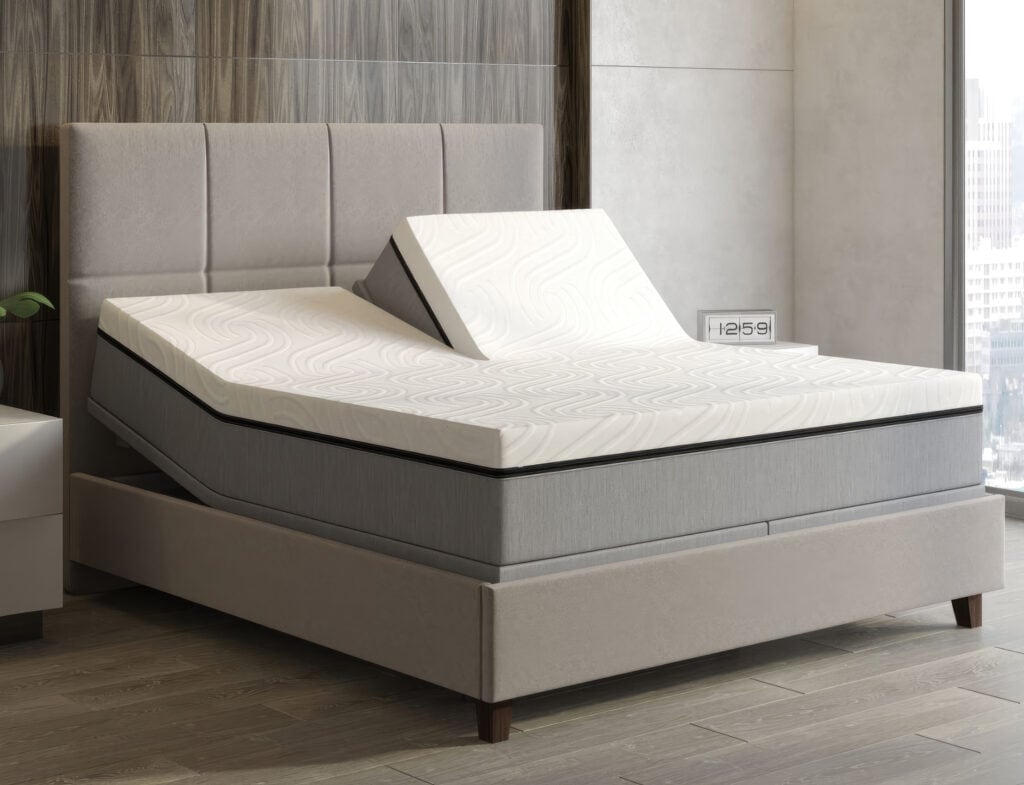
Sleep Number beds: Sleep number beds feature mattresses that enable you to adjust how soft or firm you want the mattress. Adjustable presets allow a soft mattress for sleep and a firm mattress setting for turning, dressing and transfers. Some models like the pSE can control head and foot height. Twin size pSE (smart bed base and mattress): $4,298.
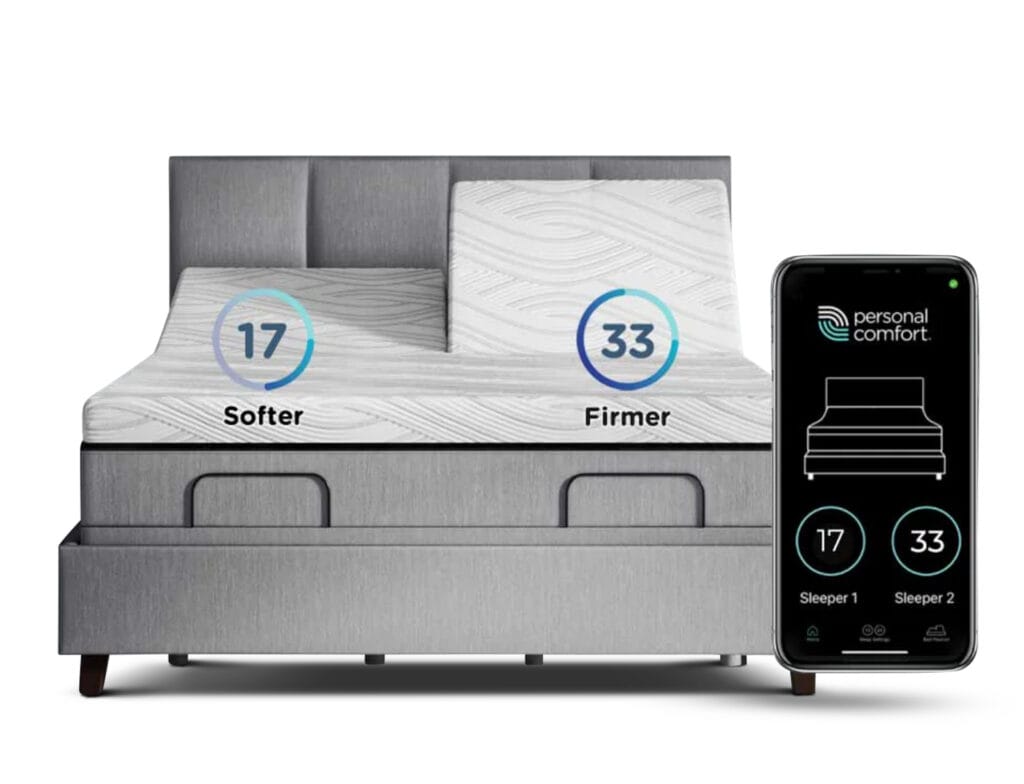
Personal Comfort beds: Personal Comfort beds have adjustability for how soft or firm you want your mattress, as well as head and foot adjustability at competitive prices. Twin Power-Flex 2 base: $1,499. Twin Rego Smart Bed adjustable mattress: $1,199.
Hospital Bed Frames
Basic Frames
Basic hospital bed frames offer the primary push-button adjustments needed for sitting upright, dressing, positioning, spasticity reduction and transferring. In general, the more you pay, the more features and automation you get. Most basic hospital bed frames are 36” wide. (A standard twin size bed is 39” wide, and a full-size bed is 54” wide.)
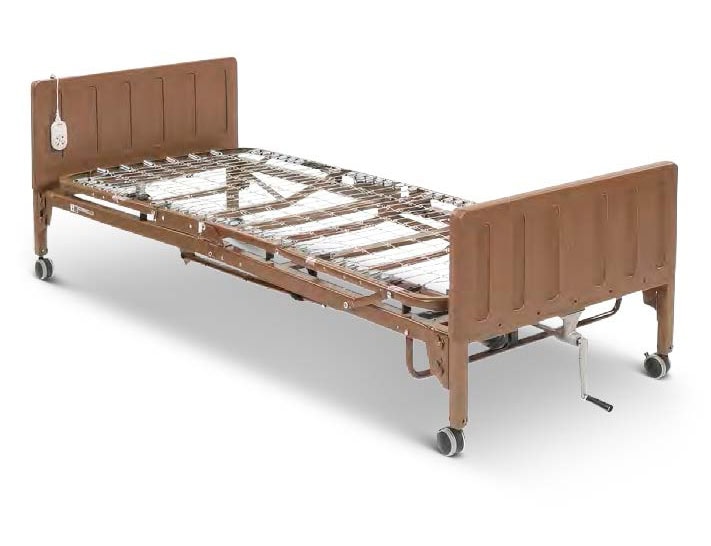
Drive Medical Semi Electric Bed (Single Crank): Footboard crank for bed frame-to-floor (transfer) height adjustment range goes from 15” to 24”. Push button controls raise upper body and knees. Includes 9-volt battery to enable lowering in case of power failure. Bed Width: 36”. Online price: $700.

MedLine Basic Full-Electric Bed: Push-button controls for upper body/head height, foot height, and frame (transfer) height. Bedframe-to-floor height adjustment range goes from 15” to 20”. Includes 9-volt battery to enable lowering bed in case of power failure. Bed Width: 36”. Online price: $799.
Deluxe Frames
Deluxe bed frames offer more options, customizability and style choices. Additional adjustments usually include Trendelenburg, reverse Trendelenburg, and wider floor-to-bed-height adjustments to help with independent transfers and make it easier for attendants to help with transfers and/or repositioning. Some deluxe frames offer color options and paneling for users who want to avoid the hospital look. Most deluxe models offer wider versions than the 36” width of basic hospital beds, or are expandable.
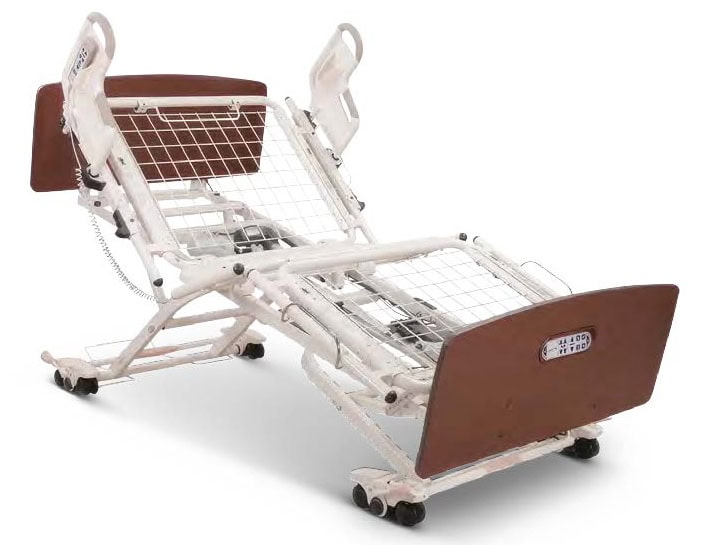
Joerns UltraCare XT: Push-button controls feature a full array of adjustments — upper body, knees, and bed frame height. Attendant controls located at the foot of the bed include Trendelenburg, reverse Trendelenburg, gravity assist position and preprogrammed positions for upright comfort sitting angles and adjustable program for transfer. Bed frame-to-floor height ranges from 7” to 30”. Bed has heavy-duty motors and Smart Actuators that use 80% less energy. Options include SafeLight to illuminate the bed for transfers, and transfer-assist rail handles. Standard bed width is 35” with add-on to 42”. List price: $3,220. Online price: $2,450.

Span America Encore by Savaria: Push-button controls for raising and lowering upper body, knee, Trendelenburg and reverse Trendelenburg. Bed frame-to-floor transfer height ranges from 7 7/8” to 30”. ‘Glide align’ helps prevent sheer when raising upper body by raising knees at the same time. Bed is 35” wide and adjusts to 39” or 42”. Underbed light for nighttime transfers and optional transfer-assist side rails. Headboards have two profile options and five color options. List price: $8,925. Online price: $4,000.
Pro Tip: Check to see if the bed you are looking at includes or has the option of adding a backup battery big enough to fully power the bed for many adjustment cycles in case of power failure. Better still, especially if you have a pump-powered air mattress, look into a whole-house backup battery or generator. Also, check with your utility company as some power companies offer a Medical Backup Program and/or Medical Power Discount that gives discounts on utilities and a provides a whole-house backup battery or generator at no cost or a discount if you have a medical need. Backup power is even more crucial if you have an air mattress.
Hospital/Rehab-Style Mattresses & Overlays
In addition to comfort, the reason one would choose a hospital or rehab-style mattress is similar to choosing the proper wheelchair cushion. The goal is to get the correct amount of immersion to reduce pressure and shear on sensitive areas. For users with intact, healthy skin, something with multiple levels of foam can provide a good balance of immersion for skin protection and comfort, and enough firmness for dressing and transferring. At the high end are air management systems, which provide immersion that provides maximum protection for compromised skin, often at the cost of mobility. The most expensive mattresses are usually only for people with extremely compromised skin or those healing from a pressure ulcer or skin flap.
Two items of special note:
• When trying a new mattress or mattress topper, it is especially important to do regular mirror-skin checks (or smartphone/selfie stick skin check) to look for redness and skin damage.
• Most hospital/rehab-style mattresses require a strong bed-frame base — either a hospital bed or a base where the mattress support slats are 3 inches apart or less.
Entry Level
These mattresses distribute pressure using different layers and densities of multidensity foam. Examples:

PurpleFlex Mattress: Although not specifically a hospital mattress, the PurpleFlex mattress gets high marks from wheelchair users. It employs a combination of layers of foam with an injection-molded GelFlex Grid made up of 1,400 waffle-shaped square air channels that help evenly distribute pressure and dissipate excess body heat, allowing the mattress to breathe. List price (twin size): $499.
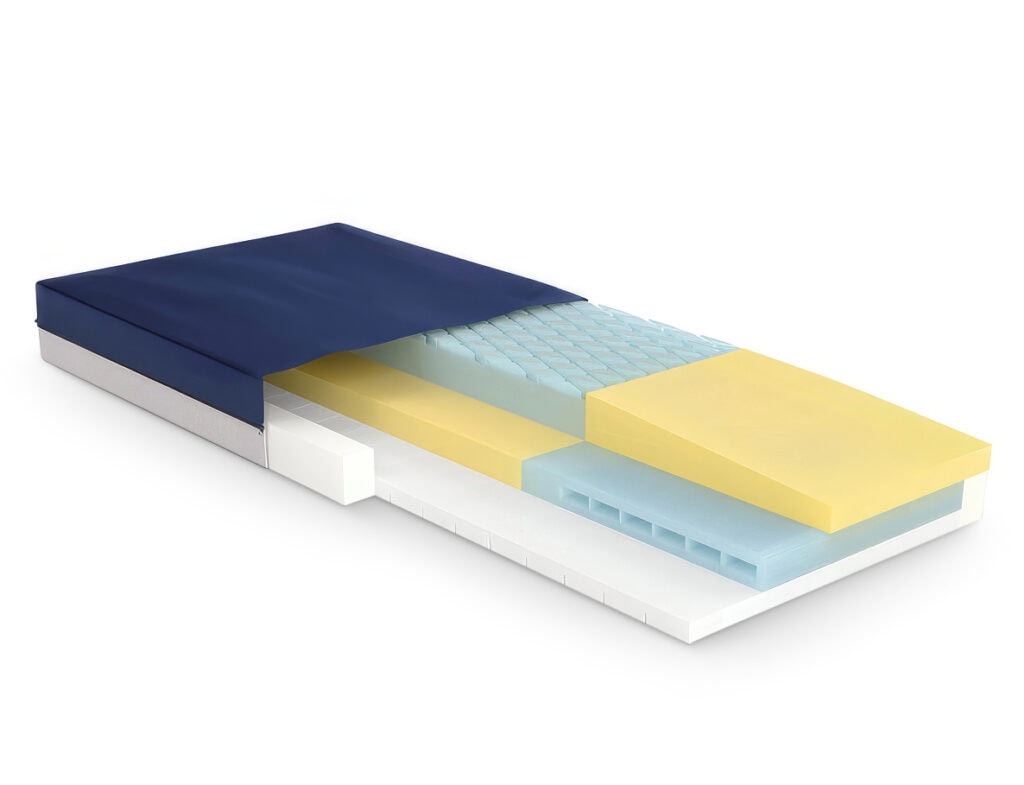
Drive Medical Gravity 8: The Gravity 8 uses three layers of different density foam that is die-cut for pressure redistribution and has high density foam on the perimeter of the mattress for support. Online: $225.
Overlay
An overlay can be a solid, often more affordable option for people looking for a little extra skin protection or added comfort. For as little as $50, you can add some protection with a 2-3” foam egg crate bed topper, available at online retailers like Amazon. For a little more, Tempur-Pedic makes a 3” overlay made with material that supports and responds to weight, shape and temperature that starts at $259. Keep in mind, an overlay usually adds about 3 inches of transfer height to the top of the mattress that might make chair-to-bed transfers more difficult, depending on your current mattress height.

Geo-Matt: Geo-Matt by Span America is a 3.5” overlay made of polyurethane foam cut into a geometric pattern of 800 cubes and shaped into open air channels to enable air flow and reduce shear. Comes in many widths. List: $127. Online: $111.

ROHO: ROHO by Permobil offers several models of skin protection overlays that incorporate their interconnected air cell technology, including the SOFFLEX 2, which has 3 sections of 3.5” interconnected cells. List price: $937. Online price: $705. ROHO’s maximum protection system, the ROHO Dry Flotation Overlay, has four sections with 720 3.25” air cells for maximum protection. List price: $3,600. Online price: $1,740.
Low Air Loss
Low air loss mattresses are the leading-edge protection for people with compromised skin and for helping heal pressure ulcers, recent skin flaps or grafts. They are made up of a series of air chambers and an air pump that create a surface that adjusts to and evenly distributes pressure to help maintain normal blood flow and eliminate pressure points. High-end versions employ microprocessors and computer calculations to monitor and simulate floating in a liquid.
When checking online prices, be sure the pressure control unit/pump is included in the price. The prices below are for mattress and control unit/pump.
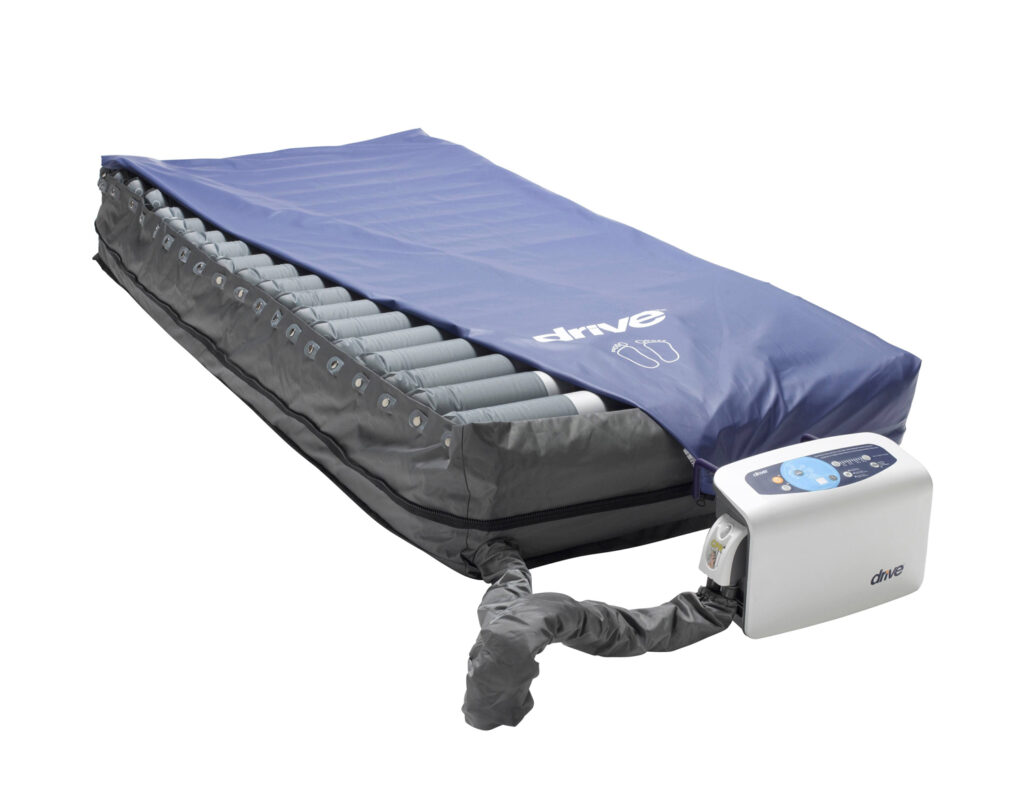
Drive Medical Harmony True Air Loss Therapy Mattress System: A low air loss mattress that manages moisture and humidity. The control unit offers four therapy cycle times ranging from 5-20 minutes, and 10 comfort weight settings. The mattress consists of 20 individual 8-inch-deep air cells for pressure redistribution. List price: $3,240. Online price: $2,381.

Span America’s SPAN PressureGuard APM2: The APM2 is a low air loss mattress that can be switched from alternating pressure to “float” mode — which provides maximum envelopment — to lateral motion which changes pressure from side to side, simulating a side-to-side weight shift. The mattress has a firm foam edge that helps support transfers, a GeoMatt top — with hundreds of interconnected foam rectangles for additional pressure distribution — and a cover with Sheer Transfer Zones under the shoulders, sacrum and heels to help prevent shear. List price: $3,997. Online price: $1,413.
All-In-One Hospital Beds
All-in-one hospital beds come with a frame and mattress designed to work together. This is especially helpful with high-end bed and high-protection mattress combinations designed for compromised skin protection and/or healing a pressure ulcer. They offer the ease of one-stop shopping — not having to mix and match bed and mattresses — with the tradeoff of higher cost (see Payment and Sourcing”, below).
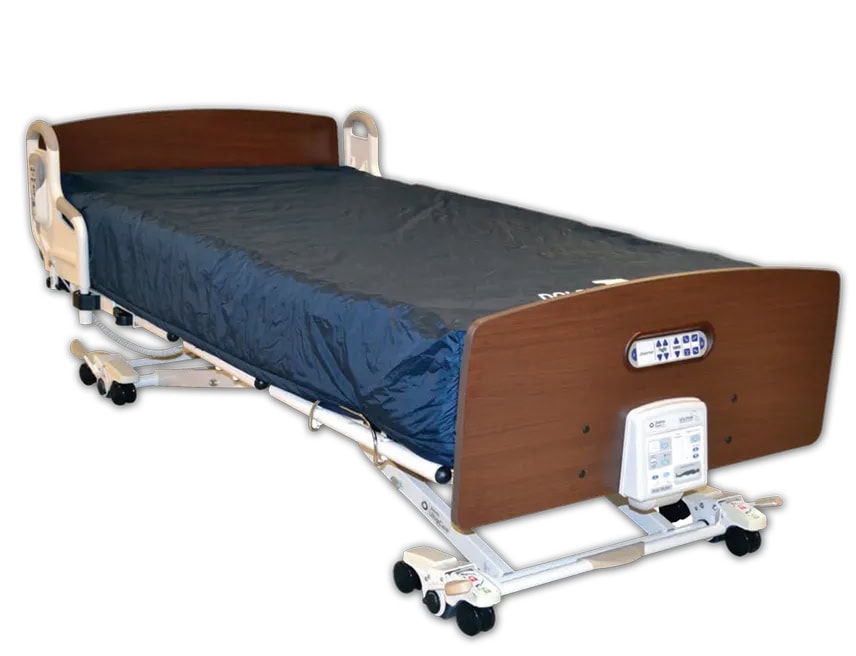
Joerns DolphinCare Integrated Bed System: This system combines Joerns UltraCare XT Frame with their FIS Dolphin mattress and control unit. FIS — Fluid Immersion Simulation — is for fragile skin protection and healing pressure ulcers and flap surgeries. The controller has a microprocessor that continually measures and adjusts the entire air mattress to the weight, shape and movement of the body to simulate floating in water, which allows near normal blood flow, eliminates shear forces and protects skin. List price: $33,697. Online price: $29,654.
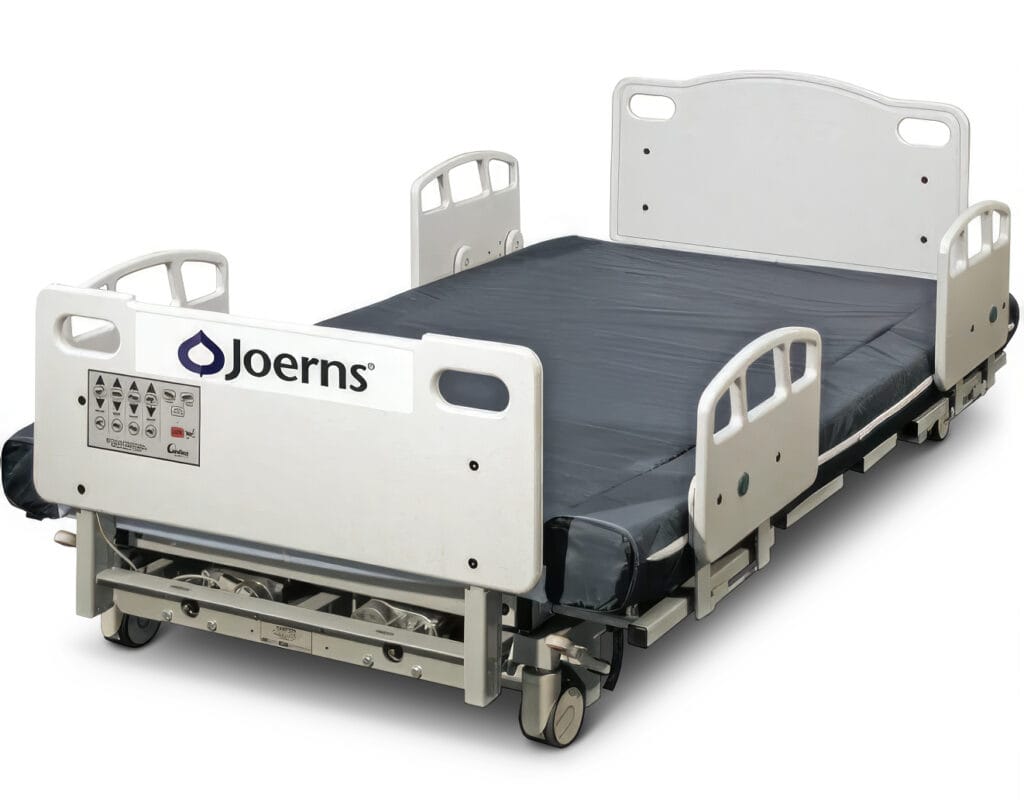
Joerns Healthcare RC Ultra Hi-Lo 850: This system combines a highly adjustable bed frame with a pressure redistribution mattress. List price: $10,899. Online price: $7,449.
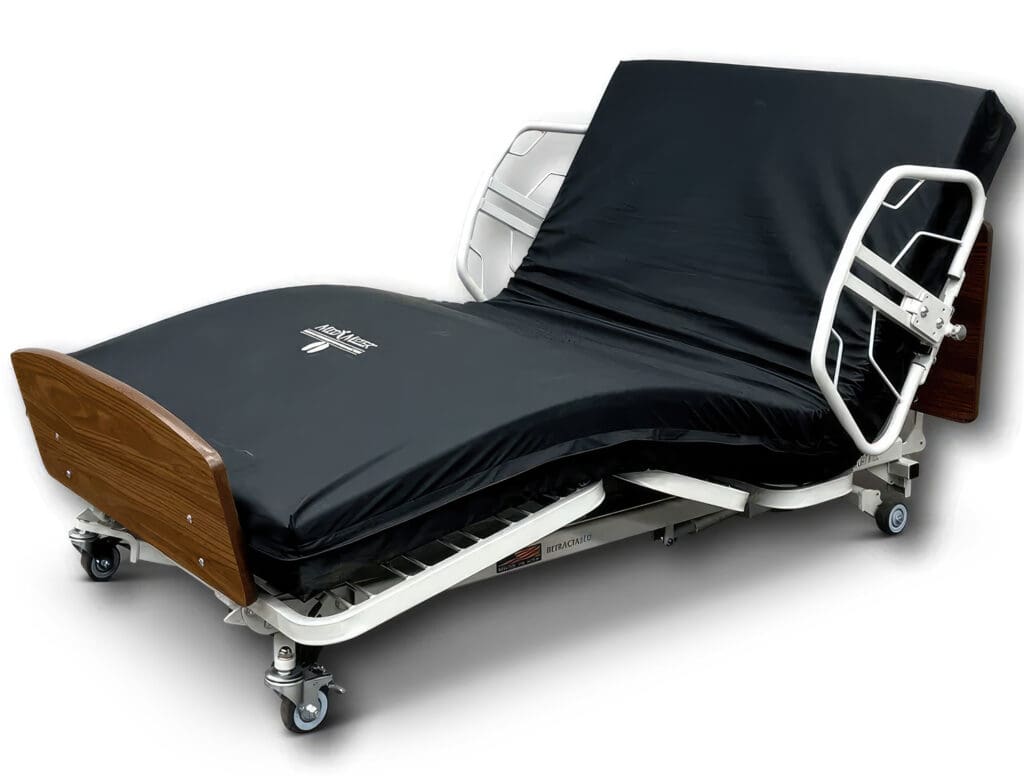
Retractabed Hi-Low Hospital Bed by Med-Mizer: A fully push-button power adjustable frame that comes with mattress options ranging from the Med-Mizer Deluxe 3-layer all-foam mattress designed to protect moderate-risk skin, to the Med-Mizer Elite Pressure Relieving foam mattress. List price: $3,125. Online price: $2,588.
Payment and Sourcing
Medicare will pay for a hospital bed and specialty mattresses if you have a stage 3 or 4 pressure sore, but it will take proper documentation from your physician. To get insurance to pay for the best bed and mattress for you will also likely take being a squeaky wheel, something that can be time-consuming but worth it.
Healing and/or keeping fragile skin healthy is worth fighting your insurance for (or paying out of pocket if you can afford it), explains Tim Gilmer (See “Finding My Patient Advocate” in April 2018 New Mobility). “When I had my worst pressure sore, I spent more than six months in bed,” recalls Gilmer. “My insurance covered a rental bed supposedly made for healing sores, but what they provided was crap. It was so uncomfortable I couldn’t sleep. They ‘upgraded’ me to another one that was better but didn’t provide enough pressure relief to help heal the sore.”
Gilmer’s subsequent research and help from a patient advocate led him to a top-of-the line bed and mattress, in his case a Hillrom CareAssist frame and Hillrom P500 therapy mattress (a make and model that is now only available for rental, not for purchase). “The insurance companies finally caved when they realized that they had paid around $150K for my skin flap,” he says. “An extra $30K for the right bed and mattress is much cheaper than having to pay for another flap surgery.”
There are many online companies like MedMartonline.com that offer refurbished and/or “Certified Refurbished” hospital beds and mattresses, including some like the Hillrom CareAssist and Hillrom P500 that are no longer available for purchase from the manufacturers. Also check eBay, Craigslist and Facebook Marketplace for discounts on new or used hospital beds and mattresses. To find the best make and model to suit your needs, seek guidance from a wound care nurse.
Other Solutions
Automated Lateral Rotation
During sleep, nondisabled people turn an average of every 12-minutes. Turning and changing position — or having an attendant reposition you — reduces the risk of pressure sores, and turning from side to side is good for the lungs, and helps open up airways and reduce congestion. The Freedom Bed by ProBed Medical (see “The Bed that Turns You“, November 2019 New Mobility) is a bed that automatically turns you from one side to the other at a range of up to 60 degrees. It has 13 voice-activated functions, including adjustments for side-to-side angle, frequency of turning, and sitting upright. ProBeds are custom-made for each person and incorporate a dry floatation mattress. List: $35,000-$50,000.
Support New MobilityWait! Before you wander off to other parts of the internet, please consider supporting New Mobility. For more than three decades, New Mobility has published groundbreaking content for active wheelchair users. We share practical advice from wheelchair users across the country, review life-changing technology and demand equity in healthcare, travel and all facets of life. But none of this is cheap, easy or profitable. Your support helps us give wheelchair users the resources to build a fulfilling life. |