


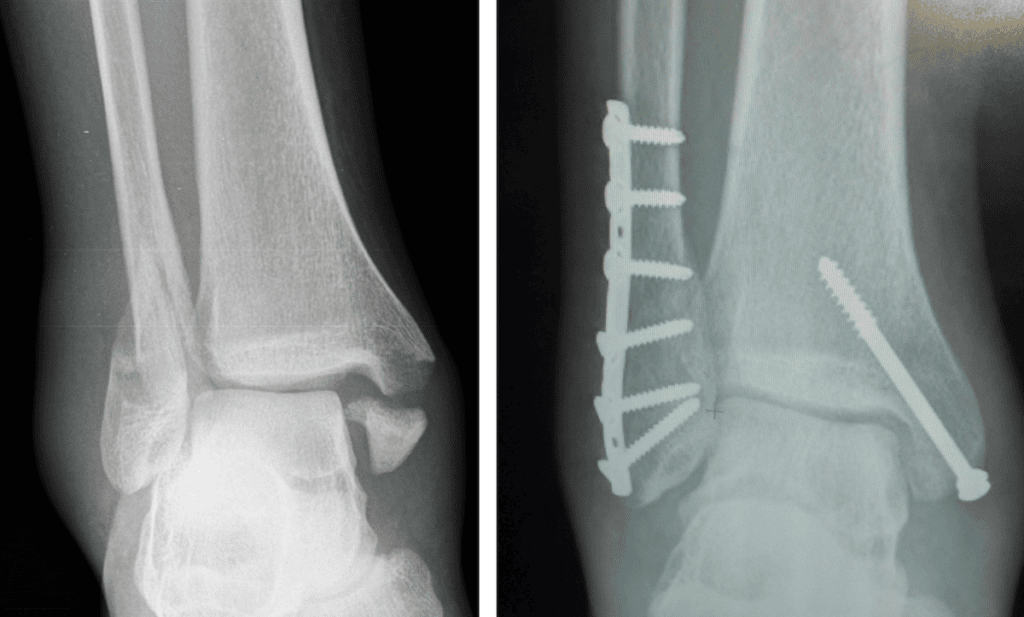
A wheelchair rugby teammate of mine recently broke his thumb in a rugby match. While he was recovering, he slipped while transferring (the thumb didn’t help) and whoops, broken foot. Another friend, a para, was in bed stretching his legs when he pushed too hard and broke his femur. Cheryl Angelelli, an incomplete quad, writes about how she broke three ribs (wheelchair ballroom dancing) and her foot (another transfer fall) in the span of a year.
For many active wheelchair users, our entire lives are refutations of the idea that people with disabilities are medically fragile and in need of protection — but alongside this truth is a parallel, frustrating fact: Our bones snap a whole lot easier than those of our nondisabled peers.
Equally frustrating: It can feel like we don’t have much control over our bone health. After a spinal cord injury, we lose bone mass almost immediately, and within the first year of a complete spinal cord injury, 50% of people develop osteoporosis.
This newsletter looks at bone health among wheelchair users, the risks associated with SCI and fractures, what you can do to improve bone health, and finally, how to reduce the risk of fracture once your bones are already weak.
Offloaded Bones Age Quickly
People with spinal cord injury experience bone loss at a much quicker rate than those who walk around all the time. In a 2009 article, “Osteoporosis: Avoiding the Breaks,” Bob Vogel talks with Dr. Douglas Garland, who at that point had been an orthopedic surgeon for 30 years, with 20 years researching osteoporosis and SCI. Garland describes how people with SCI lose bone mass:
“The most crucial piece of information is this: With SCI, your bones get thinner (weaker) from the hip to the knee, and thinner still from the knee to the heel. The longer you have been injured, the more fragile your bones become.”
People with SCI don’t lose bone mass everywhere, just in the areas that no longer bear weight. So, my rugby teammate’s thumb and Angelelli’s rib breaks are less to do with disability and more due to the trauma of a wheelchair rugby crash or a dance partner falling on you. But the stretching femur fracture and the transfer-fall foot fractures have SCI fingerprints all over them.
Back to Vogel, as he explains in “Fracture Risk and Treatment Options with SCI,” there are a couple of important thresholds to keep in mind when it comes to bone loss:
“Osteoporosis starts when losing 32% of [bone mineral density] puts you in the ‘fracture threshold.’ You run the risk of fracture from a fall, a missed transfer or a tumble out of your chair. A loss of 50% BMD is considered the “fracture breakpoint.” These really fragile bones can fracture from minor movements like stretching, a simple fall from the chair, or even rolling over in bed.”
It’s too much to go into here, but Vogel gives a helpful breakdown of how to estimate your own bone loss based on time after injury and why standard bone density (DEXA) scans can be misleading for wheelchair users in his “Osteoporosis Update.”
How to Prevent and Reverse Bone Loss
As a wheelchair user, improving bone health comes down to two strategies. First, try to slow down bone loss as much as possible, and, if you already have osteoporosis, consider options to rebuild bones.
In 2023, The Journal of Personalized Medicine published a paper that synthesizes some of the best scientific research and guidelines around bone health, fracture risk and osteoporosis in people with SCI. Recommendations from that paper include:
- Take both Vitamin D and Calcium supplements. They recommend a “maintenance dose” of 1,000-2,000 IU of Vitamin D3 and a Calcium dose of 1,000-1,200 milligrams depending on age, gender and whether you have a history of kidney or bladder stones. People with SCI are at higher risk of developing bladder stones with calcium supplementation, so it’s worth consulting with your urologist before starting a supplementation regime.
- Regular standing or walking — using a standing frame, forearm crutches, an assisted treadmill, or an exoskeleton — can load your lower extremity bones enough to improve bone health.
- Functional electrical stimulation of lower extremities is helpful as well. Strong muscle contractions produced by FES can load bones enough to stimulate growth.
- Pharmacological interventions such as Alendronate, Zoledronic Acid and Densoumab can also help improve bone health, though only Alendronate has been studied on people with chronic SCI.
There’s a lot more in that study — it’s worthwhile reading if you’re up for parsing dense, scientific language. Or even better, send it to your doctor before your next appointment so they can read it and help you develop a personalized plan to improve your bone health.
In “Searching for Osteoporosis Solutions as a Wheelchair User,” Angelelli reports on her attempts to get insurance to pay for Forteo and Tymlos, two injectable bone-building drugs. After years of battling, she was ultimately approved for Tymlos, and she shares her experience managing side effects and daily injections as a quad.
How to Reduce Fracture Risk
Improving bone health is a slow process, even if you’re doing everything right. If you’re one of the many who are already at the “fracture threshold” or “fracture breakpoint” that Garland mentioned, it’s time to learn how to reduce risks.
Talk to a group of longtime wheelchair users and it’s pretty easy to see how most broken bones occur: either from falling out of your chair while you’re rolling (stupid pinecones) or falling while transferring. Research backs this up and also shows that most fractures occur in the tibia/fibula, femur and hip.
Reducing your risk of breaks doesn’t require doing less. Instead, good technique in your daily movements and wheelchair setup can help you stay active while keeping your bones intact. If you roll a lot outside, a longer wheelbase wheelchair, larger soft-roll casters (four or five-inch diameter), or suspension forks like FrogLegs can all help keep you from pitching forward out of your chair.
For technique, Vogel recommends that people untuck blankets at the foot of your bed to avoid catching your feet when rolling over, and to avoid twisting when you’re stretching or ranging your legs, as femur’s can break more easily when you apply torque. Mark Wellman, a para and one of the founders of the adaptive climbing movement, says he treats every transfer with the carefulness of a climbing move. “I make sure where my hand holds are, check where my legs are and make sure they won’t twist or get caught before I make my move.”
Of course, accidents still happen, even with good technique and bone health. Just ask my rugby teammate. Like with everything else, healing a fracture can be more complicated with a SCI. But that’s a topic unto itself. Let us know if you’d like us to cover it in a follow-up article or newsletter.
Support New MobilityWait! Before you wander off to other parts of the internet, please consider supporting New Mobility. For more than three decades, New Mobility has published groundbreaking content for active wheelchair users. We share practical advice from wheelchair users across the country, review life-changing technology and demand equity in healthcare, travel and all facets of life. But none of this is cheap, easy or profitable. Your support helps us give wheelchair users the resources to build a fulfilling life. |


I am a 66 yr old C-7 SCI manual wheelchair user with 35+yrs post motorcycle accident. The last few years I have broken bones in both legs. The last injury happened in May 2024 when I fell transferring from wheelchair into my driver’s seat. I destroyed my left leg, breaking the femur, tibia and shattered my knee cap. Because of my lack of bone density the surgeon said he could not operate using screws or plates. He wanted to amputate above the knee. I had to teach him just because I don’t use my legs to walk I still use them to help in transfers. Explaining how I lift with my arms and then pivot on my legs during transfer made him decide on a Plan B. I would have to live with a non-union leg, meaning the femur is no longer connected to the knee. I immobilized the leg for 8 weeks then moved to a hinged brace permanently. Obviously it is not ideal, but is better than the alternative.
Now over a year and a half later I am still wearing the brace and I am using a slide board for all transfer lessening the chances of another fall.