



Since the early 2000s there have been significant advancements in technology and options for intermittent catheter users. The average person with neurogenic bladder (unable to control bladder due to nerve intervention) catheterizes approximately 1,800 times a year. Choosing the right catheter can make bladder management easier and more convenient, can save time, and most importantly can help reduce UTIs and improve overall renal health.
We’ve broken down existing intermittent catheter styles into eight general categories. Each category has a summary explaining what differentiates it and what advantages that type of catheters offers. We’ve also provided a couple of examples of each category, to get you started. Instead of trying to list every specific model on the market, we’ve tried to give you the terms and concepts to help ease your selections process.
Intermittent Catheter 101
Catheters come in different diameters and lengths. The diameter of a catheter is referred to as FR, which stands for French, and each unit of FR equals 1/3 millimeter. Catheter sizes range from 6FR to 24FR, and the average adult tends to use a 14FR or 16FR.
Female catheters range from 3 ½ inches to 6 inches long, while men’s catheters range from 13 inches to 16 inches long. Most manufacturers list the length of each type of catheter on their website, something to consider if your current style of catheter barely makes it into the bladder.
Catheters tend to offer a “standard” and a “soft” version. Standard works best for most people, especially users with tight sphincters, and soft can be less irritating for those who have sensation.
Catheter Styles
Straight Catheters
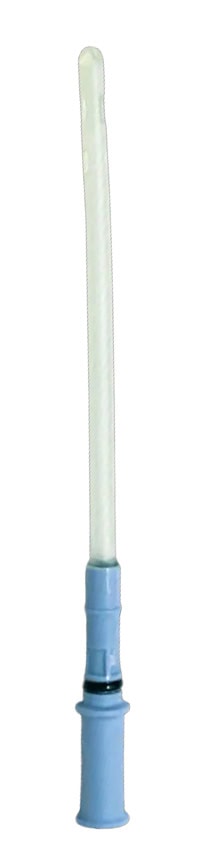
As the name suggests, straight catheters are basic straight catheters designed to be used with some type of lubricant, such as K-Y Jelly, applied to the tip to enable easier insertion and reduce urethral trauma.
They are ideal for extended trips because they take up minimal space, and, although designed for single use, in a pinch when traveling, or when money is tight, they can be re-used. All you have to do is clean the catheter with tap water and clear liquid dish soap; thoroughly rinse inside and out; set on clean paper towels to dry; and store in a Ziploc type bag.
Straight catheters are the least expensive style. They can be purchased online at sites like Medical Monks or Express Medical Supply for around $0.59-$0.97 per catheter.
Examples
Coude Catheters
Named for the French word meaning “bend,” coudé catheters have a specialized tip that is designed to pass through difficult areas in the urethra including strictures, false passages, the prostate or an unusually tight sphincter.

There are several coudé designs: The most common has a short curve and slight taper at the end. When inserting a coudé the bend should be facing upward, toward the body — some coude catheters help facilitate this by adding a line where the catheter is supposed to be facing the body.
A Tiemann tip coudé (left) has a longer, tapered tip that is usually more flexible than standard coudé tips. This design is often helpful for going past urethral strictures.
An Olive tip coudé has a short, ball-shaped tip which is helpful for going around obstructions like false passages. I have a tight sphincter which made it difficult to get a catheter into the bladder and frequently resulted in passing blood. A standard coudé was helpful with this. Two years ago, I started using an Olive tip coudé and found it easily passes into the bladder every time.
Examples
- Self-Cath Plus Male, Coudé Olive tip by Coloplast
- TruCath Intermittent Coude Catheters by HR HealthCare
Hydrophilic Catheters
Hydrophilic catheters have a coating that is bonded to the surface of the catheter and becomes super slippery when it interacts with water. Because the lubricious hydrophilic coating greatly reduces friction, it enables the catheter to easily slide through the urethra and reduces the risk of urethral damage, including microtrauma, which reduces the risk of UTI — as backed up by a January 2017 article in BMC Urology that looked at seven studies comparing hydrophilic and nonhydrophilic catheters.

Catheter manufacturers are continually making hydrophilic coatings slipperier and better bonded to the catheter. There is a lot of variance between different manufacturers here, so make sure to explore if you are interested: Hollister has HydraBalance Lubricating Technology made with naturally sourced ingredients; Convatec has FeelClean Technology; Wellspect’s LoFric has Urotonic Surface Technology, a surface coating of salt and solutes that is similar to urine; and Coloplast has a triple coating hydrophilic technology.
Hydrophilic catheters come in several types, including prehydrated and prepackaged. With prehydrated catheters, the hydrophilic coating is already activated in the package and ready to use. Prepackaged ones have a tiny plastic water pouch that must be cracked open within the package 30 seconds prior to use.
Examples
Touchless System Catheters
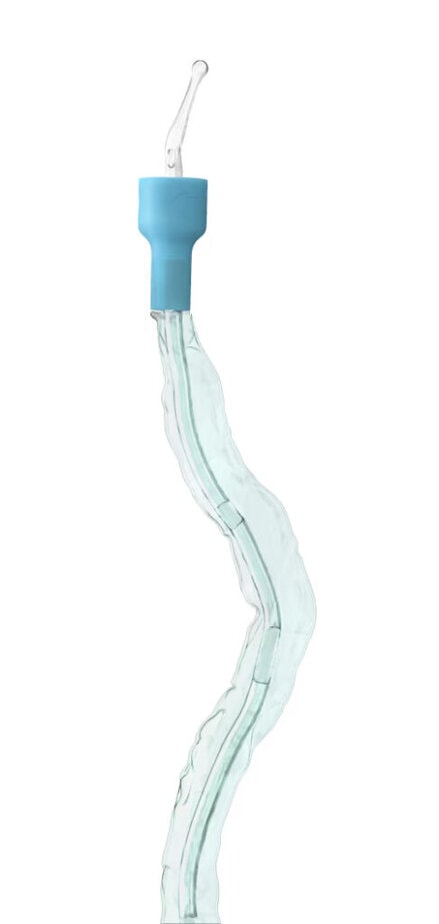
One of the most difficult parts of catheterizing is trying to avoid introducing bacteria to the catheter. To that end, a touchless catheter system enables opening and using the catheter without any direct hand/catheter contact. Touchless systems work by employing different methods. Convatec’s Cure Ultra uses a sliding “gripper” (flexible piece of rubber or plastic) around the catheter, so your fingers can handle the gripper to insert the catheter into the urethra and slide the gripper up the catheter for full insertion. Coloplast’s SpeediCath Flex Coudé Pro uses a full-length sleeve around the catheter, enabling the user to feed the catheter through the sleeve into the urethra.
Examples
Closed System Catheters
A closed system catheter is a self-contained, prelubricated catheter that empties into its own collection bag. Closed system catheters have many advantages, including: Because they are touchless, there is reduced risk of introducing bacteria. The clear collection bag is helpful for monitoring bladder health by viewing urine color and output. The bag has volume numbers to help you monitor output. For reference, the average adult bladder is considered full at 600 cubic centimeters.
The collection bag also makes closed-system catheters convenient for travel because they enable discrete catheterization. Need to void on a long-distance flight? By placing a jacket or blanket over your lap you can discretely void into the closed system while in your airline seat, and when you are done, place the system in an air sickness bag. Visiting a place without an accessible bathroom? No problem, simply slip into a discrete area, void into the closed system and dispose of it. (Tip: A large Ziploc bag provides extra protection if you are going to toss the bag into the trash.) Collection bags have a tear tab to empty the contents into the toilet. Last but not least, closed systems are great when you wake up in the middle of the night with a full bladder and don’t want to transfer and wheel to the bathroom, or if camping, don’t want to leave your warm sleeping bag — just cath into the closed system collection bag and dispose of it in the morning.
Examples
How to Try New Catheters & Get Them Paid For
If you are interested in trying samples of different catheter systems at no cost, there are several ways to go about it. You can contact the manufacturer via their website to see resources and talk with staff who will be happy to discuss catheter options and send you samples. Remember, you will need a prescription — something the manufacturer will be happy to help you obtain. As a bonus, many manufacturers have great tips on bladder care on their websites, and their customer care teams are adept at helping you choose the best catheter. Another option for trying different catheters is to contact your supplier.
Once you know what you want, you need to work with your medical team to get insurance to cover it. An essential part of getting coverage for the catheter you need is developing a working relationship with your urologist and/or primary care doctor and informing them any time you have bladder or catheter problems.
There is a hierarchy of what Medicare will pay when it comes to catheter choice — straight catheters, then coude, and at the top of the list are closed system catheters. And most insurance companies tend to follow Medicare’s lead.
Medicare HCPCS Codes apply to all brands of catheters in a category. If your supplier says your preferred catheter is not covered by your insurance plan, you may want to contact the catheter manufacturer’s customer service or customer care plan and ask if it is covered. Here are the codes so you can make your case for the caths you need.
• Medicare HCPCS Code A4351: Intermittent urinary catheters, straight tip, with or without coating (hydrophilic). The only documentation needed is “neurogenic bladder that requires catheterization” and how many times a day on average you catheterize.
• Medicare HCPCS Code A4352: Intermittent urinary catheter, coude, curved tip, Tiemann tip, or olive tip. With or without coating (hydrophilic). This requires documentation that you have had difficulty or been unable to pass a straight tip catheter into the bladder.
• Medicare HCPCS Code A4353: Intermittent urinary catheter with insertion supplies. This includes closed system catheters and some forms of touchless catheters with or without insertion tips. Physician documentation is required, with one of the following: Patient has had two documented UTIs while using a straight or coude tip catheter within a 12-month period. Patient is immunosuppressed. Patient has documented vesico-ureteral reflux (urine flowing backward into the kidneys). Patient is a spinal-cord-injured, pregnant female with neurogenic bladder (for duration of pregnancy only). Patient resides in a nursing facility.
Catheters With Introducer Tip
As the name suggests, this is an approximately ¼-inch long tip that is incorporated into some styles of touchless sleeve or closed system catheters. Most potential bacteria is near the entrance of the urethra, the introducer tip passes beyond the urethral entrance and the catheter passes through the end of the tip, thus bypassing potential bacteria and helping reduce chances of UTI.
Examples
- VaPro Plus No Touch Intermittent Catheter by Hollister
- No-Touch Closed System EZ-Advancer by HR HealthCare
Compact Catheters
Compact catheters are designed to be small and discrete. Because they come in smaller packages it is easier to keep a spare in a pocket, wheelchair pouch, or purse, and for traveling they take up less room in luggage. They come in several styles, including touchless, and closed system.
Examples
- SpeediCath Compact Male with SpeediBag by Coloplast (compact closed system)
- VaPro Pocket No Touch Catheter by Hollister (touchless sleeve catheter with introducer tip)
Micro-hole Zone Technology Catheter
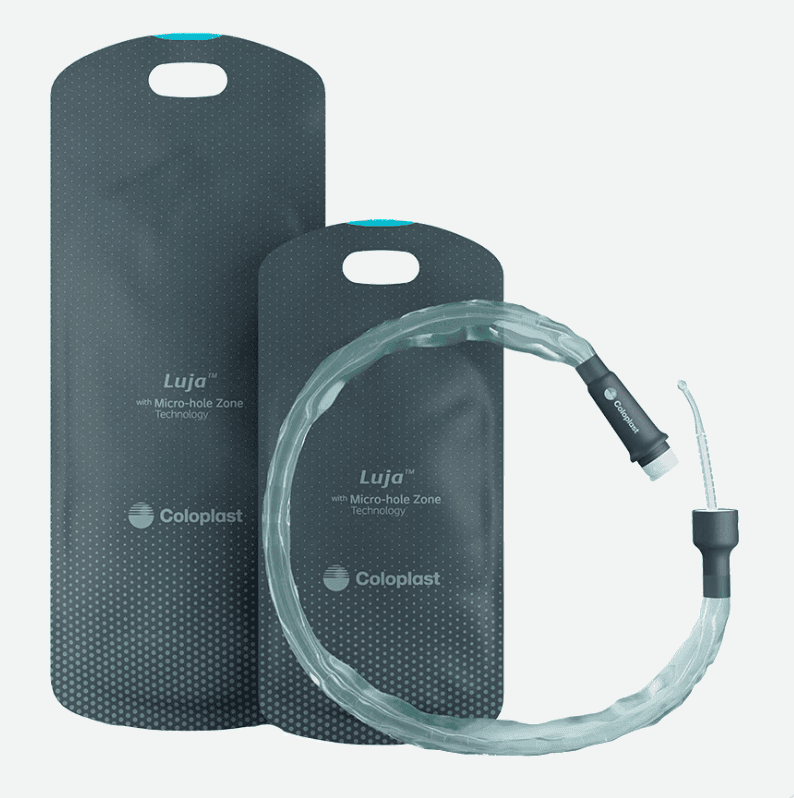
Luja, a new style of catheter by Coloplast, addresses failure to fully empty the bladder when catheterizing. Urine drains out of the bottom of the bladder; however, the tip of the catheter and drain holes typically ride higher in the bladder, leaving residual urine unless you reposition (pull out) the catheter a little at a time to make sure it is fully drained. Residual urine left between catheterizations creates a perfect breeding ground for bacteria to brew. The Luja substitutes drain holes with more than 80 microsized holes which drain urine completely without the need to reposition the catheter.
Example
Women’s Catheters
Although most catheter styles come in male and female lengths, some manufacturers have styles specifically designed for women, including: Wellspect’s LoFric Elle, a compact hydrophilic catheter with an angulated handle that connects to the catheter to enable catheterization while upright. Convatec’s GentleCath Air for Women, a compact hydrophilic catheter. Coloplast’s SpeediCath Compact Female, the most compact hydrophilic catheter for women. Hollister’s Infyna Chic, a compact hydrophilic catheter. Coloplast’s Luja female, a compact hydrophilic catheter with Micro-hole Zone Technology.
Examples
Extension Tubing
An often-overlooked item is extension tubing, a 12-inch or 24-inch tube that fits into the drain end of a catheter, enabling you to catheterize in your chair by holding the end of the extension tube over the commode. Most manufacturers offer some type of extension tubing. It is reusable and insurance tends to cover one or two extension tubes a month. Extension tubing can be purchased online at prices ranging from $2.50 to $9.69.
Examples
Support New MobilityWait! Before you wander off to other parts of the internet, please consider supporting New Mobility. For more than three decades, New Mobility has published groundbreaking content for active wheelchair users. We share practical advice from wheelchair users across the country, review life-changing technology and demand equity in healthcare, travel and all facets of life. But none of this is cheap, easy or profitable. Your support helps us give wheelchair users the resources to build a fulfilling life. |


SENSE BY Wellspect was a total game changer for me