



The Skoolie
There are a million different reasons a wheelchair user might want more mobile living quarters, but RV living isn’t for everyone. Luckily, there are plenty of other ways to live accessibly on the road.
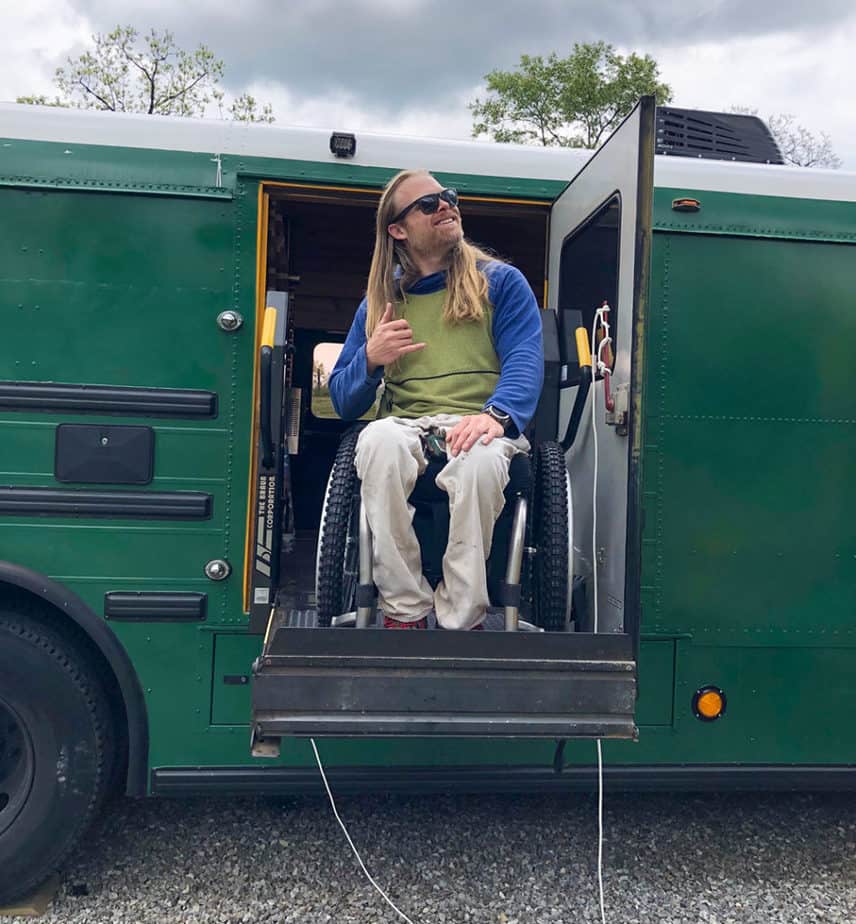
Take Thomas Speer, who came to his accessible school bus conversion by way of a yurt. Speer, a para and manual wheelchair user, owns an acre of land in rural North Carolina and had dreams of turning that acre into a permaculture farm (think less Miracle Grow and more human-curated ecosystem). He wanted to raise a yurt to live in at the property, but the county he lived in required him “to build it basically like a house, and at that point, it’s not a yurt,” he says.
The county didn’t have much to say about parking a bus on your own property though. Speer had been tinkering with the idea of a school bus conversion and when a good friend bought one, Speer saw the practicality and the blank slate that a “skoolie” (as they’re known) offered. He decided to go for it. “I dove into it just thinking, ‘I can do this,’” he says. “But I was in a bit over my head. I’ve built things before, but using a wheelchair there are just certain things you can’t do by yourself.” Speer hired a friend of a friend who was looking for work and the two started what would become a two-year conversion process.
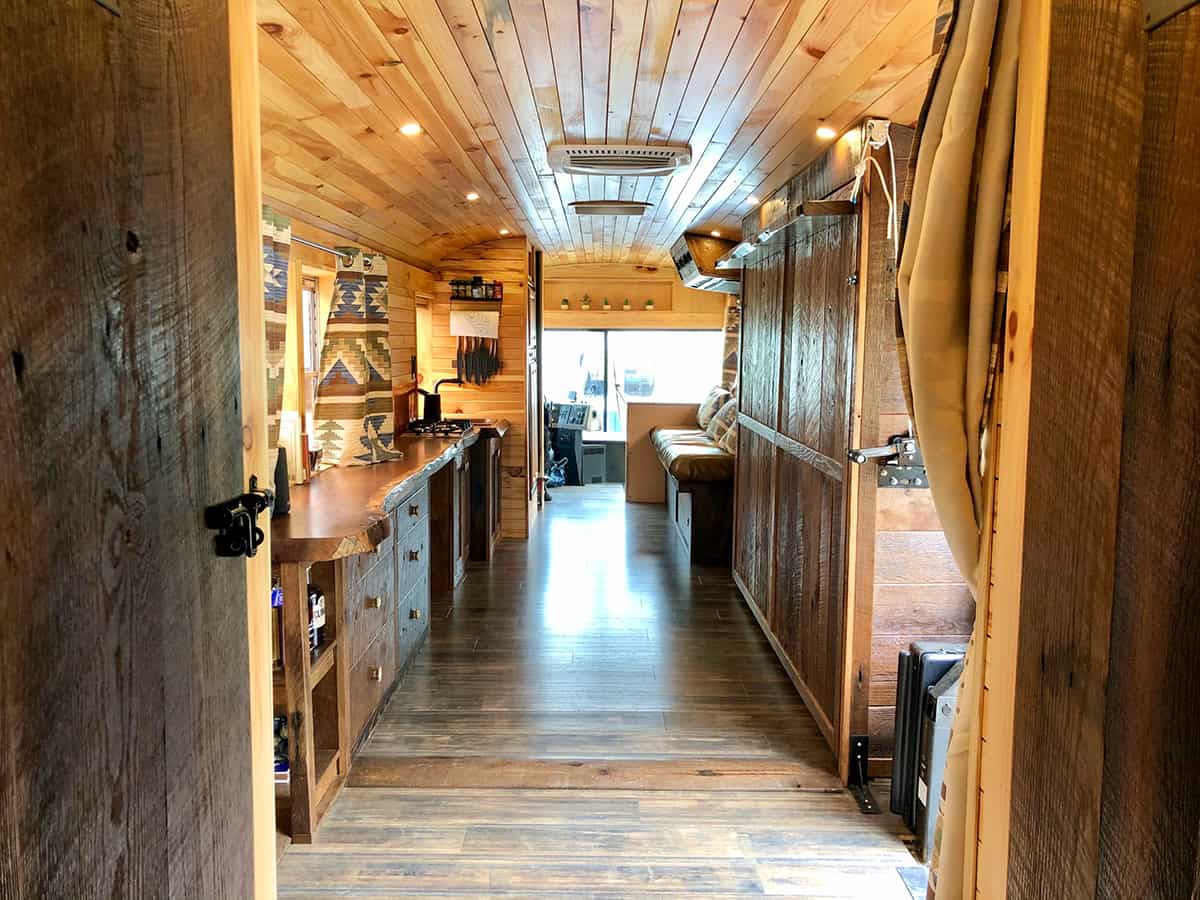
Watch the video below that Speer did with the YouTube channel “Tiny Home Tours” and you’ll understand why it took so long. His bus is beautiful — fir shiplap covers the roof and walls, there are live edge countertops and hammered brass sinks, a wood stove, tiled roll-in shower and a “churched up” murphy bed, all so thoughtfully laid out that even with a house-worth of amenities he still has plenty of room to roll around with wide knobby tires on his wheelchair. There’s air-conditioning, hot water and a second outdoor shower attached to the bus so he can wash dirt off his chair (or his dog) before coming inside. The whole setup is powered by roof-mounted solar panels, with touch screen controls and an electronics cabinet that looks like it could command a nuclear submarine.
But the most surprising part about his bus may be the cost. Speer estimates he spent $55,000-60,000 on the whole thing, which is about one-fifth of the cost of Winnebago’s new “accessibility enhanced” RVs, and less than you’d pay for a new wheelchair-accessible minivan. A big part of the low cost is due to the fact that you can buy a used, full-size school bus, complete with a wheelchair lift for around $6,000-9,000. From there costs are dependent on how tricked out you want your setup to be and how much you (or friends and family) can do the conversion labor yourself. Speer estimates that if he’d gone without the solar, off-grid capabilities and high-end finishes, he could’ve done a basic but livable conversion for around $20,000.
Even so, DIY bus conversions aren’t for everyone. They take a lot of time and effort. You have to research, design, build, fiddle and redo. “All the finishing work was 10 times as hard [as normal construction] because everything is in a bus. There are so many weird angles and curves. It was difficult for sure,” says Speer. His advice for other would-be accessible skoolie converters? “Take your time. Don’t get in a rush. And don’t give up. It’s a long project, but it’s definitely worth it.”
Speer is getting ready to head off on a two-month trip in his bus. To follow along, check out his Instagram @thefartherbus.
Accessible Toy Hauler
When Rudy and David Berger began looking at a more accessible way to travel and visit family spread across the country, they had a few specific requirements. Rudy, a para who was injured at 70 years old, uses a hospital-style bed to manage circulation and pressure sore issues. They wanted to be able to use the hospital bed and have space for a portable Hoyer lift. And they didn’t want a huge rig with all the costs and maintenance that go along with them.
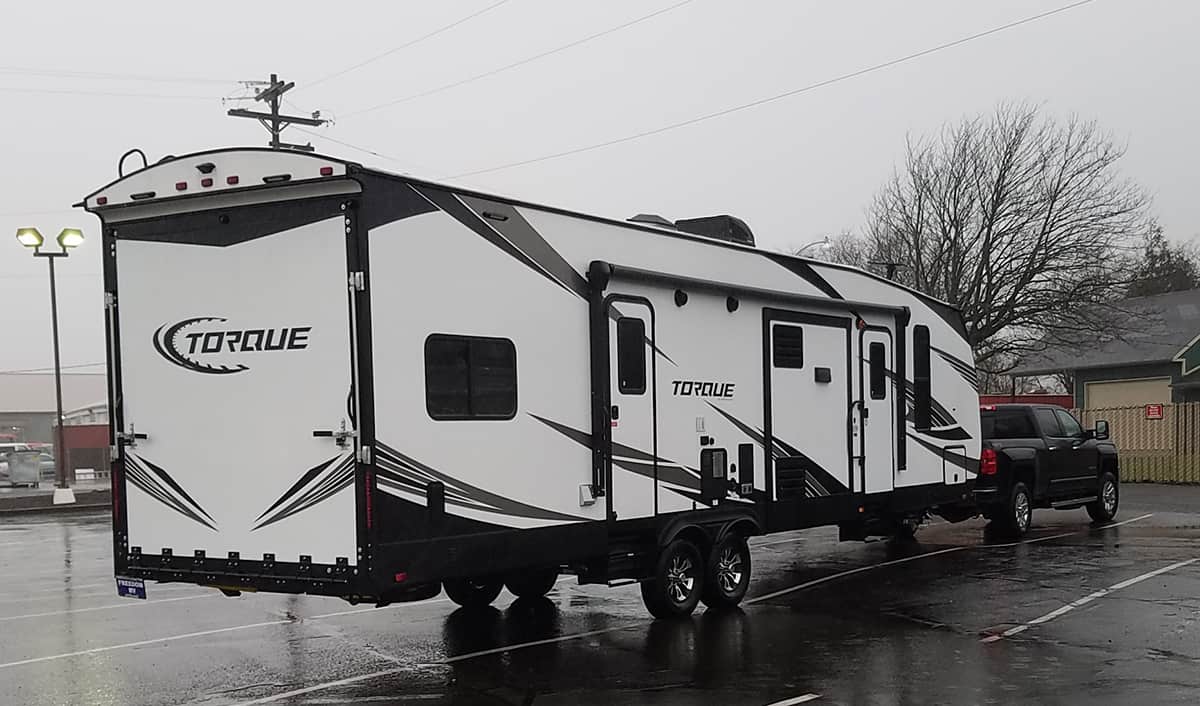
David, a retired engineer, researched options and ultimately decided on a Heartland T31 toy hauler-style towable trailer. Toy haulers typically have a living quarters at the front end of the trailer and a garage bay at the rear that people use to carry motorcycles, ATVs or other vehicles and equipment. The Bergers’ Heartland trailer had a 12 ½-foot garage section with robust tiedown attachments, so they were able to place and easily secure the hospital bed without modifying it.
They did modify the door between the garage area and main living space, widening it from 24 to 32 inches so Rudy could fit through in her manual wheelchair. David also modified their Hoyer lift to accommodate the height of the trailer door and made a foldable platform out of plywood and piano hinges, so they’d have a stable base to put the lift even when they were parked in gravel. “In many of these RV sites, you don’t find paved places very often,” he says. The toy hauler has an integrated rear ramp, but David says the slope was too much to manage, which is why Rudy uses a lift to access the trailer.
Other modifications included adding plumbing for a washer/dryer combo unit, a process that added about $4,000. They also put in a corner sink unit that Rudy could roll under and use independently. David was able to modify the existing plumbing and put the sink in on his own.
The first summer they had it, the Bergers put 16,000 miles on their trailer, visiting family from Minnesota to Arkansas and trekking north through Canada to visit Alaska for the first time. Whether they were staying with family, at RV Parks or a few nights dry camping out in the middle of nowhere, Berger says the modified toy hauler wound up giving them the kind of traveling flexibility they were looking for, “and then some.”
Also This Month
The Accessible RV Life on the Road
How to Choose an RV
Keeping It Classy & Affordable in a Class C
Support New MobilityWait! Before you wander off to other parts of the internet, please consider supporting New Mobility. For more than three decades, New Mobility has published groundbreaking content for active wheelchair users. We share practical advice from wheelchair users across the country, review life-changing technology and demand equity in healthcare, travel and all facets of life. But none of this is cheap, easy or profitable. Your support helps us give wheelchair users the resources to build a fulfilling life. |


Recent Comments
Tim Gilmer on Could Paralympian and ‘Prairie Populist’ Josh Turek Be Iowa’s Next Senator?
Caroline Whalen on Adaptive Products Roundup: May 2026
Tim Ripley on The Right Wheelchair Seating Setup Can Change Your Life