


Engracia Figueroa’s Death Shows How Dangerous Flying as a Wheelchair User Can Be
December 2, 2021
Kenny Salvini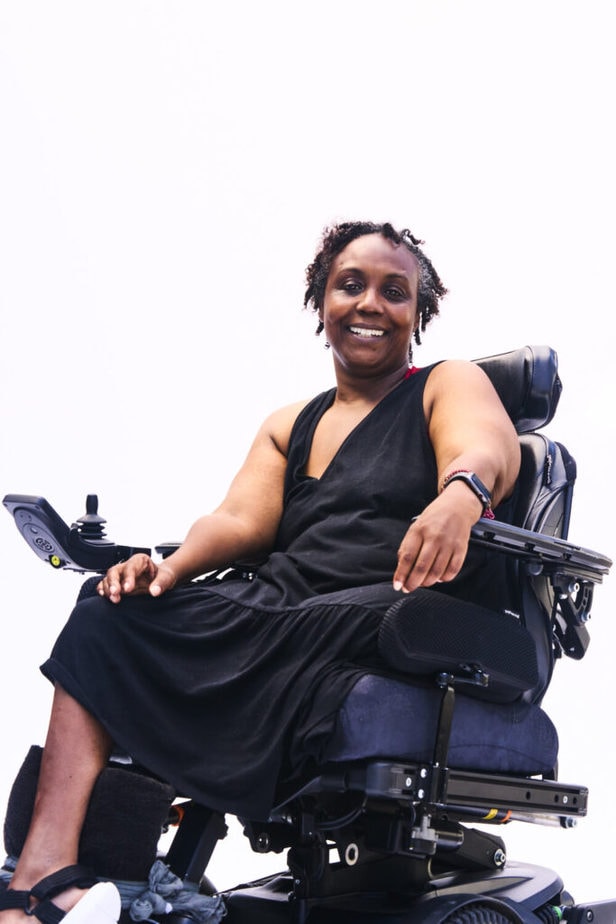
The Oct. 31 death of longtime disability-rights activist Engracia Figueroa has amplified calls from the disability community to reform disabled air travel.
Last July, while Figueroa flew home to California from an advocacy rally in Washington, D.C., United Airlines severely damaged her wheelchair. While United eventually provided her with a loaner power wheelchair, Figueroa spent weeks fighting with the airline about whether they were obligated to repair or replace her wheelchair.
NPR reported that a previously-healing bedsore reopened in the weeks that she was forced to use the ill-fitting loaner wheelchair. According to Hand in Hand, the organization Figueroa was representing, “The sore became infected, and the infection eventually reached her hip bone, requiring emergency surgery to remove the infected bone and tissue.” She died Oct. 31, two weeks after being admitted to the ICU for complications from the infected pressure sore.
A Broken System
Frustratingly, the issues that led to Figueroa’s death are not new. Air travel was the only mode of modern mass transportation excluded from the Americans with Disabilities Act, and airlines’ disregard for the safety of disabled travelers has been a hot-button topic ever since. Air travel is covered under the Air Carrier Access Act of 1986. Figueroa died just days after the Department of Transportation celebrated the ACAA’s 35th anniversary. While they called it “one of America’s great civil rights achievements,” many disabled advocates see the ACAA as an outdated, toothless piece of legislation that has gone unenforced for years.
As Figueroa herself said in a quote that has been making the rounds in social media since her death: “Mobility devices are an extension of our bodies. When they are damaged or destroyed, we become re-disabled. Until the airlines learn how to treat our devices with the care and respect they deserve, flying remains inaccessible.” Her death highlights the true costs wheelchair users must weigh before booking a flight. Even the most minor damage to a custom wheelchair or seating system can impede the user’s mobility. More substantial damage can lead directly to sores and other injuries or prolonged stays in bed and the cascade of complications that come with that.
Due to successful advocacy from United Spinal Association, Paralyzed Veterans of America and many other disability groups, the 2018 passage of the Federal Aviation Administration Reauthorization Act included provisions from the Air Carrier Access Amendments Act, like tripling the previous maximum civil penalty of $28,500 per instance of mobility aid damage or injury and mandating that the Department of Transportation create a committee to recommend consumer protection improvements for disabled passengers. Still, it lacked true accountability measures that might adequately incentivize the industry to change its ways (see sidebar below).
Support the Air Carrier Access Amendment Act
Congress needs to extend the Federal Aviation Administration’s programs in the next couple of years. As Congress examines the FAA’s programs and the air travel protections or lack of protections they should give to all Americans, now is the time to ask your members of Congress to cosponsor and support the Air Carrier Access Amendments Act (H.R. 1696/S. 642). This bill, championed by Senator Tammy Baldwin and Representative Jim Langevin, includes a number of new protections that will make air travel more accessible to people with disabilities:
- Increased penalties for damaged wheelchairs/mobility aids or bodily injuries, and allowing air travelers to sue in court to recover damages.
- An Airline Passengers With Disabilities Bill of Rights
- An Advisory Committee on Disability at the Department of Transportation
- Better stowage options for assistive devices
- Safe and effective boarding and deplaning process
- Higher standards for accessibility and safety, and airport and airline employee training
Please contact your members of Congress today and ask them to support and cosponsor the Air Carrier Access Amendments Act (H.R. 1696/S. 642). Click here to access a quick and easy tool that allows you to email or call your representatives about this important issue.
For one, the ACAA needs to be amended to include a private right of action. Currently, disabled air travel passengers who are discriminated against or suffer serious harm due to their disability have no legal right to sue for damages. Without the ability to properly hold the industry’s feet to the fire, airlines and air service companies operate with relative impunity.
Enforcement of the ACAA falls entirely on the DOT, which can levy fines through enforcement orders against airlines for violations of the ACAA. Since the DOT began tracking the number of damaged and lost wheelchairs in December 2019, it has chronicled more than 15,000, or roughly 26 a day. That count doesn’t include the myriad other disability-related violations like when passengers are denied preboarding or refused seating accommodations, among others. Yet, according to the DOT’s website, it hasn’t filed a single enforcement order against an airline in that time frame. The last time it did fine an airline for a mobility-disability-related violation was in 2018, when it ordered Allegiant Airlines to pay $250,000 for failing to provide adequate assistance to passengers with disabilities moving within the airport terminal.
Even if the DOT were to do its job, it’s hard to imagine the occasional fine incentivizing change, especially on the heels of a massive industry bailout. As wheelchairtravel.org’s founder John Morris says, “What does a fine mean anyway when the treasury has just deposited $25 billion in your bank account?”
What’s Next
Hand in Hand’s statement detailing Figueroa’s death also served as a petition demanding that “United Airlines end the damage of wheelchairs and assistive devices on its flights and create an accessible process for people with disabilities to travel safely, with dignity.” In a press release cosponsoring Hand in Hand’s petition, All Wheels Up plainly calls out the airlines’ lip service and record of inaction over the years when it comes to accessibility concerns, saying, “While the industry claims it is supportive of working toward a more accessible future, action and funding have been minimal.” AWU takes the call to action one step further by encouraging all stakeholders to partner with them in their goal of truly accessible air travel by providing a wheelchair spot on airplanes. The National Academies of Sciences recently said this is feasible, and functional prototypes for safe wheelchair securement are already being tested. [See sidebar below]

It Could Have Been Me
As a C3-4 quad myself, Figueroa’s story could easily have been my own. My skin was similarly damaged in 2016 on a United Airlines flight from Seattle to Newark. Multiple dehumanizing transfers in and out of the industry standard aisle chair and a six-hour flight on a regular airline seat caused such significant shearing injuries to my backside that I went straight to the emergency room after landing.
My recovery was hindered further because United had damaged my head-controlled wheelchair so badly that I spent 11 of 14 days on the East Coast without it. And when Alaska Airlines destroyed the same chair on my way home from Washington, D.C., less than a year later, it took a full six months to get it repaired.
It’s impossible to overstate how dangerous skin issues can be. I’ve lost friends to similar issues. I’ve lost years of my own normal life to skin breakdown like Figueroa’s.
Those experiences thrust me onto a platform I never chose, but since then I have fought alongside countless other tireless advocates to reform the system for all wheelchair-using travelers. While our efforts have been met with plenty of sympathetic and supportive rhetoric from industry executives and elected officials, we’ve seen little actual change. The most frustrating part is that wheelchair-accessible air travel is within reach.
London-based firm PriestmanGoode and Colorado-based Molon Labe Seating have produced workable designs that allow wheelchair users to fly safely in their own wheelchairs. I tested out the latter in a mockup design study just this last summer.
The system, featuring a sliding aisle seat that could collapse over the top of the middle seat, was originally designed to widen aisleways for faster boarding and deplaning. This would allow airlines to accommodate wheelchair users without losing a seat when the wheelchair space isn’t needed. I was able to drive through the cabin of a current configuration of a major airliner unimpeded and backed easily into a Q’STRAINT lock-in mounted on the floor.
The designer told me he could have it ready within a year. The obstacles to accessible airline travel are no longer technical — they’re in forcing an airline industry that prioritizes short-term profit above all else to finally start accommodating all passengers.
What remains to be seen is what, if anything, will come of this tragedy. In a Twitter thread last week, lifelong disability rights activist Judy Heumann laid the blame at the feet of the airlines’ leadership “for the frivolous manner by which they failed to address an issue that has been going on for decades.” Heumann implored Secretary of Transportation Pete Buttigieg, who said at the ACAA celebration there was a “moral and economic imperative” to improve airline accessibility, to convene a meeting of airline executives to demand accountability.
Given the recent news that the secretary just secured a $1.2 trillion infrastructure bill granting him unprecedented power, it sure seems like the right time to put his money where his mouth is. “He said some great things,” says Morris. “This is an opportunity for him to live up to it in assuring and guaranteeing that those rights will be honored and respected.”
The time for talk is over. Engracia Figueroa deserved better. And so do the rest of us. One can’t help but speculate that this isn’t even the first time this has happened. “I would honestly be surprised if she was the first person to have a downstream medical effect from a wheelchair being damaged,” says Morris. “She may not be the first person to have died in a circumstance like that — it is just the first one that we have heard about.”
We’ve crawled off planes. We’ve taken to social media., We’ve assembled and advocated on Capitol Hill. We’ve pleaded behind the scenes with industry executives. And now we’ve lost one of our own. The question we’d like airline executives and lawmakers to give us an honest answer to is this: What else is it going to take?
Support New MobilityWait! Before you wander off to other parts of the internet, please consider supporting New Mobility. For more than three decades, New Mobility has published groundbreaking content for active wheelchair users. We share practical advice from wheelchair users across the country, review life-changing technology and demand equity in healthcare, travel and all facets of life. But none of this is cheap, easy or profitable. Your support helps us give wheelchair users the resources to build a fulfilling life. |


Excellent article, Kenny. Keep up the fight, as frustrating as it must be. Someone else’s life may depend on it.
Outstanding article! So many of us have experienced the horrors of air travel. it should not take someone dying to make people pay attention. May her death not be forgotten and make this happen for us once and for all.
I’m sorry to hear about the passing of Engracia. I met her a few times and enjoyed her company. I remember going out to eat at a Wing Stop in Hollywood, with her and Scott Rosendall, back in 2013, after a SAG meeting.May God bless her soul. I’m sorry she suffered so. This article says that she had a previously-healing pressure sore, but the Hand In Hand article states that the pressure sore was developed by the five-hour use of a broken chair that United provided her while waiting in the airport. Are you sure that her wound actually existed prior to her traveling? Hand in Hand says that United caused the sore, not that United’s negligence aggravated a wound that already existed. Thank you. https://domesticemployers.org/hand-in-hand-grieves-the-loss-of-engracia-figueroa/