


Evicted: When Colleges Abandon Students Who Need Live-in Caregivers
September 1, 2021
Tim Gilmer
Illustration by Mark Weber
What happens when an exemplary college for significantly-disabled wheelchair users encounters financial difficulties, cuts costs and ultimately abandons its historic mission to provide necessary everyday living supports for those who need them most? For dozens of Edinboro University students, the outcome was shockingly disruptive to their college progress and future plans. Furthermore, it deprived them of much-needed social interaction and a sense of community — both critical factors in overall quality of life, maintaining self- determination and continued progress in the battle for equality.
As disturbing and unjust as the Edinboro situation has been, it also serves as a warning of what may be in store for other university programs that serve disabled students who need personal assistance. The flip side of this ugly possibility — if it can be adequately envisioned and carried out on a national scale — could conceivably be a stable, self-sustaining model of how this nation finally makes good on the lofty ideals that underpin the Vocational Rehabilitation Act of 1973 and the Americans with Disabilities Act of 1990. After all, higher education is the one best path to equality for this disadvantaged group. But how long will it take — and can it actually happen?
Edinboro’s Demise
In September 2018, Edinboro’s students who use personal assistance had made commitments for the academic year, including choosing one of the university’s two fully accessible residence halls complete with the school’s well-known 24/7 attendant care program. Then, when students were already situated on campus, they received shocking news from the administration — the program, which was over 30 years old, would cease to exist by the following May.
For 20-year-old Morgan Neumann, who uses a power chair and personal assistance due to spastic quadriplegic cerebral palsy, it meant her education — already well underway — had been upended. She had no idea how she would go on, where she would live or what to do. Like many of the 36 students in the program, she relied on round-the-clock personal care attendants for almost all of her everyday needs.
“The decision left most of us in the middle of our college career with a choice,” says Neumann. “Either hire our own care and manage it” — something they had never done — “or transfer and lose credits and our happy life together.
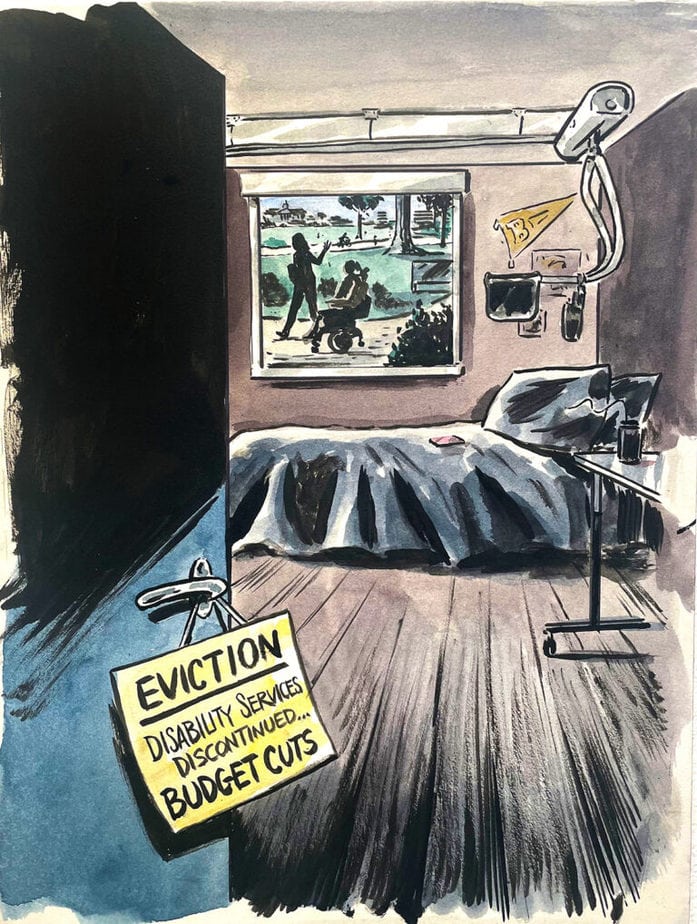
Illustration by Mark Weber
“What made it worse was the terrible way the administration treated us. They fired the PCAs and support staff in the office of disabilities,” says Neumann. “Students and parents were in tears when they announced it, and no one expected it. At the least, we hoped that they would grandfather in students who had already committed to the school.”
Neumann, a communications student with a 3.9 GPA, found herself at a crossroads with no directional signs. “College was the most important thing to me, and my care needs are extensive, and my immune system is weak.”
She and most of her Edinboro friends had come to Pennsylvania from other states. “We met at a summer camp out on Long Island, and we had always dreamed about going to college together,” she says. “Edinboro was our best option.” Their parents helped them move onto campus, and they began their college careers in an ideal setting. But only seven of the 36 students in the program could continue their studies at Edinboro since they were in-state residents with family members nearby.
Meager Options
Neumann’s best friend, Courtney Allen, also a power chair user with spastic quadriplegic CP, was one of the lucky seven. She, too, came to Edinboro as a freshman. “I was in their attendant care program until it dissolved, but now I’m in the consumer-based option,” she says. She moved into an apartment and arranged for care from a local private agency after Edinboro’s program stopped. On campus, she had lived in Rose Hall next to Neumann. “We had the same set of aides, the same people. We took all our meals at the hall, and the aides were housed in the dorm in three different shifts.”
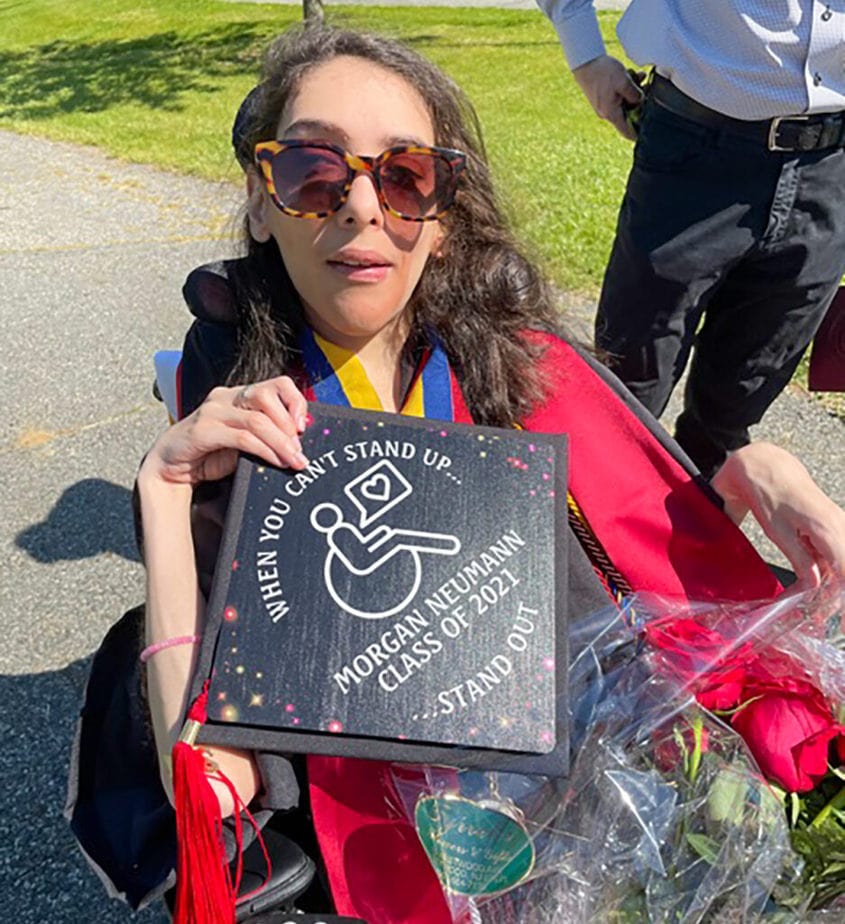
“Students and parents were in tears when they announced it, and no one expected it. At the least, we hoped that they would grandfather in students who had already committed to the school.”
But her private agency care option did not pan out. She had to move back home because staffing was so difficult. “The hours and pay for the aides are bad,” she says. “For me, it’s hit or miss, a lot of trouble. It’s hard to find reliable aides. Since the university is a state school, the workers there got a higher rate than they can get through a private agency.”
Neumann, whose personal assistance needs are more extensive than Allen’s, moved back home to Fountain Lakes, New Jersey, where her mother can care for her. She eventually enrolled in Ramapo College, a 19-minute drive away. “Before the pandemic, I got to live in a nearby assisted living apartment, but now I’m at home again. A PCA comes in, but only for two days a week. It is tough to find any good aides since the pandemic.”
Part of the difficulty of maintaining adequate care comes from chronic poor pay. As of June 2021, Neumann says her aides made $11.48/hour. By contrast, according to a 2018 Pittsburgh Post-Gazette article about the dissolving of the Edinboro program, the aides on campus at that time were paid anywhere from $15 to $28/hour. Many states have rates that hover near the federal minimum wage rate — $7.25/hour.
The minimum wages of Alabama, Georgia, Idaho, Indiana, Iowa, Kansas, Kentucky, Louisiana, Mississippi, New Hampshire, North Carolina, North Dakota, Oklahoma, Pennsylvania, South Carolina, Tennessee, Texas, Utah, Wyoming and Wisconsin have been $7.25/hour for at least the past 11 years. On the flip side, California and Oregon offer $14/hour, the highest minimum wage, while New Jersey and New York’s minimum wages are between $12.00 and $12.75 an hour.
Edinboro University’s rates were exceptionally high, paid in collaboration with Pennsylvania’s Office of Vocational Rehabilitation, which may have contributed to the university’s decision to scuttle the whole program. From the students’ viewpoint, the main problem was the administration’s lack of transparency and warning, coupled with its decision to shut down the accessible dorm buildings and refusal to grandfather in existing students amid their college education. “Throwing the baby out with the bathwater” is an apt description of Edinboro’s approach to solving its financial problem, and those students who were hurt the most were those who could least afford the sudden turmoil and financial strain.
As an early leader in establishing a wheelchair-friendly culture, Edinboro was considered for inclusion in NEW MOBILITY’s Wheels on Campus guide. But our attempts to interview personnel from the university and current wheelchair-using students with the university’s cooperation — the protocol used with all candidates for inclusion — were ignored. Higher-ups directed the assistant director of accessibility services to ask for our interview questions in advance, and NM complied by promptly sending them. When no response followed, NM followed up with emails and phone calls. After months of waiting and no reply, the decision was made to exclude Edinboro from Wheels on Campus.
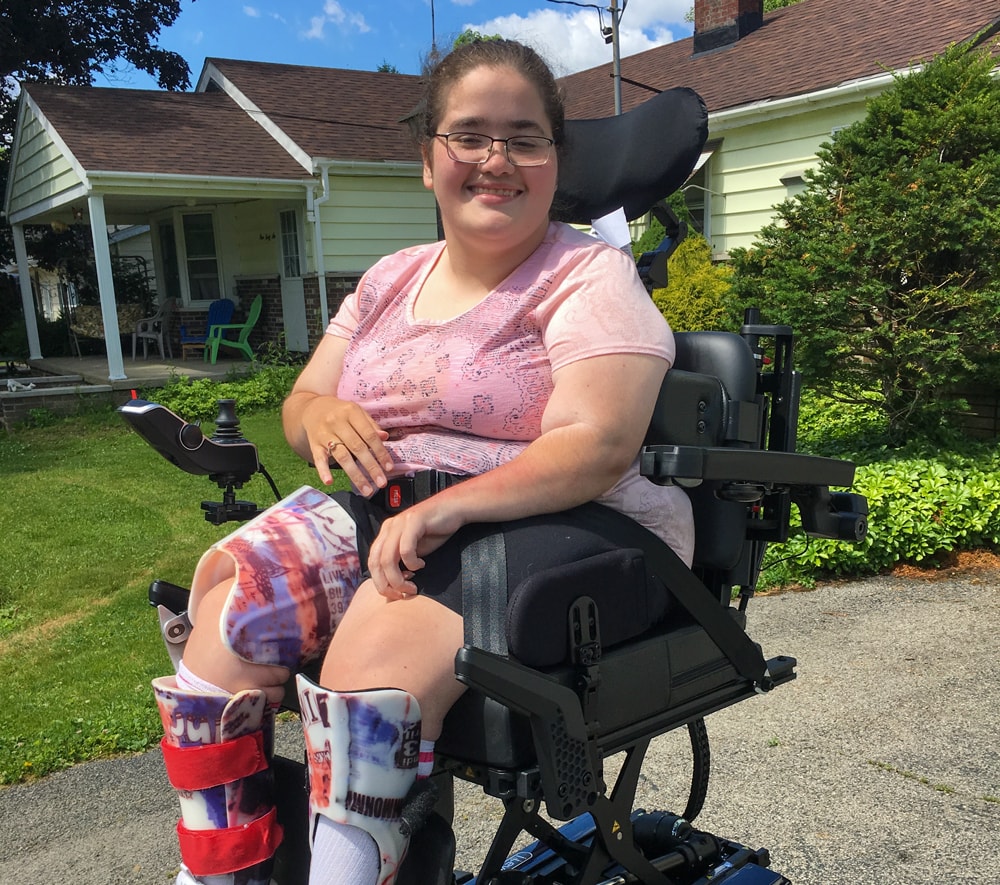
“The hours and pay for the aides are bad. Since the university is a state school, the workers there got a higher rate than they can get through a private agency.”
The National Problem
The disparity in PCA pay rates across the nation is more than substantial, and the difficulty of finding aides is not confined to Pennsylvania. Not only does each state have its own pay rate, but few states provide sufficient monetary motivation for job seekers to sign on for difficult hours and low wages. It is a nationwide problem, making moving from state to state especially difficult for students — and non-students — who need substantial personal assistance.
California, usually a leader in all things related to disability, has been changing radically over the last several years. “We are going through a time of tremendous turmoil with PCA services in California,” says Nancy Becker Kennedy, a longtime, dedicated disability advocate. “There is a big change between the states that unionized and the states that didn’t. The ones that unionized got more money, California included, but I think we have lost much of our rights to freedom.”
While aides in California get better pay due to unionization, a substantial downside affects wheelchair users who live in their own homes (such as students who reside near campus). Kennedy says the Service Employees International Union switched from a social model to a medical model, with much greater control and tighter rules, resulting in favoritism given to families whose wheelchair-using children live with them. It is a drastically different situation for those wheelchair users who live on their own. “They are treating us like we’re under house arrest. They’re putting EVV [electronic visit verification to track employees’ hours] into our homes. We have lost our privacy and independence. They’re limiting hours per day of pay, and it makes it much harder to get PCAs to come in for a few hours of work, twice a day.”
Add to this the high cost of living in California, especially in urban areas. It becomes evident that the individual states with the higher pay rates usually have the highest living costs, reducing job seekers’ motivation. Additionally, California micromanages care from a centralized, unionized seat of power and follows a policy that limits caregivers’ hours and works against the welfare of recipients and personal assistants.
California’s EVV approach to verification of hours requires clocking in and out using a cellphone, making it virtually impossible to have a live-in aide since the new limitation on hours does not pay for time that is not strictly spent doing physical work of some kind. There is no incentive for aides to stay overnight in case they are needed — and that is sometimes when they are most needed.
This paternalistic approach is an overreaction to charges of billing fraud and discriminates against those living on their own, including college students living on campus or in apartments. It is reminiscent of the federal government’s earlier crackdown on Medicare billing fraud in durable medical equipment that resulted in “competitive bidding.” Predictably, the bidding war was won by a handful of large national companies, resulting in long waits and fewer smaller equipment dealers, which DME advocates correctly warned would bring about dire service gaps, especially in rural areas.
Kennedy says this new crackdown on potential fraud in reporting wages includes a considerable windfall for Sandata, a national data tracking company greenlighted to install EVV devices in homes across the nation. Does this bring to mind echoes of Big Brother is watching? “It absolutely does,” she says, “and it also scares off potential PCAs.”
These changes result in an inequitable situation favoring large national corporations, families whose children live at home, and medical-model-minded managers who carry out the lopsided policies. In other words, as our top-down economy continues to favor large companies gobbling up smaller ones, we may be in for a prolonged time of “throwing out the baby with the bathwater” as a way of dealing with complex social problems. “We have come a long, long way — and not in a good way — from the days of Ed Roberts and the independent living movement,” says Kennedy. Ed Roberts, the first wheelchair user to attend UC Berkeley, cofounded the independent living movement to help others with disabilities live where and how they choose.
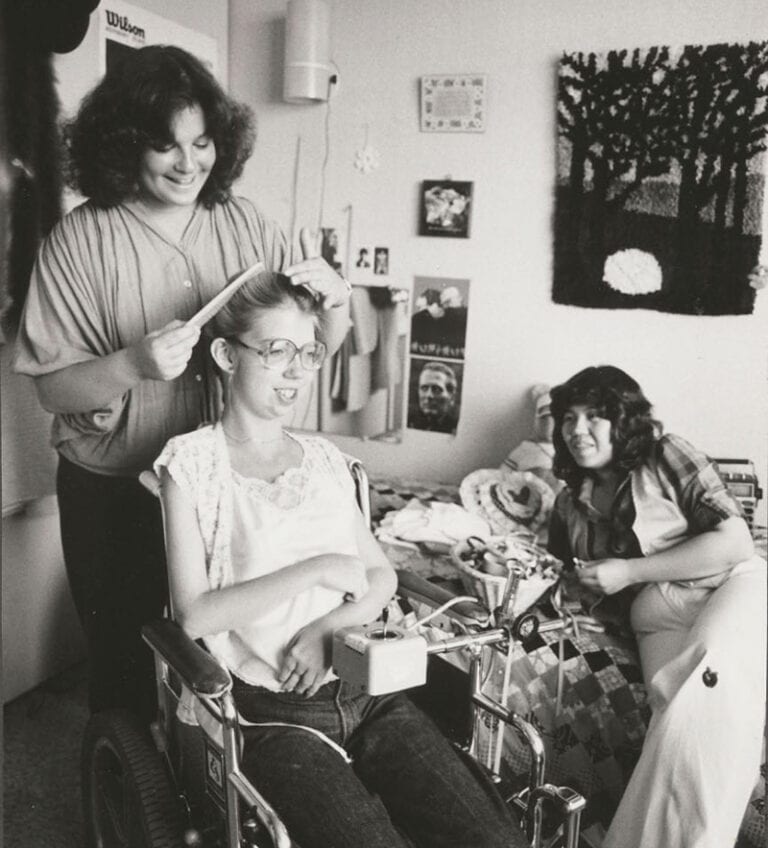
Photo courtesy of UC Berkeley
Berkeley had an exemplary program for decades.
“We have come a long, long way — and not in a good way — from the days of Ed Roberts and the independent living movement.”
— Nancy Becker Kennedy
Money: The Cause and the Solution
In the case of Edinboro and other colleges that have eliminated their on-campus PCA programs, the main culprit is financial distress, something that our national institutions of higher learning have been coping with for decades. A Feb. 22 article in Forbes chronicles the economic challenges facing colleges and universities:
“Colleges are not going to come out of this period [the pandemic] and return to ‘business as usual,’ as too much has changed in the way we do business and the priorities of students.” This prediction comes from economist Lucie Lapovsky, former president of Mercy College. Then she elaborates, forecasting that these changes could very well affect disability services and ADA accommodations across the nation: “Those schools, which have trimmed down and positioned themselves to be able to grow in new ways once the pandemic is over, will survive and thrive.”
“Trimming down” often means doing away with those programs and services that are losing money. In that scenario, disability services are an easy go-to-choice for cutbacks, whether they are state-run programs or funded by universities. That is precisely what happened at Edinboro.
In his 2019 Post-Gazette article, Bill Shackner found that the small Pennsylvania university had been looking for ways to trim down since 2013. That’s the year Edinboro began discussions with the state’s Office of Vocational Rehabilitation to alter or end its decadeslong agreement to provide funding for the on-campus PCA program. The ultimate decision was to close down the PCA program. In this way, the school would save money by not repairing, upgrading or maintaining their two accessible dorms.
In other words, whether intentionally or not, Edinboro abandoned those students who most needed the specialized dorms as a way of solving its financial problems. Morgan Neumann’s mother, Julie, says the overall program change “gave them an excuse to get rid of the dorms.”
Another part of the university’s rationale for no longer providing PCA services came from a change in the OVR waiver program, which stated that reimbursable services must have an educational purpose. Therefore, in the minds of those who failed to see the critical need for attendant care in the first place, aides sleeping overnight in a dorm had no educational purpose.
How UC Berkeley Lost its PCA Program. Is There a Remedy?
Berkeley, California, has long been known for its progressive influence in the independent living movement. Due to the demands of Ed Roberts and the Rollin’ Quads, the pioneering advocacy group that he cofounded in the 1970s, the University of California, Berkeley, created the Disabled Students Residence Program. The program provided personal assistance for up to about 10 students, all wheelchair users, to live in regular residence halls alongside nondisabled students and learn how to manage their care, according to Kevin Shields. He managed the program from 2008 until it closed in 2016.
When the Great Recession hit in 2008, the program began to be whittled down by, in Shields’ words, “a thousand little cuts” in the form of regulatory changes by the state and federal government and UCB. Besides furloughing employees that year, the state Department of Rehabilitation changed to a “cooperative contract” with the DSRP, which according to Shields, “meant DOR continued funding at $300,089 annually, but UCB would now have to match the price at 70%, with UCB staff doing special services related to the program.”
At the same time, California’s governor, Arnold Schwarzenegger, launched a $50 million hunt for fraud in entitlement programs, which caused many cuts and changes that limited access to supports. Shields says less than $1 million in fraud was discovered. Then in 2010, on the federal level, Republicans took over the House and Senate and passed an amendment to the Workforce Innovation Opportunity Act that limited the future of entitlement programs. The WIOA was “a great idea but resulted in no way to fund the web of complicated programs it created,” says Shields.
California also passed a law in 2012 outlawing duplication in services, which prohibited DOR from funding DSRP’s personal care program since the state already operated its own In-Home Support Services department. Also in 2012, the Service Employees International Union, which includes personal assistants, approved a step-increasing annual raise to its members, while DOR and Berkeley were unwilling to increase the DSRP budget. Consequently, the program laid off staff, dropping from 11 to two in just three years.
The last straw came in 2016, says Shields, “when Berkeley’s Equity and Inclusion Division that oversaw the Disabled Students Program, which managed all accommodations for disabled students under the ADA, underwent a leadership change.” The accumulated financial strain, internal strife and uncertainty took their toll, the result being UCB decided to close down the DSRP. The era of independent living at Berkeley as envisioned by Ed Roberts and the Rollin’ Quads had come to an end.
“Despite a large public outcry, petitions and newly-formed groups, UCB would not back down on its decision, even though,” says Shields, “the DOR was willing to continue funding.”
Many similarities link the demise of the PCA residence programs at Berkeley and Edinboro, mainly relating to funding instability. While Berkeley’s problems took time to gradually take down its storied program, Edinboro’s collapse seemed sudden and shocking, perhaps due to a lack of transparency on the college’s part. Other campuses nationwide who were pioneering leaders in disability services’ residence programs have also had to pare down or limit what they can offer students.
When the problem is financial, the root cause seems clear. But given the confusing web of laws, regulations and bureaucracy, whose responsibility is it to provide funding?
Shields thinks that funding must happen on more than one front. For openers, the disability lobby, fractured as it is, has been largely ineffective in obtaining appropriate government funding. A stronger, more unified lobby is critical. Perhaps just as important is a public relations plan that can deliver a powerful and motivating message that influences the public, lawmakers and policymakers. But to make funding more consistent and reliable, Shields suggests colleges look to alumni to fund endowments specifically for residential care services.
Even Exemplary Universities Are at Risk
In 2020, the leading university in providing a genuinely wheelchair-friendly culture, University of Illinois, Urbana-Champaign, was faced with an unprecedented situation that brings to light another potential problem with delivering consistent, across-the-board support for students requiring PCA care and accessible facilities.
Unlike Edinboro, the University of Illinois has kept its vaunted dorm hall/PCA program operating for decades, right up to the present. But when the surge in COVID-19 cases hit home in 2020, the administration decided to temporarily shut down Nugent Hall, home to the university’s Beckwith Residential Services, the contemporary caregiving model for excellence in higher education.
Rather than reacting to a situation brought on by financial distress, the university’s response seemed to be driven by three different factors, all of which have become more important to colleges and universities and corporations throughout the nation — safety, liability and public relations.
Anyone who has a significant disability or works for a nonprofit that serves people with disabilities knows all too well the growing and dominant power of attorneys, whose job is to protect their clients from lawsuits and unfavorable publicity. When Illinois announced in July 2020 that it would have to shut down Nugent Hall for the fall, no one blinked an eye. On the surface, it seemed like the prudent, safe thing to do. That was the official reason given — safety — to protect not only those students who were seen as vulnerable, but also the university.
Barrett Patton, a student from Tennessee who came to Illinois due to the exemplary reputation of Beckwith Residential Services, was in his final semester of studies, living in Nugent Hall, where he received the daily care he needed as a power wheelchair user with CP. He was skeptical when he became aware of the university’s plan to shut down Nugent due to safety concerns. “At first the reason they gave was they didn’t have staff to support our needs. But other communications said it was deemed too risky to allow certain students to return.” Right away, he began to read between the lines — “risky” can be a red flag for liability concerns, and “certain students” strongly hints at the underlying assumption that wheelchair users, especially those who need daily help, are fragile and vulnerable.

“At first the reason they gave was they didn’t have staff to support our needs. But other communications said it was deemed too risky to allow certain students to return.”
While something as severe as the life-threatening novel coronavirus demanded extreme caution, Patton wondered why the university did not consult with the students and parents. Why did they have no voice in the matter? And why the mixed messages? Having been trained to be his own advocate for independent living by the university’s disability resources program, he insisted that he have a say in the matter. With Patton as the point man, a group of eight students who all needed care at Nugent Hall came up with their own potential plans, “the main one being to at least allow us to use the rooms,” says Patton. “Even Beckwith administration would not express support. We even offered to supply all our own attendants.”
Patton’s main point has always been that policy decisions should include input from those whose lives will be most affected. So he started a petition that got over 5,000 signatures in just a few days. In a few weeks, he received a response from University Housing stating that his group would be allowed to use the rooms in Nugent Hall but had to provide their own staffing.
When classes resumed in the fall of 2020, Patton, as part of a group of five students with similar needs, was on campus, housed in Nugent Hall, but the five families had to pay PCA costs of approximately $30,000 for staffing. The takeaway from Patton’s experience points up the need for self-advocacy and marshaling support in significant numbers to combat administrative policy changes that are certain to disrupt and potentially damage the futures of students who need caregivers.
“At the center of all this,” insists Patton, “is self-determination.”
What We Can Do
On a potentially larger scale, Kennedy’s experience with the state of California, which has a relatively large number of advocates and disability rights groups, shows what can happen even when strident and consistent protest and organizing is evident. Too often, the authoritative sway of government and self-serving corporate entities and organizations results in ill-conceived policy changes that bring about harmful results; if not for all, then certainly for large numbers of people whose needs are disregarded. “In California, it’s like a ‘one-size-fits-all’ policy,” says Kennedy.
And scariest of all, more states are expected to adopt similar policies. Given the perfect storm of financial uncertainties building in our nation, how can we protect our community’s need for affordable and accessible higher education?
We need to anticipate unwanted consequences and build a national coalition that speaks with a unified voice to protect access to personal care and truly accessible campuses. We also need effective proactive advocacy from state to state, especially in this era of states looking for ways to make budget cutbacks. Every bit as important, we need to insist on being included in discussions about policies and laws that affect our ability to live meaningful and fulfilling lives.
Our strategy must include influential advocacy groups like United Spinal Association, ADAPT and other powerful organizations with our best interests in mind and speak with authority about legal and civil rights matters. Surely the Vocational Rehabilitation Act of 1973 and the Americans with Disabilities Act provide authoritative and sound mandates for effective policies that guard the equal rights of those whose lives are at stake. The ADA’s promise of reasonable accommodation can be applied and enforced in higher education, but will the Justice Department be willing to act as the enforcer? More than likely, the DOJ’s Civil Rights Division will only act when influential disability organizations lead the way.
But we can go beyond advocating for our rights. We also need to win over legislators and policymakers by educating them about what our community has to offer when we transition from receiving services to paying taxes. And more: We need to tell our stories about successfully surmounting barriers and obstacles as a way of life.
We are the experts in this regard, and the mainstream public needs to see and hear it, time and time again. Hopefully, lawmakers and policymakers in sufficient numbers will begin to understand how spending money now on needed day-to-day personal care services in general, but especially in higher education, is an investment in our future. And by “our,” I mean our nation as a whole.
Support New MobilityWait! Before you wander off to other parts of the internet, please consider supporting New Mobility. For more than three decades, New Mobility has published groundbreaking content for active wheelchair users. We share practical advice from wheelchair users across the country, review life-changing technology and demand equity in healthcare, travel and all facets of life. But none of this is cheap, easy or profitable. Your support helps us give wheelchair users the resources to build a fulfilling life. |


If there is a program such as this one at Edinboro University, I think that shutting it down without consultation with the affected individuals to find a compromise that is financially feasible is an act of housing discrimination under both state and federal law. Was a complaint ever filed with HUD, or in this particular case, with the PA Human Relations Commission.
As a local around the Edinboro University campus and former student, I’m appalled at this decision after such a long time sustaining the program. I would assume Edinboro had modeled the program to make them positive revenue. I’m assuming the tuition, housing, and/or assistance was much higher than a traditional student without any disability. It sounds like new leadership wants to go in a different direction to me. I honestly knew Edinboro University had a lot of students needing assistance in different ways but didn’t realize the extent of the program. It sounds like it was a great thing that gave people all over the country a great service while obtaining their education. I feel many other schools would be interested in doing something like this and in the state colleges some funding should absolutely be allocated toward making this important access of education and needed assistance available. I’m so sorry for the students who quickly had to find a new path, it embarrasses me to have been part of the University. Please don’t give up, get your education….as much of it as you can. Do not give up because of this horrible budget cut that was implemented way to fast and inappropriately.