



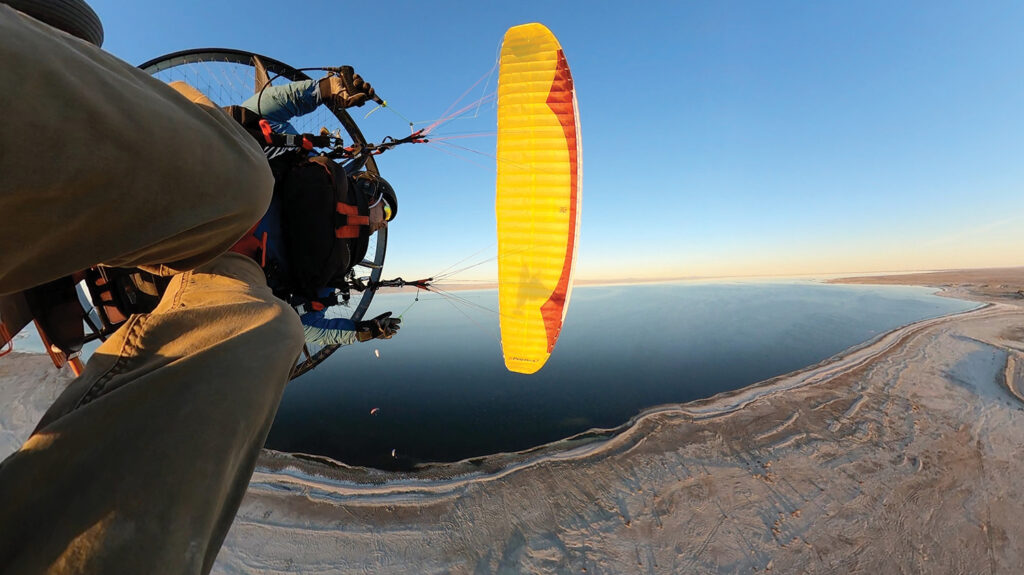
You never know what a paragliding flight will be like until you’re in the air. That’s what Joe Stone loves about flying. There are so many variables you can’t see, from thermals to turbulence to gusts of wind, that you’re forced to be completely in the moment.
“As you’re flying, you’re painting this image in your head of what the air is like. You’re feeling it. You’re reacting to it,” he says. “You’re having to do things with quick timing to respond to whatever is being thrown at you.”
Some flights only last a few minutes. Others stretch for hours. Sometimes you get lucky. “When you’re circling around on a thermal and a bird is looking at you as you’re doing the exact same thing it’s doing, that connection with nature and the environment is pretty unmatched,” he says.
Those feelings of being present and connecting with the natural world and like-minded people have drawn Stone to adventure sports his entire life. As the director of mission for Teton Adaptive Sports, a nonprofit based in Jackson Hole, Wyoming, that provides inclusive outdoor recreation opportunities, Stone makes sure people with disabilities of all backgrounds can access those same experiences.

A New Direction
How he got there is a story that wanders as much as the rivers around Jackson. It starts with speed flying, a particularly risky type of paragliding in which you fly as fast and low to the ground as possible. It’s an adrenaline mainline, and it was Stone’s passion throughout his early 20s. Then, in 2010, he hit the side of Montana’s Mount Jumbo and broke his C6 and 7 vertebrae and sustained a host of other injuries.
Stone knew that what he was doing was risky. He played hard and partied hard, and one of his biggest fears was winding up with a spinal cord injury. It was a fear rooted in ignorance since he figured that his life would be over if he couldn’t walk. While in the hospital, he saw Murderball, the Academy Award-nominated documentary about the U.S. wheelchair rugby team, and realized that if those guys had figured out how to lead fulfilling and active lives as quads, he could too. “When I was first injured, I didn’t know anything about spinal cord injuries or whether life would even be worth living, so the first stage, especially in the first year, was just about figuring out what I could do,” says Stone.
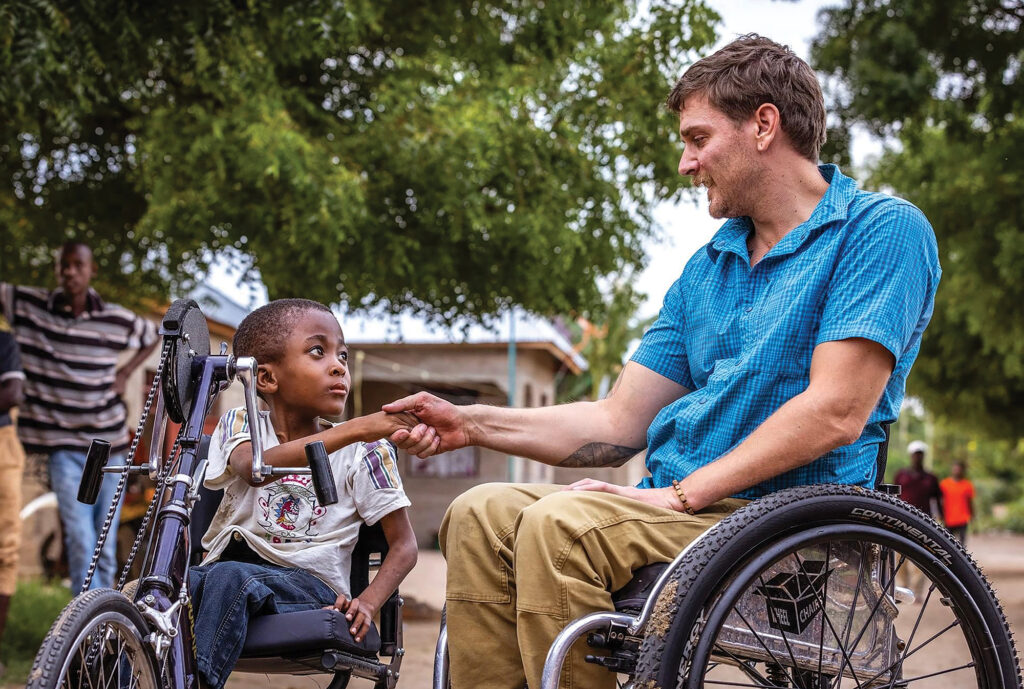
He set a goal to handcycle the Going to the Sun Road, a 50-mile stretch of highway that climbs 2,500 feet up Logan Pass in Montana’s Glacier National Park. It was ambitious, to say the least. He didn’t know if he could do it — he didn’t even have a handcycle yet. But it gave him a goal to work toward.
One day before his first SCI anniversary, he rode the Going to the Sun Road with a group of friends. The 12-mile climb up Logan Pass took him eight and a half hours, but the hardest part was riding the last flat miles back to camp after the climb. The high of the summit and the adrenaline of the descent had worn off, and he was exhausted. It wasn’t fun anymore. He didn’t want to be there. He gutted through.
Stone and his friends pulled back into camp just as the sun was setting. That trip and the process of working toward it changed Stone’s whole outlook on living with paralysis. It gave him the confidence that whatever he wanted to do with his life was open if he was willing to do things differently, accept help from others and put in the work. And he’d just proved he knew how to work.
Finding Purpose in Failure
Not long after the Going to the Sun ride, Stone set another goal: to become the first quad to complete a triathlon. He was one year out from his accident, had never done a triathlon, and had never been in a racing chair. He didn’t have the right equipment and didn’t have the money to buy it. But he threw himself at it, confident he’d figure it out.
While learning about everything from racing chair techniques to adaptive wetsuits, Stone started a filmmaking project. He partnered with a close friend, Kevin May, to make a documentary, It’s Raining, So What, about the Ironman journey. “My intention then was, if I could help one person who’s laid up in the hospital dealing with a new spinal cord injury, the way Murderball helped me, then it’s a success,” Stone says.
It’s Raining, So What
This feature-length documentary chronicles Stone’s early years after his paragliding accident, including the Going to the Sun ride and his Ironman attempt.
Available for streaming:
Rent for $4.99 or purchase for $9.99 at vimeo.com/ondemand/itsrainingsowhat
During his Ironman training, he started posting regularly on social media, sharing everything from getting dumped into the water while rafting to how-to videos about transferring into a car or stretching out his muscle spasms. The intent behind Stone’s various public-facing projects — the documentary, the social media and a newly-developed career as a public speaker — was to help other people with SCI move forward with their own lives.
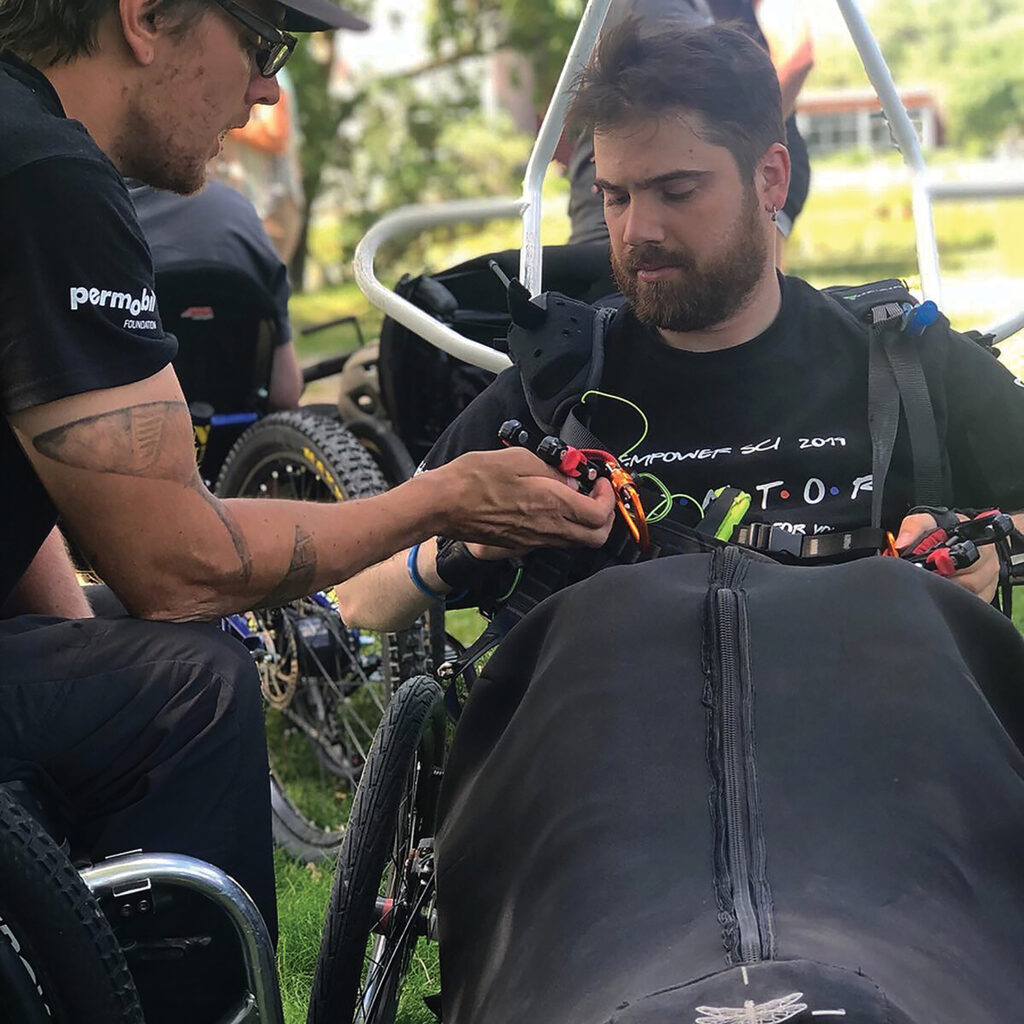
In 2013, Stone competed in Ironman Florida. He completed the 2.4-mile open water swim two minutes beyond the cut-off time, but Ironman races have strict time limits, and Stone wasn’t allowed to finish the race. At the end of It’s Raining, So What, Stone says that moment “felt like the biggest failure of my life.”
The silver lining came later that night when he helped cheer on the race’s last finishers, including a woman with Ehlers-Danlos syndrome who willed herself through 17 hours to finish less than a minute before the final time cut. Seeing the collective energy at the finish line and reflecting on all the support he’d received taught him some important lessons: “It’s not all about me, and it’s not about the path I want to go on and what I want to accomplish. It’s about communities. It’s about bringing people together.”
Foundation Life

In the first years after he was injured, Stone benefitted from several adaptive sports foundations, but he still felt like there was a need not being addressed. He and May started the Joe Stone Foundation to bring adaptive sports into the broader outdoor recreation community. “One of the things that really bothered me when I was first injured was suddenly, I was separate from all the guys I used to fly with. What the hell? I break my neck, and suddenly I’m funneled into adapted sports? It’s like any knowledge and experience I already had didn’t matter,” says Stone. “The Joe Stone Foundation is about bridging that divide.”
The successful partnerships proved Stone’s hunch. “People with disabilities wanted to be at events where it wasn’t just for people with disabilities. It was a lot easier to join an already existing event and make it accessible and inclusive than to create a whole new one,” he says.
“There were times where the teenaged son of the dad who uses a wheelchair would go off and join an advanced downhill clinic, and his dad would go off and do a group ride, a downhill ride, or whatever it was to further his skills. And then they’d meet up after and have lunch. That’s kind of the dream — to have an event and a community that just supports everyone.”
Back In The Air
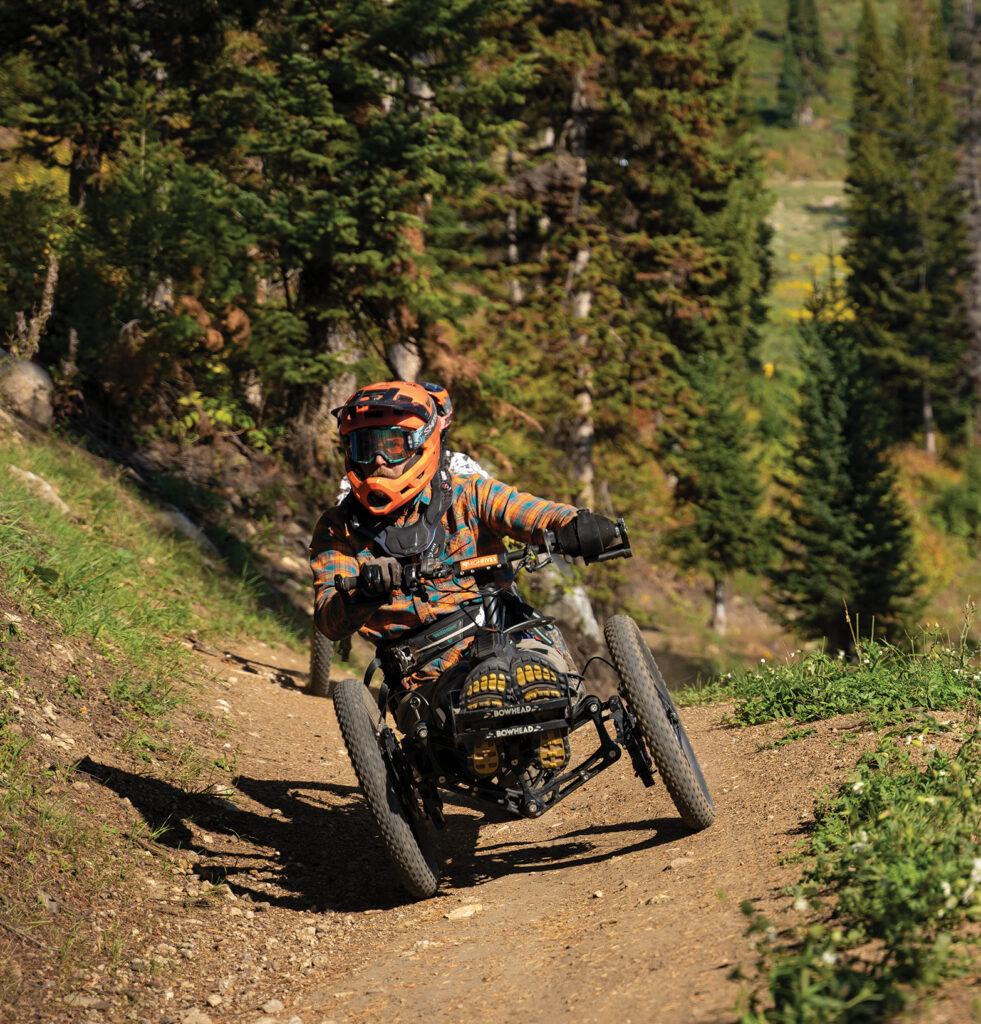
After his accident, Stone didn’t immediately try to get back into flying since in 2010, there weren’t many resources for learning how to paraglide as a wheelchair user. Plus, he didn’t feel it was fair to his family to dive right back into an activity that had left him paralyzed. He kept an open mind and tried as many different activities as possible, hoping to find something that would grab him, like paragliding.
Despite trying swimming, quad rugby, triathlon, off-road handcycling, white water rafting and anything else he could find, the flying itch never left. Years later, he’d still dream of being back up in the air. Then, while he was training for the Ironman, a guy named Chris Santacroce reached out via Facebook about an organization he ran called Project Airtime, a Utah nonprofit that provides inclusive flying opportunities.
After a few months of hemming and hawing, he made the trek to Utah in 2014. On his first flight, he fell back in love. “When I got out there and started learning with them, it turned out to be way easier and way more inclusive than I ever could have expected,” says Stone. “Once my eyes were open to how possible it was for someone in our situation, it was game on.”
He says the hardest part was telling his parents. But they eventually got on board after realizing that Stone wasn’t the same person he was when he got hurt and that he had a different approach to the sport now. He says rather than flying “filled with ego,” he’s learned how to enjoy the process, listen to his mentors and let his skills develop naturally rather than continually push his limits.
With his background, progress happened fast. He went from tandem flights to solo adventures in just a few sessions. Soon he was starting Project Airtime programs in Montana, Wyoming and Idaho and helping others create versions of the program in their cities. “My role with Project Airtime is both being a pilot and an advocate for it. And when the right people show up who want to bring a chapter to their area, I just help facilitate that by answering emails, sourcing the gear and providing some training,” he says.
“My favorite thing about Project Airtime is how organically we allow it to grow. It’s never forced,” says Stone. “Chris Santacroce was the guy who taught me that thing of ‘if you show up, you’ll go flying,’ and that’s helped me in my own personal growth and with my peer-mentorship. I could spend all day reaching out to people, but at the end of the day, if you show up, we’ll make things happen — and that’s what Project Airtime is all about.”
Joe Stone’s Favorite Spots for Accessible Outdoor Adventures
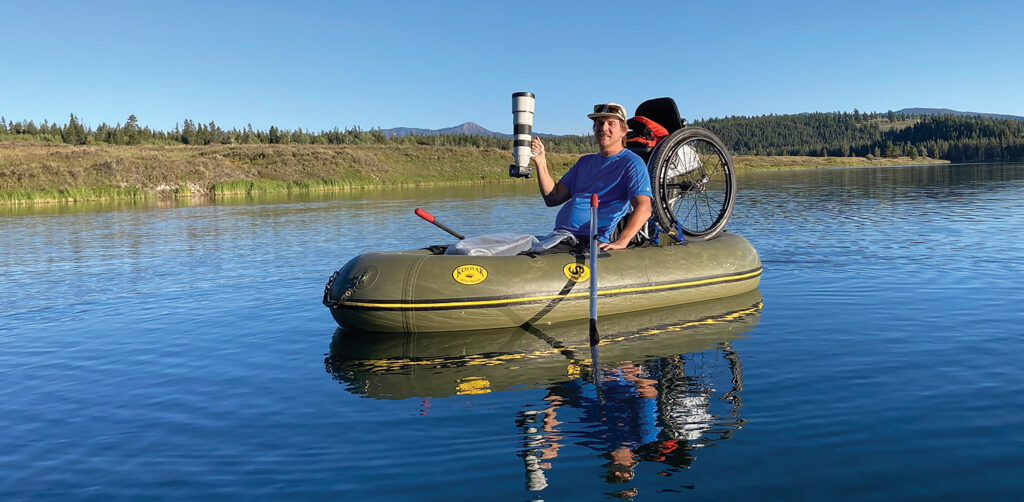
- Jackson, Wyoming – “I might be a bit biased because it’s where I live, but I do think it’s a unique area. You can go white-water rafting or you can get on flatwater, and both of those can be guided. You can also rent some adaptive paddling equipment to go out on the lakes with friends and family. You can rent a handcycle meant for paved paths through Wheel Wranglers, who will deliver the equipment. There are a lot of unique opportunities for families. Not to mention Yellowstone National Park, Grand Teton National Park and tons of wildlife.”
- Salt Lake City, Utah – “You’ve got the headquarters of Project Airtime right there. There’s also the National Ability Center, Wasatch Adaptive Sports and the University of Utah, all with adaptive recreation opportunities. On top of that, there’s an indoor skydiving place and the outdoor Skydive Utah, which are both open to taking people with disabilities. There’s also a great art museum, aquarium and food. It’s also really affordable and has a great music scene.”
- National Parks – “They are always super fun. It’s just about figuring out how you’ll get on the trails and what things you can do — so some are better than others. Yellowstone is pretty great, and if you have an off-road handcycle, Channel Islands is cool off the coast of California. The people contracted to do the boat rides were super helpful to me. It’s a little challenging, so you will work hard for it with a lot of climbing, but it’s really cool. Death Valley is also cool. National Parks are rad, and there are opportunities at all of them.”
From Dirtbag To Director
Stone wasn’t getting paid for anything to do with adaptive recreation until about a year ago. He was surviving on public speaking, and everything he did through The Joe Stone Foundation was completely volunteer.
“I got really good advice that I didn’t take from the original founder of Teton Adaptive, who said, ‘Hey, I think what you’re doing with The Joe Stone Foundation is really cool. Just so you know, at a certain point, you’re going to have to start paying yourself because otherwise, you’re going to get burnt out.’”
Stone brushed it off at the time, but that’s what happened. He got pulled in many different directions and didn’t know how to say no. He became overwhelmed.
That’s why, in 2018, he took a break from all of it.
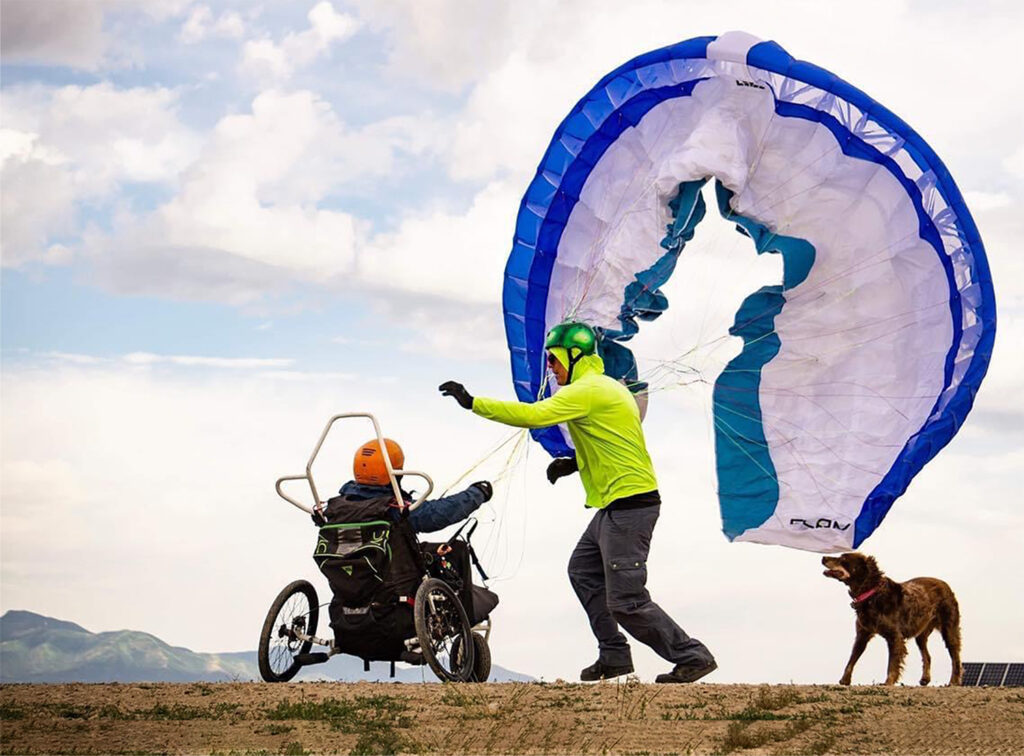
“I loaded everything into a storage unit and left with my truck and my camper, spending two years chasing warm air for paragliding,” says Stone. “I had a few select speaking gigs that I flew to from time to time and activist things with ADAPT in Washington, D.C., but it was all real minimal. That allowed me to analyze what I got burnt out on and pull in the things I was passionate about, like creating adaptive recreation opportunities or being involved in disability civil rights.”
Meanwhile, Teton Adaptive courted him for a full-time role, but the timing was always wrong. It wasn’t until COVID hit in March 2020, when all Stone’s speaking gigs dried up and his girlfriend announced she was moving to Jackson for a physiotherapy job, that Stone and Teton Adaptive were finally on the same wavelength.
Stone is now director of mission at Teton Adaptive, where he leads fundraising initiatives and finds businesses the organization can partner with to develop new adaptive recreational opportunities. “What’s made getting hired really nice is that all the other areas that burnt me out more on a volunteer basis, like being involved in panels and the nitty-gritty details of taking time out to help others establish an adaptive mountain bike program, are now part of my job,” he says.“What has helped me grow is being able to learn from everybody else’s perspectives. You’re never going to hit it out of the park with every single person. But we’re trying.”
Stone has simple advice for anyone who wants to get involved in outdoor recreation but isn’t sure how to start. “Get out, try new things, find groups of people who can help you do it, and be open to the help,” he says. “Stay curious, stay open-minded and show up.”
Support New MobilityWait! Before you wander off to other parts of the internet, please consider supporting New Mobility. For more than three decades, New Mobility has published groundbreaking content for active wheelchair users. We share practical advice from wheelchair users across the country, review life-changing technology and demand equity in healthcare, travel and all facets of life. But none of this is cheap, easy or profitable. Your support helps us give wheelchair users the resources to build a fulfilling life. |


As an Aussie quad from a hang gliding accident in 1977, I can really appreciate this article. I went back to water skiing, snow skiing (using equipment I designed) along with gliding a tandem hang gliding (no fun as a passenger) yachting and now handcycling. Only flying gives the total adrenaline buzz, but too old with family and a mortgage to take up parasailing. Flying for 20 minutes, with a Wedge-tailed Eagle guiding me to lift bands on the mountain was my ultimate high.
Thanks Colin, glad you could relate to this one.