


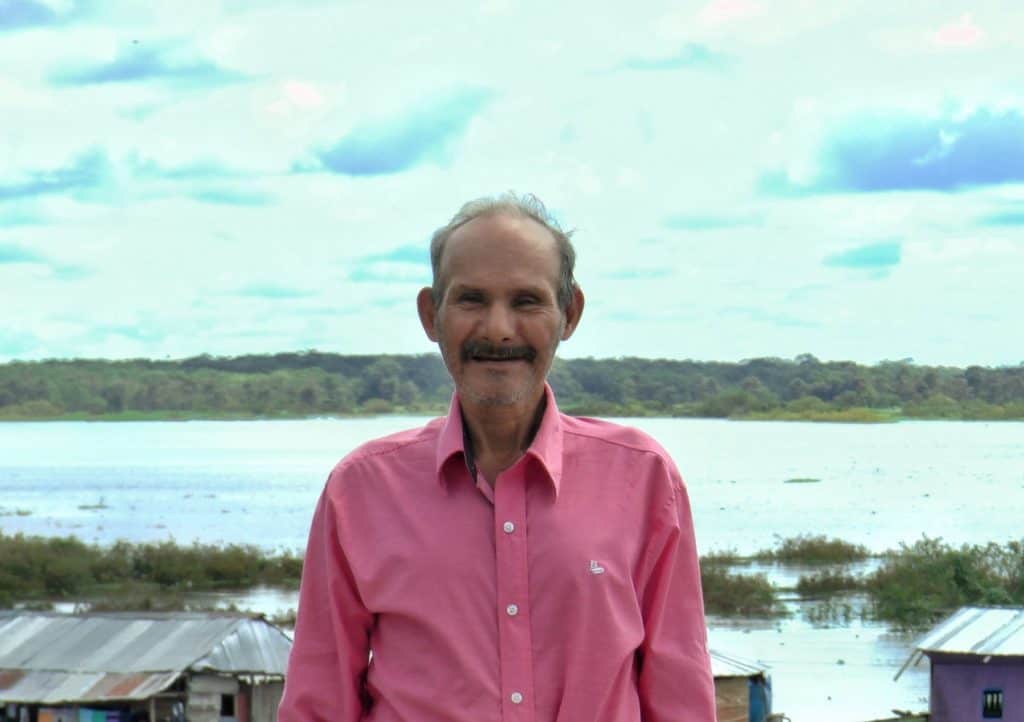
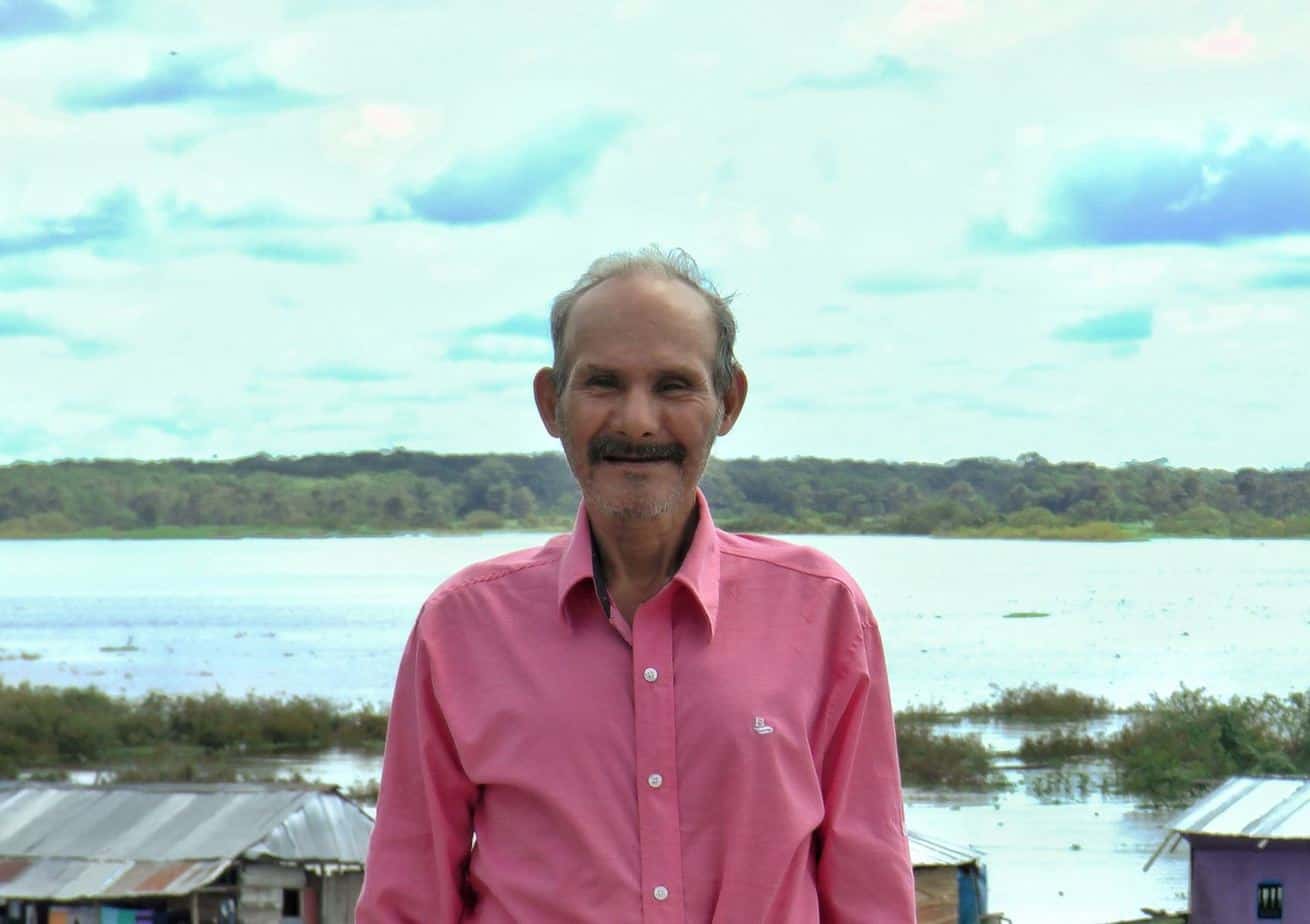
Amadeo Garcia Garcia is the last man on earth, his own personal earth. He lives in the village of Intuto, Peru, on the banks of the Amazon, and he’s the last survivor of his tribe — the last native speaker of his first language, Taushiro.
When he dies, no one will be left to speak his language. Now, while he lives out his final years, he may be the world’s loneliest man.
The profound connection we have with our native language is lost on most of us who are American-born English speakers. Every day we hear our language spoken wherever we go, wherever voices can be heard, in snatches of public conversation, on radio, TV, movies, computers, cell phones and a host of electronic devices and recordings. But Amadeo no longer hears his own language. When he speaks, his words fall on silence — and no one responds.
In the United States, we hear many different languages spoken, but our first allegiance, our primal identity, our ability to communicate with others, is inextricably linked to our first language. If it is not English, it is Spanish, Italian, Japanese, Chinese, Vietnamese, Cambodian, German, Russian, Swedish, Dutch, Hebrew, Arabic, Swahili, Maori, or one of countless other languages that make up our uniquely diverse nation. And some of us also speak a distinctly unique dialect of a particular demographic group.
Many of us who live with severe disabilities, for instance, speak Disabledese. Certain words or expressions yield their complete meaning only to others like us who also speak Disabledese. When we use words like “walkie” or “able-bodied,” the connotation transcends the literal meaning of the word or phrase. These words are rich with innuendo and shared meaning. But the fullness of their meaning is only appreciated by other members of our cultural tribe. The great majority of inhabitants of this nation have never spoken Disabledese, nor will they ever.
Disabledese Both Unifies and Divides
It is no doubt a monumental stretch to compare our sense of isolation with that of Amadeo Garcia Garcia, but we do share certain characteristics that make true communication with others outside our tribe difficult and, at times, seemingly impossible. Our specialized vocabulary is at once unifying and divisive. At best it creates a sense of community among us; at worst it erects boundaries.
Like Trump’s proposed wall on our southern border, the purpose is everything. If our purpose in speaking Disabledese is to enforce borders, it will have an isolating effect. On the other hand, if we make a real effort to translate our specialized dialect into friendly terms and make it more easily understood by others who do not speak it, we break down the Great Wall, and we invite others into our world, our personal space, our lives.
The only way that Amadeo Garcia Garcia’s existence and the history of his people can survive is if he succeeds in passing Taushiro on to another person, along with the challenge to encourage that person to pass it to another and another.
Like Amadeo, if we want to escape isolation and make others aware of and responsive to our particular unique demographic, we must translate our language to any who will listen, one person at a time.
Support New MobilityWait! Before you wander off to other parts of the internet, please consider supporting New Mobility. For more than three decades, New Mobility has published groundbreaking content for active wheelchair users. We share practical advice from wheelchair users across the country, review life-changing technology and demand equity in healthcare, travel and all facets of life. But none of this is cheap, easy or profitable. Your support helps us give wheelchair users the resources to build a fulfilling life. |


Recent Comments
Neil on A Safe, Effective Reusable Catheter System
Richard Crumb on A Safe, Effective Reusable Catheter System
Richard Crumb on A Safe, Effective Reusable Catheter System