



Imagine the largest vessel you can carry. It’s full of water and you’re carrying it across a room. You move with great care, afraid that it will get loose on you, that it will get out of control. Chronic pain is like that. You don’t want to jiggle it. People who have it spend too much energy preserving a delicate status quo — avoiding the deluge — and too little time savoring life.
“The rich are different from you and me,” wrote Fitzgerald. That’s how people who have chronic spinal cord injury pain feel about those who don’t. It’s not that we feel we have a corner on pain. It’s that we know that other people cannot understand.
Our former editor, Barry Corbet, wrote those words in 1995. I decided to start this newsletter with Corbet because I trust that he knew what he was talking about. As one of a small percentage of people with SCI who have little experience with chronic pain, neuropathic or otherwise, I cannot understand.
I’ve spent a lot of time diving into the New Mobility archives, learning from those who do, and this edition is an attempt to share their insights with you. We’ll start with understanding how and why people experience pain after SCI, then explore what treatments people use to lessen their pain, and finally we’ll look at advancements in “the surgery of last resort.”
Understanding Pain Types
There are two main types of chronic pain after SCI: neuropathic and musculoskeletal. A recent meta-analysis found that 58% of people with spinal cord injuries experience neuropathic pain, though with huge variations in frequency and severity. For some, it can be an intermittent annoyance; for others, a debilitating constant. Our former editor, Tim Gilmer, writes about his and other wheelchair users’ experiences of neuropathic pain in “The Pain the Never Stops:”
“For as long as I can remember, more than 40 years, I’ve had a stabbing electrical pain that attacks my left groin when I least expect it. If it weren’t so bothersome, it would be funny. I’ll be cruising through the day, happy as a lark, and ZAP! — I nearly jump out of my wheelchair. If I were a cartoon character, my hair would stand straight up and my eyes would bug out.
Such is the nature of neuropathic pain. It is not like any other. It doesn’t ache or throb or hurt like a bruise or a sore tendon; it acts like an electrical signal gone haywire.”
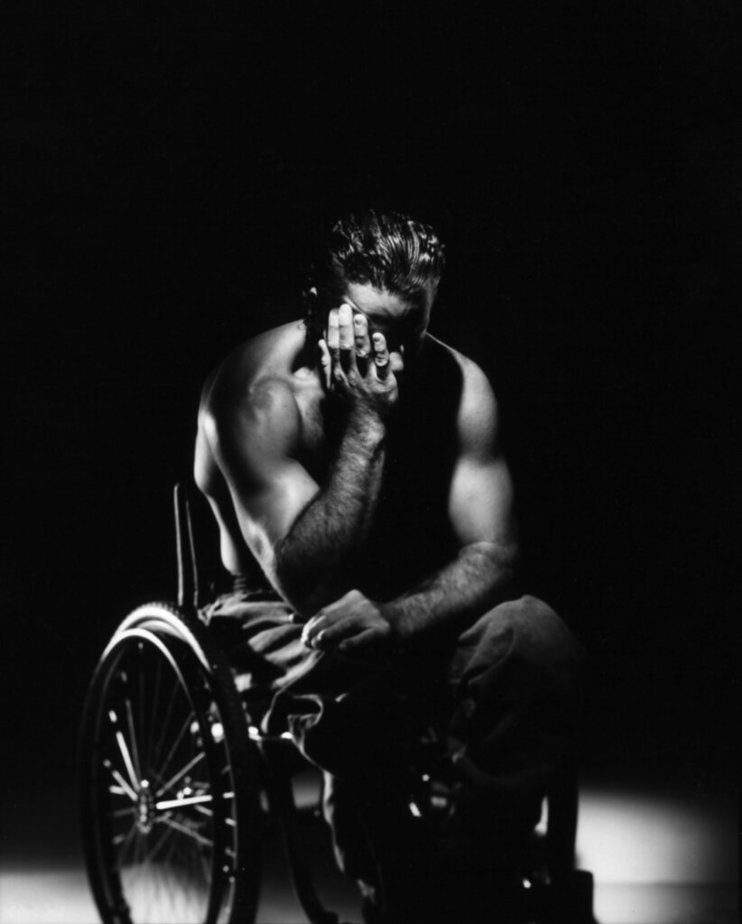
Neuropathic pain acts like an electrical signal gone haywire because that’s what it is. As Kate Willette describes neuropathic pain in “A New Map to Deal with Neuropathic Pain,” it is “the brain’s misbegotten attempt to organize chaotic or missing signals from a damaged sensory system.”
For a long time, clinicians thought that people with incomplete injuries were the only ones that experienced neuropathic pain. But it is possible, though much rarer, for those with complete injuries to have it. That’s because pain signals travels along a sympathetic nervous system chain that runs outside of the spinal cord. Bob Vogel explains how mapping of pain pathways has changed our understanding of neuropathic pain.
Typically, those who deal with neuropathic pain will know it within the first year after injury — it becomes part of your new nervous system. Musculoskeletal pain is different in that it can appear (and recede) at any time based on outside factors. Traumatic or overuse injuries, years in a suboptimal seating setup, tightness from lack of activity or spasticity can all cause pain. The more sensation you have, the more likely you are to feel the various indignities that life with paralysis inflicts upon a body.
Words of Wisdom

“A friend once told me, “Your pain is chronic. Acknowledge it, and then let it go.” Easy for him to say, the guy without pain. But he was right. I practice doing this — acknowledging it and letting it go.
It chooses to stay. And so, we co-exist.”
-Reveca Torres, C5 incomplete, “Feeling My Pain”
Living with Pain
For people with chronic pain, it can be hard to wrap your head around the fact that most treatments act more like coping mechanisms than cures. As Mark Johansen, a doctor at Craig Hospital, put it in “Strategies for Managing Disability-Related Pain:”
“One very important point for people to understand is that the goal of pain management is not necessarily to eliminate pain — which may or may not be possible — but to keep it from significantly limiting function and quality of life.”
Of course, that doesn’t mean that pain is something that you must simply grit and bear for the rest of your days. There are a variety of options for lessening both neuropathic and musculoskeletal pain. Figuring out what combination of treatments works best for you will take time and trial and error.
Many people treat pain with a combination of drugs. According to a June 2015 study in Pain and Therapy, “Management of Neuropathic Pain Associated with Spinal Cord Injury,” no single drug can eliminate neuropathic pain, but antiepileptic meds, antidepressants, opioids, and cannabis are effective in dampening the pain. Tim Gilmer goes over the menagerie of drug cocktails that people use in his article, “More Neuropathic Pains Meds.”

For those who find opioids an effective way to take the edge off chronic pain, but worry about addiction and long-term use, Josie Byzek’s “Controlling Opioids so They Don’t Control You” is valuable reading. Another option to reduce side effects is to have pain meds delivered directly to the spinal cord via an implantable “pain pump.”
Apart from drugs, many wheelchair users learn to live with pain by finding enjoyable activities to distract themselves. Adaptive sports, deep reading, puzzles, spending time in nature — anything that gets your thoughts somewhere else can be helpful. As Matt Patterson, who has a C5-6 incomplete SCI, puts it, “I play chess and read, and listening to music helps. It’s easier to dwell on the pain than to think of something else. It takes effort to stay focused on something else, because the pain never goes away.”
Apart from drugs and distraction, other pain relief options include massage, acupuncture, and fascial release therapy. Neurostimulation devices can be effective for some, and recent research has shown that an outpatient therapy called cognitive multisensory rehabilitation therapy — CMR for short — can be effective in treating neuropathic pain.
Unfortunately, for some people with neuropathic pain, none of the above treatments provide substantive relief. At that point there’s really only one other option.
A Last Resort for Neuropathic Pain
For those who experience debilitating levels of neuropathic pain that cannot be quieted with lifestyle adjustments or medications, the treatment of last resort is Dorsal Root Entry Zone surgery. The surgery — in which a doctor burns off nerve roots where they enter your spinal cord — is known as a last resort because it’s extremely complicated, risky and can have significant side effects. Loss of sensation and some function have been common for those who choose to undergo DREZ.
But as Bob Vogel writes in his recently published story on advancements in DREZ, the surgery has become more precise in the past 30 years as Dr. Scott Falci has mapped the pain receptors in the spinal cord.
“A patient’s description of their neuropathic pain and where they feel it, combined with this mapping system, enables Falci to know where to look for, test, and ablate the pain-producing nerves. Incorporating this mapping system improves overall pain-relief and especially for mid-thoracic-level paras, where, prior to the mapping system, DREZ surgeries didn’t work as well,” Vogel writes.
The mapping has allowed Falci to improve the effectiveness of the surgery and even to operate on quads, because the potential risks of functional loss were too high. Even with these advances, Falci maintains that DREZ remains an option of last resort.
“DREZ is a lot, you have to be willing to have part of your spinal cord destroyed and that’s a lot, especially if you are young and waiting for a cure to come along, AND there is no guarantee that it will work. For the 85% that it works, it is a game-changer for their lives and it thrills me to no end, but in the 15% that it fails, that is the worst surgery that I do because I was their last hope. … It is one of my favorite and one of my worst surgeries.”
Support New MobilityWait! Before you wander off to other parts of the internet, please consider supporting New Mobility. For more than three decades, New Mobility has published groundbreaking content for active wheelchair users. We share practical advice from wheelchair users across the country, review life-changing technology and demand equity in healthcare, travel and all facets of life. But none of this is cheap, easy or profitable. Your support helps us give wheelchair users the resources to build a fulfilling life. |


I wish I could understand this neuropathic pain issue better. Or in my case, a better name might be ‘phantom limb pain’. Because of a rare brain tumor at the very bottom of my spinal chord becoming aggressive, my spinal chord was removed to eliminate the cancer. Even my neurosurgeon told me I should have “NO” feeling below the T6 point where he amputated and removed my spinal chord from there down. How could I? There isn’t even a damaged path, there is simply no path at all for sensation. In theory, there’s no way I could have any pain below T6. Reality doesn’t always recognize theory though, does it. Sometimes I feel like I’m sitting on a hot stove, it hurts so bad. There are very few moments that I don’t have some kind of tingling or aching feeling in my legs, or feel like a belt is tightening around my abdomen. My best escape is to stay distracted by something. I sure wish, though, that I could find something to make it stop. Because the feeling is in part of my body that I *know* that I can’t really feel, for a long time I’ve felt like I’m losing my mind.
I had significant struggle with neuropathic pain for the first 18 months of my spinal cord injury (T12/L1) “incomplete”. After trying oxy, gabapentin, pregabalin, amatripaline, etc, the only thing that’s offered substantial pain reduction was a spinal cord stimulator – specifically above my level of injury for pain management. Pain isn’t gone but it is substantially reduced.