


Independence Through Art
The Association of Mouth and Foot Painting Artists
January 1, 2024
Cheryl Angelelli
Mariam Paré always knew she wanted to be an artist. In 1996, she was on the path to achieving her dream, enrolled as a 20-year-old art major at the College of DuPage in Glen Ellyn, Illinois, when she was shot in a random act of gun violence. The bullet struck her in the neck, instantly rendering the tools of her trade — her hands — useless. “In the beginning, I thought my life was over. I thought as a quadriplegic, I’d be lucky if I could feed myself,” she says, “so painting was not even on my radar.”
It wasn’t until she held a pencil in her mouth to write her name that Paré could begin to reimagine her life as an artist. “I was surprised,” she says. “My signature looked the same as I would have written it with my hand, and that made me think, OK, I just might be able to paint as well with my mouth, too.”
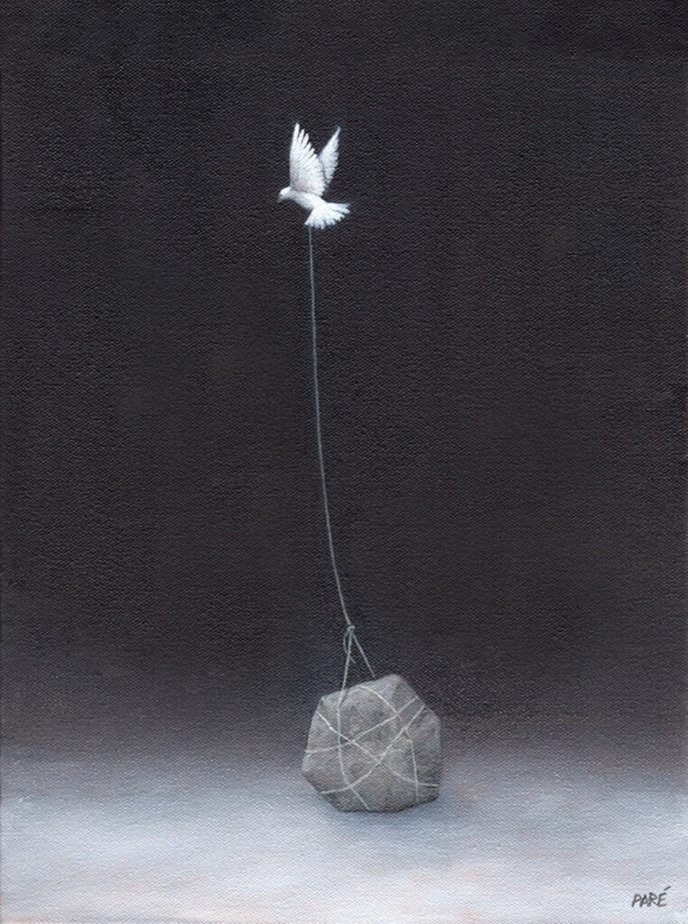
Paré reenrolled in college soon after her injury. She says learning to paint by mouth was like starting all over again. “I knew how to paint, I had that knowledge in my brain — it was just translating it with this new way of outputting my ideas,” she says. “It took about 10 years before I could look at one of my paintings and say, ‘You can’t even tell I did that with my mouth.’”
It was a chance encounter with a stranger at the Chicago Abilities Expo that set Paré’s life on a trajectory she couldn’t have imagined. While displaying her artwork at the expo, she was approached by a fellow mouth painter who told her about the Association of Mouth and Foot Painting Artists, and encouraged her to apply.
“I thought, holy cow, there is this whole association of artists who paint in this weird way that I do. I was like, sign me up,” she says. She submitted a portfolio of her best work, and in 2005 was accepted as a student member in MFPA.
Painting with Purpose
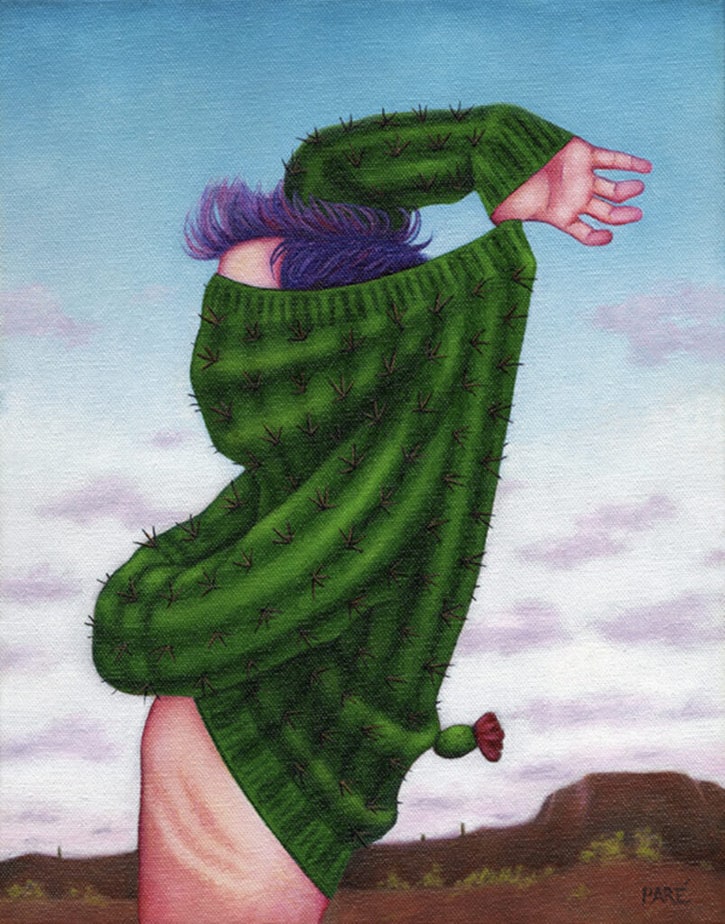
Also known as the Association of Mouth and Foot Painting Artists of the World, MFPA is made up of nearly 800 artists from 72 countries who share one thing in common — they all love to paint, and due to disability, they hold a paint brush with their teeth or toes.
The association is also unique because it is a for-profit business founded and run by the artists themselves. Only a small number of nondisabled employees are hired to handle some of the administrative duties.
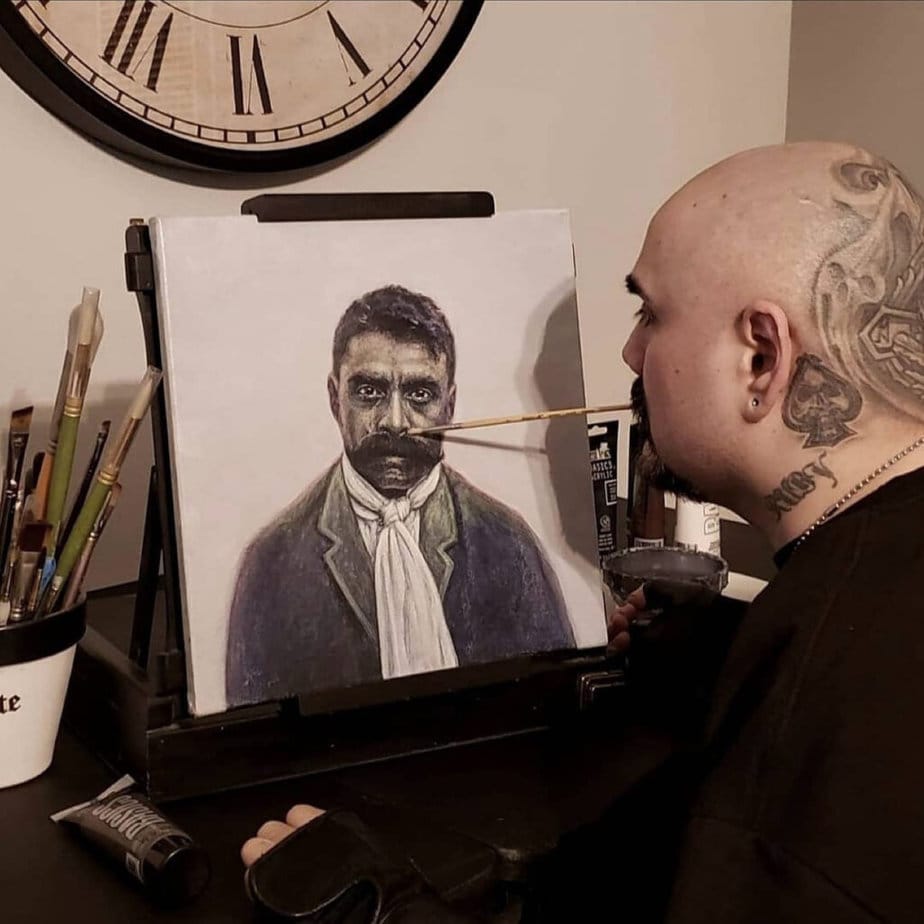
“It was really hard at first trying to control the brush with my mouth. In the beginning my art looked like
Frank Espinosa
a 2-year-old painted it.”
MFPA artists submit thousands of new works of art to the association each year. The artwork remains the property of the artists, but the right of reproduction is transferred to MFPA, which works with publishing houses around the world to sell the art in the form of greeting cards, calendars, prints, illustrated books and other items. More than 90% of the profits go to the artists in the association.
MFPA was founded in 1957 by German painter Erich Stegmann and a small group of disabled artists from eight European countries. A polio survivor, Stegmann grew up without the use of his arms and built a highly successful career in Germany by painting with a mouth-held brush. It was his vision to create a worldwide organization that would allow mouth and foot painters to attain self-respect, creative fulfillment and financial security.
“As human beings we strive to be seen and heard. MFPA uplifts and provides those opportunities for a section of society that has been systemically marginalized,” says Kate Adams, MFPA artist liaison for North America. “The association gives artists the freedom to create, freedom to exist and participate in society, freedom to give back and give value.”
From the onset, Stegmann was adamant that he did not want the association or the artists themselves to be viewed as a charity or with pity. To this day, MFPA’s motto remains “Self-Help, Not Charity,” and the association does not qualify for charitable assistance. “We don’t want people thinking we’re painting for any other reason than we are artists. Love our art for what it is. Yes, you can be amazed by how we make it, but that’s it — we want the work to stand for itself. No pity,” says Paré.
There are three artist levels within the association: student, associate and full member. Students receive a three-year scholarship that comes with a monthly stipend earmarked to help them improve their standard of painting. Funds can be used for things such as materials, private art tutors or transportation to get to art class. As the student improves, the scholarship amount increases. Students can continue to reapply after the scholarship term ends.
Classes and supplies such as oil paint can be expensive, since many of the artists have a limited income or rely on government aid. “The scholarships help lessen some of that burden,” says Adams.
When a student has reached a standard judged by the full members of the association to be equivalent to that of a nondisabled artist, associate or full membership is granted. Associate members receive a monthly income and full members receive an income for life, regardless of whether the progression of their disability or health makes it impossible for them to keep contributing works of art to the association to be sold.
Potential Artists
MFPA is always looking for new artists, whether you’re already painting at a high standard or seeking to develop your artistic skills. To qualify, you must be unable to paint with your hands due to a disability.
Applicants are reviewed by the association to determine the artist’s capability, which governs the level of financial support deemed necessary to develop the artist. For more information about applying, email kvmarch@mfpausa.com.
To learn more about MFPA or to purchase work produced by their artists, visit mfpausa.com.
Other association benefits include the opportunity to meet, network and learn from one another at conferences, exhibitions and other events. “That kind of camaraderie is huge,” says Paré. “There is nothing online, no books, no teachers who can share techniques that are very specific to mouth and foot painting; that only comes from getting to speak with other mouth and foot painters who actually get it. For example, I was having trouble reaching the top of the canvas painting by mouth, until another mouth artist shared a trick to flip the canvas upside down and paint half of it upside down.”
MFPA Artists in the U.S.
MFPA has been operating in the U.S. since 1961. There are currently 43 student artists, two associate members and four full members working in the U.S.
Prior to becoming a quadriplegic at the age of 18, Frank Espinosa, 51, of Whittier, California, never picked up a paintbrush or took an art class. As part of his personal healing and rehabilitation, he began sketching with his mouth and progressed to painting.
“It was really hard at first trying to control the brush with my mouth,” he says. “In the beginning my art looked like a 2-year-old painted it.” With time and mentorship from an MFPA full member who lived nearby, Espinosa began to flourish. He was accepted into MFPA in 2014 as a student, and continues to receive scholarships to hone his skills. “Being a painter and part of MFPA has given me a sense of purpose and a positive way of living. It’s also given me a goal to learn as much as I can, so I can try to become a full member.”
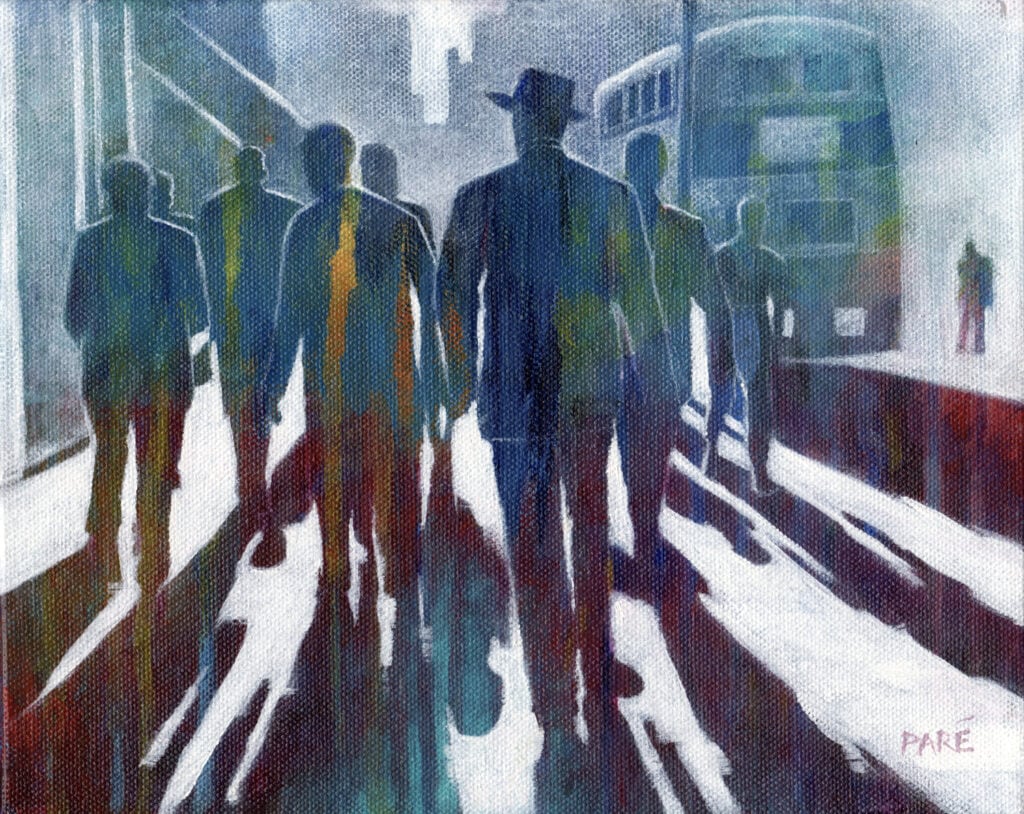
It’s a goal Paré herself recently achieved. After being accepted by MFPA as a student in 2005, she made full member in 2023. Now 47, her life as a full-time artist in Naperville, Illinois, is a busy one. When she isn’t painting all day, she is thinking about her next project. “I can daydream about ideas forever, that’s almost my favorite part … thinking about the emotion I want to provoke, what I want my art to say,” says Paré. “That is the greatest gift I get from my art, successfully conveying an emotion or an idea that moves somebody.”
Painting is her first love, but now she has branched out into video, photography and digital art. “More recently, I have been making art about being a gunshot survivor or having a disability. I’m learning a lot about myself, and being able to express myself that way has been cathartic,” she says. “I think that is kind of where my future art is headed.”
She keeps busy with commercial projects too, thanks to the doors MFPA has opened and the exposure it has given her work. She has participated in international exhibitions at exclusive museums all over the world, and hosted accessible art workshops across the U.S. and Canada for children of all abilities. Another career highlight was presenting actor Pierce Brosnan with a portrait he commissioned from her after learning about MFPA. She also recently closed a deal with LIFEWTR, the premium bottled water brand, to be a part of their “Life Unseen” campaign to amplify the unique work and perspectives of diverse creatives.
“Thanks to MFPA, I get to say I accomplished my goal of becoming a professional artist,” she says, “and I get to earn a living doing something I love.”
Support New MobilityWait! Before you wander off to other parts of the internet, please consider supporting New Mobility. For more than three decades, New Mobility has published groundbreaking content for active wheelchair users. We share practical advice from wheelchair users across the country, review life-changing technology and demand equity in healthcare, travel and all facets of life. But none of this is cheap, easy or profitable. Your support helps us give wheelchair users the resources to build a fulfilling life. |


I’d never heard of this organization before — love that it exists to support artists like this!