


A good caregiver you can rely on to consistently show up on time and get the job done is worth their weight in gold. But the sad reality is that finding a reliable, honest caregiver can make finding your soulmate via online dating seem easy. Whether it’s managing cancellations and no-shows or adjusting to perpetual tardiness, if you rely on a caregiver or attendant, you have to learn the difficult — and often exhausting — art of flexibility.
With cancellations come excuses — some valid, some downright laughable. And while there’s nothing funny about a cancellation or no-show when your life depends on another person, sometimes all you can do is laugh.
After more than 25 years of managing caregivers, I still haven’t figured out the perfect way to call out a caregiver for not doing their job. I’m fully aware that avoiding conflict isn’t the best way to handle many situations. But I do want a shower. I don’t want the person helping me with it to be holding a grudge. And I can’t afford to have someone quit.
For survival and self-preservation, I’ve learned to, as Elsa says, let it go. Turns out I’m not alone — both in excuses heard and in lessons learned.
Attacked by a Cat
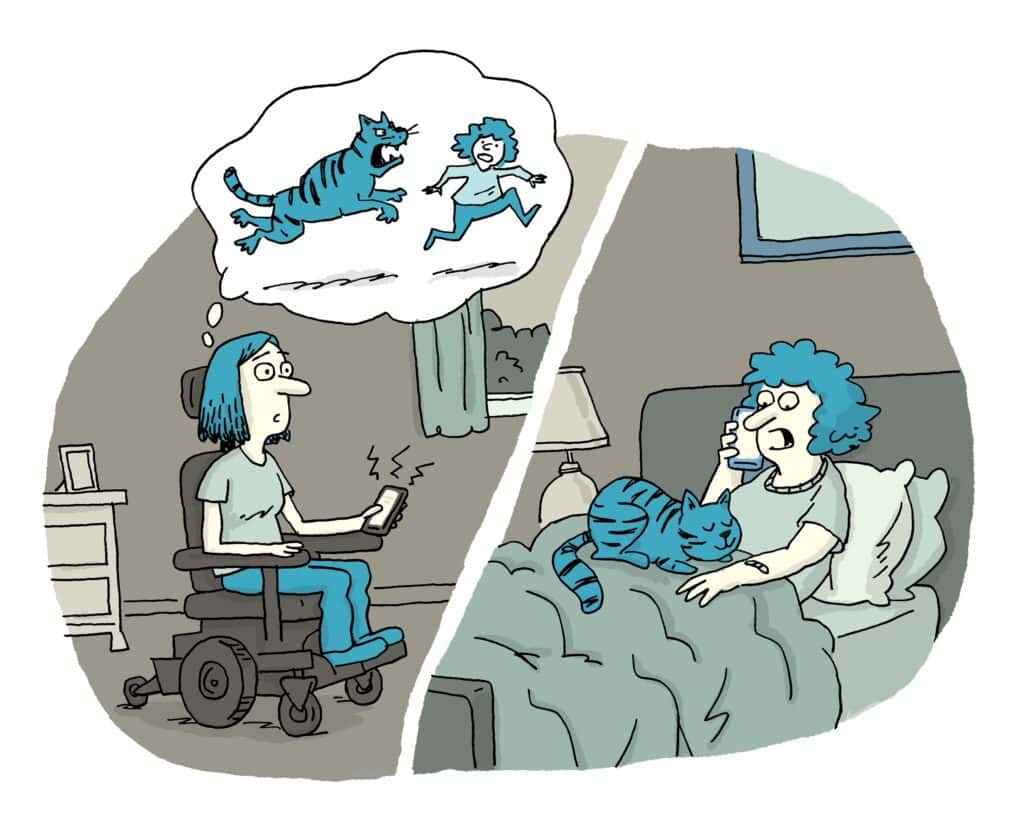
Recently, a caregiver texted at 5:43 a.m.: “Hey, I was wondering if I could not come tomorrow. I got attacked by a cat yesterday, and I’m in pain.”
The first thing I’ve learned is that a text like this is not a question. It’s a statement: “I’m not coming.”
As a C6-7 quad, I depend on a caregiver two mornings a week for a shower and light housework. So, I practiced my flexibility (and thanked God I had pants and shoes I could put on) and went ahead with my day without a shower and the help that saves me time and energy.
But attacked by a cat? The next morning when the caregiver arrived, I expected to see red, swollen scratches from head to toe, inflicted by a demon-possessed cat.
Nope. A scratch.
I Took My Kid’s Drugs
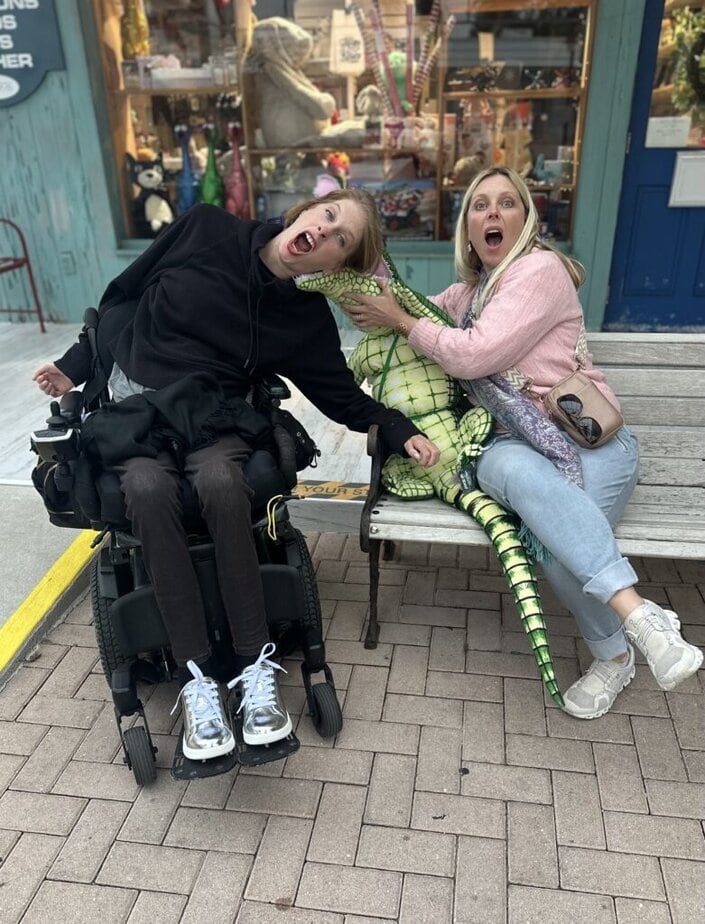
Abigail Schwarz, a C5-6 quad from North Carolina, had a series of mishaps with caregiving agencies. “A lot of caregivers wouldn’t show up, or the agency sent last-minute substitutes who were supposed to do my intimate care needs. That made me feel uncomfortable,” she says. Now, Abigail opts to have trusted family and friends provide her care. “I try to keep my care in the family, so only people who genuinely care for me are the ones helping me.”
This system isn’t foolproof, though. A family friend quit while on the job, proving that even those close to us can keep things interesting. “Instead of leaving my house, she took a nap in the guest room,” Schwarz says. “When she woke up, the caregiver forgot that she had quit. She told me that she took a nap because she’d taken her child’s Ritalin.”
“I’m grateful for the setup that I have now. My husband and mother-in-law help me out,” she says. “I don’t have to deal with so much awkwardness with various caregivers.”
I Lost $20
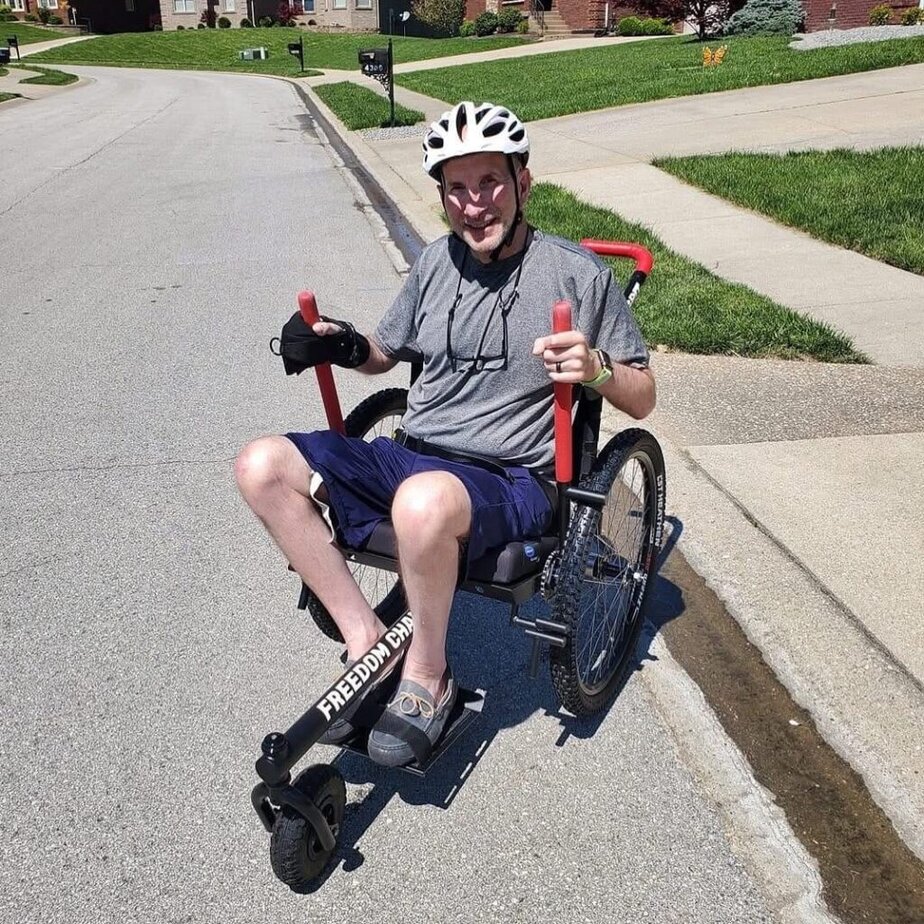
Dave Miller lives in New Albany, Indiana, and is an incomplete C3 quad who works in flight control for UPS. The worst excuse he’s heard was when a caregiver called to cancel because she lost some cash. “She told me she had stopped at a garage sale. While she was there, she lost a $20 bill and was returning to find it,” Miller says.
She canceled, didn’t even bother to come late, and definitely didn’t ask for more shifts to make up for her “lost” $20.
His tip for managing caregivers: “Stay flexible. And give them a bonus every now and then.”
No Explanation. But Look!
“During my freshman year in college, my caregiver no-showed,” recalls Nicole Tarzia, who has spastic quadriplegia due to cerebral palsy and lives outside Boston. “When my caregiver arrived the next day, she nonchalantly showed me the tattoo she was proud of getting.”

It didn’t take a detective to figure out when she got the tattoo. “At that time, I didn’t know much about managing my PCA. This particular PCA was great under normal circumstances, so I didn’t say anything,” Tarzia says.
“One of the biggest lessons that I’ve learned is to advocate for myself. My basic human needs and ADLs need to be met,” she says. “We walk a fine line with broaching absences because good help is hard to find. Plus, the tattoo came out great. … It’s a funny story that I can look back on now and see how much I’ve grown as an advocate for myself.”
I Was in a Car Accident
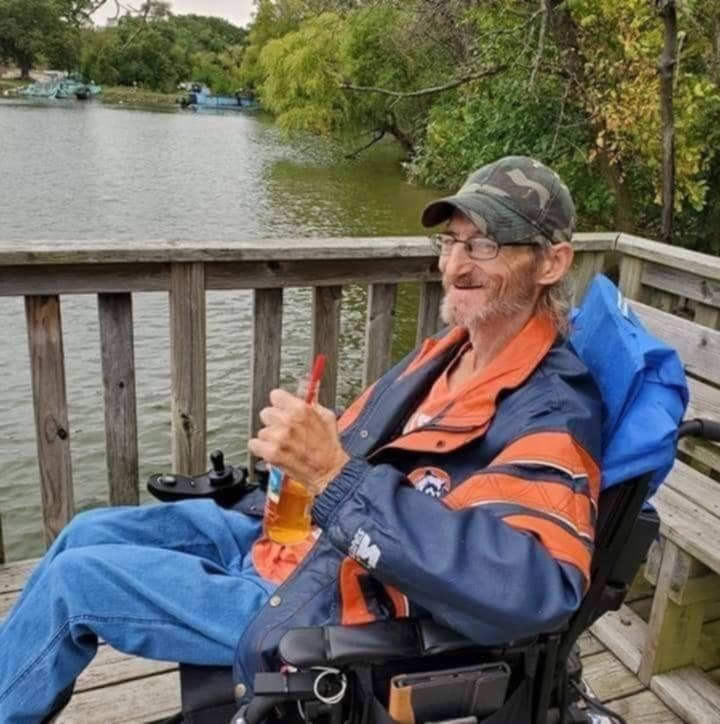
Matt Haynes, an incomplete C5 quad from Milwaukee, Wisconsin, got a text from his caregiver that was a little more dramatic than he expected. She said she’d been in a car accident on her way to work and even included a picture of a rolled-over SUV. “I realized it wasn’t the car she drove,” Haynes says. “I did a Google search on the image. It came back with a news article about a family killed in an accident four years ago in Ohio.”
Haynes was direct in his response. “I assume you’re no longer working for me.”
“I am fortunate that I can get by without care for a day or two,” he says. “I’ve had times when I’ve been without help for months. It’s amazing what I learned I could do when I had to.”
His advice: Be direct. But he says, “I really don’t have any advice on finding caregivers. It’s so difficult to find good ones anymore.”
In Conclusion
So, what have we learned? Besides the fact that Google reverse image search is an underrated tool in caregiver management, we’ve become masters in the art of biting our tongues, accepting excuses to maintain the peace, or when needed, directly expressing our expectations and frustrations.
Cheers to the caregivers who show up. To the rest? May they never actually experience a horrific car accident, a grudge-holding cat or a $20 bill that remains unfound.
Support New MobilityWait! Before you wander off to other parts of the internet, please consider supporting New Mobility. For more than three decades, New Mobility has published groundbreaking content for active wheelchair users. We share practical advice from wheelchair users across the country, review life-changing technology and demand equity in healthcare, travel and all facets of life. But none of this is cheap, easy or profitable. Your support helps us give wheelchair users the resources to build a fulfilling life. |