


Quad Hands
In 2018, Reveca Torres wrote an NM piece titled “Quad Hands.” It was so compelling that we recently asked her to revisit it. We also showed it to four other quads to see what it might spark. The result? Five short essays about how quads view their hands.
July 1, 2024
Reveca Torres
Reveca Torres, Nonprofit Director
Chicago, Illinois
I recently had a conversation with a seemingly nondisabled man. As we talked, I kept looking at his hand and the way his thumb tucked in. The underpart of his forearm was thin and atrophied. As we continued to talk, he disclosed that he had injured his C5 and C6 vertebrae and recovered years ago. He was a walking quadriplegic. I knew it! I recognize a quad hand when I see one!
I feel a kinship with other quads. The kind where I should wave at them when I pass them on the street, like those people that drive Jeeps, except my salutation would be in the form of a fist, and my newfound friend would fist-wave back at me.
I get excited when I learn about a quad who’s able to do things like paint, weld, sew, transfer or cook! How do you do it? Give me some tips? The reality is that there is a large spectrum of ability just within the quad crew. So many times, I have compared what I could do to what other quads do, or I enviously observed a paraplegic in their full-functioning-hand glory. How I’ve wished I could just have my fingers back!
Most of the time my wishful thinking comes at noncritical moments like … I wish I could pinch my boyfriend’s butt when he passed by because he looks cute today … or I wish I could grab a handful of popcorn and shove it in my mouth instead of picking up one by one … or I wish I could recreate those closeup shots in Madonna’s Vogue video.
It used to hit me hard to wish for this ability that I knew I couldn’t have back. I grieved and convinced myself I wasn’t doing as much as other quads who had more function. This led to a few days or weeks of me trying harder in the way of intensely staring at my hand as I tried to open and close it. With my eyes tightly shut, I willed to just make my thumb twitch. I tried massaging my hands like the random lady at church told me to do because it helped her nephew. None of it worked … or maybe I didn’t try hard enough.
I’ve stopped grieving, for the most part, and accepted what I am able and not able to do. In fact, I’m sometimes proud of myself when I devise a clever way to open something with a tool or manage to not drop my fork at dinner. I have a secret, silent celebration — go me! I celebrate me and the other quads and paras who accomplish so many little wins every day.
If you see me on the street, shoot me a fist wave or give me a fist bump, and if that’s not in your abilities, a simple head nod or eyebrow raise will do.
See Torres’ original essay.
Angie Hulsebus, Mom/Advocate
Urbandale, Iowa

When my daughter was born, I worried that my hands and lack of function would keep me from being able to cuddle with her or hold her for long periods of time. I should have known: Moms and quads find a way.
I quickly learned to scoop under her legs using the backs of my hands and wrists. I was surprised how well I could hold her. Having that physical touch and connection so she knows I’m her mom is important.

At 20 months she is investigating everything around her, learning new things almost daily. When my husband plays patty-cake with her, sometimes she’ll try to open up my rigid fingers so I can high-five like daddy. She’ll watch me use my thumb knuckle to tap my phone and then she’ll do the same. She’s a quick learner.
She’ll grab my hands and want me to tickle her feet. I go through the motions, doing my best with my knuckles, and she goes crazy. She’s too young to know the actual tickle sensation yet.
I still can’t change her diaper by myself or prepare her bottle — I’d like to. The more I can do independently, the better, but we’ve got a good system. My husband is amazing and very patient. Aside from putting bows in our daughter’s hair, he’s pretty good at everything. He’s terrible at the bows. We’re a good team and can’t wait to see what her future holds.
Paul Amadeus Lane, Accessibility Consultant
Los Angeles, California
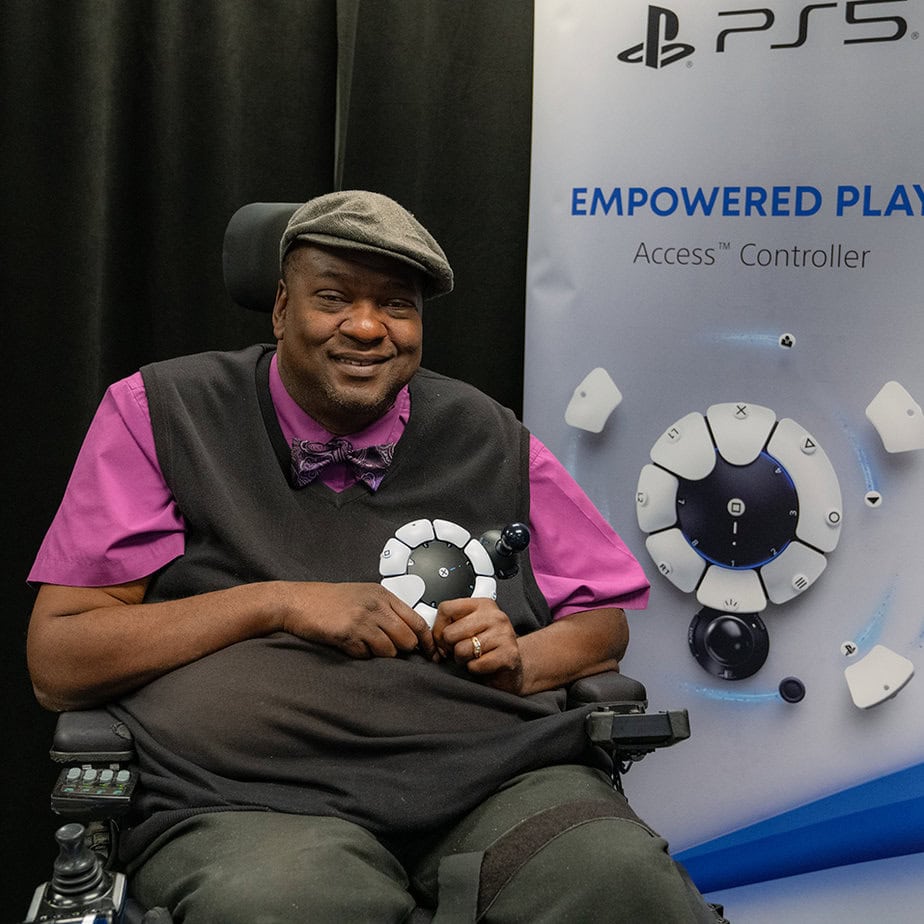
As an accessibility consultant, a lot of my work revolves around technology, and a lot of that ends up revolving around how we use our hands.
I remember how frustrating it was to not be able to hold a video game controller after I was paralyzed. My hands were like gloves — fixed in position and unable to adjust to what I needed. They frustrated me.
I held off on getting a cellphone for a long time because I didn’t see how I could use one with my hands.
Over time I learned how to move my wrists and use my chin to open my fingers up. I mastered using the backs of my thumb knuckles to tap touchscreens and press things.

My outer thumb and inner first-finger have small areas where I have normal sensation, and I try to make the most of that. Whether it’s checking the temperature on the stove or monitoring the deep fryer, my hands are good enough to make me a mean sous-chef for my wife.
Now that I understand my hands better — and with the release of the adaptive controller — it’s a whole new world when it comes to video games. I love beating people with full finger function in Madden. I’m the king, can’t nobody stop me.
David McCauley, Artist
St. Petersburg, Florida
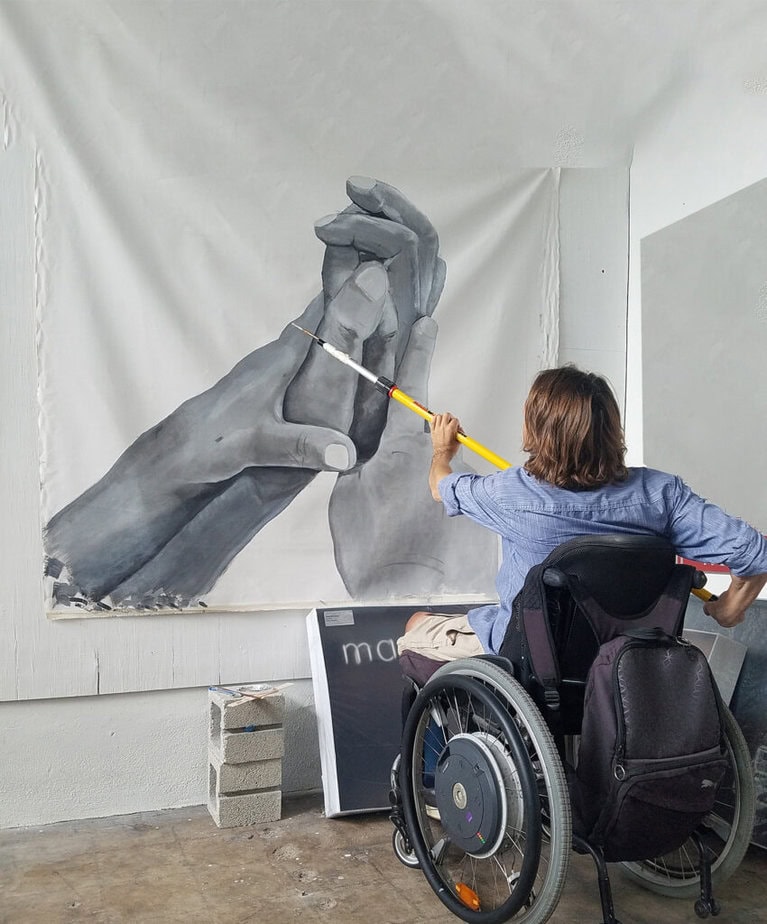
I have a complex relationship with my hands. Tenodesis in my wrists gives me a little bit of grip, but anything heavier than a cellphone pretty much slides through my atrophied fingers. Like so much of quad life, I’ve learned to embrace the challenges my hands present, and see if I can solve them. As a result, I have fabricated various tools to assist in my creative pursuits like painting and playing guitar, but sometimes I just want a little bit more dexterity.
An art mentor told me, “Don’t try to paint like everybody else. Artists with a formal art education are being taught to paint the same way. Don’t conform to conventional methods. You have a unique way.” My strokes come from my shoulder and elbow instead of my wrist and fingers. Instead of brush strokes, my mentor called it “mark-making” and told me to embrace it. As a result, this guidance empowered me to develop a signature style which is deeply personal and innovative.
On a smaller painting, I can achieve the necessary control by securing a brush into my wheelchair glove. For larger works, I’ll lash a brush to a 4-foot-long piece of bamboo or an extender pole to increase reach and maneuverability. I’ve always been fiercely independent and try to get the most out of my hands, but I’ve learned to utilize and appreciate adaptive tools — especially where they can help me tap into my creative process.
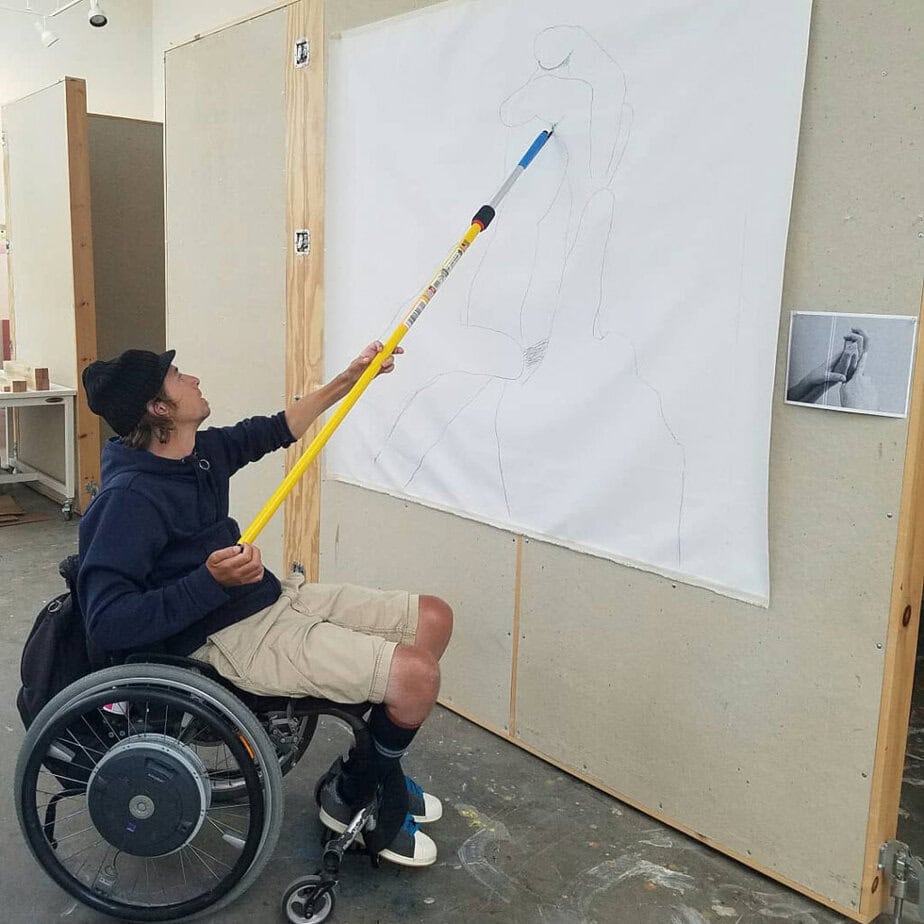
For his 2019 installation, My Mother’s Hands, David McCauley drew inspiration from Reveca Torres’s 2018 “Quad Hands” column in New Mobility. The installation features two large canvas paintings of McCauley’s mother’s hands holding his own paralyzed hands. “My mom is a classically trained painter, but I didn’t come to painting until art therapy, after I was paralyzed. Art was a beautiful way to calm the mind and process the emotions after I was injured,” he says. “These paintings are symbolic of all the things that I can accomplish in life with just a little bit of help.”
Ian Ruder, Editor
Portland, Oregon

My fingers are long, soft and supple — perfect for a hand model, terrible for an active quad. They dangle like wet noodles, while my thumbs tuck into my fists like they are actively avoiding tenodesis.
A surgeon rewired my tendons so my right thumb could pinch, but my joints were too loose. All I could grab was air. Another surgery to fix the pinch only resulted in more scars and my thumb jutting out at an unnatural angle.
That’s when my quad hands and I came to an understanding: This is how it’s gonna be.
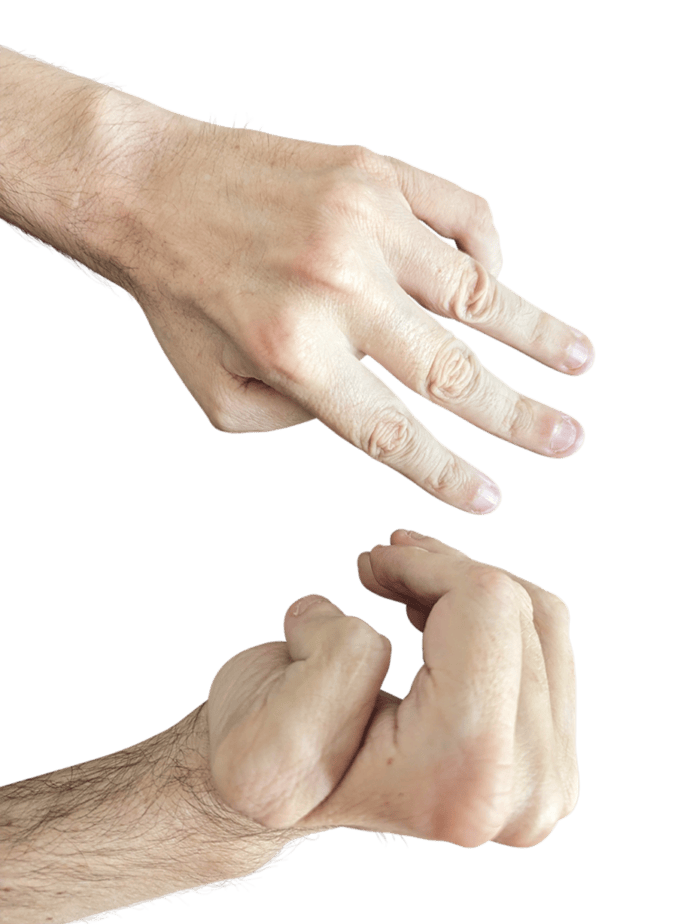
I’m still not used to the feeling of not feeling. My mind expects a sensation when I reach out and touch something. Most of the time it gets nothing.
And just as I can’t feel my quad hands, when I watch them twitch and spasm to their own rhythms, I get the sense they don’t feel me either.
Every once in a while, they surprise me. Whether it’s nimbly connecting two tiny Lego pieces or jimmying a USB charger into position, when we’re on the same page, we can get things done.
My fingers may be all but useless, but they’re not the only usable parts of my hand. Every knuckle, bump and smooth space can be a tool with a few twists of my wrist and a little tenacity. Little kids can’t help but stare when I feed myself a chip or an hors d’oeuvre off the back of my hand.
My relationship with my quad hands is always evolving — functional and creative one day, frustrating and limited the next. Sometimes all four at once. I appreciate the ways my quad hands make my life better, and do my best not to take them for granted, but I’d be lying if I said I didn’t miss my old hands.
Support New MobilityWait! Before you wander off to other parts of the internet, please consider supporting New Mobility. For more than three decades, New Mobility has published groundbreaking content for active wheelchair users. We share practical advice from wheelchair users across the country, review life-changing technology and demand equity in healthcare, travel and all facets of life. But none of this is cheap, easy or profitable. Your support helps us give wheelchair users the resources to build a fulfilling life. |


Recent Comments
Neil on A Safe, Effective Reusable Catheter System
Richard Crumb on A Safe, Effective Reusable Catheter System
Richard Crumb on A Safe, Effective Reusable Catheter System