


Rethinking the Excuses that Kept Me From Traveling Internationally
January 16, 2026
Regan Linton
A few years ago, I set a bucket list goal to go to the United Kingdom for my 40th birthday. Since my SCI in 2002, I’ve been fortunate to travel internationally a few times for work and leisure, including to Japan, Italy and Dubai. But never the UK. After four decades on the planet, I was jonesing to finally visit the land of my roots and my beloved Shakespeare and Mr. Bean. I wanted to be awash with history and wit, and bask in nuanced accents while drinking a pint at a countryside pub.
I knew it might be challenging to make it a reality amidst my ever-unpredictable work schedule. To amplify its probability, I shouted it to the universe. I asked my siblings if they would join me on the trip. I decorated a wine bottle with the Union Jack flag and placed it prominently on my counter. I started bookmarking accessible UK cottages and asking friends for destination recommendations.
Then COVID. Stopped. Everything.
No biggie, right? Totally valid reason to postpone and make the trip a goal for my 41st.
One year turned into two. Then three. I kept shouting my goal into the ether, but “reasons not to” kept popping up: a work project that might happen, my siblings traveling elsewhere, my checking account needing a boost.
As 2025 arrived — with COVID restrictions now mostly a distant memory — all the people I’d told about my goal continued to excitedly ask when I’d be going. When I responded, “I’m not sure, I have X, Y, Z, blah blah,” their forced smiles communicated what I was feeling inside: It sounded like excuses.
“Reasons” vs. “Excuses”
Perhaps it’s helpful to quickly differentiate “reason” vs. “excuse.” To me, a reason is a factual explanation why a situation may come to be. A reason morphs into an excuse when the motivation is no longer to understand and deal with the situation, but rather to dismiss. Push it off. Avoid responsibility or opportunity for addressing it.
Now look, as a spinal cord injury survivor, what I call “reasons” might seem like “excuses” to non-paralyzed people. They don’t understand the many complexities of life that can easily become deterrents for us wheelers. When these pile up or recur thanks to circumstances beyond our control, they can feel unsolvable or overwhelming — like the thousand cuts that spell death to our dreams.
With travel, for example, the cuts are the weeks of emails, calls, and requested photos it takes only to discover the “accessible shower” at a luxury Rome hotel is actually a dog-spray hose hooked up next to the toilet in an unnavigable cramped closet with peeling walls and cracking tile thrown on the floor (true story). Or the changed flights, unworkable seats, accessibility failures, missed connections … all of which can escalate minor inconveniences to life-threatening situations.
And of course, the “reasons not-to” in our daily lives go far beyond travel. Problematic systems, inaccessible spaces, jerk-ass people … I don’t have to name the examples, you know them. I consider myself a pretty darned active, optimistic and adventurous person, but the incessant and necessary problem-solving to deal with all the reasons can get exhausting.
Eventually inertia sets in like a vile monster, and even when we muster the emotional energy to “set our minds to it” (as my dad says) and git-er-done, somehow it starts to feel more safe, comfortable, and less tiresome to hide inside, give the world the middle finger, and put the blame on anything and everything outside for why something isn’t happening. Making excuses eventually becomes less work and allows us to avoid the potential for disappointment … in ourselves and the world.
The Value of 2002 Regan
his makes me think about my headspace just after my SCI accident. The dread and uncertainty that set in amidst sleepless nights staring at the ceiling in rehab, the surgeries, therapies, leaking legbags, and the “oh f*ck, what is my life gonna be.” Talk about overwhelming. And yet, I made it through, as we do, because it’s the option we have.
By the time I had pushed through a couple of years of “real life” post-injury, a brand-new joie de vivre had emerged … that of a survivor. I was ready to do ANYTHING I COULD. Hell, I was still breathing! The sun was out! I could get myself around! Sure, the idea of traveling to — I dunno, maybe Edinburgh, Cairo, Tokyo — felt like a terrifying black hole of logistical unknowns, but dammit, I was gonna figure it out.
Over time, I’ve realized sometimes I need Regan of March 2002, with all her anger and urgent craving to rip out the IVs and get out to live life, to give me a figurative kick in the pants. Regan of 2002 reminds Regan of 2025 not to become complacent; make my life fruitful RIGHT NOW.
In 2025, I learned that an equally powerful impetus is a dear friend who suddenly mentions she has to go to Germany for work, and proposes going to the UK first because she knows it’s my goal. When this happened, I could immediately feel the excuses bubbling … not enough time to plan, can’t get the right tickets, don’t have enough money…
Luckily, 2002 Regan interjected. “Bugger off!!! Let’s do it.”
I literally channeled her out loud multiple times whenever “reasons not to” crept up during my planning: “You aren’t gonna see everything in one trip, and that’s okay!” “If a job comes up that conflicts with the trip, let the job go!” “Just get on the plane. … It’s all a bonus!” Slowly and surely, I felt more powerful to solve the conundrums, throw myself into dealing with reasons and stop making excuses. Eventually, I was on the plane.
The Best
Once I got to the UK, there were still plenty of reasons that could have stopped me. I grunted through the cobblestones, travel constipation, drenching rain, bathroom access variability, lugging luggage, terror of highway roundabouts, credit card debt incurred and plenty of bodily discomfort during the ten-hour flights in economy.
But it was the BEST.
I found myself driving a rental car solo with a completely different hand control on the opposite side of the wheel, opposite side of the car, opposite side of the road, grinning full-on like a Mr. Bean-loving idiot.
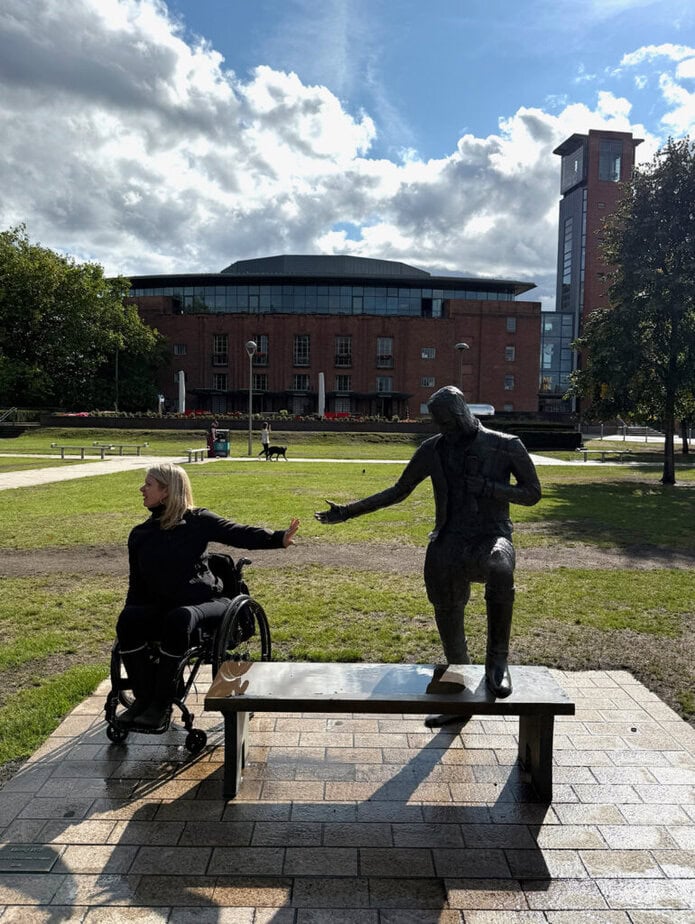
I got in the warm springwaters of Bath (via an accessible lift, btw) and scampered around Stratford-Upon-Avon with the aplomb of Shakespeare himself.
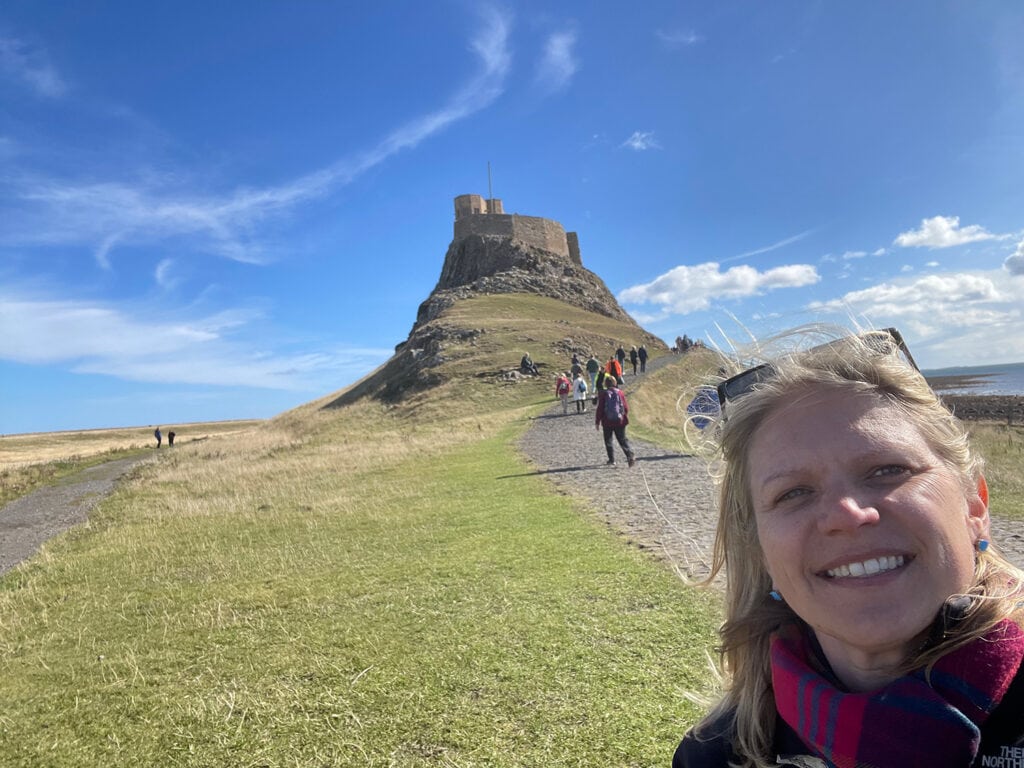
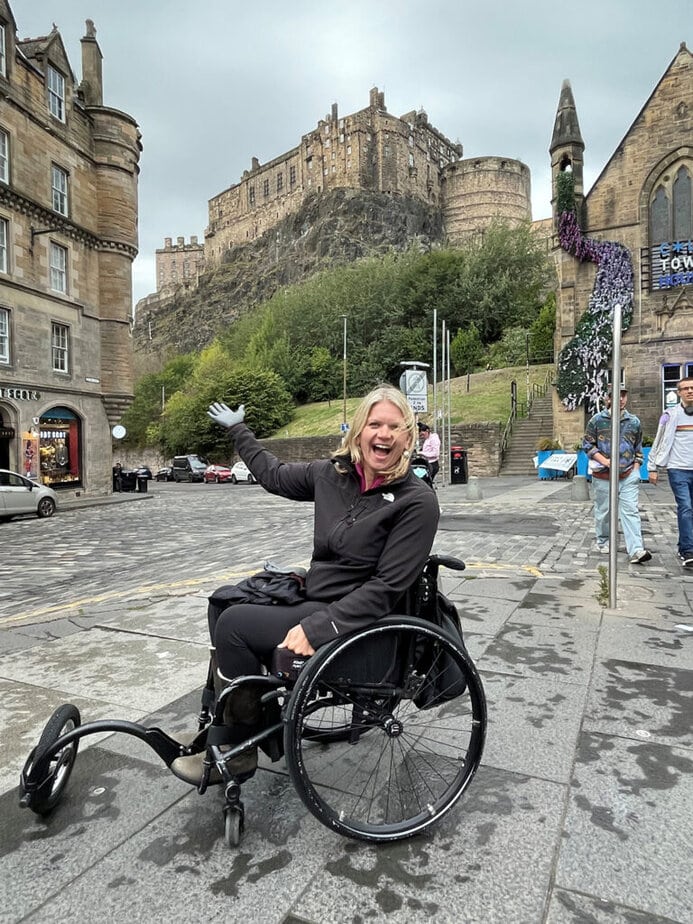
I wheeled, bussed and trained around London, Liverpool, Manchester and the coastlines of Lindisfarne, Edinburgh and the Bempton cliffs, discovering accessible spots that even my most UK-experienced traveling friends hadn’t ever visited.
I slept in a hip London hotel, a seaside B&B, a football stadium and a rural farmstead — all accessible.
And as I did all of it, man, I was so glad I hadn’t waited one more day. One more month. One more year. The hunger I felt so saliently after my injury to get out and live, and do, and not fall into reasons or excuses, was re-stoked.
I know that as I get older, the “reasons not to” will only accumulate and more easily become excuses. But at least for now, I’m reminding myself to keep pursuing “what’s next” and make it happen, however it needs to.
Support New MobilityWait! Before you wander off to other parts of the internet, please consider supporting New Mobility. For more than three decades, New Mobility has published groundbreaking content for active wheelchair users. We share practical advice from wheelchair users across the country, review life-changing technology and demand equity in healthcare, travel and all facets of life. But none of this is cheap, easy or profitable. Your support helps us give wheelchair users the resources to build a fulfilling life. |