



Richard Bagby was sitting in a packed hotel ballroom with a bunch of people he didn’t know at a conference he wasn’t sure he wanted to be a part of. It was the first Monday morning of United Spinal Association’s 2016 Roll on Capitol Hill. As then-President James Weisman started his introductory address, all Bagby could think was, “How long am I going to have to do this? We’re here for six hours?!”
He thought about how he could be back home in Virginia, meeting patients at his local hospital, helping them adjust to life with a spinal cord injury. He could be getting things done instead of sitting around in a hotel. But then he started listening. Weisman talked about the issues they were going to tackle, like legislation to improve community-based services and provide better access to mobility equipment. This wasn’t about making signs and picketing at the U.S. Capitol. It was about meeting with legislators, having conversations and making logical arguments about concrete policies that could help improve people’s lives. “It kind of clicked for me,” Bagby says.
Putting People First
Bagby never set out to be an advocate. In fact, he says, “I never labeled myself an advocate until Alex [Bennewith] called me and let me know I’d won Advocate of the Year,” he says. His focus after he was injured was on helping individuals adjust to life with a spinal cord injury. He was injured in 2008 and became friends with a couple of his occupational and physical therapists at rehab. “Early on in my recovery they started asking me to come and chat with some of their clients because they were experiencing some of the same things I had,” he says. “I didn’t realize at the time that I was doing peer mentoring. I was just chatting with people.”
“Roll on Capitol Hill embodies all the work that chapters are doing across the country. The fellowship and community built around it is worth attending in and of itself.”
The chats became more regular. “It became apparent that there was a huge need for it that I couldn’t fulfill on my own.” At the same time, United Spinal Association reached out because they didn’t have a chapter in Virginia. Bagby and a woman whose son recently had a spinal cord injury decided to start a chapter. Bagby’s focus was on the peer mentoring program, and he says that everything the chapter does has developed out of that. “We take on issues as they organically present themselves to us via our membership,” he says.
That approach has led to programs as diverse as a ramp-building program to help people get back into their homes after rehab and a massive effort to ensure a new SCI-rehab facility went well beyond ADA compliance, setting a new standard for hospital accessibility.
“Richard has helped build the Virginia chapter into a model for how United Spinal can serve its community,” says Vincenzo Piscopo, president and CEO of United Spinal Association. “The chapter really goes above and beyond to make sure all its members — from the newly injured to longtime wheelchair users — have the tools and support they need to succeed.”
Lessons from the Roll
Bagby had never delved into legislation or government policy before Roll on Capitol Hill. But his initial experiences at ROCH taught him a few things. First, that policy advocacy uses some of the same skills that peer mentoring does. It’s having conversations and educating people — in this case, legislators and staff rather than people with new spinal cord injuries — about the realities of life as a wheelchair user.
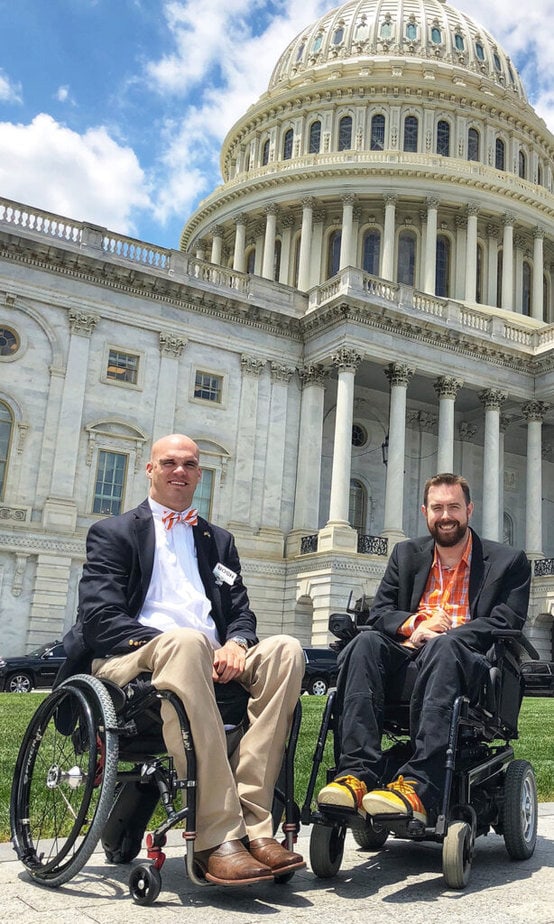
Second, most of the policies that they were advocating for made sense from both a human and a fiscal perspective — they were an easy sell. Once you start comparing wheelchair components to the cost of flap surgery or extended hospital stays, quality cushions and well-fitting wheelchairs don’t seem so expensive. “We’re trying to educate the legislators to spend a penny so they can save a dollar,” says Bagby.
Third, advocacy often works. “We’ve always had at least one piece of legislation that was successful from [ROCH], which is incredibly rewarding,” he says.
But perhaps the most empowering thing about attending ROCH was seeing that there are hundreds of other people passionate about tackling the same issues. “Roll on Capitol Hill embodies all the work that chapters are doing across the country,” he says. “The fellowship and community built around it is worth [attending] in and of itself.” Bagby was able to see and learn from what other chapters leaders were doing in their own communities and take those lessons with him back to Virginia.
Taking it Home
Not all issues that presented themselves to the Virginia chapter were solvable by simple solutions like building ramps. Bagby met a man named Chris in 2019, a high-level quad who had been discharged from rehab. Chris was going to go home, but his family decided they needed a little more time to make their house more accessible. So he went to a skilled nursing facility for what was supposed to be short stay. Chris still isn’t out of the SNF.
He originally had been fitted for a power wheelchair through Numotion, but NuMotion wasn’t able to deliver it to a skilled nursing facility. Virginia Medicaid policies stated that they wouldn’t reimburse complex rehab technology for people living in nursing homes, only for those living in the community. So Turpin wound up in a cheap, ill-fitting Hoveround power wheelchair. “He’s now had flap surgeries, a stroke and multiple hospital stays because he doesn’t have the proper equipment,” says Bagby. “Just yesterday I learned that he had a bilateral amputation because of more sores.”
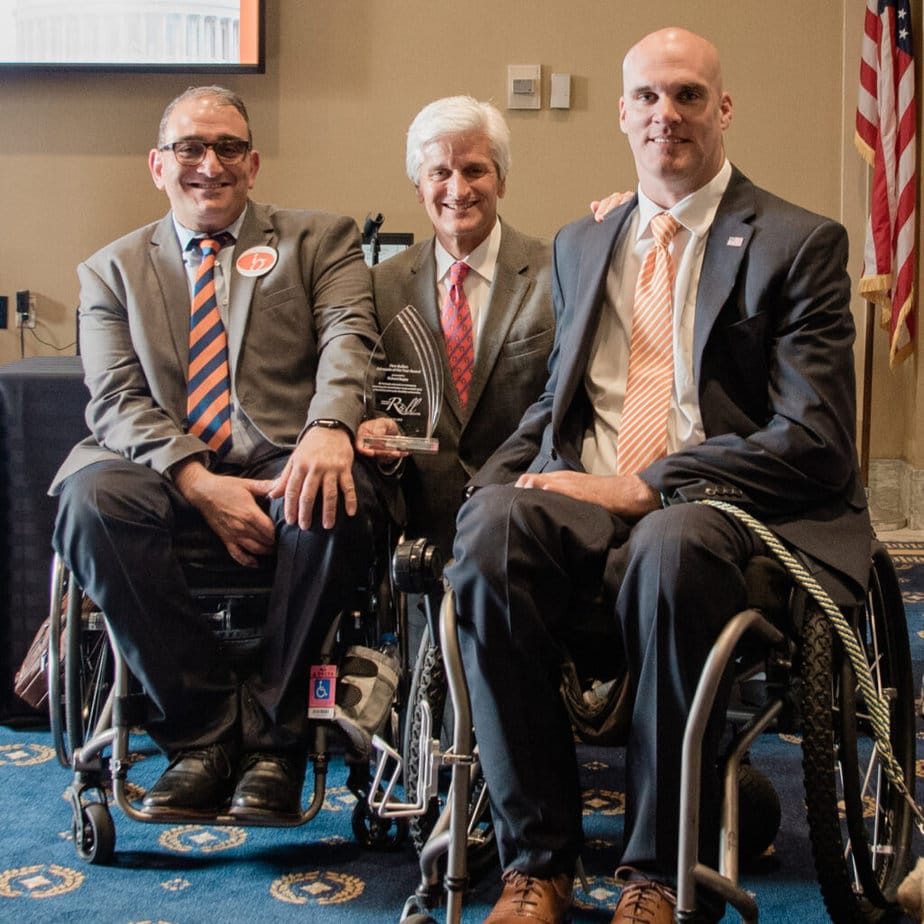
His experience at Roll on Capitol Hill had shown that taking the issue to the legislature could be successful, but it would also be a ton of work. Megan Murphey, an ATP from Sheltering Arms, the hospital at which Bagby had helped with the design process, heard Chris’s story and convinced Bagby to start the fight. “She had zero advocacy experience,” he says. “But she gets really pissed off when she sees an injustice.”
Fortunately, Bagby and Murphey realized their knowledge was limited — they needed help. “The first thing we did is form a working group,” says Bagby. They recruited people who worked for Numotion, other vendors, local advocacy organizations, people who knew Medicaid coding and rules and who had connections at Virginia’s Department of Medical Assistance, which runs the state’s Medicaid program. “Megan and I became organizers. … We were getting the right people at the table. We only knew a smidgen of what the group needed to know, but these 50 people are each adding their piece. When you put that together, you get a bill, and a successful one.”
In April, Virginia governor Glenn Youngkin signed House Bill 241 into law, which requires Medicaid officials to study and work toward allowing coverage for complex rehab technology to people living in nursing homes. It’s a major step toward making sure that people get the equipment they need, wherever they’re living — a step that likely never would’ve been taken had Bagby not ventured into the ROCH hotel ballroom seven years ago.
What Bagby has learned since then is that he is an advocate, and advocacy, just like everything else in life, is about people. Being successful starts with one skill: “Networking, networking, networking. It’s so beneficial across so many different aspects, especially for folks with spinal cord injuries — whether you’re trying to figure out how to become independent, or you’re trying to make legislative change or societal change. It’s knowing people. And you can’t know people without getting out there and introducing yourself.”
With reporting by Hilary Muehlberger
Support New MobilityWait! Before you wander off to other parts of the internet, please consider supporting New Mobility. For more than three decades, New Mobility has published groundbreaking content for active wheelchair users. We share practical advice from wheelchair users across the country, review life-changing technology and demand equity in healthcare, travel and all facets of life. But none of this is cheap, easy or profitable. Your support helps us give wheelchair users the resources to build a fulfilling life. |


Recent Comments
Neil on A Safe, Effective Reusable Catheter System
Richard Crumb on A Safe, Effective Reusable Catheter System
Richard Crumb on A Safe, Effective Reusable Catheter System