


Roadmaps: Not What I Imagined for Us
Rebekah Taussig and Hannah Soyer use their personal experience to explore some of the messiest questions that living with disability presents.
February 15, 2024
Rebekah Taussig and Hannah Soyer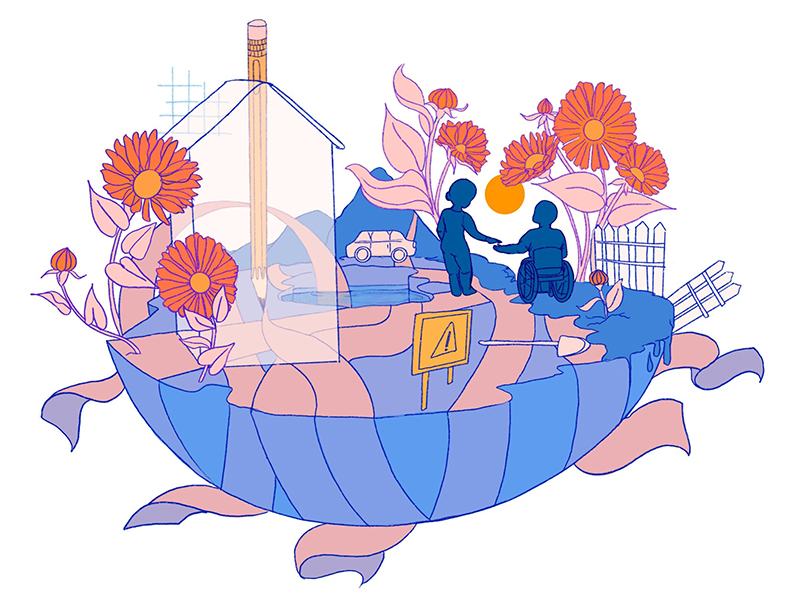
Dear Rebekah and Hannah,
It’s been a few years since my spinal cord injury. In a lot of ways, I’ve adjusted to this new life. I learned how to drive again, I’m back at work, I’ve made some accommodations to our house, which helps. Still, when I look around at my life, this is not what I imagined for myself. I want to go on skiing trips with my wife, chase my grandkids around the yard, I even wish I could clean out the gutters. I’m grateful to be alive, but I can’t help but feel cheated out of the life I was supposed to have. My wife wants me to see the silver linings in everything, and I try to be positive for her. My injury has made life so much harder for her, and I don’t want to make things even worse by being a downer all the time. I want to feel optimistic and count our blessings, but the loss feels so great. And I can’t get past the fact that these are her losses, too. How can I be the happy husband she wants me to be when I know my injury has taken so much from us and the life we dreamed of living together?
Signed,
Not What I Imagined for Us
Dear Not What I Imagined for Us,
It’s one thing to grapple with your own loss. It’s a whole other animal to feel responsible for someone else’s, isn’t it? At least, it has been for me.
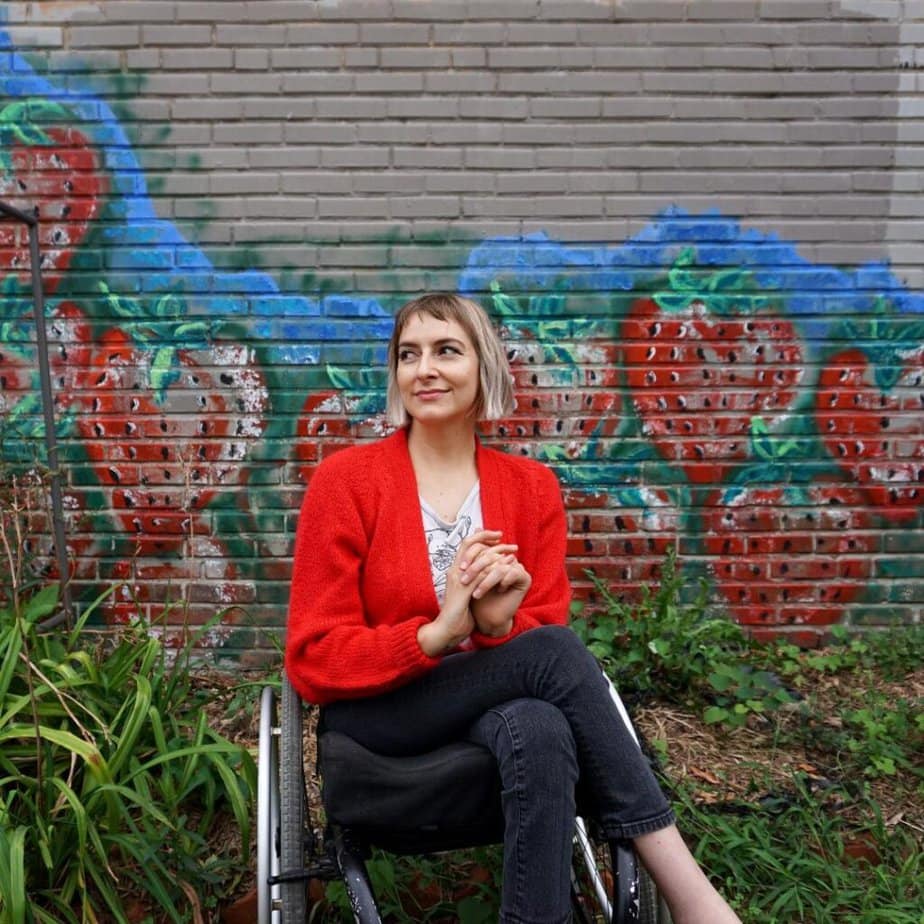
About a year after I started dating the guy I’d eventually marry, my body derailed everything. I’d dealt with pain and spasticity most of my life, but this was a new kind of debilitating. Some days the pain was all I could think about. While I was going from doctor to doctor, trying to sort all this out, I watched as his life bent to the force of my pain. It became our first topic of conversation, shaped our weekend plans, forced us to leave the party early.
One new rhythm to our days started before the sun came up when he’d help me do stretches. The routine always ended with trying to stand for 30 seconds. This particular morning, the air felt especially cold and the morning darkness impenetrable. As I stood, I felt the pain in my lower back start to throb and my leg muscles clench. He gripped me tighter, and I forgot to breathe as I counted each slow second in my head. I was so angry — that this was our morning, that this pain was swallowing my life whole, and maybe worst of all, that he — this lovely, kind, generous man — was pulled into this nightmare with me. And then, right when I thought my fury and ache were about to punch out of my body, I felt him nuzzle his nose into the side of my face. “I like holding you,” he said. I heard myself make a sound like a wounded animal, a yelp. It felt terrible and wonderful to be loved this way. To witness tender affection thriving in the midst of acute distress. It’s hard to describe that awful contradiction, but I think you might understand it.
He and I have been together for almost 10 years now. In those years, he was diagnosed with cancer, and we had a baby as we sheltered in place during a global pandemic. None of it is what we dreamed for ourselves. But more life means more pinpoints on the map that can offer perspective, and here’s what I see now, that I didn’t see that dark morning.
When I set out on this journey with my partner, I thought that my body — my disability — was a distinct kind of weight he shouldn’t have to shoulder. The more life we’ve lived together, though, the more I’ve realized “weights” come in as many forms as there are atoms. Can you even have a partnership without a house full of them? Would you even want to? The longer we’re together, the more partnership seems to be about building a structure that can hold all our weights — a structure that holds space for grief and frustration, that makes us feel safe enough to trust each other with our heaviest parts.
And your structure seems to have taken a hit. This is not what you imagined when you pictured yourself enjoying these years with your wife and grandkids. That loss is real and undeniable. This life is going to look different than you expected. There is nothing weak or wrong about grieving it.
And also — and this is the counterintuitive part — when our plans fall apart, we have an invitation to reimagine. Whenever you’re ready, you might ask each other: What other shape could our life take? Who else might we be or become? What other dreams are waiting to be realized? Or maybe, a question as simple as “Where are the best adaptive ski resorts?” What if the work wasn’t a choice between the happy husband or the downer husband? What if your assignment was simply to bear witness to every single piece — the impenetrable dark and the soft nuzzle? What if the project was two partners dreaming of a structure big enough and flexible enough to hold all of the pieces?
Love, Rebekah
Dear Not What I Imagined for Us,
I’ve had days where my heart feels like a pit that I’m carrying around in my chest, with the goal of no one else seeing the depth of that dark hurt. My parents, my friends, my helpers. Especially my helpers: I need them, and I don’t want to be
a downer while they’re around and risk them not liking their job. If you’re reading this and have caregivers, please know that you deserve to feel the full spectrum of your emotions and are allowed to have bad hours, days, etc. This is something I’m constantly working on reminding my- self. Feeling like you need to be positive around others when you’re not feeling positive at all can be exhausting — you’re putting on a mask to cover up what’s actually going on inside, and the effort of keeping that mask from slipping is tiring.

Even in therapy, there are moments when I can’t quite bring myself to fully open up to my therapist, specifically around the great tangled mess of emotions I feel around romance and sex.
In some ways, I feel like I’m still tied to the story of needing to spin heartbreak into a lesson, instead of just letting the heartbreak be what it is. Sometimes I feel like if I actually unbury the grief, it will consume me, and what I’ve had to learn, over and over, is that even when it does consume me — when I go around my days feeling like a dark, foggy cloud has descended past my shoulders — I’ll still emerge on the other side.
Pain is a scary place to exist in. Think about how much we do as a culture to avoid it. But the truth is, pain, heartbreak, grief — it’s all real, it’s all normal, it’s all a part of life. Not too long ago, my therapist suggested that perhaps by allowing myself to be sad, anxious, etc., around my helpers, I’m also reminding them that it’s human to have more emotions than simply happy, that feeling these emotions is human, that being human is, well, OK.
My disability is genetic and has been apart of who I am for as long as my memory goes back. I’m 29 years old. I don’t have kids or grandkids. I’m not married. I really can only imagine what you’ve gone through. But the desire to remain positive for someone who you spend the majority of your time with and who you care deeply about rings true to my experience, too. And I’m wondering if perhaps allowing yourself to grieve and rage and all the other uncomfortable emotions we try to avoid but shouldn’t will actually give your wife the gift of recognizing that if she needs to, she can do this, too. That neither one of you are alone in this, and that you’ll live the highs and lows, together.
Love, Hannah
Roadmaps authors Rebekah Taussig and Hannah Soyer don’t claim to know it all, but they have been traveling the disability road for quite some time and would love to share their experience with you. To submit your question, please send it to messyroadmaps@gmail.com.
Support New MobilityWait! Before you wander off to other parts of the internet, please consider supporting New Mobility. For more than three decades, New Mobility has published groundbreaking content for active wheelchair users. We share practical advice from wheelchair users across the country, review life-changing technology and demand equity in healthcare, travel and all facets of life. But none of this is cheap, easy or profitable. Your support helps us give wheelchair users the resources to build a fulfilling life. |


My SCI leaves me without the use of my arms. But when my partner hugs me I feel that dichotomy – I love it, but can’t hug him. Thanks for your kind comments on these feelings.
Dear NWIIFU,
After my mom’s injury resulted in her quadriplegia at the age of 71 her greatest regret, and guilt, was that she had “ruined” her and dad’s lives. They were both retired, financially comfortable, traveled extensively, independent, had no worries, until the night she stood on a bed to turn on a ceiling fan and fell off breaking her neck while visiting my sister. She felt solely responsible for all that followed, the family issues, the fear, the financial upheaval, the complete change in their lives, and the worry for the three of us adult kids who lived in different cities.
Mom, who had always been the problem solver, the one who pulled everyone together, the objective one, the person who seemed to find a way to understand that God would help us all figure out what the heck was going on and how we could move through the most difficult of adversity, didn’t recover emotionally or spiritually from her situation. She shut down completely emotionally. She refused to try accessible tools. She did the least needed to stay physically mobile with stretching, she put off medical appointments, she didn’t actively participate in physical therapy appointments, she only left the house for medical appointments, and she refused counseling or to meet others who were paralyzed. Mom was constantly angry at herself and others, she expected perfection from everyone, and kept a strict time schedule, while at the same time, my dad ignored her requests which made her even more angry. She didn’t like talking about the issues between her and dad, didn’t like talking about her anger, and didn’t like talking about how she felt about the change in their lives. Neither of them did, they both just got angry.
Mom had been through a lot in her life with Dad, and she wouldn’t let me rescue her. She loved him too much to not stay with him. But the injury took the fight out of her spirit. Not living near her meant I couldn’t be there often enough, daily, to help with her mental support. She talked to me a couple of times about how she really felt, she let out her real feelings but then shut down. I couldn’t help her with what she honestly wanted to do and she knew that. It wasn’t until she was in the hospital at the end that I could help her and protect her.
I lived across the country from them, and that made them mad because I wouldn’t come out to care for them. I was married and helping care for a mother-in-law who had dementia. I’d go out once or twice a year for several weeks and constantly work to find services and financial help for them, but they’d never accept the information I provided, even though they could see the same info was helping with my mother-in-law’s care.
Before this, I’d had to quit work because of serious medical issues and had to adjust to not working. My husband worked two jobs and our lives had changed drastically from our original plans. I was on disability but our income was seriously limited as we were helping pay for his mom’s care, he was working constantly, all “vacations” were spent with my parents, my time was spent on the couch doing internet research, I was getting even more sick while trying to help two moms with their serious medical situations. But my husband and I talked about the situation daily. We had specific goals, to make sure our moms were given the best care we could provide without killing me in the process and without killing our marriage.
It wasn’t easy. His mom died in 2007, and my mom died in 2017. We’re still together. I’ve had numerous surgeries, and medical setbacks, and spent lots of days parallel-parked on the couch or bed. He does most of the shopping and cooking and helps with the house chores while working from home in his emergency services lettering business. I’ve still traveled to the other coast to help for months at a time with family who have medical issues. We had some rough times emotionally, spiritually, medically, and physically.
We’re not dead. We know we do well when times are tough. We handle things well together, and when we have to be in different places at different times. We aren’t going to ever retire to a log cabin in Vermont to hike in the fall leaves, read books, watch TV, lounge by the fire, eat popcorn with a big dog, sleep in under big quilts, drink hot cocoa with grandkids. He will die with a paintbrush in his hand doing gold leaf lettering on a fire truck because that brings him joy, I’ll be waiting at home with the dog and cat watching old movies or talking to people who need answers about caregiving cause that’s my job.
Our lives didn’t turn out the way we expected when we were first in love dreaming and planning our future. But as situations have changed, and we realized we needed to change, we talked, sometimes didn’t, but adjusted what we had to do to accomplish one thing, staying together until we were 95, because just before we got married we agreed that that’s what we would do, then after that we’d discuss what to do next.
Talk. It’s hard to do. But talk. It will make you afraid. Try to talk, even if you cry, sob, don’t cry. Talk. Being unable to care for yourself is devastating. Talk about that. Let her know, so she can let you know how she feels. Please give her a chance to tell you.