



Swiss Researchers Continue to Push Forward Functional Recovery With SCI
February 9, 2022
Seth McBrideMainstream media was ablaze yesterday with “Paralyzed Person Walks Again” headlines after a new epidural stimulation study was published in the journal Nature. The study, helmed by Dr. Jocelyne Bloch from Lausanne University Hospital and Grégoire Courtine of the Swiss Federal Institute of Technology, showed that three individuals regained significant motor control in their leg and trunk muscles the first day after switching on an electrode array on their spinal cords.
Déjà vu?

If you follow spinal cord injury research at all, you may have noticed that there have been a number of these types of headlines over the past few years, all of which have been related to ongoing epidural stimulation trials. In fact, three and a half years ago, this same Swiss trial generated headlines when David M’zee, who has an incomplete spinal cord injury, regained enough leg function to perform some stepping motions. Initially he used a harness system, and then progressed to a walker.
M’zee was not the first. Epidural stimulation has been producing significant functional recovery in people with spinal cord injuries for over a decade now. Rob Summers, who has a complete C7-T1 injury, was the first participant in an epidural stimulation trial with Dr. Susan Harkema at the University of Louisville. Summers regained some standing ability almost immediately following the implantation of an epidural stimulation device in 2009, and has since regained sensation, along with some bladder, bowel and sexual function. With the stimulator turned on, he can now walk using a walker.
The Louisville trials, and another out of the Mayo Clinic have shown significant recovery of lower extremity function in people with both incomplete and complete spinal cord injuries.
The Swiss Method
This latest Swiss study is a continuation of this string of epidural stimulation successes, all of which link to V. Reggie Edgerton’s pioneering, and ongoing, work in the field at UCLA. Courtine studied with Edgerton before moving to back to Europe. His first human epidural stimulation trials used the same type of off-the-shelf stimulators that researchers in the U.S. have been using. But the Swiss team felt that a more advanced stimulation protocol could aid recovery.
They studied spinal cord signal patterns and designed a stimulation device that could be programmed to deliver targeted, patterned signals that mimicked those sent by the spinal cord for different movements. They started with people whose injuries are incomplete, since they would be more likely to show improvement. Their first study with M’zee produced significant results — mainly that similar functional outcomes to the other epidural stimulation trials were possible without the months of preparatory loco-motor training used in the U.S. trials.
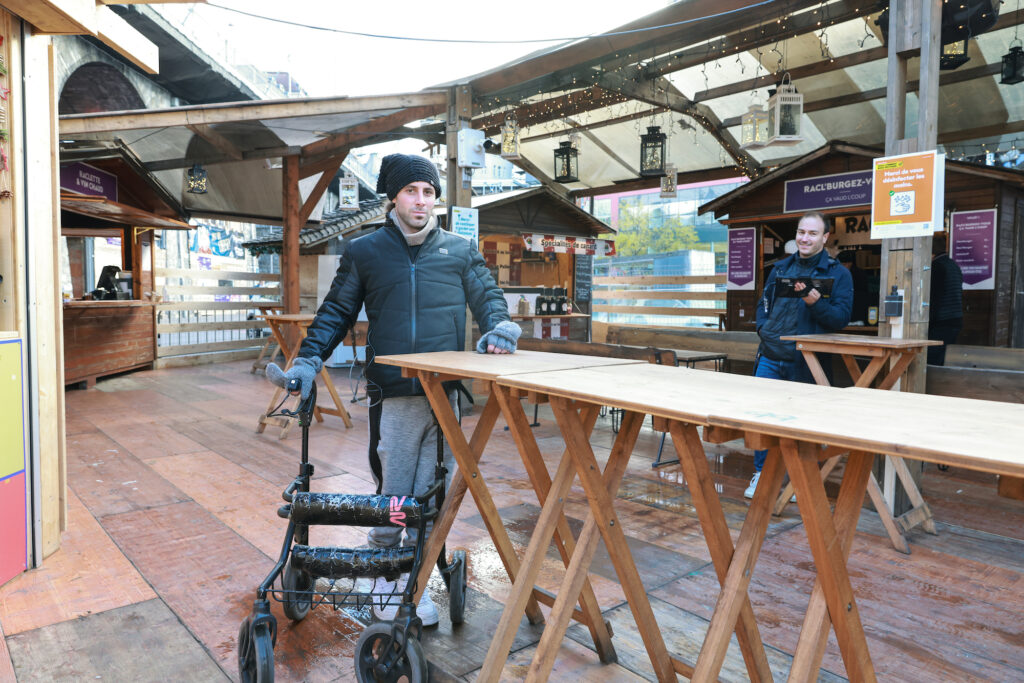
With the release of their latest study, the Swiss team has shown that their device also works in those with complete injuries. After training, participants have used the device to stand and walk with a walker outdoors in community settings, as well as to improve trunk control during recreational activities. Watch the video below and you can see their movements are slow and often performed with limited coordination — they are not exactly salsa dancing. But they do show functional abilities unavailable to most with complete spinal cord injuries.
In another recent video produced by the BBC that highlights the progress M’zee has made since his stimulator was implanted, Courtine summed up the research this way: “This is not a cure for spinal cord injury, but it is a critical step to improve people’s quality of life. We are going to empower them with the ability to stand, maybe to make some steps. It is not enough — it is not a cure. But it is a significant improvement, I believe, for the future.”
Commercial Viability
How far away that future is remains elusive. Courtine says he hopes his device is commercially available within the next three to four years. Our community has heard those kinds of prognostications before. But we’ve also never had a treatment with a track record of human successes like epidural stimulation.
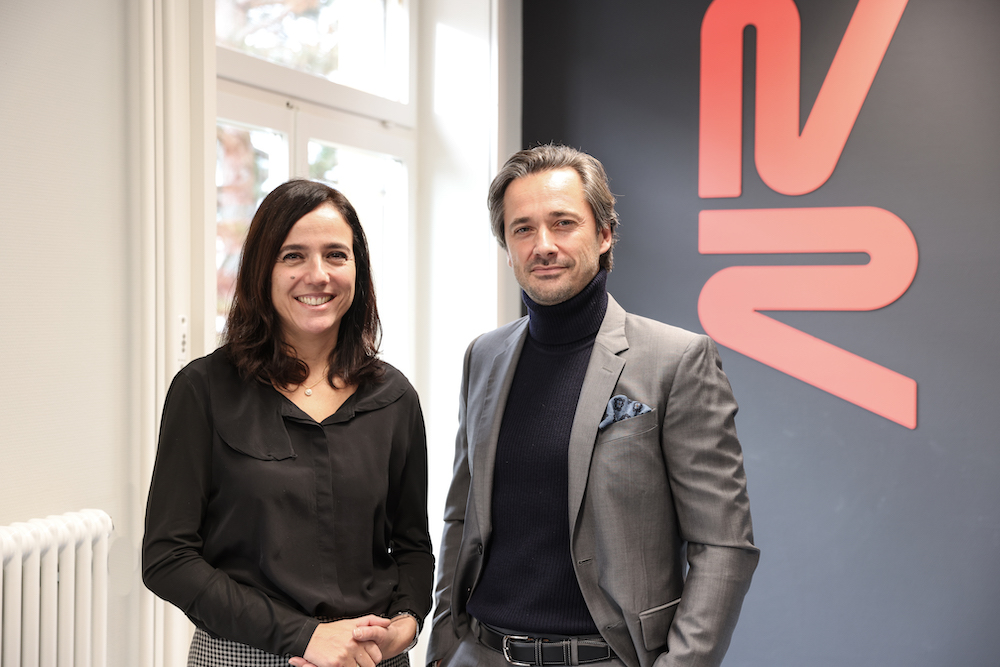
Courtine founded GTX Medical to market his team’s implantable stimulation device. Edgerton founded NeuroRecovery Technologies, which held the rights to the transcutaneous stimulation device that researchers have been using to improve hand and arm function for people with quadriplegia. Those two companies merged in 2019 and both devices are now held by Onward, a biotech company where Courtine is the chief science officer.
Onward is partnering with major international spinal cord injury foundations including the Christopher and Dana Reeve Foundation, the United Kingdom’s International Spinal Research Trust and Canada’s Praxis Institute. Both the implantable and the transcutaneous stimulation devices have already received breakthrough device designation from the FDA, which can help speed the regulatory approval process for new medical devices.
Nobody yet knows whether Courtine’s “three to four years” is an accurate prediction or another statement we’ll roll our eyes at five years down the road. But with every successful new study, the promise of accessible, functional recovery with epidural stimulation looks one step closer to reality.
Support New MobilityWait! Before you wander off to other parts of the internet, please consider supporting New Mobility. For more than three decades, New Mobility has published groundbreaking content for active wheelchair users. We share practical advice from wheelchair users across the country, review life-changing technology and demand equity in healthcare, travel and all facets of life. But none of this is cheap, easy or profitable. Your support helps us give wheelchair users the resources to build a fulfilling life. |


Recent Comments
Neil on A Safe, Effective Reusable Catheter System
Richard Crumb on A Safe, Effective Reusable Catheter System
Richard Crumb on A Safe, Effective Reusable Catheter System