


The dreaded pressure sore — a major challenge to maintaining quality of life and a problem that can occur no matter how vigilant you are. Whether your sore quickly gets out of hand or simply isn’t healing fast enough despite treatment, there may come a time when your wound care team suggests “flap surgery.” We are here to explain what this means and how you should proceed based on the knowledge and experience of others who have been through this.
Well before considering flap surgery, there are many wound care treatment options worth exploring, including wet to dry dressings, an Unna boot (wrap), wound vacs, ointments, creams and more. But when these treatment options aren’t successful or take too long to heal a wound, is when flap surgery starts being discussed.
In flap surgery, the surgeon removes all the dead and diseased tissue, a procedure called debridement, and then replaces it with a “flap” of healthy tissue, along with an intact blood supply from a nearby part of the body to promote healing. Patients who develop stage 3 and 4 pressure injuries with a prolonged chronic and complex wound are the usual candidates for flap surgery.
We spoke with three individuals who are all too familiar with flap surgery: Jim Vacik, 61, a C6-7 complete quad since 1979; Dustin Matthews, 38, a C3 quad since age 2 from a spinal stroke; and Erica Davis, 41, a T2-T11 paraplegic from a spinal hemorrhage in 2005.
Erica Davis:
Finally Getting It Right
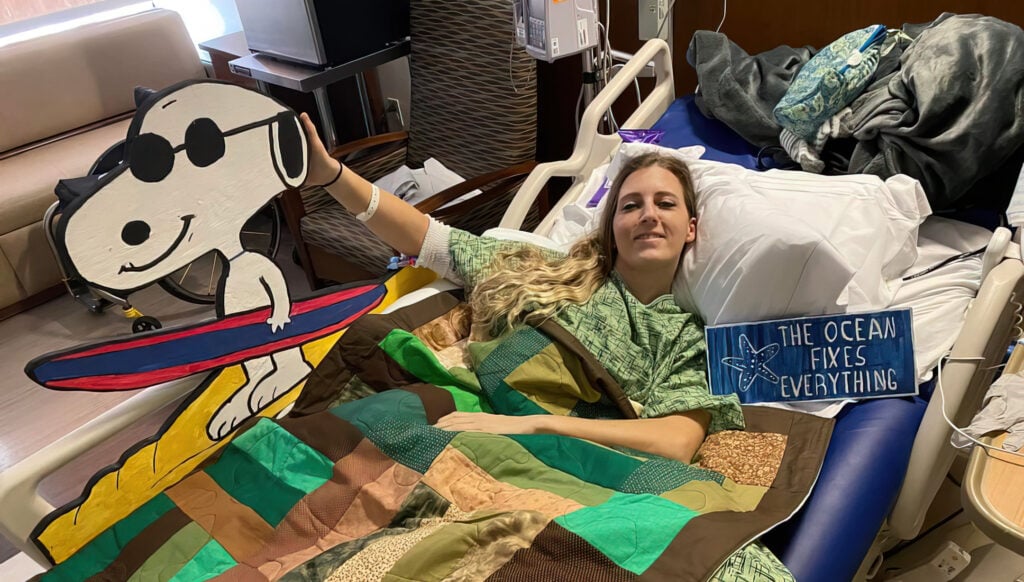
After accidentally falling to the floor in November 2021, Erica Davis had to scoot across the carpet to get to a chair that she used to pull herself up. “I was wearing boxer-type shorts and they rolled up, giving me direct contact with the carpet, so I got a small carpet burn,” she says. “Just a small scrape is how it all started.” Even though she was treated by wound care nurses at home, the wound quickly worsened. Two prior skin grafts in the area from a burn in 2009 didn’t help the healing. After six weeks of oral antibiotics and home health nurses, she was admitted into the hospital in January near where she lives in Carlsbad, California.
An MRI showed something going on in her hip bone, either inflammation or infection, so she had a peripherally inserted central catheter or PICC line inserted to deliver IV antibiotics. Knowing the wound would not heal if there was a bone infection (osteomyelitis), she took on the task of interviewing doctors and discussing their approaches before she made up her mind as to which approach was best for her busy lifestyle. “One surgeon wanted to be more aggressive with flap surgery, but three other doctors were against it. I was just waiting for them to figure things out and give me my options so we could get the show on the road and back to healing.” She was discharged to her home in mid-February after the PICC line was removed.
While she was recovering at home with wound care nurses coming in three times a week to change the vacuum-assisted dressing called a wound vac, two more infections developed. The last infection needed another IV antibiotic, but she no longer had the PICC line. She ended up going into the ER with fever and chills. “They took an MRI of my hip that had the osteomyelitis, and results showed there was still some infection left, which is why I kept getting infections even though the wound was very slowly healing.”
After careful consideration, Davis selected a surgeon from the three physicians she had consulted. “I chose the surgeon that seemed to have my best outcome in his plans.” In all, she was treated with not only oral and IV antibiotics, but also a wound vac, hyperbaric oxygen, debridement surgery, and finally, muscle flap surgery. She says it all helped, but killing the bone infection was critical to success.
Her surgical team performed flap surgery by pulling tissue from her upper gluteus muscle back to the wound area and stitching it in place. From surgery, she went directly to a Clinitron sand bed, a specialty bed that promotes healing. “It’s like a mix between a waterbed, quicksand and a cloud. It’s so weird. It’s constantly moving and it’s nice and warm.”
Protein Needed for Wound Healing —
More Is Better
The National Pressure Ulcer Advisory Panel “recommends a global protein intake for pressure ulcer healing of 1.25 to 1.5 g/kg of body weight per day. For patients with Stage III/IV pressure ulcers, the proposed level is 1.5 to 2.0 g/kg, depending on the size of the pressure ulcer and the total protein loss from draining wounds. In a study, the group receiving higher protein (1.8 g protein per kg body weight) demonstrated nearly a two-fold greater rate of healing than those randomized to lower protein intake (1.2 g protein per kg body weight).”
Taken from ncbi.nlm.nih.gov/pmc/articles/PMC5930532
Importance of Post-Op Recovery Time
After three long weeks in the hospital lying in the Clinitron bed after surgery, Davis was finally discharged home, where she started an even longer process of strict bed rest. “I was not allowed to put any pressure whatsoever on my right tush as my muscle flap continues to heal.” Having done her homework, she lobbied to get approval for a Dolphin pressure-redistributing bed, one of the best in-home therapy beds.
Her health care team came up with a post-op schedule for her: complete bed rest for six weeks with no sitting, before adding five minutes of sitting time every day until she reached two hours. That took 24 days. After that, the protocol called for a five-minute rest after every two hours of sitting — forever. “I will have to be more careful with my tush now that it’s had a few surgeries, but I’m looking forward to getting back out there again.”
Davis is careful to point out her takeaways from the ordeal. “I didn’t really start to make real progress until I had an infectious diseases doctor and a plastic surgeon involved as well.” Reconstructive plastic surgeons are best for flap surgery. “The plastic surgeon really stressed how important it is to do regular pressure relief. Muscle can die in two hours without blood flow, fat takes four, and skin dies in six hours.”
Davis is now back to teaching a workout class one day per week. “I’m all healed up on the outside, but I was told it can take up to a year to heal up completely on the inside. I can’t wait to get back to teaching my workout class full time. I want to get back to my people.”
Jim Vacik:
Proper Nutrition and Staying Vigilant
Jim Vacik refers to his flap surgery experience as an adventure. Beginning in 2009, he started having bouts of osteomyelitis, which required antibiotics, like Davis. The bone infection created a sore under his skin that worked its way out, resulting in sepsis and hospitalization. “At that time, I was 30 years post-SCI. It was my first sitting sore, in the right ischial. A little drainage started, and I noticed it in my pants,” he says. “I felt something. It was difficult to actually look at since I’m a C6-7, but it felt hot and moist.” Very quickly it progressed into fever and chills, and by that time it had tunneled out. “I had no idea it was a bone infection.” A nurse practitioner at Craig Hospital’s outpatient clinic looked at it and sent him straight to the ER at nearby Swedish Medical Center, where he was seen by an infectious diseases doctor and a plastic surgeon.
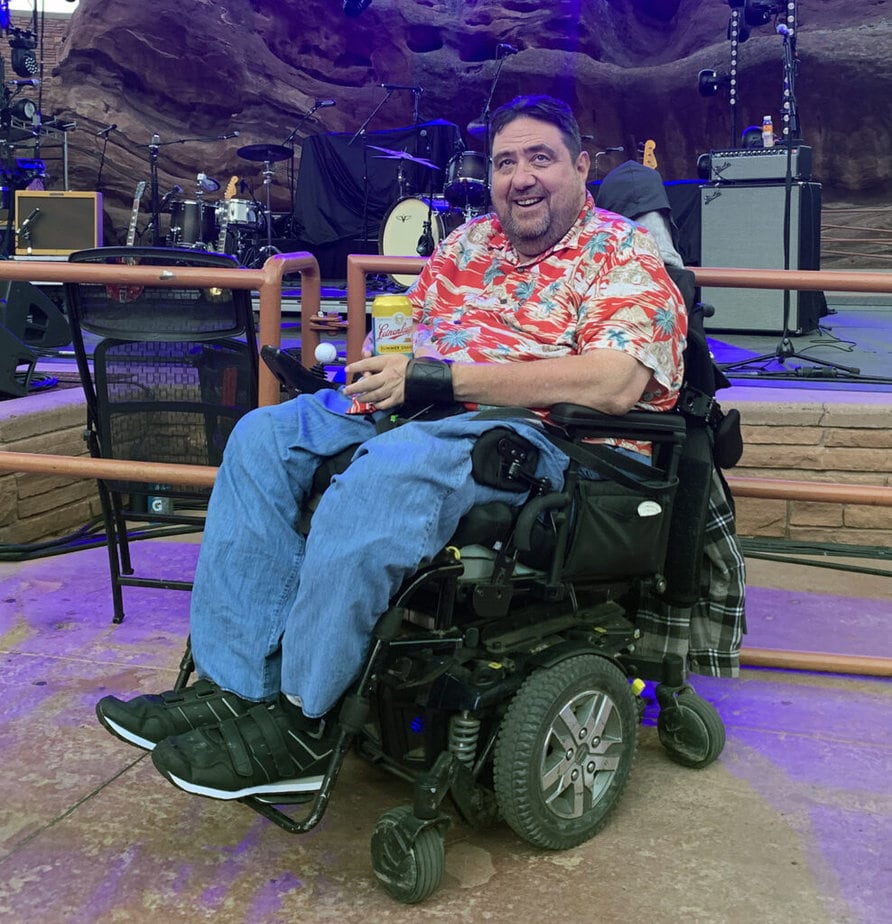
First, they debrided the wound area and put him on antibiotics, leaving the wound open and on a wound vac. He continued on the IV treatment for months to kill the infection until he was ready for flap surgery. “A long time before then, maybe 20 years prior, I had a sore in that same place, but it seemed minor. I did have other problems with osteo but not in that area.” They shaved down his ischial tuberosity and removed some bone. The doctor could see what was there, and having seen hundreds of similar wounds, said an MRI was not needed.
“While I was healing, I was on a high protein diet tailored to the number of calories that I needed for optimum wound healing, along with a steroid regimen similar to what bodybuilders do, also to enhance healing.” He was admitted to the ER around St. Patrick’s Day and discharged three months later around the Fourth of July.
Vacik’s post-op schedule was similar to Davis’s. He had to lie completely flat on an air mattress with no more than 6 degrees of head elevation for six weeks, and turn using a logroll technique every two hours. After six weeks, when the wound was declared healed, his physical therapy program started with some gentle stretching and range of motion. He was allowed to sit up for 10 minutes and immediately went back to bed for a skin check. The next day it was 15 minutes and back to bed. The following day it was 15 minutes first thing in the morning, then back to bed, then another 15 minutes later in the afternoon and back to bed.
Each day the sitting time was increased by five minutes, then 10, then 20, then in half-hour increments, as his skin tolerated it. “The goal was to get to eight hours minimum of sitting time with no skin issues. I was also doing weight shifts (for pressure relief) every 20 minutes for two minutes.”
Dustin Matthews:
When Flap Surgery Can Be Avoided
With lots of patience, a wound vac, and several wound debridements, Dustin Matthews healed a 2009 pressure sore in nine months with no discussion of a surgical flap. But in 2019, a sore opened up in the same butt cheek. “My wound care doctor at this time believed in nothing but flap surgeries, but he never shared his plan with me,” he says. “He performed the first debridement and thankfully didn’t think the wound was ready for the flap that day. In recovery, he mentioned the flap and I freaked out.
“I had read a lot about flaps and I preferred to heal otherwise. My biggest concern was lying flat and having that cause lung issues.” With a C3 SCI, he worried that his lungs would not be able to take extended time lying flat. “Recovery is too hard, and that would force me to stop living my life.” Based on these concerns, and the advice of his home health nurse, Matthews decided against surgery. “My home health nurse had seen flaps fail numerous times, and my bond with her is great. I’d trust her in anything.” His doctor kept insisting on performing a flap, so he ended up leaving against medical advice.
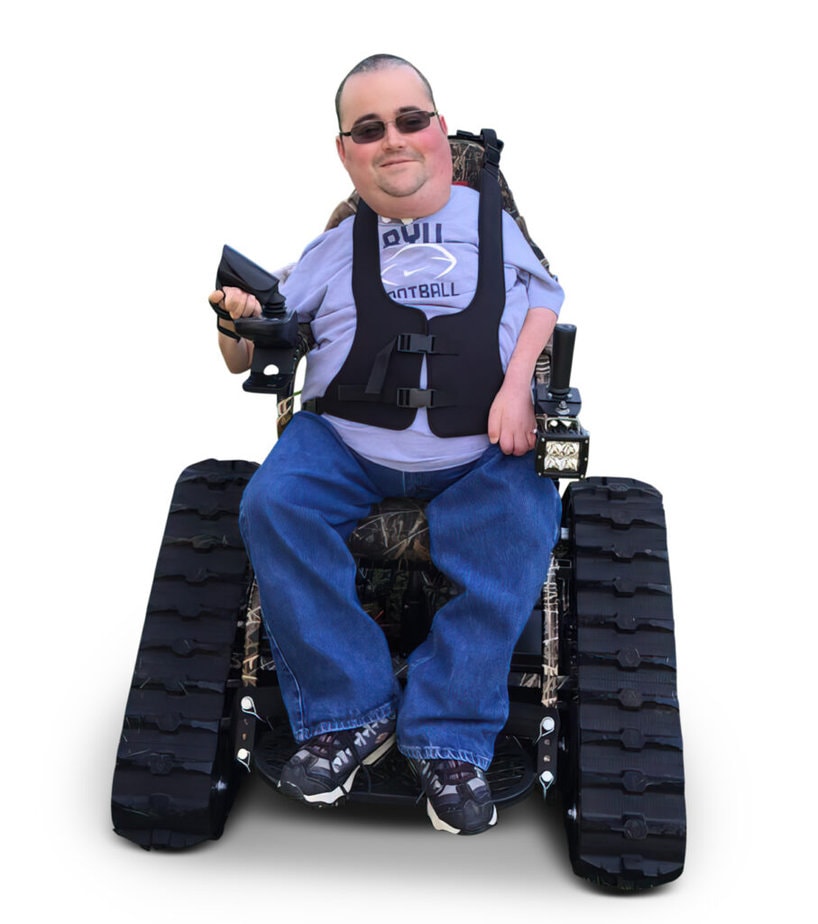
Matthews found a new wound clinic and now says his wound is completely healed. So how was it treated successfully without flap surgery? “I never did have an MRI, either the first one or this one, because I have metal in my back, but with this second wound it became clear I had an infection, so the doctor scraped it and biopsied it. I did IV antibiotics through home health and it cleared up pretty fast.”
The doctor did something new as well, using platelet-rich plasma therapy along with a wound vac. “The wound went clear to the bone. It did so well and made progress every doctor visit. Now I am healthy and happy. Flap free.”
Dr. Bruce Ruben, a wound care specialist who built his own completely wheelchair-accessible wound care clinic in Michigan and is known for successfully treating nonhealing wounds, believes in the healing power of the body when everything is done right. “In this case, it sounds like the doctor did everything right,” he says. “I have had moderate success with PRP therapy, but a pressure-free wound properly debrided, with proper nutrition, good circulation, no edema and no infection can heal on its own with proper management.”
Bottom line, we have spoken to many in the SCI population and a high percentage of those who have had flap surgery would do it again. But as we have researched, and by talking with others, it is a major commitment in post-op care and a major responsibility to “baby” the site.
Getting up too soon, staying up too long, or allowing too much pressure could cause the surgical site to reopen. Starting all over again with an open wound adds the risk of infection. Also, moving in the bed can cause shearing and reopening the site. Proactive healing following flap surgery is labor-intensive for many months afterward.
—Additional reporting by Tim Gilmer
Resources
Support New MobilityWait! Before you wander off to other parts of the internet, please consider supporting New Mobility. For more than three decades, New Mobility has published groundbreaking content for active wheelchair users. We share practical advice from wheelchair users across the country, review life-changing technology and demand equity in healthcare, travel and all facets of life. But none of this is cheap, easy or profitable. Your support helps us give wheelchair users the resources to build a fulfilling life. |


Flap surgery is 40+ years old. Its a waste of time. Flowable matrix will heal the wounds much faster. Instead of months/years of recovery. Weeks.
Not for stage 3 and 4 pressure injuries.
I’ve been a C 5/6 incomplete quad since 1980 with near no pressure sores till 2020 using a ROHO. An abscess cost me my entire left leg followed by a sequence of pressure sores since. I’ve had 2 flap surgeries and am nursing 2 wounds 7cm deep. Aside from healing my wounds, what is the best WC seat to prevent them ?
After 40 years of using a roho with no problems I developed a pressure wound on my right ischial. After 2 years trying to heal – wound vac, iv antibiotics, bed rest I had flap surgery. I started using a “ride cushion.” I can sit 8 hours, but it was a long process.
The author should be aware that “wound vac” is a trademarked term for the KCI Wound V.A.C. (vacuum assisted closure) device, and that there are a number of competing products which all fall under the category of NPWT (negative pressure wound therapy). KCI had been pretty aggressive in defending their trademark being used generically.
The Dolphin mattress technology is called “fluid immersion simulation”.
What about sitting cushion?