


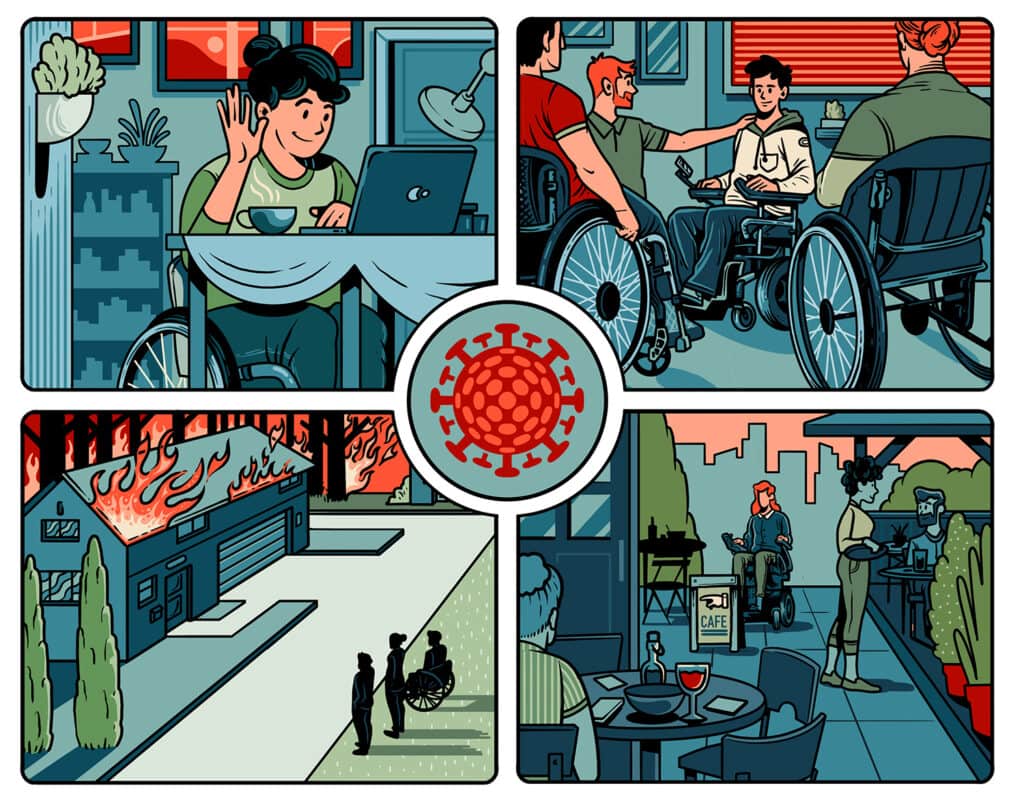
When the pandemic shut down the world in 2020, no one knew what to expect. Every expert and wannabe pundit had their theories, but underlying all of them was the fact that no one could predict what was coming.
Three years, almost 7 million deaths and over 670 million cases later, the pandemic drags on. The changes it brought are more profound than most could have imagined. Many of these changes have been scrutinized at length in the media and online, but for this issue, we wanted to look more closely at how the pandemic has affected disabled people and how our community has adapted.
We’ve curated a selection of essays and social media comments to explore many of the new realities we are facing.
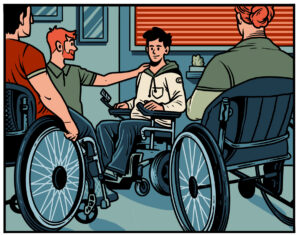
A New System for Support
by Kenny Salvini
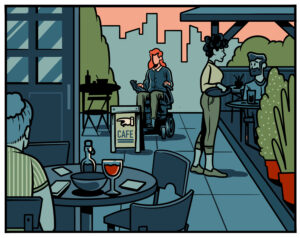
Breaking the Built Environment
by Nickole Cheron
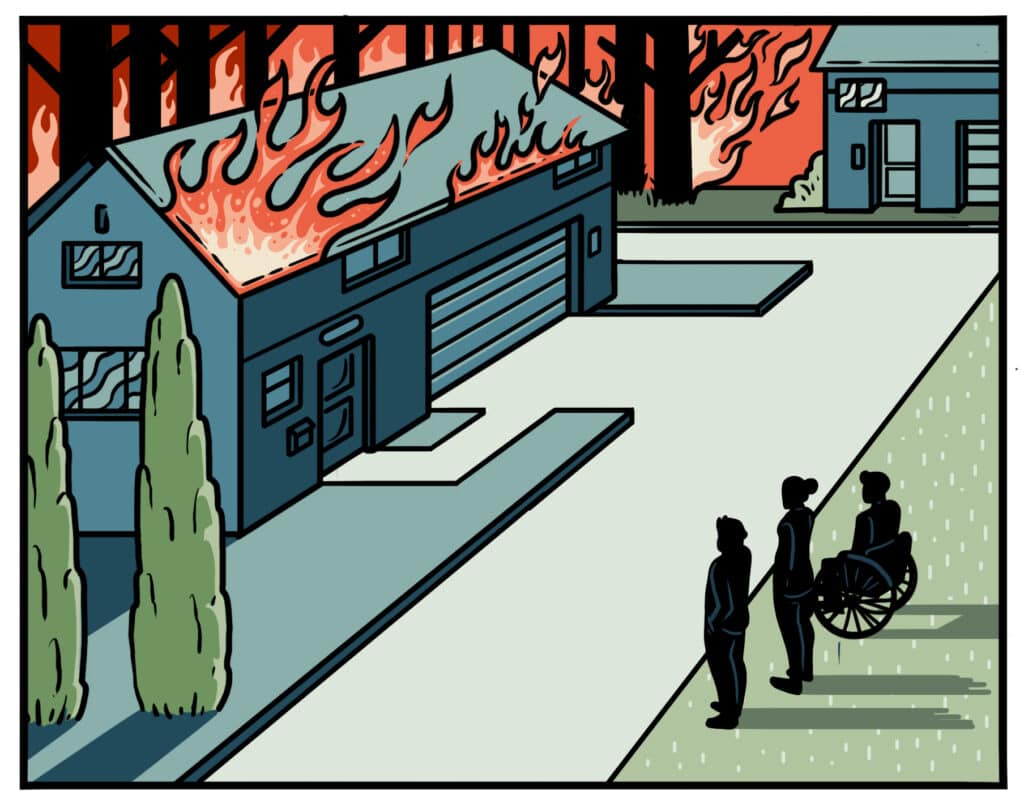
Shining a Light on Emergency Preparedness
by Garp Karp

Remote Work Enables Return to Employment
by Beka Anardi
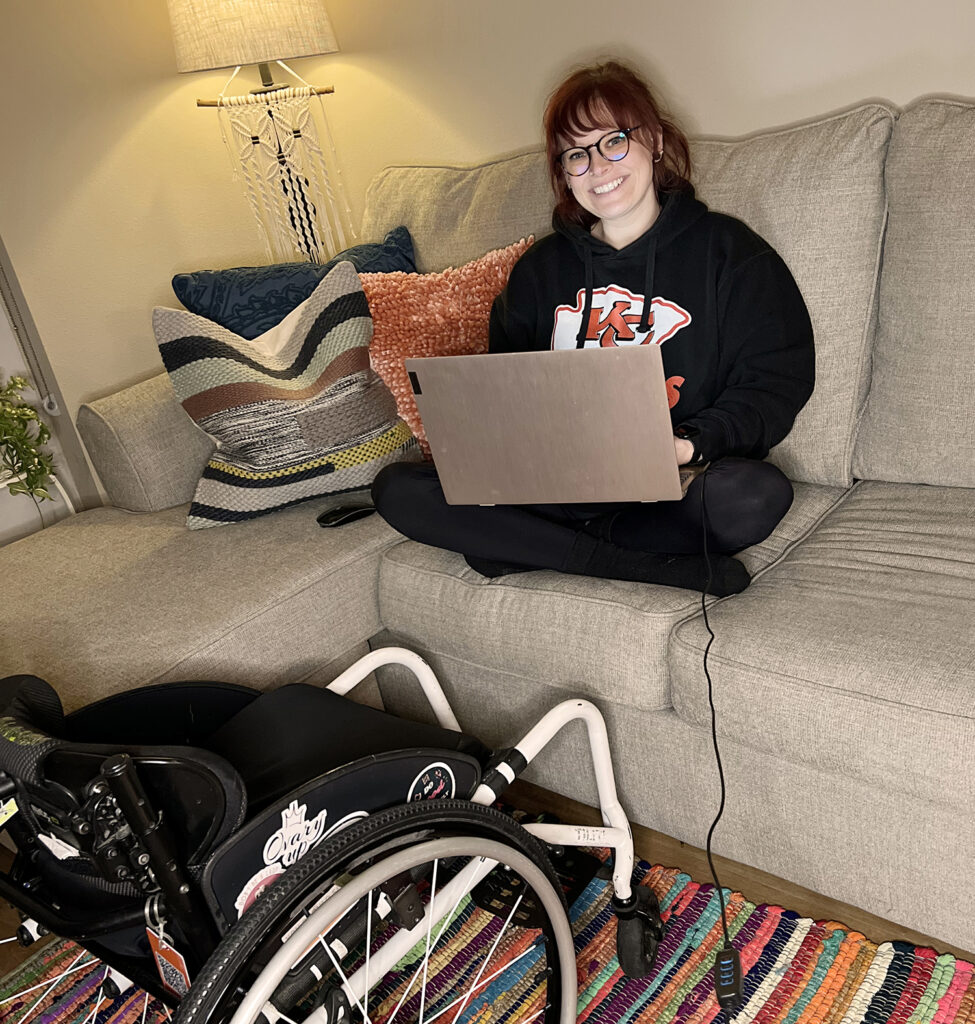
A Mental Reset
by Hilary Muehlberger
We asked our Instagram followers to share stories about how the pandemic has affected them, and we received many thoughtful comments. Here are a few, edited for length:
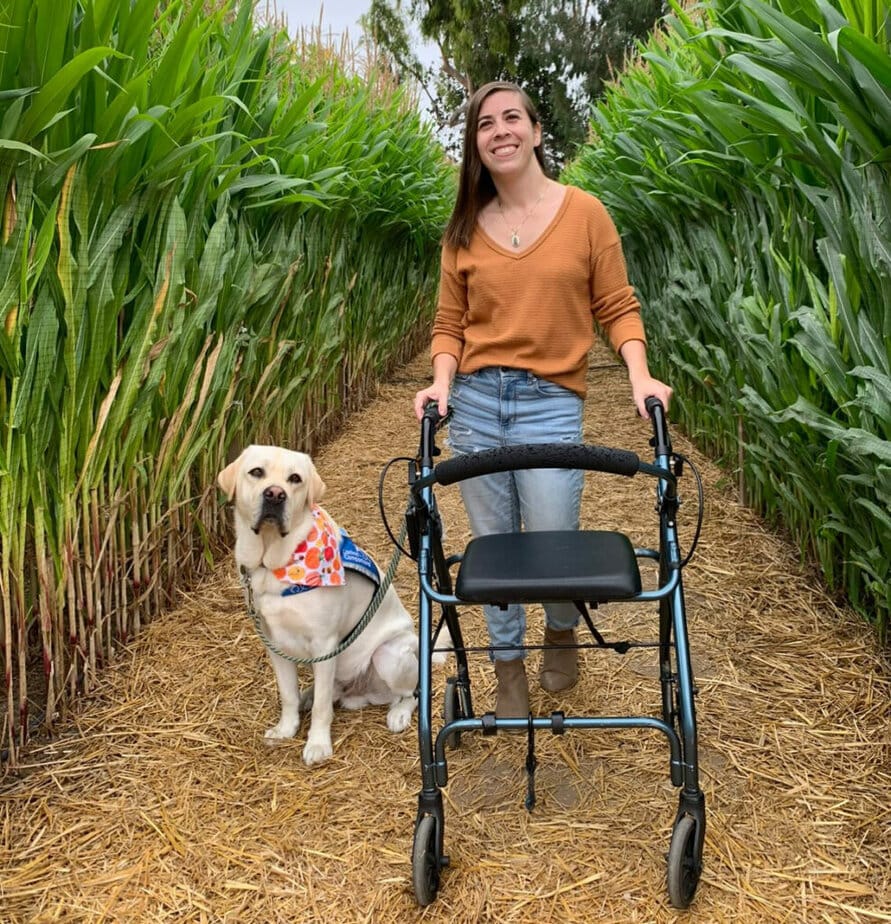
@jeeves1729 While there were a lot of negative impacts during the height of the pandemic, the lasting effects of remote work have had a huge positive impact for me. I work as a career coach and I was commuting two hours a day, five days a week before 2020. Now I work remotely two days a week, sometimes more with my supervisor’s permission. My employer saw the positive effects on employee morale and experienced it themselves, so they made this change permanent. This extra time back in my day allows me to spread out my daily self-care and chores to a manageable level and has allowed me to go back to school and start earning my graduate degree. The resulting additional income goes directly to finally being able to afford physical therapy and purchase a new mobility device that my insurance won’t cover. Overall, the two extra days at home and four fewer hours of commute time has brought back some semblance of work/life balance for me.
— Elizabeth Pode, Camarillo, California, cerebral palsy
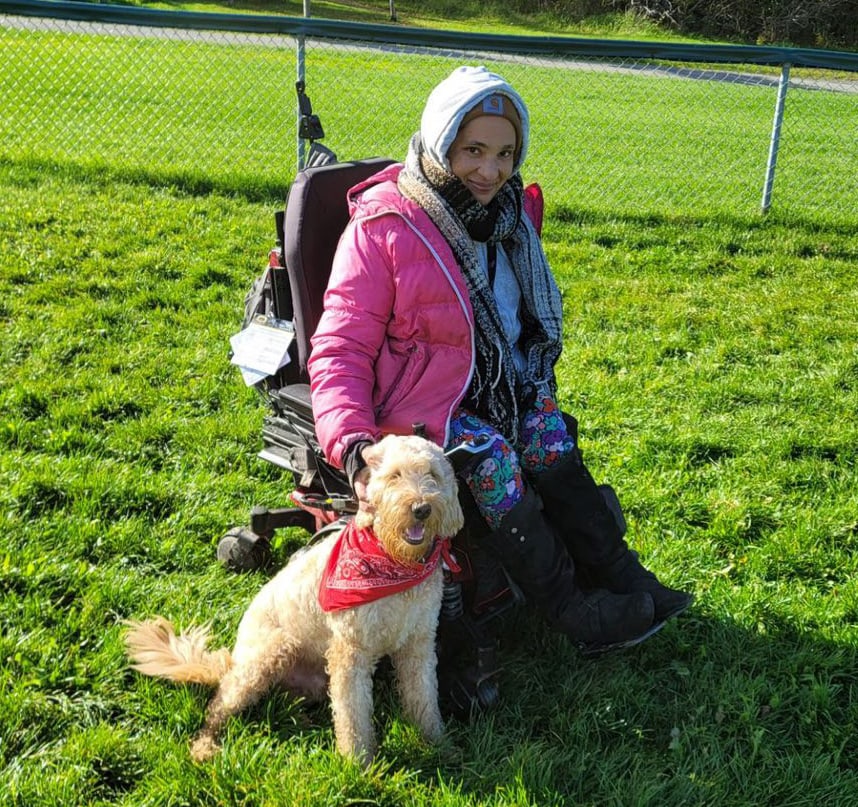
@studyofthesoul I still feel isolated. I can’t afford a van, so I only go out for groceries or appointments. I used to go out with friends for coffee or lunch, but since COVID started they haven’t invited me anywhere. I miss socializing. I worked as a service planner, writing treatment plans for people with disabilities. Prior to the pandemic my employer refused to let me work from home one day a week when the pain from the cancer near my spinal cord became debilitating. After I quit, COVID started and everyone in that office was working from home. I am now cancer free, and I wouldn’t mind working with people face to face again, but I can’t find a work-from-home job. I’m tired of this.
— Desiree Rodriguez, Anchorage, Alaska, SCI from cancer
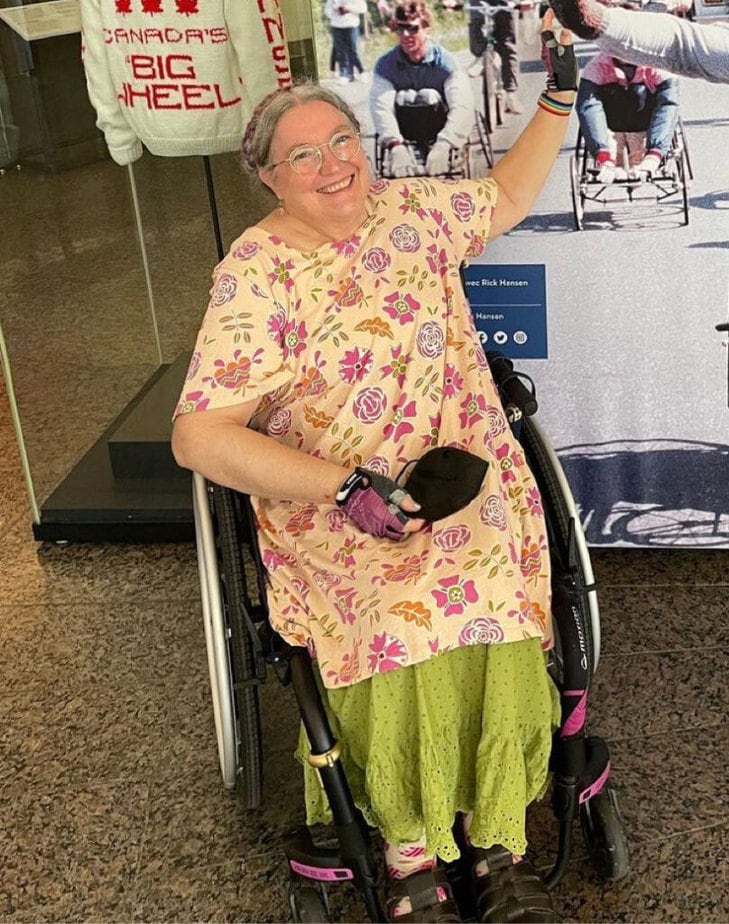
@lisagwinner Our grocery store turned about a quarter of its disabled parking spaces into grocery pickup spaces. So now there’s less parking available for my wheelchair van. Also, I transitioned from using a walker to using a wheelchair while everything was remote, so showing up in public in a wheelchair without any context caused a lot of confusion among folks I know. The first few weeks back at church were exhausting! But folks are getting used to it.
— Lisa Gwinner, Rochester, New York, degenerative spinal arthritis
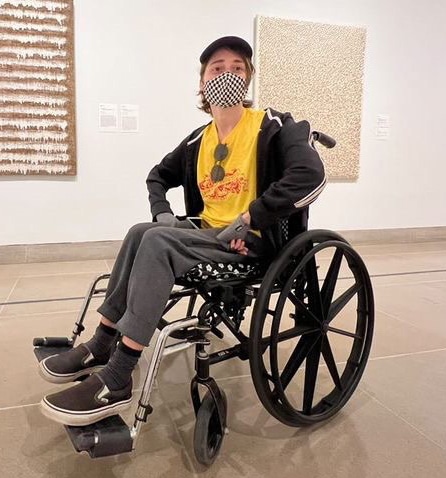
@brainfogdesigns Lack of mask mandates in public spaces makes doing basic tasks like grocery shopping and getting medical care extremely difficult. Surges mean hospitals have lower capacity, and disabled folks end up postponing or cancelling lifesaving procedures. Things have gotten so much worse now that most of the public has “moved on” from taking any level of precaution. I feel so much more isolated now than I did in 2020 when people cared about trying not to infect people. So many disabled people have died … and continue to die.
—Ray J. Soller, Stamford, Connecticut, hypermobile Ehlers-Danlos syndrome and postural orthostatic tachycardia syndrome
@nomads.roam Access to teleheath and delivered essentials has been such a help for me as a disabled person in a rural community. Supply chain shortages have definitely hindered things, though. I’m hopeful about the increased awareness of disability as many faced quarantines and limited supplies, but saddened at how quickly such awareness faded as people rush to try and “go back to normal.” The world is always changing. There is a new normal. And there will be another new normal. I hold hope that with increasing visibility and amplification of disabled and marginalized people’s voices on social media that each new normal will be increasingly accepting of disability and differences; accommodating as needed; and celebratory of the lives of and knowledge offered by people with disabilities across all identities and cultures. There’s so much that everyone can benefit from when disabled persons are included in planning and preparedness. We may be in a post-quarantine world, but just as there will always be a new normal, there will always be a new disaster of some sort. Including everyone in building the new normal helps protect everyone from future calamity. The best protection against a dire future is to build a better now.
— Moss Seanaché, U.S., Ehlers-Danlos syndrome hypermobility subtype
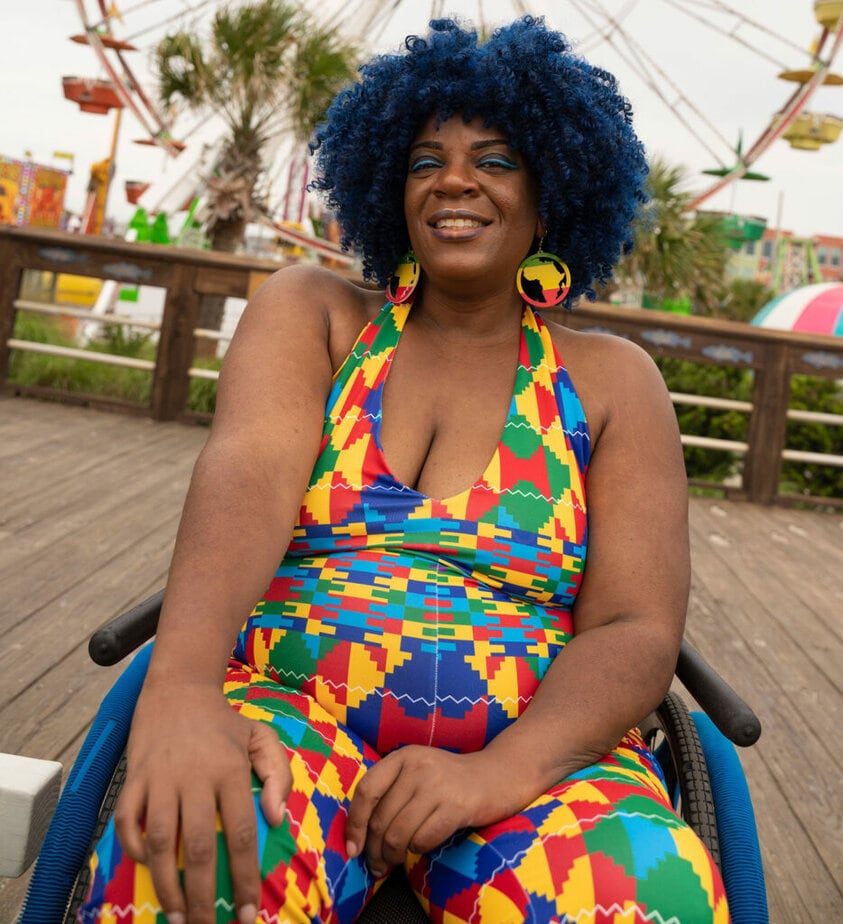
@moniquestamps522 My kids and I all got COVID early in the pandemic. I’m still dealing with long COVID today, and the pandemic’s impacts are all around me. An engineer from vocational rehab came out to evaluate my bathroom for a roll-in shower in the spring of 2021. He told me to expect a follow-up call within a month. It never came. I’ve emailed, texted, called to get a hold of my rehab counselor, but I haven’t heard back from her. I had also been working with voc rehab to go back to school, but now that’s up in the air too. It’s especially frustrating because just prior to the pandemic I had found a good job, but they wouldn’t let me work remotely. Now that position is fully remote.
— Monique Stamps, Charlotte, NC, C6-7 SCI
Support New MobilityWait! Before you wander off to other parts of the internet, please consider supporting New Mobility. For more than three decades, New Mobility has published groundbreaking content for active wheelchair users. We share practical advice from wheelchair users across the country, review life-changing technology and demand equity in healthcare, travel and all facets of life. But none of this is cheap, easy or profitable. Your support helps us give wheelchair users the resources to build a fulfilling life. |


Interesting! I’m a C6 complete quad in Australia and we’re still basically isolating, from our own choice. People act like Covid-19 has gone, don’t wear masks, and mingle. But way too many I know are still getting it and people are still dying. If that many died on our roads, there would be outcry, but now the media and public opinion seem to ignore the data. No longer newsworthy. I’m 66 and want to be a ‘healthy’ 67 and older, so wear a N95 mask when out and ignore the looks and comments like “you don’t need to wear a mask anymore!”.
Life has changed, but wife and I are OK and that’s what counts. Need to regain some fitness though, so picking up a new handcycle in 12 days. Can cycle on my own and get some enjoyable cardio.