



For many people with mobility disabilities, the decision to move isn’t just about climate, family, or lifestyle. It can determine access to health care, financial stability, and day-to-day independence. While the following two stories have very different outcomes, they both highlight some of the critical concerns disabled people should consider when moving and offer some insights on how to make sure the move is a success.
A Move That Didn’t Work
Newly retired and wanting to escape the harsh Michigan winters that were getting harder as she aged with a spinal cord injury, Ann Manning and her husband decided to sell their home and move to California in 2015. They were seeking more sun and proximity to family, and they ended up buying a small home in Borrego Springs, a quiet residential community nestled between San Diego and Palm Springs that offered both.
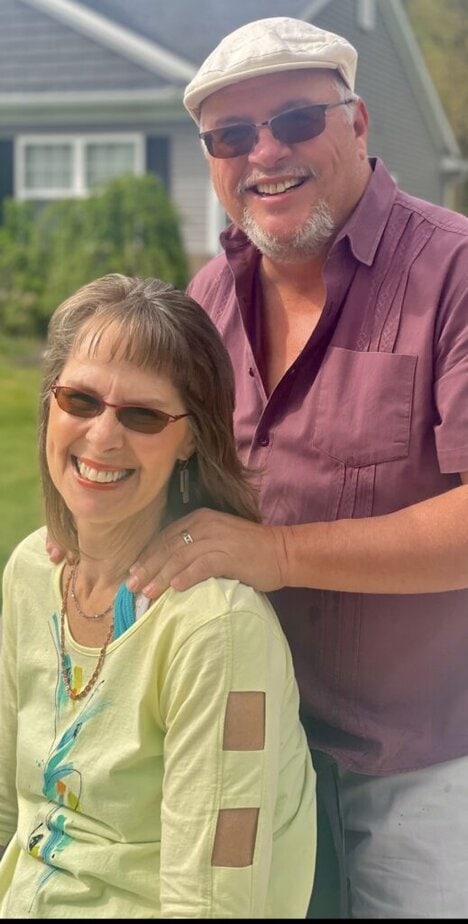
Manning, 66, spent months planning for all the move-related obstacles that her three-plus decades as an incomplete C7 quadriplegic had taught her to anticipate. Despite all of her efforts, the transition was anything but smooth.
Things went awry before Manning even got to her new home: The moving company she hired damaged $10,000 worth of belongings. “Always go with a bonded and insured moving company,” she says.
Manning hadn’t been able to visit the house before moving, but she had reviewed the floor plans and knew she would need to remodel both bathrooms and her kitchen, among other access improvements for safer and easier use. She also knew her insurance company required an occupational therapy evaluation before they would approve any home modifications. What she didn’t know was how hard it would be to find someone to do the evaluation.
She ended up finding an occupational therapist and contractor three hours away. The process of getting an evaluation and report to the insurance company took almost two years. “My advice is when you are looking for a new home, you need to get a handle on what modifications you are going to need, and how soon you are going to need them before you can safely live in your new home,” advises Manning.
Figuring out auto and health insurance coverage proved equally unpredictable. Because Manning had been paralyzed in a car accident in Michigan in 1980, she had access to unlimited medical benefits under the state’s unique No-Fault Insurance law. “When I got to California, I consulted a PIP attorney to see if I could keep my Michigan insurance. He told me I would have to get auto insurance in California, and I couldn’t hold onto my Michigan no-fault,” she says. This change meant that if she was in another car accident in California, her California auto insurance would become her primary insurance and the Michigan no-fault insurance would be her secondary. “I was really nervous about that because I greatly benefited from having unlimited medical coverage for whatever I needed,” she says.
“Proximity to care and services is huge when considering a move because we have so many more needs than the general population. We have to be smart where we put ourselves.”
Knowing she’d be visiting every summer, Manning decided to keep her medical specialists in Michigan and rely on Telehealth appointments. However, she struggled to find services like physical therapy, massage therapy, and chiropractic care near their small desert community.
“So much of my time was spent just trying to set up support services for myself,” she says, “plus I made the decision to go on Social Security Disability, so I had to file my claim in California, which was also a lot of work.”
Even the smallest details provided unexpected complications, like her insurance company requiring her to use a Rite Aid pharmacy to fill prescriptions. “I didn’t know that I couldn’t use the local pharmacy, and the closest [Rite Aid] to our new house was an hour and a half away,” she says.
Although the long-term plan was to make California their primary residence, expectations did not meet reality. In 2017, without ever actually starting the remodel, the Mannings moved back to Michigan full-time. “I was starting to need more assistance, and living out in the middle of the desert, I didn’t feel supported there,” says Ann. For example, if I needed urgent care, I would have been medically evacuated to a hospital that has probably never heard of a spinal cord injury. So proximity [to care and services] is huge when considering a move because we have so many more needs than the general population. We have to be smart where we put ourselves.” she says.
However, Manning says she has no regrets. “I’m glad we tried it. We still love it there, and we go back almost annually to visit.”
A Move That Paid Off
When Brina Simon decided to leave Texas for California, the choice was less about lifestyle than about health care. After sustaining an incomplete cervical spinal cord injury in 2023, she was living in Dallas and relying on her mother’s health insurance.
“[My mom] needed to retire but refused to retire until I had health insurance,” says Simon, now 32. Simon discovered that even though Social Security Disability Insurance accounted for her entire income, she still earned too much — by $14 a month — to qualify for Medicaid in Texas.
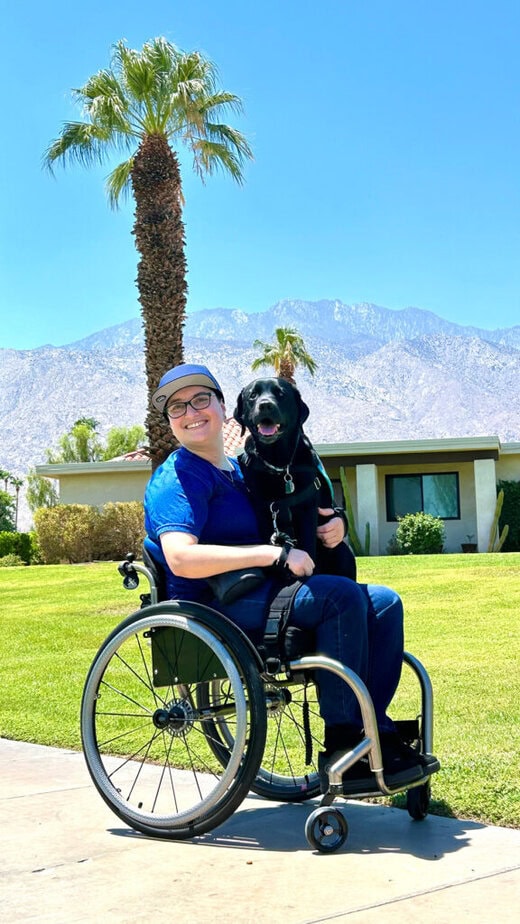
She started looking for a state where she could keep her benefits and get health insurance. “It’s really important to do research not only on how benefits may differ from state to state, but the cost of living, and how accessible is the community,” she says. “I also thought about natural disasters like fires, earthquakes, hurricanes and blizzards, which ones would likely be easiest for me to handle. It really started to feel like there was no perfect place to live, but I just had to choose the place that fit as best as possible.”
She considered Colorado and Connecticut before settling on California. She grew up in Southern California and, in a stroke of luck, her grandmother owned a one-story condo in Palm Springs she was looking to rent. “When I realized I could get Medi-Cal (California’s version Medicaid) if I moved to California that made a big difference,” says Simon.
Simon moved in 2024 and now lives rent-free, only paying for utilities. As a Medi-Cal beneficiary, Simon is eligible for the In-Home Supportive Services Program, a Medi-Cal program that provides in-home care to eligible individuals with disabilities so they can safely remain in their homes. Simon’s mom moved with her and is temporarily providing caregiving assistance, but Simon says knowing she will be able to rely on IHSS was a big factor in choosing California.
Even with housing and care in place, the transition was costly and stressful. “Holy crap it was so expensive,” she says. To save money, she ended up renting a truck and found a retired couple in Dallas willing to drive her belongings to Palm Springs.
The desert climate brought its own adjustments. Because she no longer sweats now that she is a quadriplegic, the heat can be dangerous. “It can get so hot here,” she says. “A few days ago I rolled over to my neighbor’s house a few doors down, and it took me almost two hours to cool down in their air-conditioned house.”
She’s also learning to live with the California air. Air quality never bothered her before her accident, but the smoky air from a recent wildfire forced her to evacuate even though many of her neighbors didn’t seem bothered at all and stayed in their homes. On the flip side, she is grateful that her nerve pain has improved since the move. “The weather in Dallas is very humid and I didn’t know humidity can make nerve pain more intense,” she says.
Simon’s advice for someone thinking of moving across state lines is to take your time and don’t rush into a decision. And the biggest lesson she learned? “Never move again! I hope this is the last time,” says Simon, laughing. “Overall, I am very happy I moved to Palm Springs.”
Support New MobilityWait! Before you wander off to other parts of the internet, please consider supporting New Mobility. For more than three decades, New Mobility has published groundbreaking content for active wheelchair users. We share practical advice from wheelchair users across the country, review life-changing technology and demand equity in healthcare, travel and all facets of life. But none of this is cheap, easy or profitable. Your support helps us give wheelchair users the resources to build a fulfilling life. |