


United Spinal’s Working Groups
Since 2022, United Spinal has been organizing members into working groups that are tackling our community’s most pressing issues. Learn more
May 1, 2024
Shannon KellyOutdoor Recreation
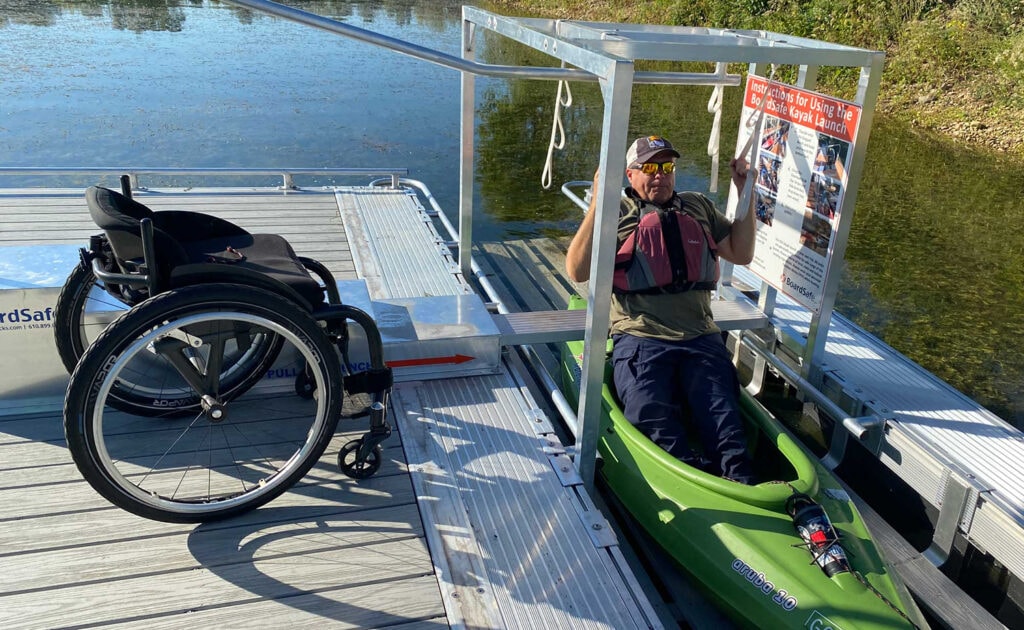
This group boosts awareness of the need for equal, inclusive access to outdoor recreation. It compiles lists of accessible outdoor recreational equipment available to purchase, rent or borrow; engages with federal, state and local entities about promoting access to parks and recreational spaces; and creates robust community resources on topics such as Beach Access and Mobility, Accessible Camping and Accessible Winter Activities and Recreation. Illinois member Bill Bogdan got involved with the group because he wants to ensure wheelchair users have equal opportunity to enjoy nature, and recently worked with a local forest preserve to get an adaptive kayak launch installed in a Chicago suburb. “I can kayak independently by using that dock, I don’t need any help. I can take my kayak from my van, get it down to the pier, shoot it down the kayak launch, and then transfer from my wheelchair into the kayak,” he says. Bogdan hopes other states follow suit and stresses the importance of getting out there. “I think the more people with disabilities get out there and enjoy nature, the more local governments will see that
this is an important issue.”
Care Support
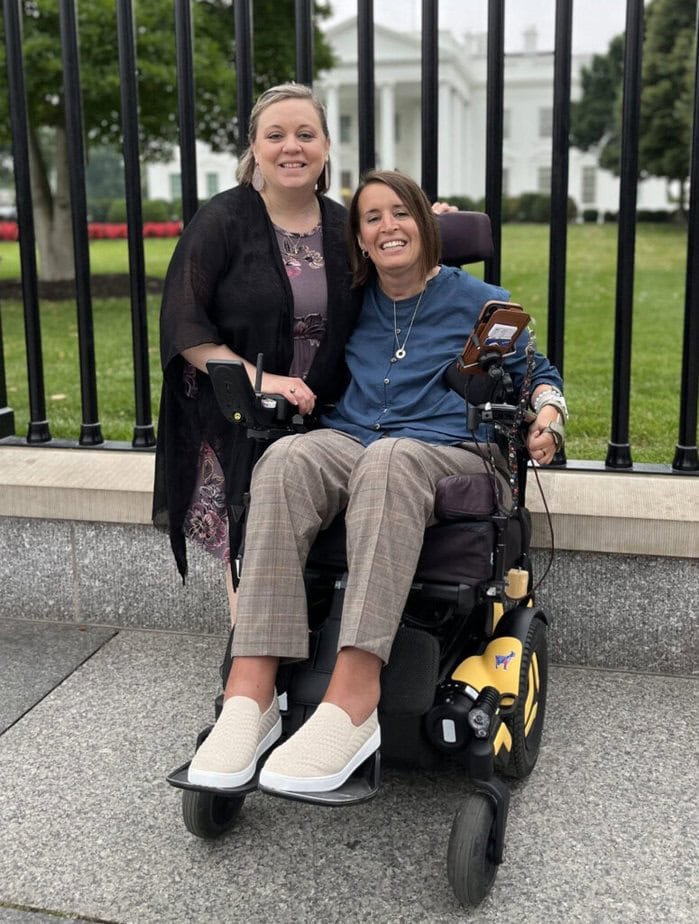
United Spinal’s Care Support working group combines advocacy efforts, education and peer support to help wheelchair users navigate their caregiving needs in the face of the ongoing shortage of care workers. Group member Melinda Simms, a C4-7 incomplete quad, started relying on her husband as a care provider when she lost access to her care support team during the pandemic. “We live in a rural area where home care is hard to come by. When [the pandemic] hit, the agency could no longer provide caregivers, since many of them were sick and quarantined,” she says. The Department of Veterans Affairs formally recognized her husband as a PCA and offered him a monthly stipend and health insurance. She has made it a priority to work with other veterans to help connect them to benefits that they may not be aware of.
Now she is sharing the knowledge she’s learned on the job and her personal experiences of working with caregivers. “A lot of times people know their list of things that they should ask [but] they don’t really know why they should ask those things,” says Simms. She collaborated with other advocates to create guides on best practices for hiring and training caregivers.
Simms also joined other advocates, caregivers and health care professionals for United Spinal’s care support webinar. The webinar gave caregivers the opportunity to discuss what they need to provide the right care for their clients.
Emergency Preparedness
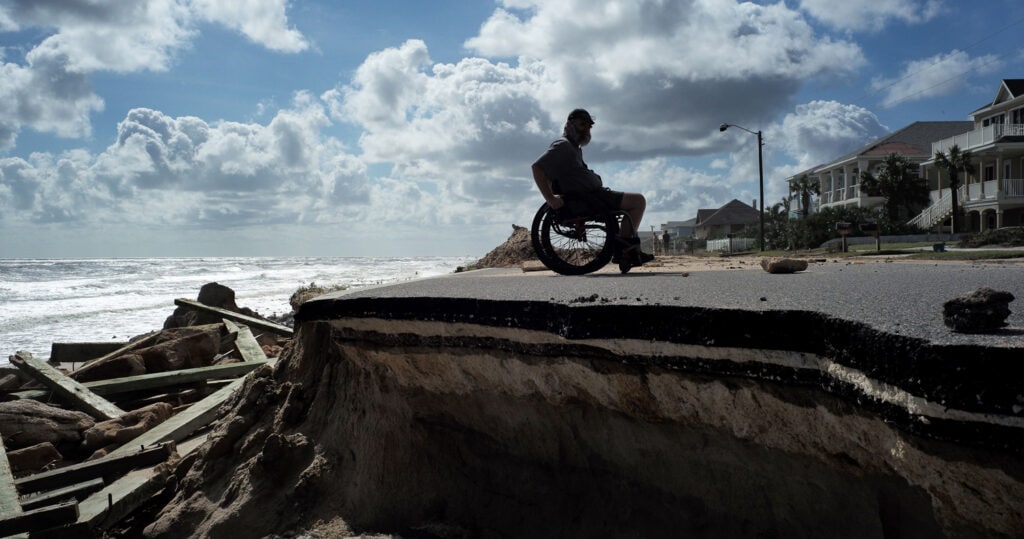
The Emergency Preparedness working group was created in tandem with the organization’s Ready to Roll initiative to address the reality that wheelchair users are often more vulnerable to the effects of natural and man-made disasters. The working group provides information to enable wheelchair users to make informed decisions about their safety, and assists governments and other organizations in proper disability-focused emergency preparedness activities.
The group authored a wildfire preparedness guide that includes tips on evacuations, transportation, loss of power, smoke inhalation, and needed supplies. More recently, it assembled winter-safety guides for wheelchair users. These include the warning signs of frostbite, recommended winter clothing, and tips for preparing your vehicle and wheelchair. “Winter weather is not universal, and knowing how to take care of yourself and what you need to take care of yourself is not universal either,” says Andy Weyant, a C4-5 quad and working group member from New York. “Every one of us should know our needs for our specific situation, and if anything goes wrong, … what we need to do to continue moving forward.”
Accessible Parking
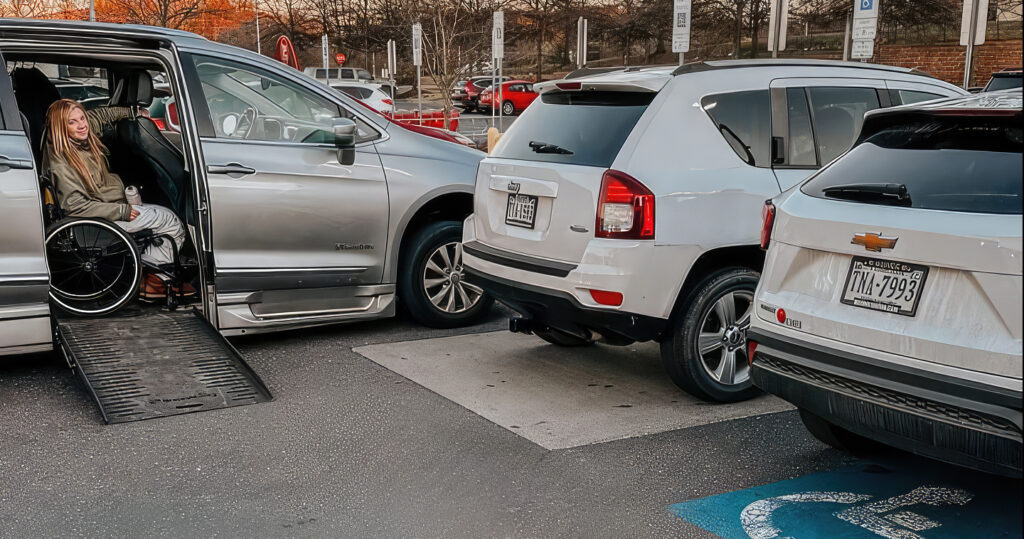
The most popular working group strives to improve accessible parking laws and regulations throughout the U.S., while raising awareness of common barriers encountered by the disability community.
The group aims to bring public attention to the importance of access aisles, the hashed lines next to the accessible spaces that allow room for people with disabilities to get in and out of their vehicles. The group is also gathering documentation on the numbers of parking placards and accessible spaces available in all 50 states.
Once the data is compiled, they will bring it to the U.S. Department of Transportation to ask for increasing the federal requirements on the minimum numbers of accessible spaces. “We’re hoping [that] showing the numbers will really create change. Going about such a big issue is tricky — [you‘ve] got to break it down and have real goals,” says Shelley Jaspering, a C7 quadriplegic and member of United Spinal’s Iowa chapter.
Learn more about United Spinal’s Working Groups.
Support New MobilityWait! Before you wander off to other parts of the internet, please consider supporting New Mobility. For more than three decades, New Mobility has published groundbreaking content for active wheelchair users. We share practical advice from wheelchair users across the country, review life-changing technology and demand equity in healthcare, travel and all facets of life. But none of this is cheap, easy or profitable. Your support helps us give wheelchair users the resources to build a fulfilling life. |


Recent Comments
Neil on A Safe, Effective Reusable Catheter System
Richard Crumb on A Safe, Effective Reusable Catheter System
Richard Crumb on A Safe, Effective Reusable Catheter System