



Spinal cord injury can be the unwanted gift that keeps on giving. Secondary complications and pain can be variable and sometimes progressive, especially for people who develop a syrinx or tethered cord. In these cases, finding a neurosurgeon trained in diagnosing and treating these difficult conditions — ideally with exceptional experience and a mindset to try conservative treatment options first — can be essential for maintaining function and quality of life.
Arguably the two most renowned SCI-focused neurosurgeons of the past few decades have been Dr. Scott Falci, formerly associated with Craig Hospital, and Dr. Barth Green, professor and chair of University of Miami Miller School of Medicine and co-founder of The Miami Project to Cure Paralysis. But Dr. Green retired his scalpel in 2021, and Dr. Falci’s office is no longer at Craig Rehab, where for decades he was a mainstay. He’s no longer even mentioned on the Craig website.
So where have the SCI neurosurgeons gone? And what options will people have moving forward?
Still Operating
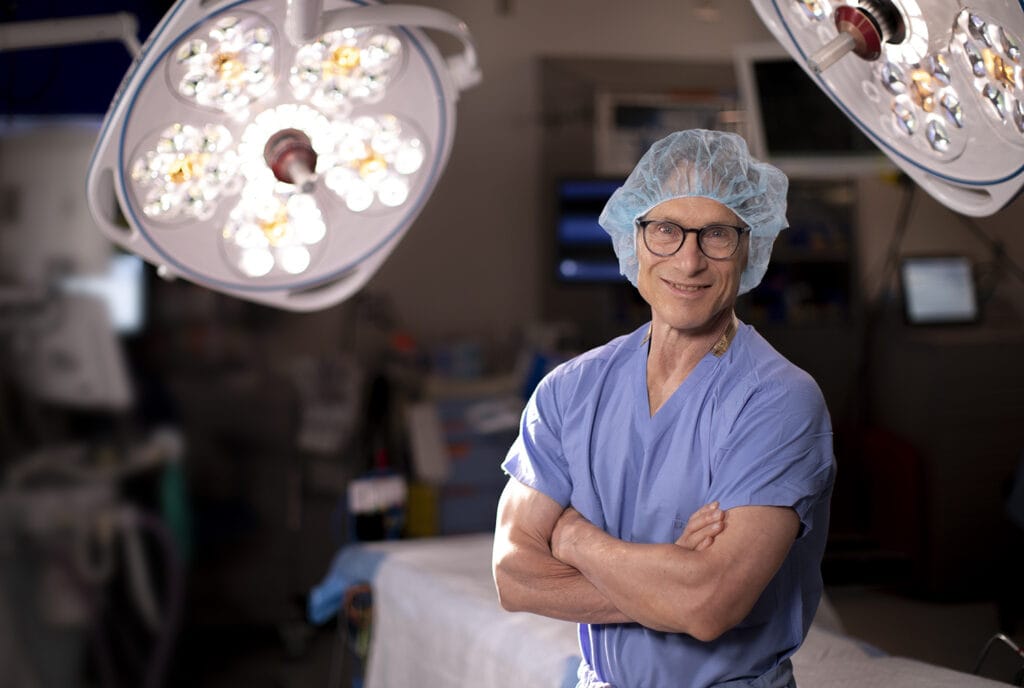
The great news is that although Dr. Falci is no longer affiliated with Craig Hospital, he is still performing surgery. He recently moved to a new office across the street from Swedish Medical Center in Englewood, Colorado — where he has always performed his surgeries. Better still, he is passing on his knowledge and skill by creating an institute for treating conditions that can occur with chronic SCI. “I’m not ready to retire yet, but I came to the realization that I need to pass my 30 years of experience on to others,” he says. “There haven’t been a lot of neurosurgeons that focus on chronic spinal cord injury. It’s a real issue globally. Since we get calls from patients from around the world, the only way we can treat them is if their healthcare system can send them over and pay for their care.”
The specter of spinal surgery is scary enough on its own, but what do you do when you can’t find an experienced surgeon to operate?
To accomplish this, he has partnered with HCA Healthcare — the parent corporation for Swedish Medical Center — to form The Falci Institute for Spinal Cord Injuries. He says the clinic will try to figure out nonsurgical ways of treating a condition, such as working with a physiatrist, physical therapist or medications, incorporating world-class surgical intervention when appropriate. “I also plan to keep doing cutting-edge research, including in new, nonopiate medications to treat neuropathic pain.” A vital part of this is that Falci will be passing on his surgical skills by recruiting and training the next generation of neurosurgeons focused on chronic SCI.
Complications from a Syrinx
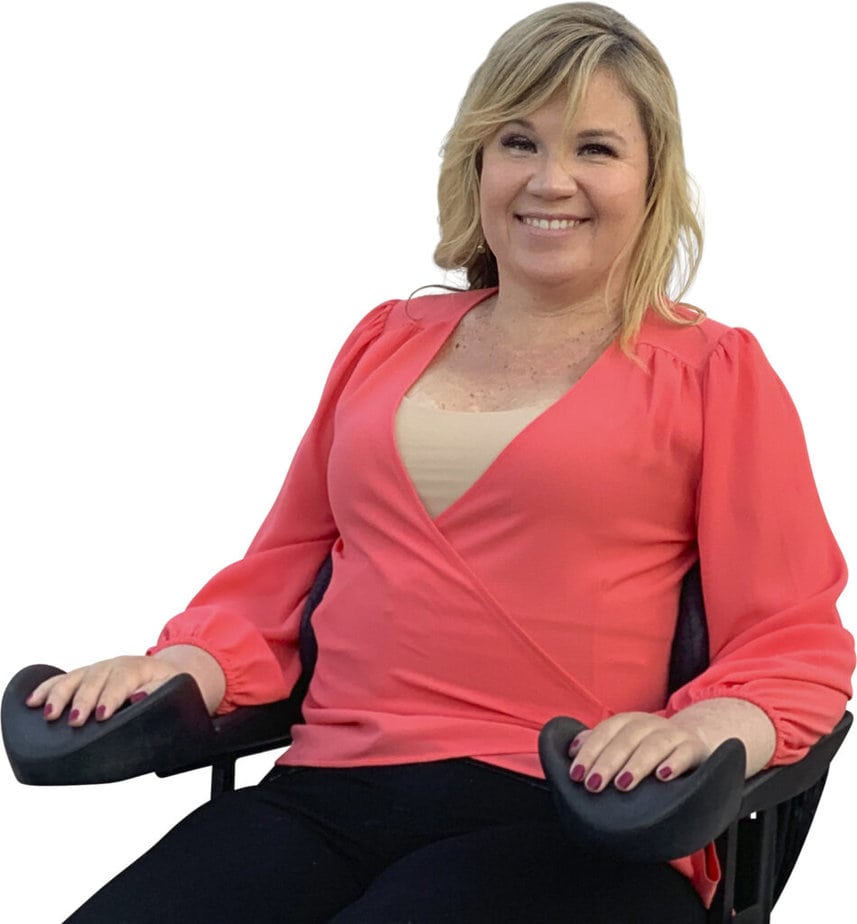
One of Falci’s most recent patients is Brook McCall, 42, in her 20th year as a C4 complete quad. During her initial rehab stay at Craig, McCall was informed that she had a small syrinx at her injury site and that she should keep a close eye on any changes in sensation, spasms, or difference in pupil size — all symptoms of problems with a syrinx. In 2015 she started having new, increasing back pain below her level of sensation and full-body spasms.
In 2016 she saw several neurosurgeons at a top hospital in Oregon. “The first neurosurgeon said it is likely this will progress to the point of needing a ventilator, and he said he wouldn’t touch it because ‘there was no hope of her walking.’ Another recommended I put off surgery until I had difficulty breathing and swallowing, which left me feeling boggled and bewildered without any guidance,” says McCall. “As a Craig alum, I knew of Dr. Falci’s team and went to see him in October 2019.”
Falci’s testing showed she was losing sensation, and he said — given her injury level — that surgery would carry a high risk of complications, so she should try treating the symptom with medications. “When I diagnose somebody with a chronic spinal cord injury who is having pain, spasticity, sweating, a syrinx or whatever, I rely on my experience working with this population,” says Falci. “It requires a mix of experience, science and art to figure out a diagnosis and a treatment plan that balances the best way to treat the condition with what’s in the best interest for the patient. This may be through a physiatrist, physical therapist, medications, or surgery when it is appropriate.”
The pandemic put off McCall’s next meeting with Falci until September 2021. “By this time my symptoms were to the point where my quality of life was suffering,” says McCall, “and the syrinx now extended from C4 to my brainstem [the critically important control center linking the brain with the spinal cord], so I decided it was worth the risk.”
Dr. Falci did her surgery in early December 2021. The surgery involved the removal of the back of C1 and C2 — a double laminectomy — and extensive untethering of the spinal cord, but that didn’t open up the syrinx pocket. “Often when I untether the cord, I can see the syrinx collapse right before my eyes,” says Falci. McCall wasn’t so fortunate, so Falci put in two shunts and expanded the space inside her spinal cord to drain the syrinx and keep it from returning.
“I ended up with 200 microsutures on my spinal cord and a scar from below my injury up into my scalp,” says McCall. The surgery alleviated newer, more recent symptoms above her level of injury, including hypersensitivity, pain in her neck and scalp, neck weakness and muscle fatigue. The rest of her symptoms and pain are the same, except she has fewer spasms in her legs. “The easing of leg spasticity shows there is potential for improving older long-term symptoms,” she says.
At six months post-surgery, McCall reports some residual soreness when turning her neck, and she feels chronically fatigued. “I see slow improvement, and I’m coming to terms with my new normal,” she says, adding that the surgery and recovery have been substantially harder than her initial injury. “But being on the other side of things without that weight is huge and makes the surgery a success. I’m alive. I can breathe, and I’m no longer terrified that a tiny fluid-filled sac is going to take me down.”
Finding a Seasoned SCI Neurosurgeon
What if you are far from Colorado and need SCI-related neurosurgery? “Symptoms that indicate potential syrinx problems are not that common, so not many neurosurgeons have as much experience in diagnosing and operating on them as Doctors Falci and Green do,” says Bernadette Mauro, director of information and resource services for the Christopher & Dana Reeve Foundation’s Paralysis Resource Center. “But a great place to start is contacting one of the 18 SCI Model System rehab centers and the teaching hospitals that are affiliated with them. I know that University of Pittsburgh, University of Maryland and Johns Hopkins do DREZ surgeries [Dorsal Root Entry Zone — see “Terms” below]. However, when considering a neurosurgeon for diagnosis or surgery, I tell clients to ask how many untethering and syrinx surgeries the doctor has done. If it is less than 50, I encourage them to continue looking.”
To put things in perspective, Falci has performed thousands of spinal cord surgeries, including DREZ surgery for neuropathic pain, and over 1,600 surgeries for syrinx.
Neurosurgery Vocabulary
Tethered Cord: A formation of scar tissue on the spinal cord at the injury site, which can lead to the formation of a syrinx.
Syrinx: Short for syringomyelia, a fluid-filled cyst that can form on the spinal cord. With SCI, it forms above the tethered cord. It can enlarge and cause a wide variety of symptoms, including an increase of pain or neuropathic pain, new or increasing blood pressure regulation problems, increase in area and/or intensity of spasticity, weakness, and progressive loss of sensation and/or movement.
DREZ surgery: Dorsal root entry zone surgery is intended to relieve severe neuropathic pain. Using a surgical microscope, the surgeon views the damaged spinal nerve roots and creates precise lesions with radio frequency, laser, ultrasound or microsurgery.
Dr. Uzma Samadani, staff neurosurgeon for the Minneapolis VA Medical Center and president and CEO of US Neurosurgery Associates, agrees with Mauro when it comes to finding a neurosurgeon. Samadani has been practicing neurosurgery for 15 years and has performed approximately 150 syrinx surgeries to date. “If I had a syrinx, and I wanted to find a good surgeon to untether a cord to treat a syrinx, I would start by asking major spinal cord rehab centers which surgeons they work with, because they will usually know the neurosurgeons who are making people better,” she says. “Certainly experience is important, but there is also a component of listening to your patients that is vital.”
Dr. Steven Kirshblum, chief medical officer at the New Jersey-based Kessler Institute for Rehabilitation, agrees with both Mauro and Samadani. “I have tremendous respect for Dr. Green and Dr. Falci. In fact, Dr. Falci co-authored the chapter about syrinx in my book, Spinal Cord Medicine,” says Kirshblum, “That said, every major SCI center has a neurosurgeon that they use who is extremely competent. I also think that every center will agree that Dr. Falci is very well respected, but every case doesn’t go to him. A thorough workup is needed, and then a decision is made on what to do and which surgeon is best.”
When looking for a neurosurgeon, it is important to ask about outcomes in addition to number of syrinx surgeries. “Just because somebody thinks they can treat a tethered spinal cord doesn’t mean they have had the experience and their outcomes will be good,” says Falci. “Unfortunately, it is very common to find that there have been multiple surgeries in attempt to untether the spinal cord that have been unsuccessful, and ultimately the patient has been told ‘there is nothing we can do for you.’ The tethering becomes more severe with each surgery, so it becomes closer and closer to being [unfixable] because the scarring becomes worse with each attempt. The goal of the center is to have fellowships to train more people who know how to do this.”
McCall’s advice for others going through a syrinx is twofold: “First, do not settle,” she says. “There are very few surgeons with true expertise in this area, but [those without suitable expertise] will still perform your surgery. This is not an experience you want to go through more than once. At the same time, if you and your surgeon have discussed this and decide you are ready, don’t wait.”
Support New MobilityWait! Before you wander off to other parts of the internet, please consider supporting New Mobility. For more than three decades, New Mobility has published groundbreaking content for active wheelchair users. We share practical advice from wheelchair users across the country, review life-changing technology and demand equity in healthcare, travel and all facets of life. But none of this is cheap, easy or profitable. Your support helps us give wheelchair users the resources to build a fulfilling life. |


Recent Comments
Neil on A Safe, Effective Reusable Catheter System
Richard Crumb on A Safe, Effective Reusable Catheter System
Richard Crumb on A Safe, Effective Reusable Catheter System