


Why Some Wheelchair Users Wish They’d Chosen a Colostomy Sooner
September 1, 2022
Jenny Smith
Mentioning a colostomy in an online forum is akin to yelling “Fire!” in a crowded space. Suddenly nearly everyone is mobilizing and has something to say. It makes sense, because managing a bowel program is one of the trickiest, most frustrating, and mentally consuming aspects of life with an SCI. Ever-lengthening routines, incontinence, hemorrhoids, and numerous other issues leave many wheelchair users looking for an alternative to suppositories, enemas, and stimulation.
Between the poop emojis and jokes, most comments fall in two very different camps: “It’s the best decision I’ve ever made,” and “I’d never wear a bag of crap on my belly.” When I started having issues with incontinence in 2008, I leaned towards the latter, probably because I never spoke with anyone who actually had a colostomy and took the naysayers’ comments at face value.
I ended up going a different route (see “My Story” below), but a part of me wishes I had taken the time to listen to my peers and better understand how something so initially unappealing could be so beloved by so many users.
Ostomy Vocabulary
Colostomy:
A colostomy is placed in the large intestine, and output is typically formed or solid.
Ileostomy:
An ileostomy is placed in the small bowel. Output is liquidy.
Wafer or Flange:
The adhesive portion of the colostomy appliance. Wafers may be pre-cut or cut-to-fit for the size of the stoma.
One-piece system:
The wafer and bag/pouch are one piece. The entire appliance is removed when changing out a bag. May not be the best option for people with sensitive skin or limited dexterity.
Two-piece system:
The wafer and bag are separate. The wafer can stay on multiple days, while the bag can be disposed of or reused.
Stoma:
The surgically created opening from the bowel to the abdomen.
A Complicated Decision Made Easy
Steve Harris, a T9-10 incomplete para, returned to work as a TV news director six months after his injury while still adjusting to his bowel program. In his first two years post-injury, he used every sick day to deal with bowel accidents that occurred at work.
Harris saw a gastrointestinal doctor, increased his fiber and switched to Enemeez suppositories. He finally asked about a colostomy, and his doctor referred him to a colorectal surgeon. “It was a hard decision because it’s a major life change, but ultimately it wasn’t too difficult to make because I was so frustrated with my existing bowel routine,” he says.
“The colostomy was a game-changer when it came to relationships. It was the first time I was in a relationship where I allowed myself to actually fall in love with someone. I couldn’t do that before.”
— Racheal Palmer
The surgical procedure for a colostomy involves bringing part of the colon through the abdominal wall and stitching it to the outside of the abdomen. An “end” colostomy uses the end of the colon and is permanent, while a “loop” colostomy opens a hole in the colon and attaches it to the abdomen; this procedure is typically reversible. Both procedures create a stoma where stool is eliminated into a bag, usually worn full time on the abdomen.
Barring complications, the surgery can usually be done laparoscopically, minimizing the incision and making for easier healing. Many SCI recipients reported minimal or no pain post-op. Harris wasn’t as lucky with his loop surgery. “I was in the hospital for about four days, then they sent me home with a home health nurse,” he says. “I had developed a wound where the skin around the edge of the stoma separated. They extended my home health, which was really helpful because I had a hard time finding products that would work for me.”
At that point, Harris started to doubt his decision. “After surgery, just looking at the bag, then having the problems with products, I didn’t have a lot of optimism,” he says. Surgeons say to expect five to eight weeks to heal as the stoma shrinks and your digestive system adjusts to its new reality. In six weeks, Harris was back at work. Once he found the right wafers (attached to the abdomen to hold a bag) he could go through his day with confidence. He’s only had one major blowout, which he managed to clean up at the office. No need to take a sick day.
“I spend barely any time on it in the morning. When I change the wafer every four to five days, it only takes about 20 minutes. It frees me up to do everything that I want to do during the day,” he says. “It has worked out and been a really positive thing for me.”
My Story
For the first 20 years of my injury, my bowel program worked rather well. As a quad, I had to have help, but it was manageable. Around 2008, I started having accidents. I’d have to leave wherever I was — work, volunteering, sports — and get cleaned up. I eliminated everything I could from my diet. I saw five gastroenterologists, none of whom had answers or solutions.

I learned about continent ileostomies from another person with an SCI. The two most common procedures are the Kock Pouch and BCIR (Barnett Continent Intestinal Reservoir). Both take bowel tissue to form a pouch and stoma, and you empty waste from the internal pouch into the toilet using a catheter. The surgery and mechanics are similar to those of a Mitrofanoff procedure, which allows you to empty your bladder with a catheter inserted into a stoma. However, with a continent ostomy, the risks are greater than a Mitrofanoff and involve more possible complications. The biggest concern is the lack of knowledgeable surgeons if something goes wrong.
I shared the information about the continent ostomy with my urologist, rehab doctor, primary care and two gastrointestinal doctors. The colorectal surgeon said he wouldn’t recommend it due to the high risk of complications, but I was desperate and proceeded with the surgery.
One surgery tuned into five surgeries, fifteen weeks in the hospital, and two weeks of rehab to regain my strength.
I don’t regret having the surgery. I’m now completely independent with my bowel program. However, I continue to experience complications such as pouchitis, fistulas, sodium and potassium deficiency, and dehydration.
I wish I had taken the time to consider a colostomy.
Read more about The Pros and Cons of a Continent Ostomy with SCI at jennysmithrollson.com/the-pros-and-cons-of-a-continent-ostomy-with-sci.
—Jenny Smith
Increased Independence
For Racheal Palmer, a C6 quadriplegic from Texas, a colostomy solved her growing problem with incontinence and increased her independence. For the first 14 years after her injury, Palmer relied on her mother to assist with her bowel program. “I’ve always been afraid that if my mom dies, who am I going to teach how to do digital stimulation?” she says.
On top of that, in 2013, she started having bowel accidents. “There was one year where I had diarrhea every single day,” she says. “I had an accident at least two or three days every week.” She modified her diet and eliminated anything that might trigger an accident. “I was terrified to eat. If I had a family function to go to, I’d plan ahead by not eating. I was so scared of having an accident. And I just wanted to have a beer. One beer without fear.”
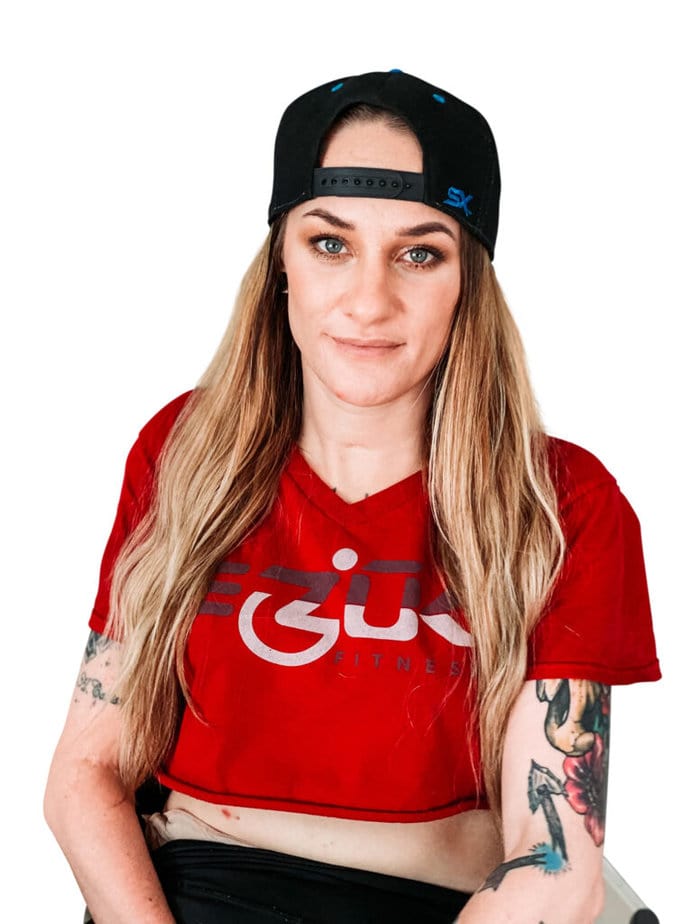
Palmer says her positive experience with her own urostomy eventually helped ease concerns about a colostomy. “It got to the point where it was an easy decision,” she says. “I was like, I’m over this.”
Her surgery went smoothly, but her recovery was complicated by a surgeon who refused her pleas for any sort of pain medication. While her bowels worked better almost instantly, Palmer struggled with dysreflexia and discomfort for a few weeks.
Even with the lack of hand function, Palmer was changing her bags days after her surgery. She is now completely independent with her bowel program. “I don’t have to worry now about going to the bathroom. I can take care of myself.”
Since the colostomy, Palmer can eat or drink a beer or glass of wine without fear. “Not once have I regretted it. This summer, I get to eat ice cream!”
Pros and Cons
Colostomies can be a boon for your independence even if you can’t manage them with your own hands. Unlike Palmer and Harris, Shawna Buchannan didn’t choose to get a colostomy. It was her doctor who insisted on the procedure to prevent infection after flap surgery for a stage IV pressure wound.
Despite 15 years of doing a two-hour bowel routine, Buchannan, a C5 quad, had been adamantly opposed to a colostomy. “My only regret now is that I didn’t get it sooner,” she says. She needs help changing the bags but no longer has to plan her life around going to the bathroom. The surgery has given her more time and made caregiving easier. “My boyfriend learned how to change the bag. It’s a lot better than someone putting their finger up your butt,” she says with a laugh.
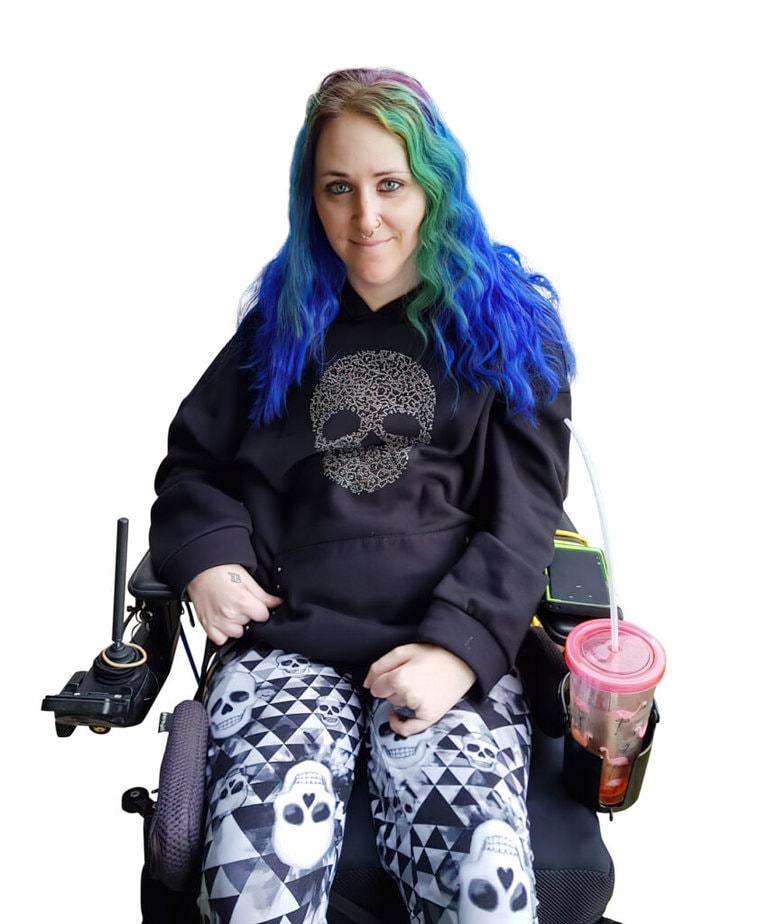
Even though time savings, increased independence and easier caregiving are common outcomes, it’s important to remember that colostomies aren’t all sparkles and sunshine, and they aren’t guaranteed to solve all your problems. Physically and emotionally adjusting to having a stoma can be difficult.
For Harris, who has been married for 28 years, self-image wasn’t as much of a concern as it is with many. “It wasn’t a big deal, and, honestly, I didn’t have the best body image anyway.” Before her colostomy, Palmer had been so fearful of having a humiliating accident that she didn’t date for 10 years. The increased confidence that she would be continent more than made up for any body image concerns post-surgery.
“The colostomy was a game-changer when it came to relationships. It was the first time I was in a relationship where I allowed myself to actually fall in love with someone. I couldn’t do that before,” she says. “My sex life improved because I didn’t fear the humiliation of having an accident.”
As she moved from her 20s into her 30s, she became more comfortable with her body the way it is. “I’ve gotten to the point where if a colostomy bothers a man, then that’s fine. I’ll find someone who can accept me as I am.”
What about the odor? While there is no way to escape the fact that poop smells, today’s pouches do a good job of concealing the smell, and there are a number of products that help reduce the odors that escape when changing bags. “I don’t have an odor that I have to deal with except for when I’m changing the bag,” says Harris. “Generally, when everything’s working like it’s supposed to, I don’t have any smell to worry about.”
One thing often not mentioned when discussing ostomies is the sound. Any gas you have will now pass through the stoma. The result can be unsettling and surprisingly loud, but most people learn to live with it.
Irrigating a Colostomy
Irrigation can be a good option for people looking for more control of their bowel schedule. Flushing the bowels with water via the stoma mimics an enema and evacuates them. With irrigation, little to no output may occur for 24 hours. Some people may even be able to “cap off” their colostomy, using a small cap instead of a bag.
Kimberly Thomas chooses to irrigate her colostomy so she can completely clear out her system before starting the day. It also keeps her bowel movements on a regular schedule, giving her more control.
To irrigate, Thomas, a T8 paraplegic, uses an irrigation kit, which includes a large bag for water, tubing, and a sleeve—or large bag—into which the waste is drained. She uses 600 to 1,000 milliliters of warm water and, in a trick she learned from an ostomy nurse, adds 25 cubic centimeters of unscented castile soap to help her colon contract for a better bowel movement.
She hangs the bag of warm water over her head, removes her regular closed-end pouch from the flange on her body and attaches the irrigation sleeve, which allows access to the stoma. She then places the cone tip of the tubing into the stoma and opens the clamp to allow the water to flow. It takes about five minutes for the water to go into the colon. It takes 30 to 45 minutes for the water and waste to drain from the colon.
James Lee, a C5 quad from Oregon, accepted the smells and sounds as small drawbacks compared to the relief his colostomy brought after years of bowel issues. “From day one after my injury, I had bad motility with my gut,” he says. “I kept getting backed up, and it just started hurting.” He tried diets, cleanses, juices — anything and everything to relieve his constipation and ease his discomfort. “I committed to everything I thought might help, but nothing did,” he says.
His gut issues landed him in the ER multiple times and came to dominate his daily life. In 2018, after talking with his doctors and many in the SCI community, he got a loop colostomy.
“I instantly loved it,” he says. The colostomy made his days easier and provided relief, but after about two years he started having issues again. His bowels simply weren’t moving enough. More hospital visits and more discomfort forced Lee to consider his options. After much deliberation and consultation, he opted for surgery to remove his large intestine and get an ileostomy.
In the procedure his surgeon connected his small intestine to the existing stoma and removed the feces-filled bowel. Though the ileostomy presents a number of new management issues and possible complications, it’s hoped that connecting higher up in the digestive tract will improve motility. Lee isn’t sure what to expect, but he is optimistic. “The biggest fear you have is the fear of making the wrong move,” he says. “I still feel like I have a huge question mark. I know I did something that needed to be done, but I don’t know if it’ll make me feel better.”
Harris and Palmer summed up the consensus.
“A colostomy isn’t for everybody,” says Harris. “It’s a big surgery and commitment. But if you’re having problems with the bowel routine, and you can’t seem to get it under control, it’s a perfectly legitimate option.”
“The only thing I would change is doing it sooner,” says Palmer. “Now, it seems silly that I waited this long. Life could have been a lot easier. This summer I’m planning on going to California to visit friends. I’m not scared to travel! This has opened up my life.”
Support New MobilityWait! Before you wander off to other parts of the internet, please consider supporting New Mobility. For more than three decades, New Mobility has published groundbreaking content for active wheelchair users. We share practical advice from wheelchair users across the country, review life-changing technology and demand equity in healthcare, travel and all facets of life. But none of this is cheap, easy or profitable. Your support helps us give wheelchair users the resources to build a fulfilling life. |


Great description of pros and cons of getting a colostomy, though you don’t mention irrigation as a way to manage it. With irrigation, it can eliminate constant output during the day and lower the chance of gas. There are also some great clothing hacks that can help (especially women, who want to wear a variety of clothes) so it’s less noticeable or not at all.
Thanks Tricia, for mentioning irrigation. I am now 76 and used a chair 46 years. Have had a colostomy 43 years. With irrigation I did not use a bag for over 37 years. After a stoma revisal though I wear an empty bag, because a larger stoma has so much mucus, I cannot keep a bandage over if. People need to know this option. There are sleeves.that drain directly into
toilet bowl. Anyone Independant with hands can do this.
Hello Everyone, my dad was recently paralyzed from a dirtbike accident (November 2022) nipples down. He is having the absolute worst time getting any type of normal bowel program that works. My mom is his caregiver. It is effecting them both mentally and physically. Any tips or advice? Is it to soon to be talking colostomy?
My dads story is posted below.
https://www.gofundme.com/f/chris-friend-jr
I was told it would make my life easier by the surgeon. I had some doubts. I’m a T-4 complete Para and work on cars. I told them how i move around and everything thing i do working on them. They said that you can do anything with one. What they fail to tell you is that you are highly susceptible to getting a hernia. Then, what they then tell you well you shouldn’t do that. Plus, they cause spasms right out of surgery. The surgery to repair it is complicated and not a sure thing to fix it.
I ended up with a parastomal hernia, diversion colitis and it has completely thrown off what was a workable bowel program. I’ve developed IBSc and IBSd . 15 years down the road in a 44 year t2-t3 injury the colostomy has been more disabling than my initial SCI.
I ended up with a parastomal hernia and diversion colitis. It is a decision I deeply regret as a t2-t3 paraplegic.
As a T4 paraplegic, 46 years post spinal cord injury, I had to have a colostomy because I could no longer make a clean transfer onto the commode and I was having problems with a decubitus ulcer. I have to empty my colostomy bag multiple times during the day due to gas, and stool starts filling the bag in the evening, sometimes causing the seal to break as I have to push stool out of the bag. I had to change my pants from Dockers with a belt to sweat pants with an elastic waist band, so I no longer have a more formal look. I’m afraid to go out in the evening because the seal might break and the need to empty the bag at least once an hour. Though the old way took an hour every other day, it now takes more time to empty the bag during the day and change the bag every day than the old way, when I didn’t have accidents between bowel movements.
Should have also mentioned the importance of finding a good ostomy nurse (usually certified as a CWOCN) to see you BEFORE the surgery and help mark the stoma site with you sitting in your chair, and who will follow you post-op and provide you with recommendations for appliances and management of problems such as peristomal skin problems or constipation.
I am a T-7 spinal cord injury, paraplegic, I myself have an Ileostomy for the past 10 years. I am very independent having this Ileostomy in my bowel program. It’s a lot easier to manage that doing it the other way with medicine and trying to go yourself in the bathroom.
By yourself, you have a device on your stomach and you go when you please. I am happy I can do it this way than the way I was trained to do it after my accident. I wish I could mention this at my spinal cord injury meeting I attend at The medical college of WI, Froedtert Hospital spinal cord injury meeting I try to attend. I am sure the more who know about this the better.
Sinead, I am a T6-7 paraplegic from SCI for 39 years. I have always used a suppository for my Bowel Program and it’s been quite successful for that period of time. Starting in January, 2023 I started having motility issues in my program where the stool is not moving down. I’m going to try the Peristeen technique and also thinking of an ileostomy. How was your surgery and recovery and did it take long for your system to adjust? I have so many questions regarding this surgery. I would like to be able to contact you through email if that is agreeable to you. Thank you for posting.
Hey Ilene, I switched to a Mace Or appendicostomy and I have regular bowel programs now.