



Three years after becoming a C5 quadriplegic, Karl Lewis felt lost and out of touch. “I felt the SCI took away my complete identity,” he says. “All of a sudden, I was consumed by ‘I can’t do this.’ I was focused on what I had lost; specifically, the freedom to do all the activities that provide that dopamine-feedback reward you get out of living.”
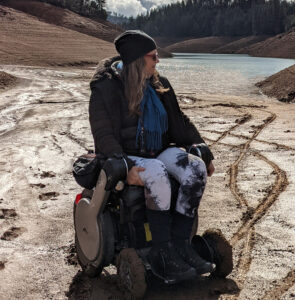
In his quest to rediscover his pre-injury excitement and joy, Lewis investigated psychedelics. He experimented with psilocybin and LSD and found the mind-expanding benefits he’d hoped for and more side effects than he wanted. “They reframed my mindset and helped me appreciate and find joy and excitement in things I was already doing,” he says. “However, the length of the trip and the adverse side effects were way too much — too much spasticity and difficulty with body temperature.”
Seeking something with the same benefits but fewer drawbacks, Lewis turned to the hallucinogenic tryptamine DMT, short for N-dimethyltryptamine. “When I exhaled after the third hit of DMT, I was blasted through a multi-colored tunnel and laid out on an altar in a huge dome, covered with geometric figures and outlines of Zeus and Poseidon. There was a higher being in control. I was just there — no thoughts, no internal dialogue. I shifted through more tunnels, which led to multiple experiences ranging from walking in the gentle surf on a beach to looking up from my own grave. In the last experience, several female humanoid creatures gave me a big hug, and the trip was over. I was back in my body.”
The psychic journey seemed several lifetimes long to Lewis, yet only 12 minutes elapsed. It left him feeling grateful and more aware. “The trip gave me a profound sense of introspection that was so spiritual,” says Lewis, now 37. “I thought if this is anything like what true believers gain from going to a church, I get it. I can see why people seek out religion.”
For thousands of years, indigenous cultures have incorporated the psychedelic powers of plant medicines in their religious practices to find spiritual connections, healing and guidance. Since the 2000s, there has been a resurgence of research into these substances by the scientific community, studying everything from their ability to help with depression and trauma to chronic pain to acceptance and comfort with death in terminal cancer patients.
This research, along with a growth of popular literature and culture investigating the possible benefits of psychedelics, is softening long-held stigmas and resulting in more people following Lewis’s tracks. In addition to increased spirituality, self-reflection and inner knowledge, psychedelics offer many benefits with extra appeal for people living with SCI/D trying to accept and reframe a new, often physically-limiting reality.
To find out more, I interviewed psychonauts with varying levels of SCI and experiences with different drugs about what drew them to psychedelics and what they experienced.
A New Way to Adjust
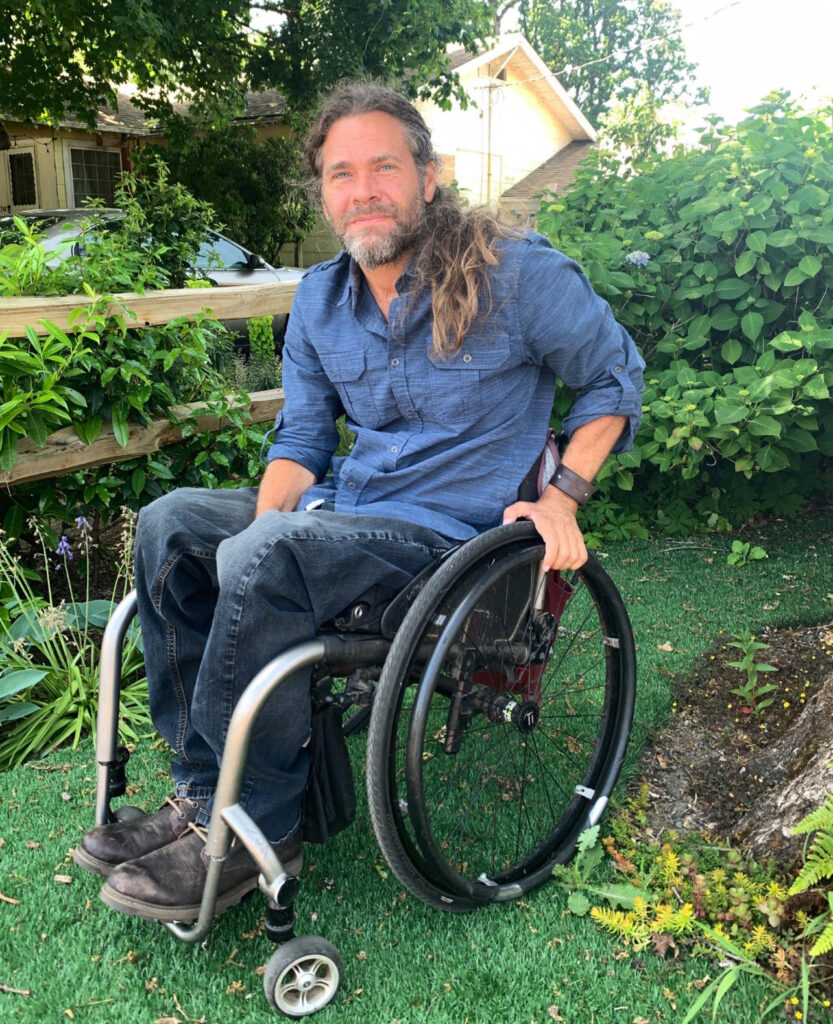
Like Lewis, Jason Holdahl struggled to adjust after a diving accident made him a C6-7 quad. “About eight years after my injury, I was going through a lot of emotional pain from the frustration of being paralyzed, and I was taking this out on my family and drinking more than I should,” says Holdahl, now 46.
As part of his search for ways to change his mindset, Holdahl read Michael Singer’s The Untethered Soul. Singer’s book offers a step-by-step guide to help readers understand their emotions and actions and change for the better. “I read it, and it seemed like psilocybin would put me on a spiritual path to ease this pain,” he says. He hadn’t tried psychedelics before his injury 13 years ago, so he started slowly with microdosing (see “Guide to Psychedelics”, below). “Spiritually, psilocybin removed my ego and enabled my spirit and heart to control my thoughts,” he says. “The journey gives you lessons, whether you want them or not, and unlike reading a concept or lesson in a book that may stay with you for a week or two and fade, this knowledge becomes part of you.”
His experience with psychedelics catapulted him into being present in the moment and helped him not get bogged down with trivial things. “I’m much more present and in the moment for my kids, my family, and my life,” he says. He also credits the experiences with removing his interest in drinking alcohol. He has only done psilocybin four times since his initial trip. “I try it when I come upon an idea or a concept from a self-help book about processing emotions or healing that I want to explore in-depth.”
Both Holdahl and Lewis warn that psilocybin use can produce severe muscle spasms, including muscle-tightening spasms around the ribcage to the point where breathing becomes difficult, especially for a quad. “When I do psilocybin, I plan ahead and lie down on a surface that protects my skin, which makes breathing easier,” says Holdahl. “The spasticity is so much that it causes me to heat up, so I have a fan blowing on me and a tub of cool water in case I get too hot.” For Lewis, the spasms and overheating created so much discomfort and potential danger that they outweighed the benefits of psilocybin.
Guide to Psychedelics
Ayahuasca: A hallucinogenic drink made from plants native to South America that produce a psychedelic experience lasting four to six hours. It has a slow come-up, peaks and plateaus, and slow comedown.
DMT (N-dimethyltryptamine): This naturally occurring hallucinogen can be found in plants and animals and reproduced synthetically. It has a rapid onset, intense effects and a relatively short duration.
Ibogaine: This potent psychedelic is made from the root of the African iboga shrub. Experiences are described as intense and can last up to 12 hours. It is frequently used as a one-time detox for a range of drugs, from opiates to tobacco and alcohol.
LSD (lysergic acid diethylamide): This synthetic hallucinogen is made from a substance found in ergot, a fungus that infects rye. Effects begin within 20-90 minutes and last up to 15 hours.
Microdosing: Taking a very low, sub-hallucinogenic dose of a psychedelic drug (like LSD) may improve mood, induce physical and mental stimulation, and encourage creative thinking without producing full hallucinations.
Psilocybin: This naturally occurring psychedelic compound found in certain species of mushrooms comes in natural and capsule forms. Effects kick in about half an hour after taking and last approximately four to six hours.
A Trip-worthy Cocktail
Dave Moore used psychedelics recreationally in his teens but found the spasms to be too painful when he tried after his SCI. Moore, 60, and now in his 41st year as a T3 para, reembarked on his psychedelic journey while working to process rage caused by childhood trauma and the many impacts of SCI on his daily life. “I was in service of my ego and needed to prove to the world I could work within the ‘norm,’” he says.

In 2015 he traveled 30 miles down a river to a Peruvian village in the Amazon rainforest for a shaman-guided series of journeys while taking ayahuasca. Ayahuasca is a hallucinogenic drink made from native plants that produce a psychedelic experience lasting four to six hours. It has a slow come-up, peaks and plateaus, and slow comedown. “For me, a longer trip gives me time to integrate the experience,” says Moore. He explains that, like other psychedelics, ayahuasca causes spasticity, but not as much as psilocybin.
Moore participated in a three-night ceremony with a group of other people, sitting on the floor of a yurt. “They give you a cup of ayahuasca, which is about an ounce of bitter-tasting liquid, sort of a dandelion taste,” he says. “You sit there, and the shaman starts singing the Icaro medicine song. When the ayahuasca took hold, it felt like there was a massive tree in the middle and we were all lying in the roots of the tree, fully held, fully nurtured.”
The ayahuasca took Moore through traumatic events in his life — whether he wanted to visit them or not — in a way that was so real it was as if he was re-living it. He found the experience more beneficial than his time with western therapists. “If you are open to doing it, you can get about 20 years of psychotherapy in about half an hour of an ayahuasca trip, but it is extremely intense,” he says. “When the journey was over, my trauma never came back. The ayahuasca and ceremonies helped me find my place in the universal field and that I am part of the universe, just as we all are.”
Since his Peru trip, Moore has participated in two more ayahuasca ceremonies. “After the third time, I felt that the drug had enabled me to complete the psychological and spiritual work I needed, and for now, I don’t see a reason to do more,” he says.
Ayahuasca is a regular part of Scot Hollonbeck’s life since he discovered its benefits on his own 2016 trip to Peru. After a long career as a wheelchair athlete, he felt something was missing as he approached his mid-40s. “When I retired, the need for something more and the need to reconnect with nature became louder, and football games and booze and work wouldn’t silence it or fill the void,” says Hollonbeck, now 51 and in his 37th year as a T10-11 para.
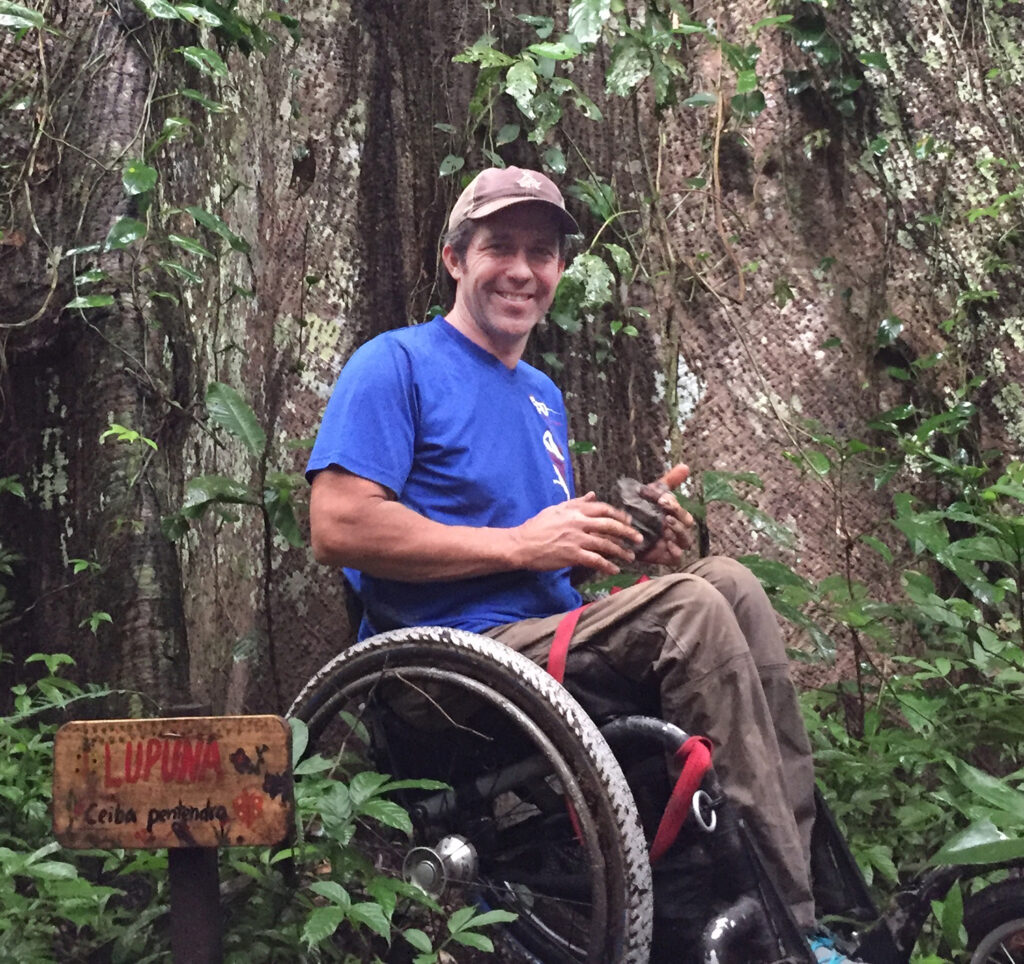
He started working with a shaman in 2013, and after partaking in various ceremonies, practicing holotropic breathing and a vision fasting, he booked the retreat to Peru. “My first experience with ayahuasca was hands down the most amazing experience of this lifetime, without a doubt,” he says. “I had a realization that I’m not this body, and I’m not these thoughts — I’m a spiritual being. I’d never defined myself first and foremost as a spiritual entity. I came away from the experience with the understanding that it’s all OK; I don’t have to be tied to anything in life. If something is bugging me, I now see it is a choice whether I let it bother me or not.”
He points out that, like all psychedelics, not all experiences are bliss. “I’ve had experiences when the ayahuasca came on, and I freaked out,” he says. “I felt I was going to die. Some people have total 100% bliss, and others have terrifying experiences.”
Still, the benefits keep Hollonbeck coming back. He schedules the ceremonies four times a year, usually around the solstices and equinoxes. “Each time I take ayahausca, I find it to be a profound spiritual experience. It is a reset for the brain, like defragging the hard drive, and each experience teaches me something new about myself and connections with the universe.”
A Solution to Pain
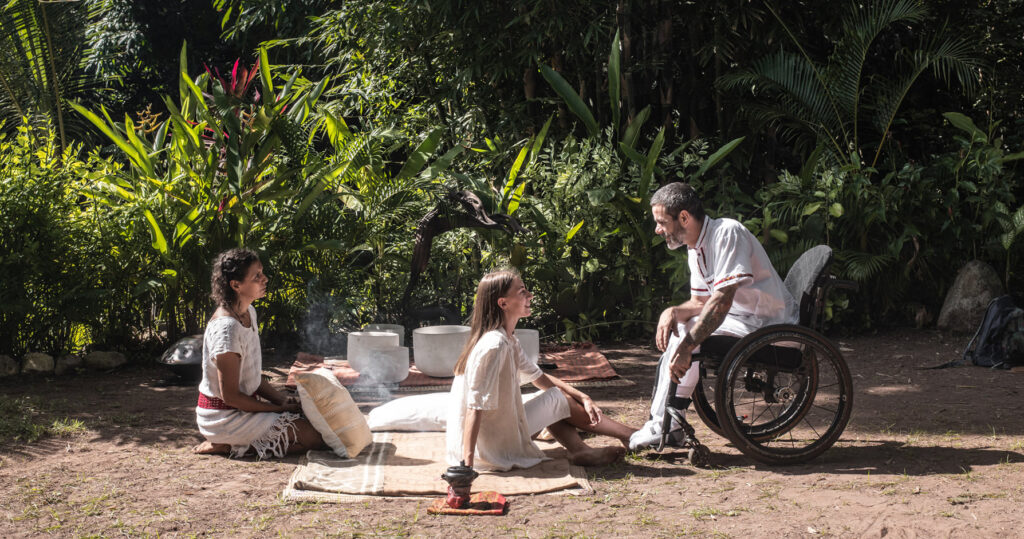
As the facilitator and cofounder of Flor De la Vida Retreat, Pete Aviles offers guidance in various psychedelic plant medicines, sound healing and breathwork. A T11-12 paraplegic, Aviles realized he had grown addicted to prescription opiates about seven years after his accident. Instead of relieving the pain, they were making it worse. While searching for detox options, he saw a documentary called Right of Passage about ibogaine (see Resources), a psychedelic made from the root bark of the African iboga shrub that enabled people to break free from addiction in one 10-hour psychedelic journey.
“Psychedelics changed the way I dealt with my injury by changing my relationship with pain, enabling me to detox from opiates and discover a spiritual connection to everything and everybody.”
Pete Aviles
Aviles already had considerable experience with recreational psychedelics and decided to travel to Mexico to do a session with an iboga facilitator. Before being accepted for a journey, he was required to undergo a physical, including bloodwork and EKG, because iboga is extremely taxing on the body. “The entire 10-hour iboga journey was very intense and forced me to face memories that I had repressed and didn’t want to deal with,” he says. “The medicine taught me some brutally hard lessons, which seemed appropriate as part of a detoxing package.”
The comedown from the trip was quite rough because he was detoxing. “The next day, I was brought to tears, as if I had just ended a terrible relationship, the relationship with opiates,” he says. “I wasn’t sick — no withdrawal — I had no craving, no post-opiate depression. It vanished in one 10-hour session. I haven’t had an interest in opiates in 10 years.” Since the experience, his pain has diminished, and there is no longer any emotion around it. “Psychedelics changed the way I dealt with my injury by changing my relationship with pain, enabling me to detox from opiates and discover a spiritual connection to everything and everybody,” he says.
At Flor De la Vida Retreat in Mexico, his guidance includes addressing DMT-containing substances. Aviles cautions that DMT is one of the psychedelics that takes you furthest into the experience. It can be a positive and touching experience but can also be scary and unsettling, with a way of waking up old traumas. He also says it can cause intense spasms in people with SCI. Like ibogaine, it is important to have a check-up for general health and potential heart or breathing issues before trying it.
Proceed with Caution
Despite the surge in interest, researchers have yet to include people with SCI in significant trials of psychedelics, so much of our knowledge of benefits and dangers for people with SCI is limited. Anecdotal evidence suggests the substances work similarly on people with SCI/D but can cause a range of physical side effects not experienced by nondisabled people. The side effects appear to change or intensify with higher level of injury and can include severe increases in spasticity, overheating and the possibility of autonomic dysreflexia.
“Everybody is different when it comes to psychedelics,” says Holdahl. He adds that some people are more prone to a ‘bad trip’ when the psychedelic brings something up they don’t know how to deal with. A bad trip can be terrifying but breathing techniques and a developed ability to let go and not fight may help ease it. “I think it is very important to do the reading and develop the tools before trying psychedelics,” he says.
Survey on Psychedelics and SCI Seeks Participants
Recently the field of psychedelics has seen a resurgence in scientific research. Although scientists have learned a great deal about the medical and psychological benefits of these psychoactive substances for the general public, there haven’t been any academic studies on psychedelics in people with SCI — until now.
Researchers at the Miami Project to Cure Paralysis are doing a study to find out how psychedelics such as LSD, psilocybin, dimethyltryptamine (DMT) and mescaline affect spasticity. They are seeking participants with spinal cord injuries who have taken these substances after their injury to fill out a survey. If you are an adult who has tried one or more psychedelics after becoming paralyzed with SCI and are interested in participating in the survey, click here.
Lewis recalls a mixed experience he had in college when he ate some magic mushrooms and drove his powerchair across campus to a party. “The first two hours were wonderful, my acute awareness of people looking at me and my power chair, and self-imposed ‘physical barrier around my chair’ and my social anxiety melted away,” he says. “Little things became miraculous, like a glass of cold water — the texture, temperature and taste were absolutely amazing.”
Then the trip became too intense. Lights and music became overwhelming. He got motion sick while driving his chair back to the dorms and stopped every 20 feet to throw up. Once safely in his dorm room, he watched concert footage and began to recover. “I was coming down around dawn and starting to overheat, so I went outside,” he says. “The sunrise was the most beautiful thing I had ever seen.”
Psychedelics are not for everybody. Most of the people I spoke with suggest if you are curious, try microdosing something like psilocybin. Starting with a full dose and realizing it is not for you can be terrifying, as there is no way to stop it, and your only hope is to ride it out. As Lewis puts it, “Do not try to jump in with a [huge] dose with anything. You have to have respect for these substances and what they bring. Done right, they can bring a great understanding of oneself, and one’s position in the world.”
“Prior to doing psychedelics, I was so fixated on being independent I would never let people help me, to the extreme point where I would rather struggle for five minutes trying to do something rather than let a friend or co-worker step in and do it in about 10-seconds,” he says. “Psychedelic experience enabled me to let go of that. I no longer have to prove to others how independent I am.”
Resources
- Flor De la Vida Retreat
- Holotropic Breathwork Benefits and Risks
- Ibogaine – Rite of Passage
- Ibogaine Treatment Study
Support New MobilityWait! Before you wander off to other parts of the internet, please consider supporting New Mobility. For more than three decades, New Mobility has published groundbreaking content for active wheelchair users. We share practical advice from wheelchair users across the country, review life-changing technology and demand equity in healthcare, travel and all facets of life. But none of this is cheap, easy or profitable. Your support helps us give wheelchair users the resources to build a fulfilling life. |


As a C7 quad I find this article to be dangerous. I ate mushrooms once and had terrible spasms, had continual bladder leakage, and uncontrollably hot body temperature. When you make something like this seem like such a great thing when you don’t have enough of a medical warning or information, why share this with so many people? It’s dangerous, and I would not recommend. Everyone’s injury and reaction is different.
Hi Kelly,
Thank you for sharing your story and cautionary tale.
Sincerely,
Bob Vogel
People should be aware that drugs like this attract principled promoters and charlatans in equal numbers. There is a near relative chemical found in the Sonora Toad tht chan be smoked. I suggest reading this article to encourage caution: https://www.newyorker.com/magazine/2022/03/28/the-pied-piper-of-psychedelic-toads
Hi Pat,
Thank you for the thoughtful comment and the link to the excellent New Yorker article about 5-MeO-DMT–that is the type of DMT that Pete Aviles (from the article) works with at his retreat. One of the difficult parts of having a fixed word count is there is never enough space to include all of the various nuances (hence the need to pick and choose) when trying to cover a broad subject. I’m hopeful people open the link you provided and read it. Sincerely,
Bob Vogel
As a C3/C4 quad I’ve been doing Microdosing for the past year and have always wondered why psilocybin produces muscle spasms. It would be great to know a medical explanation of these effect because it is thought that psilocybin is only producing effects on the brain, however, this reaction is suggests that it’s also affecting the body below the injury level. I have been cautious not to take too much because maybe the effects can be too much, that is, uncontrollable spasms, and may autonomic dysreflexia.