


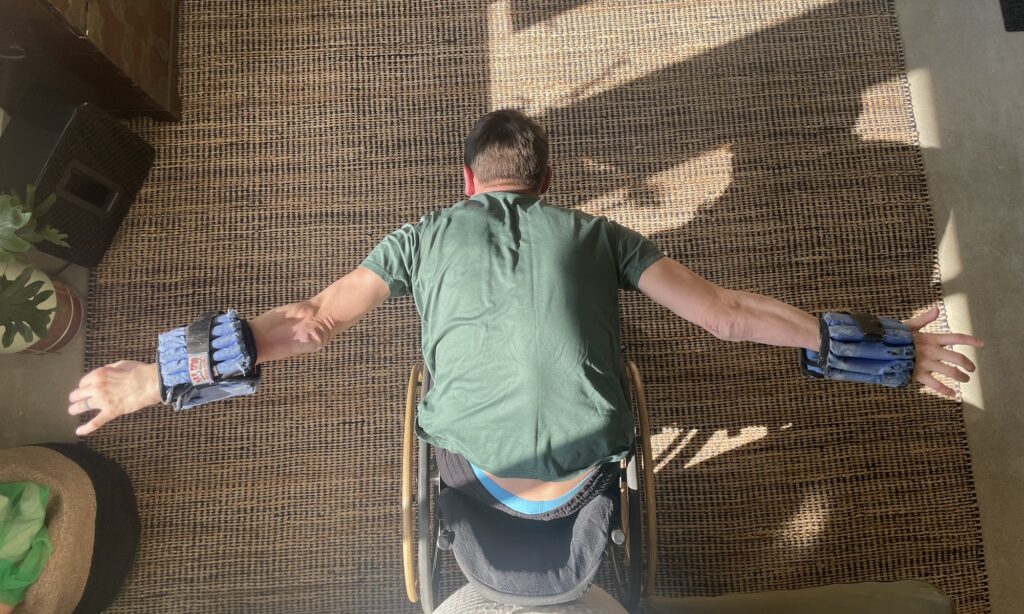
Whenever we write New Mobility stories about health and fitness, readers always ask about the best workout products for wheelchair users. It makes sense. Commercial gyms often have questionable accessibility and depending on your situation, getting to one consistently can be a pain. With the right equipment, home workouts eliminate the twin hurdles of access and transport.
So, we decided to go straight to the source and ask our social media community which fitness products worked the best for them. We got 80 recommendations spread across Facebook and Instagram. The following represent the most mentioned products, along with a few staff favorites, and we tried to include a mix of price points. For the full discussion, check out the posts on Facebook and Instagram.
Strength Equipment
Wrist Weights
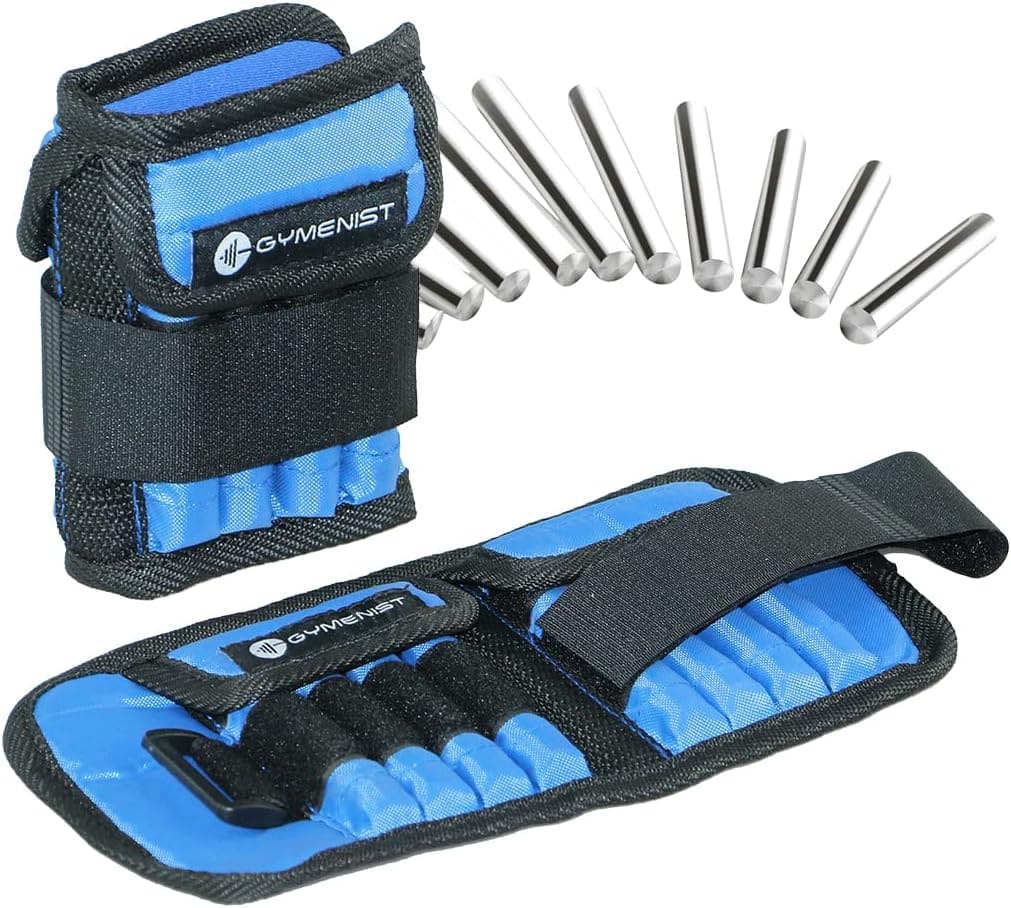
A good set of adjustable wrist weights is a great place to get started with home strength training. For those with limited hand function, they are a no-grip-required way to work everything from biceps, triceps, shoulders, chest and back muscles. Adjustability lets you fine-tune your weight based on your function and what muscles you’re working. Wrist weights won’t let you lift very heavy, but they are extremely versatile.
“Using wrist weights helped me build up a lot of the hard to isolate shoulder, back and neck muscles that can be tricky for quads.” – Ian Ruder
$20 per pair and up, depending on weight. Search “adjustable ankle weight” on Amazon, Walmart or other online retailers.
Resistance Bands
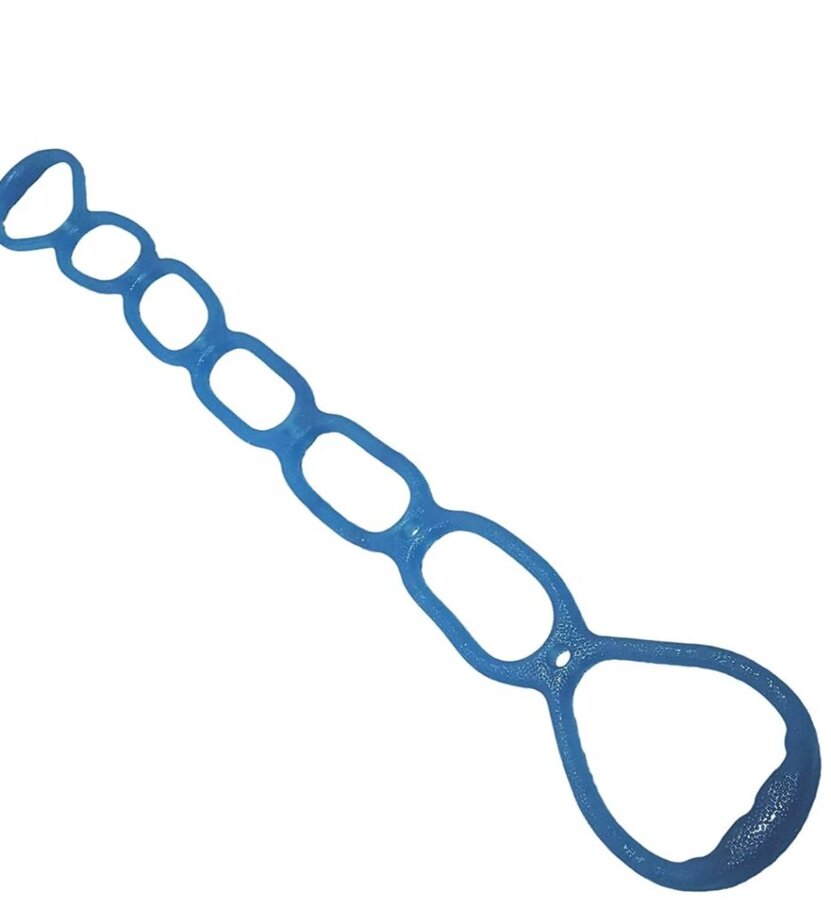
Resistance bands are a standard tool for physical therapists for a couple of reasons: They work, and they’re inexpensive. Bands are typically available in a variety of resistances, and you can buy a combo pack for versatility and cost-savings. Theraband sells door anchors that let you do a wider variety of exercises for less than $10.
“Seven ring adjustable resistance bands are my go-to. I can do a variety of exercises and with the rings dexterity is less of an issue.” – Kate Webster
From $15. Search “resistance band” “theraband” or “seven ring resistance bands” on online retailers.
MAXPRO Portable Cable Machine

The MAXPRO is a fitness device that mimics the action of a gym-based cable weight machine, but in a tiny 10lb package. You can mount it on your door or your wall via an adjustable-height wall track (sold separately). For wheelchair users, the biggest perk of the MAXPRO is its huge range of resistance — you can use it for everything from a rowing style interval workout to heavy, compound strength movements like pulldowns or presses. Plus, it’s super quick and easy to adjust the resistance, even for quads. Read my full review.
$749 from maxprofitness.com.
Cardio Equipment
SkiErg
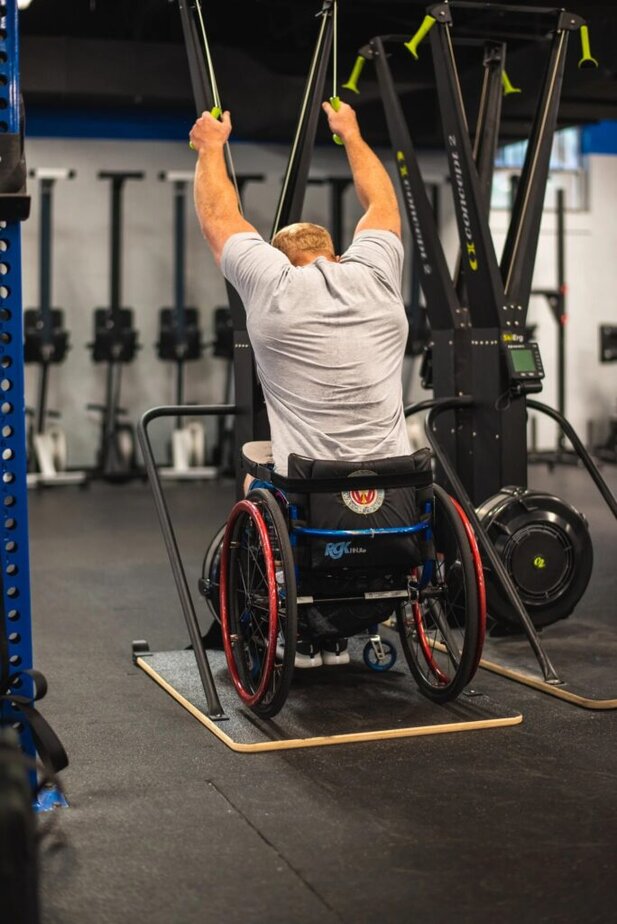
SkiErg provides an upper-body cross-country skiing motion with a similar style of resistance to a rowing machine. Because it works your back muscles, it provides a nice counter to the daily pushing of a manual wheelchair. Many traditional and cross-fit gyms have SkiErgs if you want to give one a try before committing to this sizeable purchase. Quads often use the SkiErg with a pair of Active Hands gloves or other grip aids.
“It’s the best cardio I’ve found for wheelchair users.” – Jarred Evans
$850 from concept2.com.
Multi Ropes Adaptive Jump Ropes
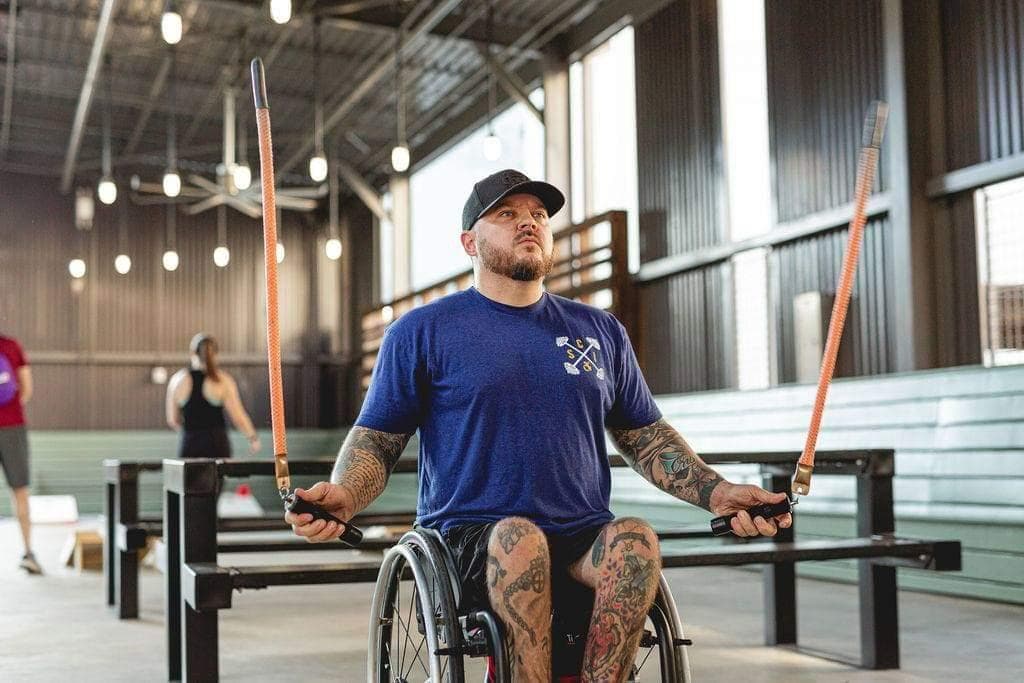
Adaptive jump ropes, also known as split ropes, offer a great way to do a cardio workout from your wheelchair. You hold a rope in each hand, and mimic a jump rope motion, without the having to jump part. Sounds easy, but after 30 seconds, your lungs and shoulders will be telling you otherwise.
“I get bored easily with workouts, but adapted jump ropes provide a fun, great cardio workout, which we all know can be difficult. It’s also a good workout to keep the shoulders strong and flexible!” – Cody Unser
$99-$165 from Equipproducts.com
Handcycle Smart Trainer

For those who already have a handcycle, smart trainers let you ride in bad weather or when you don’t have time for a full outdoor ride. Smart trainers come in a variety of styles including wheel-on units like the Saris M2 ($199), which are easier to attach to a standard handcycle because they let you keep your front wheel on.
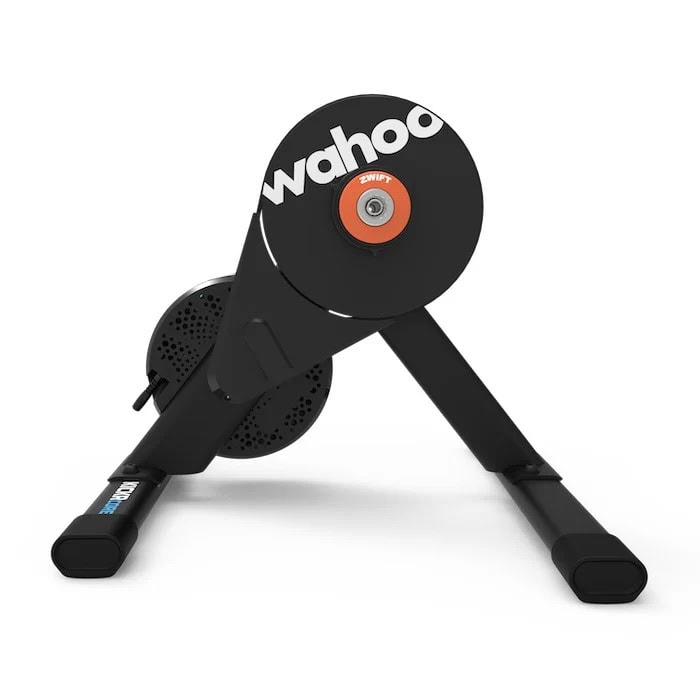
Direct-drive models require you take the front wheel of your bike off, and they’re more expensive. But for anyone wanting to get serious about indoor riding, direct-drive trainers provide a much more realistic ride feel. The Wahoo Kickr Core2 consistently gets good reviews, plus it pairs natively with the Zwift subscription App, which has a handcycling avatar you can pedal in online rides and races.
“[With a smart trainer] for my handcycle, I’m not worried about weather, daylight, my dogs or traffic. The various online platforms make riding in my living room or garage much more interesting.” – Erik Corbett
$550 from zwift.com.
Online Workout Services
Adapt to Perform
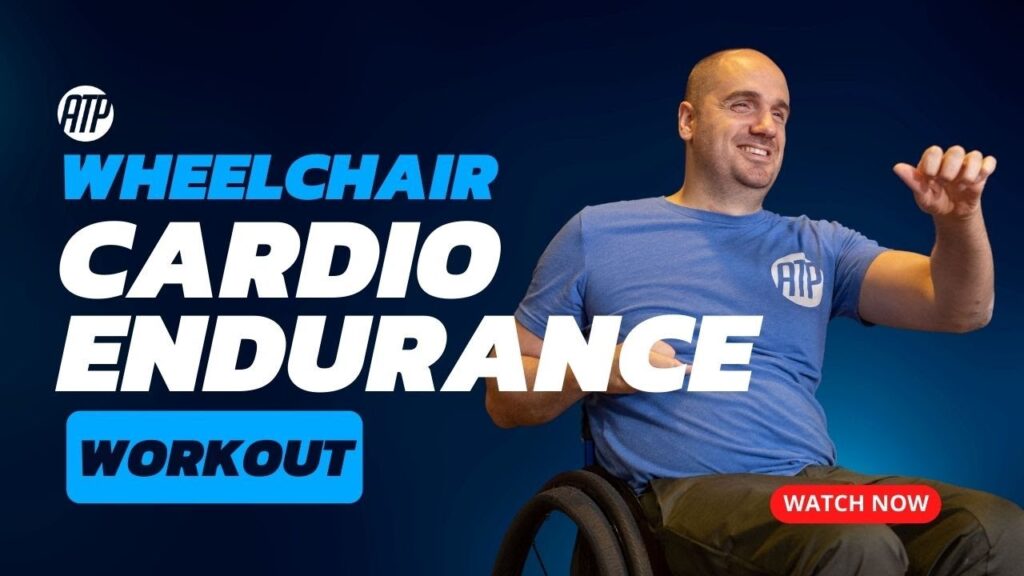
Quadriplegic personal trainer Ben Clark has a wealth of knowledge about how to adapt workouts to different levels of function and his videos offer a great mix of explanation and motivation. Clark has written several home fitness articles for New Mobility and his website offers a paid workout program featuring a video library and live classes. Many workouts can be completed with no specialized equipment.
“[Ben] greatly encourages you to do the exercises to the best of your ability and to adapt them and the philosophy is that however you do it is great and good enough!” – Liza McCollum
Adapt to Perform Website and YouTube (free videos).
Wheel With Me Fit App
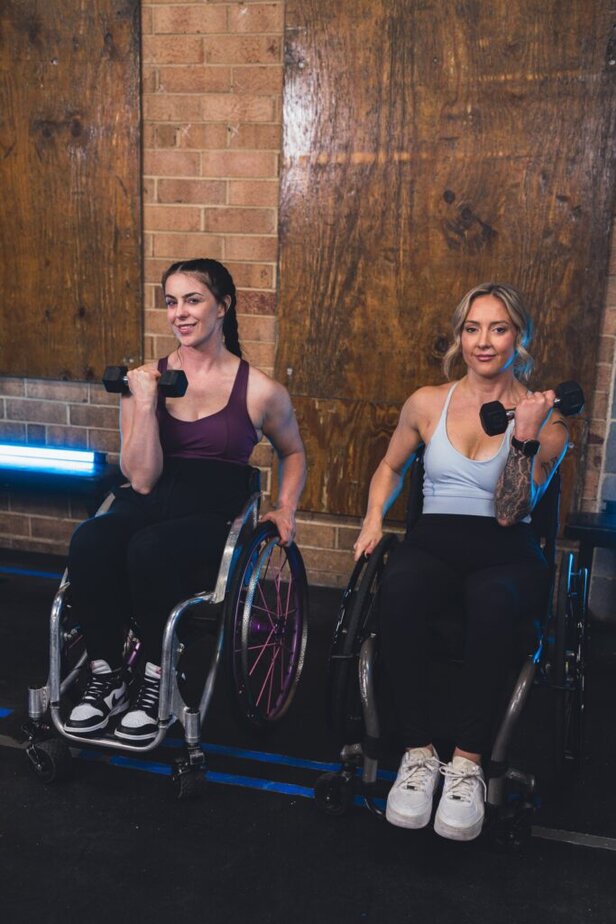
Wheelchair users Jesi Stracham and Nikki Walsh created an adaptive fitness training app with workout videos and classes covering everything from strength and muscle building to home workouts, gym workouts, cardio routines and more. They offer on demand workouts as well as live classes and most can be completed with simple equipment like dumbbells or resistance bands.
“For a monthly fee you get workouts for wheelchair users by wheelchair users. Nikki and Jesi are powerhouses who encourage us wheelies.” – Stacy Nicole
$14.99 a month (free trial offered) on the Apple or Google App stores.
Support New MobilityWait! Before you wander off to other parts of the internet, please consider supporting New Mobility. For more than three decades, New Mobility has published groundbreaking content for active wheelchair users. We share practical advice from wheelchair users across the country, review life-changing technology and demand equity in healthcare, travel and all facets of life. But none of this is cheap, easy or profitable. Your support helps us give wheelchair users the resources to build a fulfilling life. |


I am a C5/6 quad and a Ben Clark fan. I have a few of his workouts bookmarked to do 2 or 3 times a week. In one, he uses wrist weights that have a thumb hole in them so that when you reach up, the weights don’t slide down to your forearms. $16 for a set on Amazon – SPRI Wrist Weights Thumblock Arm Weights Set for Women & Men. Exercise is medicine.
Hi Steve,
I have severe arthritis in my thumbs, which make holding weights difficult. Does the set you mention put much pressure on your thumbs? They sound great!