


The Person Who Helps Me Is Not the Person Who Decides For Me
November 5, 2026
Massimo Lorusso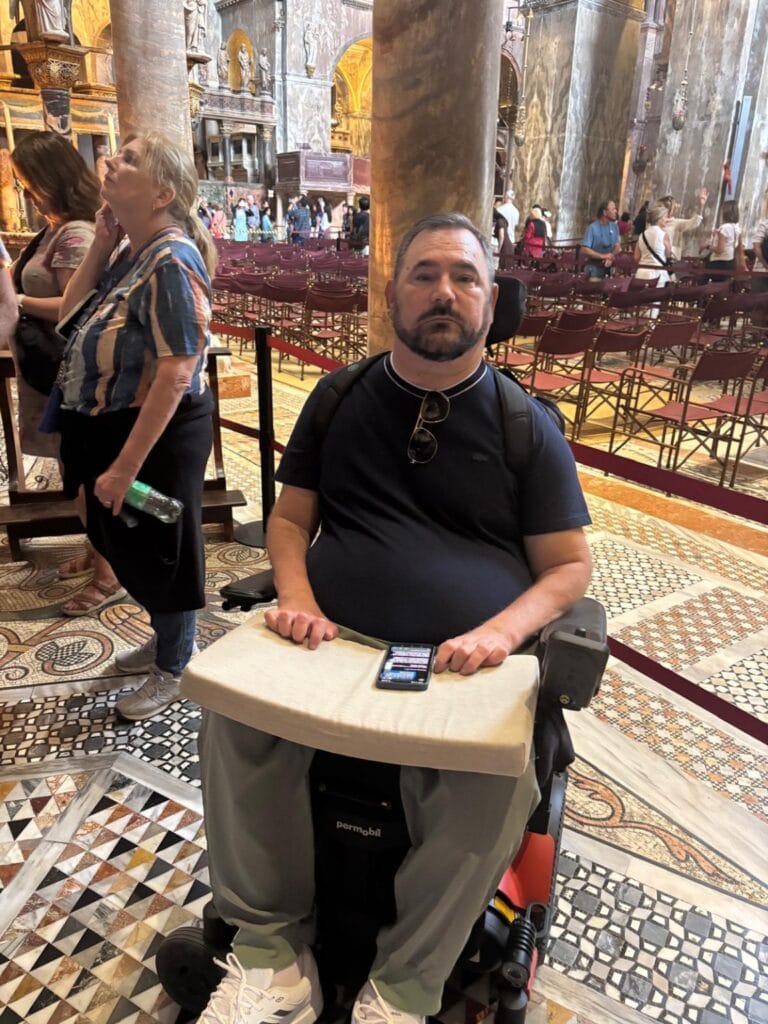
As a quadriplegic, scheduling and managing the assistance that I need for everyday actions most people do without thinking has been an essential part of my day for almost four decades. Over this time, I’ve learned there is a mistake that can happen very easily when help becomes necessary: people begin to confuse performing an action with owning the decision behind it. Understanding that distinction has probably taught me more about autonomy than any definition ever could.
If someone helps me put on a shirt, the important question is not simply whether I can put it on alone. The important question is whether I still decide which shirt I want to wear. If someone helps me travel, the question is not whether I can physically manage every stage without assistance. It is whether the destination is still mine to choose. If a service organizes my care, the measure of success is not merely whether the service was delivered. It is whether my day still belongs to me when the service is finished. That may sound obvious, especially to disabled people. In practice, it is surprisingly easy for people to lose sight of that boundary.
Sometimes people lose sight of it because a helper is in a hurry. Sometimes because an organization has a rigid schedule. Sometimes because a family member is trying to protect you. Sometimes because doing what is easiest for the person providing assistance is mistaken for doing what is best for the person receiving it.
No one needs to be cruel for autonomy to be reduced. It can happen through convenience. That is why I have come to think of independence differently.
The Nuance of Independence
For many years, public language has treated independence as physical self-sufficiency. The more things you can do alone, the more independent you are presumed to be. By that measure, a person who needs extensive assistance will always appear profoundly dependent.
But physical self-sufficiency and autonomy are not the same thing. Self-sufficiency describes how an action is carried out. Autonomy describes who has the final say. That difference affects almost everything.
A wheelchair does not provide freedom by itself. It enables freedom when it allows a person to go where that person has chosen to go. Having access to personal assistance does not guarantee autonomy by itself. It enables autonomy when it helps translate a person’s decisions into action without replacing those decisions. Technology does not provide independence by itself. It enables independence when it increases control over communication, movement, work, privacy or participation.
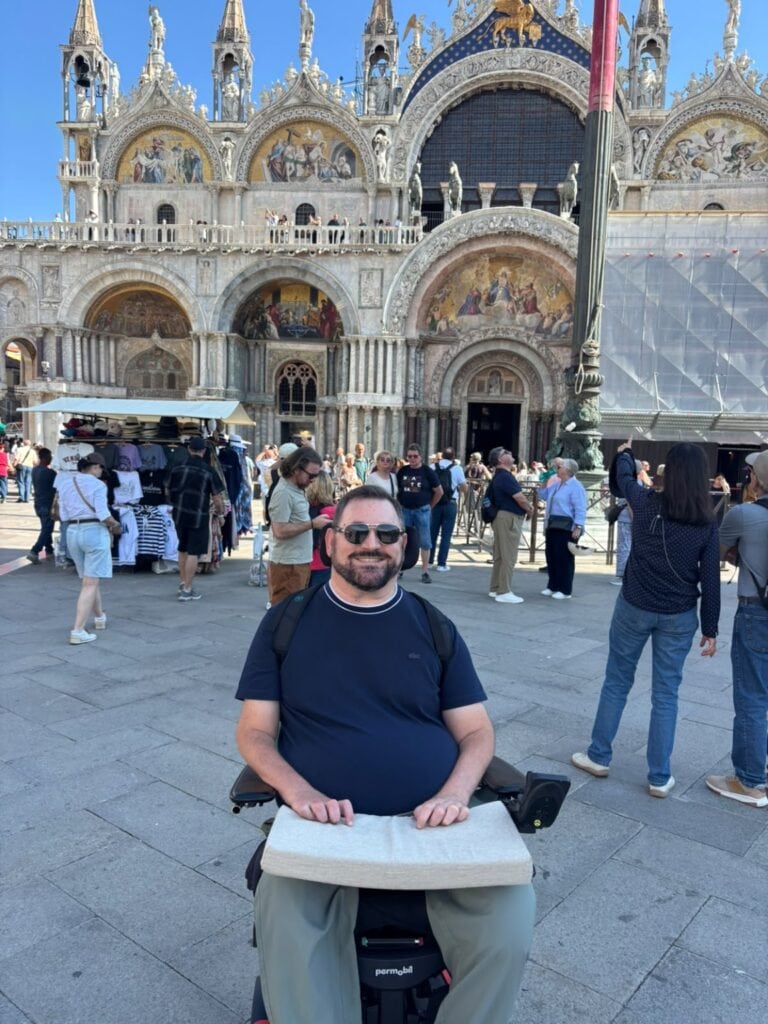
Travel is one example. Traveling with a power wheelchair requires accessible transportation, station assistance, enough time for transfers, suitable accommodation and many arrangements that most travelers never have to think about. From the outside, that may look like dependence layered on dependence. From the inside, the experience can be exactly the opposite.
If all those forms of assistance allow me to reach a place I chose, with the people I chose, for reasons that matter to me, then assistance has expanded my autonomy rather than diminished it. The same is true inside a home. A person can receive help with almost every physical task and still be the one deciding the rhythm, priorities and meaning of the day.
Problems begin when assistance structures become more important than the person. A schedule may be efficient for a service but completely wrong for someone’s life. A routine may be easier for a caregiver but may slowly reduce spontaneity. A decision may be made “for your own good” without anyone noticing that you were not actually asked.
These are not always dramatic violations. Often they are small substitutions of authority. And because they are small, they can become normal.
One of the most useful questions I have learned to ask is simple: who decided? Who decided what time I would get up? Who decided whether a trip was too complicated? Who decided that a certain inconvenience was not worth the effort? Who decided that staying home was easier? Who decided what counted as an acceptable risk?
The answer should not always be “me.” Every life includes compromise, shared responsibilities and circumstances we cannot control. Marriage, family and community require negotiation. But disability should not become a permanent reason for someone else’s preferences to carry more weight than mine. That principle has mattered in my marriage and family life too.
The roles of husband and father cannot be measured only by physical tasks. If we use physical performance to define participation, then many important forms of presence disappear from view: judgement, affection, responsibility, listening, decision-making, memory, continuity, humor and the thousand ways one person matters in another person’s life.
A body can require assistance without the person becoming a passenger in his own family. I also resist the opposite mistake: pretending that attitude makes every limitation disappear. It does not.
An inaccessible entrance remains inaccessible even if I am optimistic. An unreliable service remains unreliable even if I am patient. A lack of assistance cannot be solved by “wanting it enough.” There are structural barriers, financial barriers and physical realities that no amount of positive thinking will erase.
That is precisely why autonomy matters so much. When a person already faces limits that cannot be negotiated away, the choices that remain should not be casually taken from them in the name of efficiency, protection or routine.
What Remains?
Since I began writing in 1993, I have often returned to the same question in different forms: what remains yours when circumstances change almost everything else? My answer today is not abstract. What remains yours is authorship.
Not authorship in the literary sense, although writing has been important to me. I mean authorship of a life: the right to remain the person who gives direction to it. That does not require doing everything alone.
In fact, one of the strange lessons of disability is that independence can sometimes grow through well-designed dependence. The right assistance, the right technology and the right relationships can create more freedom than physical self-sufficiency ever could.
The goal, then, should not be to eliminate dependence at all costs. Human beings are dependent on one another in countless ways, disabled or not. The goal should be to make sure dependence does not automatically transfer authority. The person who helps me is not therefore the person who decides for me. The person who assists me does not become the author of my day.
The fact that another person’s hands may be necessary does not make my choices less mine. For me, that is independence in its most meaningful form. Not doing everything alone. Remaining the person who decides where the life is going.
Massimo Lorusso is an Italian author and journalist who has been writing since 1993. He has lived with quadriplegia since a spinal cord injury in 1988. His autobiographical work explores disability, family, autonomy, travel, institutions and the long life that follows irreversible change. He is the author of “The Voice of Silence – What Words Do Not Say.” His recent first-person essays have been published by Sisi Afrika Magazine and HopeZine.
